Why Is Rhode Island Called an Island When It Isn’t One?
The names of some U.S. states don’t need much explanation — for example, New Mexico and Washington. But Rhode Island isn’t an island, so let’s dig into its name.
Rhode Island is only 37 miles wide and 48 miles long, but it has more than 400 miles of coastline (thanks to deep bays and, yes, a few islands), earning it the nickname of the “Ocean State.” But zoom in on a map and you’ll see clearly that the bulk of its 1,214 square miles are connected to the mainland of the United States, making it distinctly not an island. Geography definitions aside, there are some oft-repeated and reputable theories about the name of Rhode Island, dating back to the 16th and 17th centuries.
One theory relates to Italian explorer (backed by the French) Giovanni da Verrazanno, who came to the region in 1524. He discovered an island roughly 22 miles off the mainland, and said its rolling hills, plentiful trees, and size all reminded him of the Greek island of Rhodes.
Another hypothesis has to do with Dutch explorer Adriaen Block, who arrived in 1614. It’s believed that Block passed by an island known to the Indigenous Narragansett tribe as Aquidneck Island, and was struck by its reddish soil. In turn, Block decided to name it Roodt Island — Dutch for “red island.”
There’s no clear answer to why the state of Rhode Island is named such. But it’s likely that one or both of the aforementioned theories inspired Rhode Island founder Roger Williams when he settled the region in 1636.
What we can say for sure is that Aquidneck Island, specifically, came to be called Rhode Island on March 13, 1644. A decree stated, “Aquethneck shall be henceforth called the Ile of Rods or Rhod-Island.” When a royal charter was granted in 1663, it mentioned the “Colony of Rhode Island and Providence Plantations” (referring to both the island and plantations on the mainland). In 2020, however, voters opted to get rid of the “Providence Plantations” part of the name because of its connection to slavery. Today, the state’s official name is simply the State of Rhode Island.
Featured image credit: Craig Taylor Photo/ Adobe Stock
Advertisement
More from our network
Word Smarts is part of Inbox Studio, which publishes content that uplifts, informs, and inspires.
Holiday gifting can feel like a puzzle, but a well-chosen book rarely misses the mark. From clever wordplay explorations to gripping biographies and inventive fiction, this year’s most giftable reads offer something for every curious mind on your list.
Picking out the perfect holiday gift can be tricky, but we’re of the mindset that a good book is always welcome. In recent years, the Icelandic tradition of exchanging books on Christmas Eve — known as Jólabókaflóð, meaning “Christmas Book Flood” — has gone global, with the tradition adopted by bookish revelers worldwide.
In that spirit, we’ve put together a list of some of the most giftable books we enjoyed this year, with some extra picks for the logophiles and bibliophiles (word nerds and bookworms) in your life.
This book is full of fun facts and obscure history, making it a great gift for the trivia fan in your life. Written by the host of the “Words Unravelled” podcast, Useless Etymology reveals the surprising ways common phrases and terms came to be.
If there is a podcast lover (or maker) on your gift list, look no further than this comprehensive guide to the history and culture of podcasting. You could even take the gift up a notch by pairing it with a new set of headphones.
Consider this one for your long-distance friend. This novel is told through handwritten correspondence that the protagonist writes and receives, slowly revealing details about her life. Send the book with some pretty stationery, your own handwritten letter, and perhaps a resolution to keep in touch.
Your bookworm friend might be celebrating another holiday in December — Jane Austen’s 250th birthday. There are many new Austen-inspired works to mark the occasion, and this new nonfiction examines Austen’s legacy in a way that is both entertaining and academic.
For music lovers, this novel about a family of talented musicians spans decades of rock history. The story covers the 1960s hippie folk movement to the 1990s alt-rock scene, making it a great pair with a music documentary about Woodstock or Lilith Fair.
If you know someone who enjoys Clueless or Legally Blonde, gift them a book exploring the word “like” and its role in popular culture. Like explores the word’s history, its role in the “Valley Girl” stereotype, and its evolution into an essential tool of modern communication via Facebook’s “Like” button.
Pick up a copy of this clever guide to entertaining as a gift for the host of a holiday party. It features party inspiration alongside recipes and charming illustrated guides. This book is sure to earn you an invite to the next gathering.
If you know a lover of history and literature, you can’t go wrong with a biography. Mark Twain is a comprehensive portrait of one of the most important figures in American history, written by the author of the AlexanderHamilton biography that inspired the musical.
History buffs will appreciate this posthumously published memoir written by the last surviving World War II spy. This is nonfiction, but it reads like a spy thriller, so it would be a good gift for a fan of TV shows such as Slow Horses or Killing Eve.
For your chronically online friend, Algospeak is a wordy deep dive into how the internet — especially social media — is shaping the evolution of language. This may also be a good gift for someone who spends a lot of time with teenagers and wants to understand them better.
Any comedy fan knows the name Lorne Michaels, but despite his 50-year career in the public eye, he has remained remarkably private. Lorne is the first biography authorized by Michaels himself, and it’s a fascinating look at what happens behind the scenes of TV history.
This illustrated memoir makes a great gift for the science and art enthusiasts in your life. The author left her job at an art gallery to work as a janitor at the McMurdo Station in Antarctica, and the book blends her personal stories with hand-drawn maps and scientific diagrams.
If you know a world traveler or adventure seeker, pick up this novel that blends mystery and “what if” history. Set against the backdrop of San Francisco’s world’s fair in 1939, this historical fiction starts with the disappearance of a world-renowned maritime explorer.
Any bakers on your shopping list? A TikTok star who researches and cooks retro recipes compiled this cookbook featuring regional classics such as beignets from New Orleans, gooey butter cake from St. Louis, and strawberry pretzel salad from Pittsburgh.
For animal lovers, this cozy novel imagines a mysterious health clinic that prescribes cats specifically chosen to suit the patient’s needs. Complete the set by adding the sequel, We’ll Prescribe You Another Cat, and don’t forget to buy a gift for their cat, too.
Featured image credit: Images courtesy of vendors
Advertisement
More from our network
Word Smarts is part of Inbox Studio, which publishes content that uplifts, informs, and inspires.
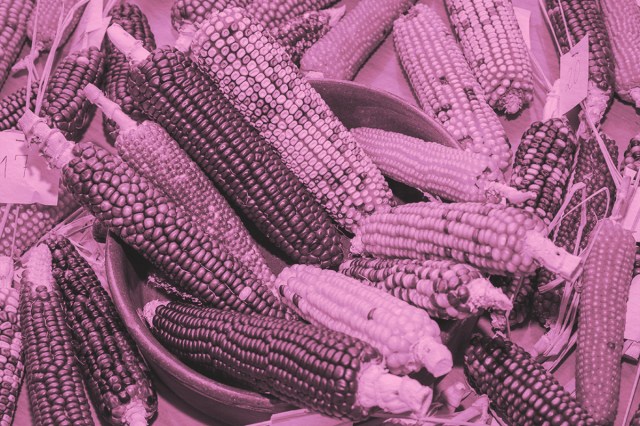
Certain foods are tied to specific holidays and times of year. We might eat corn year-round, but we tend to talk about maize specifically in the fall months, at least in the United States. References to the latter crop are usually tied to the Thanksgiving holiday, but around the world, there’s a much broader usage.
So what’s the difference, if any, between maize and corn? If we’re talking about the cereal plant scientifically known as Zea mays, then corn and maize are the same thing. Zea mays was first domesticated by Indigenous peoples in what is now southern Mexico about 10,000 years ago, from a wild grass called teosinte. Later, when European explorers arrived in the Americas and encountered the golden-kerneled grain, they needed a name for it. And this is where things get more complicated, etymologically speaking.
The word “maize” comes from the Spanish maiz,which itself derives from the Indigenous Taíno word mahiz, referring to the Zea mays plant. The Taíno people inhabited the Caribbean islands where Columbus first landed, and while the Europeans likely didn’t know the impact the crop would have, they sent it with the first shipments to Europe. Following the Columbian exchange, the word “maize” stuck, and the name for this staple crop entered European vocabularies (with various similar-sounding derivatives). Today, “maize” remains the preferred term in much of the world to refer to the crop Zea mays, and it’s commonly used in scientific contexts and in international trade.
Advertisement
Then, of course, we have the word “corn.” The word “corn” comes from Old English and Germanic, in which it could refer to a single seed of a wide range of cereal plants, or a range of plants that produce grain when growing in fields. “Corn,” therefore, didn’t refer to a specific plant, but it could be locally understood as denoting whatever crop happened to be most common in a particular area. In England, for example, “corn” might refer to wheat, while in Scotland and Ireland, it meant oats. Later, when English settlers arrived in North America and encountered maize — which became their main grain crop — they called it “Indian corn” or just “corn.” Over time, “corn” became exclusively associated with maize in North America — ultimately creating some linguistic confusion across international borders.
Today, when Americans say “corn,” they are referring specifically to maize. But in British English, “corn” can still carry its older, broader meaning — potentially encompassing a range of cereals including wheat, rye, barley, oats, and maize. This is especially true in the case of crop fields. When a native of the United Kingdom refers to a cornfield, that field could contain wheat, barley, or maize. In a British supermarket, however, you will see the word “corn” labeling products such as sweet corn and corn on the cob. So, while maize and corn are exactly the same in relation to the crop Zea mays, the precise usage and meaning of “maize” and “corn” can change to varying degrees depending on where you live and who you’re talking to.
Featured image credit: rugercm/ Adobe Stock
Advertisement
More from our network
Word Smarts is part of Inbox Studio, which publishes content that uplifts, informs, and inspires.
Is the Name of the Bird Related to Turkey the Country?
Why does a quintessentially American bird share its name with a country half a world away? The answer involves global trade routes and the mistaken identity of the guinea fowl.
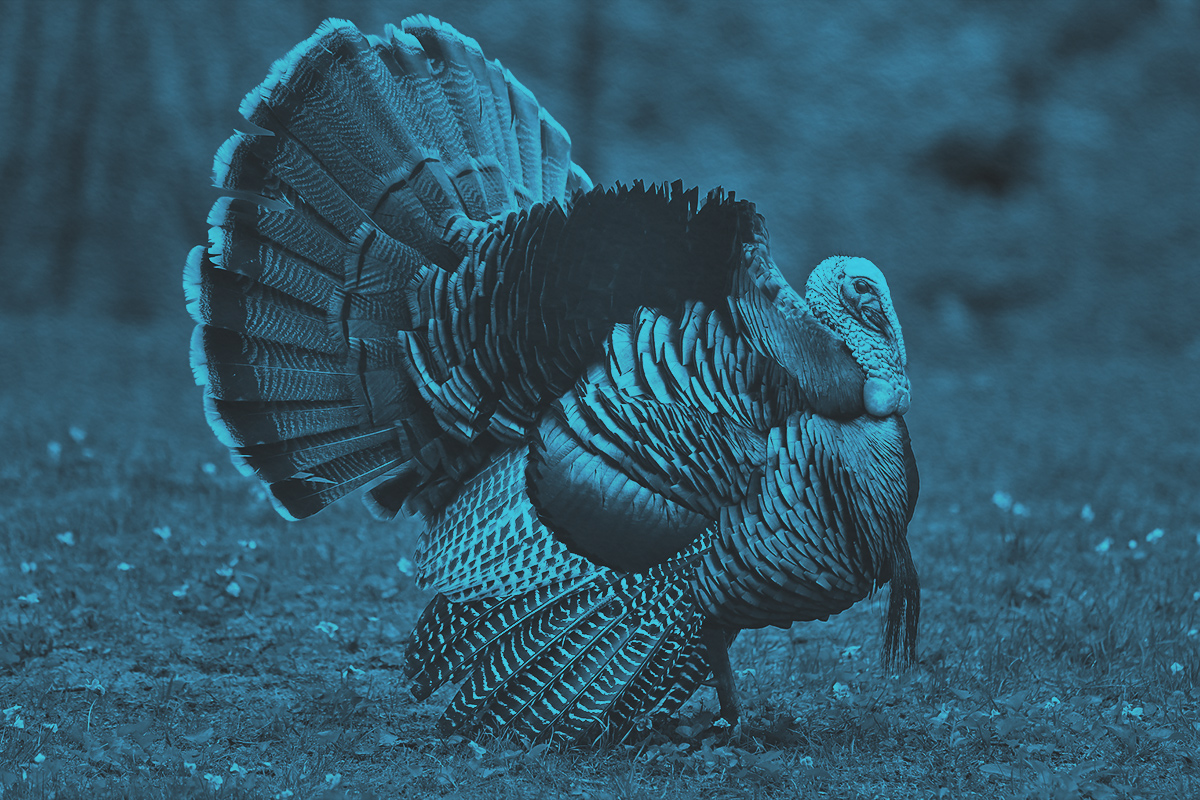
Every year on Thanksgiving, we sit down to share a meal with family, friends, and loved ones in the spirit of gratitude and abundance. Traditionally, this meal includes sides such as mashed potatoes and gravy, cranberry sauce, green bean casserole, and sweet potatoes, with pumpkin pie for dessert. The star of the meal, however, is a roasted turkey. If you’re the curious sort, you may have wondered if the name of the poultry on your Thanksgiving dinner table is related to the name of Turkey, the country.
The answer is yes, but only because the bird resembles a guinea fowl. This requires an explanation.
Wild turkeys (Meleagris gallopavo) are native to the Eastern and Southwestern United States and Mexico. The Maya of what is now southern Mexico domesticated them about 2,000 years ago — the birds were called huehxōlō-tl in Nahuatl. In the early 16th century, Spanish explorers in the Americas took turkeys to Europe, where, after breeding, they became farm animals (Meleagris gallopavo domesticus), raised for food.
This is where the naming gets a little complicated. In the 16th century, Portuguese traders exported the guinea fowl (Numidameleagris), a native species of sub-Saharan Africa, to European countries through the Ottoman Empire. Europeans called it the turkey-cock or turkey-hen because it came from the Turks. When a similar-looking fowl was sent to Europe from the Americas around the same time, it was called a turkey. But neither the guinea fowl nor the turkey is native to Turkey.
Advertisement
Why Turkey for the country? The Turks are “members of numerous Asian peoples speaking Turkic languages who live in a region extending from the Balkans to eastern Siberia and western China.” “Turk” is connected to the Medieval Latin Turcus, referring to the same group of people. After the fall of the Ottoman Empire in the early 20th century, the republic of Turkey formed, taking on the name Türkiye — a name long applied to that region by its inhabitants.
To add to the naming confusion, in some languages, the word for the bird turkey is based on “India.” For example: In French, it’s coq d’inde, or dinde; in Polish, indyk; and in Basque, inioliar. In Turkish? The bird is called hindi. Why? Guinea fowl were often imported into Europe from near modern-day Ethiopia, which misguided Europeans often confused with India.
Now that you’re informed about the convoluted history of this word, at the Thanksgiving feast this year, you can talk turkey and save the disputes for important things, such as whether sweet potatoes should be served with marshmallows.
Featured image credit: Robert Winkler/ iStock
Advertisement
More from our network
Word Smarts is part of Inbox Studio, which publishes content that uplifts, informs, and inspires.
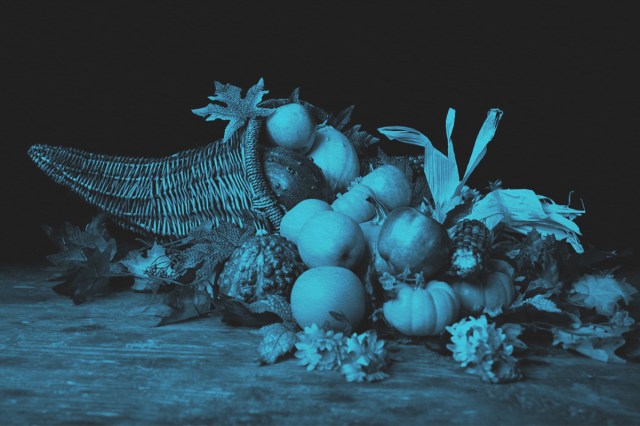
In English, we have myriad ways to express abundance. We can talk about a bounty, a multitude, or a profusion, or describe something as opulent, plentiful, or lavish. “Cornucopia” fits as a synonym for “abundance” with its definition of “something that produces an overflowing and inexhaustible supply, especially of desirable things.” And around Thanksgiving time, we often see depictions of a horn overflowing with food — this is also called a cornucopia.
“Cornucopia” is derived from the Latin phrase cornū cōpiae, which translates to “horn of plenty.” Though it’s a Latin phrase, it has roots in Greek mythology. Amalthaea was a nymph who fed Zeus goat’s milk to raise him into the powerful Greek god he became. The goat that provided the milk broke off one of its horns, and Amalthaea filled it with flowers and fruit and presented it to Zeus. This horn became known as the horn of plenty.
The Greek myth that served as the root of “cornucopia” inspired its original definition: “a curved goat’s horn from the mouth of which fruit and ears of grain overflow, used as a decorative motif in art, architecture, and design.” The horn shape references the abundance conferred by Amalthaea. The meaning of “an abundant supply” has been in use since the 16th century.
We use the term “cornucopia” in its second, figurative sense, whether or not the abundance is in a goat’s horn. When someone says there’s a cornucopia of options on the Thanksgiving table, they mean there’s plenty to share. And when we think about the cornucopia on our family’s table, we can reflect on the care Amalthaea offered through the original mythical cornucopia. The holidays are a time of celebrating the abundance we can find throughout our lives.
Featured image credit: LPETTET/ iStock
Advertisement
More from our network
Word Smarts is part of Inbox Studio, which publishes content that uplifts, informs, and inspires.
If you know your idioms, you know that a “gravy train” can be a sweet place to be. This expression refers to a job or situation that provides easy money with little or no effort. By definition, “gravy train” means “a much exploited source of easy money,” as in, “He’s been riding the gravy train ever since joining that startup.”
The idiom is typically used to suggest that the rewards might not be entirely deserved, or that something questionable is happening behind the scenes. But it can also simply mean that someone is being well paid for relatively little effort. So, when did a metaphorical train come into the picture?
The phrase “gravy train” lacks a well-documented origin, but several sources suggest that it originated among railway workers in the early 20th century. Since “gravy” was already slang for “easy money” or “something easy,” the term “gravy train” likely described a short-haul railway job that paid well. Over time, it evolved into the broader idiom we use today for any situation that brings steady, effortless profit.
The word “gravy” itself can mean “something additional or unexpectedly pleasant or valuable,” as in, “This new gig is gravy!” While it’s unclear where or when this connection originated, it likely relates to the idea that gravy is a bonus or an enhancement to an already satisfying meal. But “gravy” isn’t only tied to money. In slang, you’ll hear it as a synonym for “fine,” “good,” or “awesome.” For instance: “It’s going to rain during the concert? That’s OK — it’s all gravy.”
Featured image credit: FotoBob/ Adobe Stock
Advertisement
More from our network
Word Smarts is part of Inbox Studio, which publishes content that uplifts, informs, and inspires.
From bowl cuts to skinny jeans, some trends are best left in the past. But when it comes to language, there are some older slang terms that we’d love to start using again.
With every new generation comes a fresh set of slang. For instance, Gen Z can’t stop talking about having rizz, spilling tea, and being sus. But there was a time when now-older generations were also in their teens and 20s, communicating in a language full of code words and made-up sayings of their own. While most of those phrases have fallen into disuse, we think some of them are worth bringing back. Here’s a look at vintage vernacular that deserves a comeback.
Gas
“Gas” was once widely used for a thing or person thought to be outrageously fun. For example, you could say, “That guy at the party last night was a real gas,” or, “The trip I went on was an absolute gas from start to finish.” The word has been used in Irish culture as a figurative substitute for enjoyment since as far back as the early 1900s. It jumped into U.S. slang in the mid-20th century — meaning “someone or something that is very appealing or enjoyable” — after appearing in James Baldwin’s 1957 short story “Sonny’s Blues” and the lyrics of the 1968 Rolling Stones song “Jumpin’ Jack Flash.”
Wallflower
Some people feel shy at social gatherings and stay along the outskirts. In 1820, those people — the ones who sat by the wall at parties waiting for a partner to dance with — became known as “wallflowers.” We’d like to bring that back with a more positive spin, attributing it to folks who hang out on the edges of a party playing with the dogs and cats.
Beat Feet
According to the Oxford English Dictionary, the phrase “beat feet” first became popular in the early 1940s, when it was largely used on U.S. college campuses. It means “to walk or run somewhere in a hurry” — an act that involves literally and rapidly beating your feet against the ground. This slang became popular in North America and New Zealand.
Advertisement
Made in the Shade
This catchy bit of slang is from an early 20th-century children’s rhyme describing someone who’s living the perfect life: “ice-cold lemonade, made in the shade, stirred with a spade, by an old maid.” A person who has a nice car, big house, and a loving family is 100% made in the shade.
Pad
In the early 20th century, “pad” was used by criminals as a slang term for a room that hosts illicit trysts. But by the 1930s, it was used in a more general sense by noncriminals to describe any type of lodging or residence. For instance, in the 1960s, you might have invited friends over to your pad to listen to the latest vinyl record. This one has remained in the modern lexicon in the form of “bachelor pad.”
Peepers
This slang term dates way back to the late 17th century, when it was first recorded in the 1691 work A Voyage Round the World by John Dunton. It refers to a set of eyes and is almost always used in its plural form. However, you could also say “peeper” when talking about a single eye.
As a slang term, “square” originated in jazz circles around the mid-1940s. It referred to a person who held old-fashioned views, though in time, it evolved to suggest that someone was nerdy, or just completely normal. You might’ve heard friends in the 1950s say, “I hope her boyfriend doesn’t come to the party — he’s such a square!” These days, nerdy is cool, and maybe “square” can get an upgrade.
Shindig
A shindig is a lively party with lots of music and dancing. However, when it was first coined in the early 1870s, the term originally described a specific type of country dance. It’s now applicable to everything from backyard barbecues to Christmas soirées.
Featured image credit: BillionPhotos/ Adobe Stock
Advertisement
More from our network
Word Smarts is part of Inbox Studio, which publishes content that uplifts, informs, and inspires.
The phrase “15 minutes of fame” is a well-known expression, but it has multiple meanings and a disputed origin story. The full statement, “In the future, everyone will be world-famous for 15 minutes,” has long been attributed to eclectic pop artist Andy Warhol. It’s usually taken to mean that everyone will become notorious for something, at some point. Another interpretation is that fame is fleeting, and anyone who is in the spotlight should expect it to pass quickly.
Which version is correct? Either is possible, depending on how the user intends their message. But an exploration of the origin of the phrase may help us understand the idiom.
In English, we can find the earliest example of the phrase in print in an October 1967 edition of Time magazine. An article about a sculpture show in Washington, D.C.’s Corcoran Gallery quoted Warhol in the context of the then-rapidly changing art scene: “Whole new schools of painting seem to charge through the art scene with the speed of an express train, causing Pop Artist Andy Warhol to predict the day ‘when everyone will be famous for 15 minutes.’”
However, Warhol might not deserve credit for the coining of the phrase. Photographer Nat Finkelstein claimed he originated the expression in 1966. While he was photographing Warhol for a proposed book, a crowd gathered in an attempt to get in the picture. Warhol supposedly remarked that everyone wants to be famous, to which Finkelstein replied: “Yeah, for about 15 minutes, Andy.”
But an earlier precedent for this expression was set almost a hundred years prior to that anecdote, in a different language. In 1879, French writer Alphonse Daudet published an article discussing young writers experiencing ephemeral fame; it included the phrase quart-d’heure de célébrité (“15 minutes of celebrity”).
Of course, Warhol enjoyed far more than 15 minutes of fame. He became an iconic pop figure before his death in 1987, almost 40 years ago. Today, his artwork continues to be highly valued (his depiction of Marilyn Monroe went for $195 million at auction in 2022), and his artwork is displayed in such major art institutions as the Museum of Modern Art, the Guggenheim Museum, the Whitney Museum of American Art, and the National Gallery of Art. His 15 minutes have been long extended.
So, which interpretation of the phrase is correct? There’s no knowing, because of the evanescence inherent in the concept of celebrity. When Warhol (and others) made this memorable observation about fame, the concept of fleeting internet fame had not yet been invented. Perhaps he was prescient.
Featured image credit: Robert Daly/ iStock
Advertisement
More from our network
Word Smarts is part of Inbox Studio, which publishes content that uplifts, informs, and inspires.
It may give you a sugar high, but root beer won’t get you drunk. The “beer” name comes not from its boozy content but from a mixture of how it’s made and how it was marketed.
Unless you mix it with some harder stuff, there’s no booze to be found in a typical can, bottle, or mug of root beer. So why do we call it “root beer” instead of a seemingly more accurate alternative such as “root soda”? The answer is twofold — it has ties to how it was once prepared, and it relates more directly to a bit of 19th-century marketing.
First, let’s touch upon the “root” aspect of the drink’s name. Root beer’s distinct flavor is thanks to the root of the sassafras tree, which was once a key ingredient. However, the root was banned by the FDA in 1960 over fears it caused cancer. While that root has since been replaced by artificially flavored syrups, the name stuck.
As for the “beer” part of the name, some early root beers did have trace amounts of alcohol. This was because yeast was sometimes added to produce a foamy head, which was desirable in glasses of lager. The yeast fermented over time, leading to root beers having a very low alcohol content.
But the true popularity of the term “root beer” is owed to Philadelphia-based pharmacist Charles Elmer Hires. He’s regarded as an early pioneer of commercial root beer, though he considered naming it “root tea.” He switched the name to “root beer” in an effort to market it to Pennsylvania coal miners.
The Hires Root Beer Co. even held the rights to the “root beer” name until 1879, when Congress passed a now-repealed law declaring that no word in the dictionary could be registered as intellectual property. Based on the success of Hires’ operation, other drink manufacturers began marketing their beverages as root beer by the late 19th century.
Featured image credit: bhofack2/ iStock
Advertisement
More from our network
Word Smarts is part of Inbox Studio, which publishes content that uplifts, informs, and inspires.
Holiday cards may spread cheer, but they also spread some truly spectacular grammar slipups. Here’s how to keep your seasonal sentiments merry and correct.
The modern Christmas card industry took shape in Kansas City in the early 20th century when the Hall Brothers’ printing company began distributing holiday cards of a particular format: paper folded once into 4 by 6 inches and inserted into an envelope. Later, the company changed its brotherly name to Hallmark. But even before then, holiday letters of all formats were a cherished way to send warm wishes to friends and family. This enduring tradition tugs at our heartstrings, reminding us that sometimes the smallest gestures really do mean the most.
Today, approximately 1.3 billion holiday cards are sent annually in the United States. But among the heartfelt sentiments and well-wishes for the new year lie some inevitable grammar mistakes. Capitalization errors and unnecessary apostrophes, in particular, run amok. Of course, it’s the thought that counts — but if you pride yourself on keeping a pristine spell-check record, these tips are for you. Here’s what the grammar elves have to say about seasonal greeting cards.
Perfect Pluralization: Last Names
We’d wager that of those 1.3 billion cards sent each holiday season, at least a billion are signed using a family’s last name. It’s the most common holiday sign-off, and yet, it’s often misused. Grammar purists everywhere cringe as they open envelopes filled with apostrophes and pluralizations where they don’t belong. Keep these rules in mind when pluralizing your last name:
No apostrophes for simple plurals.
Happy Holidays from the Smith’s!
Happy Holidays from the Smiths!
If the name ends in “s,” “x,” “z,” “ch,” or “sh,” add “es.”
Love, The Rodriguezs
Love, The Rodriguezes
Apostrophe Avalanche
Holiday greeting cards are chock-full of superfluous apostrophes, and not just when pluralizing last names. Remember that apostrophes should be used only to indicate possession or contractions. Avoid using them for decoration or pluralization. Here’s how to correctly write some common holiday greetings that tend to get an extra (and incorrect) embellishment.
Avoid a rogue apostrophe-“s” in “happy new year.”
Happy New Year’s!
Happy New Year!
The phrase “happy holidays” is not possessive.
Happy holiday’s from the Joneses!
Happy holidays from the Joneses!
However, there are some instances where apostrophes should be used.
For last names ending in “s,” add an apostrophe at the end to show possession.
The Morris’s/Morris year in review …
The Morris’ year in review …
The phrase “season’s greetings” is possessive.
Seasons greetings!
Season’s greetings!
Some holidays require an apostrophe-“s” because they are possessive.
New Years Eve and New Years Day
New Year’s Eve and New Year’s Day
Contractions require apostrophes.
Tis the season!
’Tis the season! (“’Tis” is a contraction of “it is.”)
Its the most wonderful time of the year!
It’s the most wonderful time of the year!
Advertisement
Capitalization Confusion
Holiday cards are a hodgepodge of capitalization. Even generic phrases — such as “Happy Holidays” or “Merry and Bright” — often appear in uppercase letters, reflecting stylistic choices more than grammatical accuracy. Technically, these phrases should be lowercase (“happy holidays,” “merry and bright”), unless a word begins a sentence, but these tend to get a pass in the spirit of creative license on holiday cards.
However, if you’re interested in staying grammatically correct this holiday season, the Associated Press has weighed in on the matter. According to its guidance, the first letters of words in generic phrases are not capitalized unless they begin a sentence or include a proper name, such as a person’s name or a specific holiday.
Perhaps most importantly, in the context of greeting cards, this includes capitalizing holidays and events such as Advent, Black Friday, Boxing Day, Christmas, Christmastime, Hanukkah, Kwanzaa, New Year’s Eve and New Year’s Day, and Yule. The same goes for proper names, including Grinch, Kris Kringle, North Pole, Jesus, and Santa Claus.
Flipping the calendar to the new year deserves a set of rules all its own. Use capitals in the exclamation “Happy New Year!” But if you’re using a more sedate phrase such as “I’m wishing you and your family a happy new year,” the standard rules of capitalization and punctuation apply.
However, card writers tend to overdo capitalization, and often, it’s the words that shouldn’t be capitalized that are the issue. This includes common words and phrases such as dreidel, hallelujah, happy, menorah, merry, mistletoe, and season. Here are some capitalization rules in action with common holiday greetings.
Adjectives are not capitalized, even if they accompany proper nouns:
merry Christmas
Example: “We want to wish you a merry Christmas!”
feliz Navidad (Spanish for “merry/happy Christmas”)
Example: “From our family to yours — feliz Navidad!”
baby Jesus
Example: “This season, we celebrate the birth of baby Jesus.”
happy Hanukkah
Example: “We wish you a happy Hanukkah!”
Common terms and phrases are not capitalized:
happy holidays
Example: “The Smiths are dropping in to say happy holidays!”
No matter what message you write in your holiday cards, or how you write it, your hard work won’t go unnoticed. And don’t worry — Santa won’t swipe you from the “nice” list for forgetting an apostrophe or capitalizing “merry” in the middle of a sentence. Still, by sticking to these guidelines, you’re sure to impress any English teachers or grammar enthusiasts on your mailing list this holiday season.
Featured image credit: Diane Labombarbe/ iStock
Advertisement
More from our network
Word Smarts is part of Inbox Studio, which publishes content that uplifts, informs, and inspires.
Enter your email to receive daily lessons that dive into what makes English so fascinating. Each email is packed with odd rules, etymologies, and the tools you need to be a better communicator.
Sorry, your email address is not valid. Please try again.
Sorry, your email address is not valid. Please try again.