The word “borne” isn’t just an elaborate variant of “born.” Although these terms were once used interchangeably, today they carry distinct definitions. Do you know the difference?
Not to be confused with the surname of CIA special ops agent Jason Bourne, the words “born” and “borne” have a more stable origin — but that doesn’t mean they’re easy to tell apart. These verbs are commonly confused for good reason: Both are past participles of “bear,” a word with multiple meanings, including “to carry,” “to endure,” and “to give birth.” But choosing the correct past tense verb depends on the context.
It’s unclear why the past participle of “bear” evolved into two different forms, but both words were used interchangeably until the early 17th century. However, their definitions diverged by the end of the 18th century. It was around this time that “borne” became the standard past participle for “bear,” used in all senses (carrying, enduring, transporting, etc.) except one: birth.
For instance, “She has borne the weight of that responsibility” is appropriate because “borne” means “carried” in this situation. Similarly, “They have borne many hardships this year” works because here, “borne” means “endured.” Notice how these examples use abstract definitions and not a literal sense of giving birth. For birth-related contexts, use “born,” as in, “My daughter was born in June,” and “He was born in Boston.”
These rules carry over to situations when the terms are made into compound words that turn them into adjectives, such as “airborne allergens” or “foodborne illnesses.” Here, “borne” represents something that can be carried, transported, or endured, whether physically, emotionally, or metaphorically. Similarly, “born” retains its birth-related meaning when combined with adjectives, as seen in the words “newborn” and “firstborn.”
Of course, the English language wouldn’t let us get away without at least one exception to these rules. “Borne” can refer to the act of giving birth when the subject is the mother, not the child. For instance, “The queen had borne an heir,” or “My grandmother had borne three children” — in these instances, “borne” is the correct verb. However, such sentence structures are very formal, so you won’t come across them often. When in doubt, remember: “born” for “birth,” “borne” for “burden,” and leave the spy work to Bourne.
Featured image credit: kipgodi/ iStock
Advertisement
More from our network
Word Smarts is part of Inbox Studio, which publishes content that uplifts, informs, and inspires.
What Was the Original Version of ‘Head Over Heels’?
“Head over heels” or “heels over head”? Confusing the order of this phrase isn’t actually a mistake, since the original was opposite to the way we commonly use it today.
What does the phrase “falling head over heels” mean to you? The literal definition of the phrase is “turning over completely in forward motion, as in a somersault.” But you can also fall head over heels for a person — meaning you’re madly in love with them.
While “head over heels” trips off the tongue naturally, the original wording of the phrase was “heels over head.” This flip-flop seems appropriate for the topsy-turvy nature of the expression. The Oxford English Dictionary tracks an early usage of the term to around 1400, and in 1653, an English translation by Thomas Urqhart of a work by François Rabelais (largely credited with inventing the concept of a novel) gave an example of the original phrasing in a literal sense: “He incontinently turned heels over head in the aire, and streight found himself betwixt the bowe of the saddle in a good settlement.” This description aligns with the literal definition. Until the wording swapped around, “heels over head” referred almost exclusively to the physical interpretation.
It’s unclear why the swap in phrasing happened, but the original phrasing is still in use occasionally to refer to the physical nature of a somersault, or a more figurative state of being in chaos. Even when writers transitioned to “head over heels,” the earliest usages still meant it in the bodily fashion. The Oxford English Dictionary identifies an early instance of “head over heels” in a 1694 publication called the French Rogue: “… made, for haste, but one leap to the bottom, and tumbl’d Head over Heels down the other.”
The first documented use of “head over heels” to mean “falling deeply in love” comes from a 1710 translation of the medieval Greek writer Lucian: “You seem to be wholy lost in Thought, and retir’d into the inmost Cabinet of your Breast, reeling and tumbling Head over Heels.”
While almost exclusively referring to love, the expression is sometimes used to describe states of utter helplessness in contexts other than love. In an 1895 publication called Black & White, it was used to refer to financial debt: “Lemaitre, the French actor, was always head over heels in debt, despite an enormous salary.”
Whatever the cause for the swap, “head over heels” seems apt for romantic references, as the evocative nature of the bottom of your heels above the top of your head is appropriate for the world-changing feeling of love.
Featured image credit: track5/ iStock
Advertisement
More from our network
Word Smarts is part of Inbox Studio, which publishes content that uplifts, informs, and inspires.
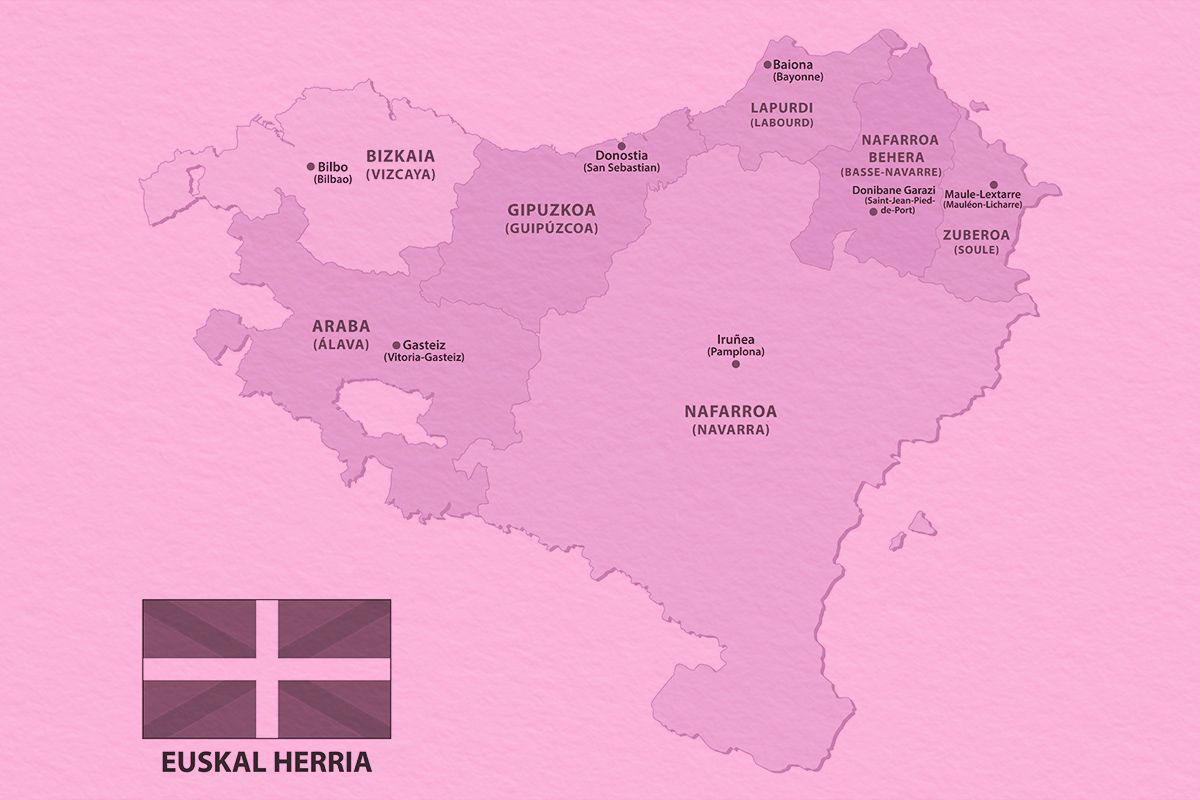
Whenever I’m planning to travel, I like to learn a few phrases in the local languages. I might not be able to have full conversations, but it’s good to be able to ask a few questions and navigate a little. I’m planning a trip to Europe now, and I realized that my high school French and Spanish aren’t going to be enough — I need to learn some Basque. The Basque region spans across southern France and northern Spain; 93.7% of Basque speakers are in Spain, while 6.3% are in France. Friends and family who have visited Basque Country rave about the beaches, food, and amazingly kind people who populate the region. I’m eager to learn some of the special language.
Basque speakers call the language Euskara. It’s a language isolate, meaning that it has no relation to any other known languages. This is in contrast to French and Spanish, which are Romance languages that can be traced back to Latin. Not only are there no known associations, but language historians are still mostly stumped about how to trace the origin of Basque.
According to Encyclopedia Britannica, very early in the recorded history of the Common Era, “dialects of Euskarian (Basque) stock were probably spoken north and south of the Pyrenees and as far east as the Aran Valley in northeastern Spain.” The resilience of Euskarian dialects was important because, at the time, the Romans were conquering Europe and most people in the region were starting to speak Latin. Basque maintained a foothold in the region over the centuries, even as various forms of Romance languages rose up around it. Today there are efforts to keep Basque alive in private education systems and through a written standard called Euskara Batua (“Unified Basque”).
To hear someone speak Basque is not too different from hearing someone speak Spanish. Many of the consonants and vowels are pronounced the same, and the “ll” is pronounced with a “yuh” sound. The Basque “r” is made with a single tap of the tongue, which contrasts with the rolled or trilled “r” in Spanish. The letters “k,” “z,” and “x” are used much more frequently in Basque than in English, which makes the appearance and the sound notably different to English speakers.
In today’s geography, Northern Basque Country is in southern France in the three provinces of Labourd, Lower Navarre, and Soule. Spanish Basque Country in northern Spain is made up of the provinces Araba, Biscay, and Gipuzkoa. The Basque language is still spoken in these provinces and their major cities. If you travel to one of the beachy cities of Basque Country from Madrid, the language might require an adjustment. But its history is as long as Spain’s, and the joys of the culture are undeniable.
Before your wanderlust takes over completely, spend some time learning more about the Basque language and memorize a few key phrases. It will go far with the locals who are very proud of their long history and culture.
Featured image credit: Rainer Lesniewski/ Alamy Stock Vector
Advertisement
More from our network
Word Smarts is part of Inbox Studio, which publishes content that uplifts, informs, and inspires.
In the English language alone, there are over a million words, and of those, an estimated 170,000 are in current use in the modern lexicon. Even with an abundance of words at our disposal, though, people tend to latch on to certain words or phrases and recycle their favorites. They may like how a word sounds, or perhaps they read a term and felt it was a perfect descriptor. Or maybe it’s a word that has creeped into popular culture, and now it seems to appear in every conversation.
Instead of repeating yourself (again), let’s look at some synonyms for the most overused words. By using unique and specific words, you’ll keep your vocabulary fresh in every situation.
Amazing
It’s a paradox. If everything is amazing, then nothing is. The actual definition of this word is “causing astonishment, great wonder, or surprise.” Yet “amazing” has been co-opted to describe everything from a much-needed vacation in a tropical locale to an afternoon iced latte — not exactly equals on the wonder scale.
Maybe it helps to think about whether something truly fits the definition of “amazing,” or if it just sparks joy in that moment. In either case, “amazing” has lost its luster, and it’s worth using an alternate adjective, such as “marvelous,” “remarkable,” “exciting,” “fascinating,” “breathtaking,” “astounding,” “inspiring,” “incredible,” “stunning,” “unbelievable,” “magnificent,” or “prodigious.” Pick the appropriate adjective for the scale of your situation.
Advertisement
Literally
The sitcom How I Met Your Mother depicted the misuse and abuse of this word well when Robin shouted to Ted, “I literally want to rip your head off,” and Ted yelled back, “You mean figuratively!” This word crept into the popular lexicon around the mid-aughts as a way to emphasize strong emotions or reactions. It’s easy to rely on in conversation, but “literally” deserves a figurative rest from overuse. Try “precisely,” “actually,” “plainly,” “truly,” or “frankly,” or kick it back to Shakespeare’s English with “verily.”We have no qualms with the figurative use of “literally,” but it’s time to change things up a bit.
Crazy
This is used as a catchall adjective with a range of meanings, from “extremely enthusiastic” to “extremely annoyed” to “downright foolish.” People often use it as an adverb, too, as in, “I’ve been crazy busy,” or the informal “I was laughing like crazy.” But the word also has a stigma attached to it, with a connotation related to mental health. Try to challenge your casual use of this term, especially when describing any behavior that doesn’t seem to fit a standard of “normal.” Pull out a more descriptive synonym. Maybe it’s more appropriate to use “passionate,” “excited,” “absurd,” “foolish,” impractical,” “unbelievable,” or “illogical” — or pull out a silly option like “bananas,” “bonkers,” or “wackadoodle.” With over a million words at your disposal, there are plenty of better options than “crazy.”
Advertisement
Hack
The word “hack” is definitely one of the worker bees of the modern English language. With both verb and noun usages, it can mean “rough cuts to an object,” “a writer who produces unimaginative work,” “how someone is coping,” and “a horse used for noncompetitive riding.”
But none of those is why “hack” is overused. As internet usage became ubiquitous, it took on yet another meaning: “to use a computer to gain unauthorized access to data in a system.” And in more recent years, the word has been applied to any quick, novelty technique that helps people save time and be more efficient — sometimes called a “life hack.” It’s tossed around on social media as if every activity is a hack, but at some point, “hack” became a buzzword that lost meaning. “Tip,” “trick,” “guide,” or “how-to” work well when you’re trying to teach someone a technique or skill.
“That’s great.” “OK.” “Sure, that’s fine.” These middling adjectives are used when there’s nothing to say, or when the speaker is trying to avoid casting an opinion. Instead of falling back on one of these wishy-washy statements, take a minute to decide what you really want to say. Unless it’s where to eat dinner — that’s tough for everyone.
Featured image credit: efks/ iStock
Advertisement
More from our network
Word Smarts is part of Inbox Studio, which publishes content that uplifts, informs, and inspires.
Why Is the First Episode of a TV Series Called a ‘Pilot’?
Unless a show is written by Sully Sullenberger himself, you might be wondering why the term “pilot” is used so often in the television industry. “Pilot” dates back to the 16th century, so how did it become a TV term?
“Pilot” can mean a few things: It can be a noun for the person who flies a plane, a verb meaning “to act as a guide to” or “to set and conn the course of,” or to someone in the entertainment industry, the first episode of a TV series. These episodes are often quite different from the rest of the series, as the writers are figuring out the concept. For instance, Julia Louis-Dreyfus as Elaine wasn’t even in the pilot episode of Seinfeld, and that’s just hard to fathom. Aviation and television don’t have much in common, so I was curious to find out if there’s an etymological tie linking these homonyms.
As with some other etymological mysteries, there’s no universally agreed-upon answer as to why “pilot” became such a common term in the television industry. However, there are some popular theories. In the TV world, pilots are produced as a way to gauge audience interest in the concept. It’s fair to think of TV pilots as a “test flight” for the larger idea — you’d need a pilot to perform a real test flight, so maybe this is inspiration for the TV pilot. Similarly, “pilot studies” are common in the field of research — they are used to determine the feasibility of a scientific theory, much like pilot episodes are used to see if a narrative concept has legs.
All that is to say, the TV term “pilot” may not have a whimsical story, and it may have evolved naturally as a metaphor. According to the Etymology Online Dictionary, “pilot” has been used in English as a verb in the sense of guiding direction as far back as the 1510s, and it was only around 1907 that it became a noun meaning “one who flies an airplane.” It originally comes from the Greek pedon, meaning “steering oar.” So in this sense, “pilot” can aptly imply the fact that these first episodes steer the course of a series, and help determine if it gets produced.
In the context of television, the Oxford English Dictionary’s earliest example dates to a 1953 edition of Sponsor magazine (a publication targeted at TV advertisers): “As an indication of new show costs, the pilot for ABC’s new Danny Thomas situation-comedy film came to a higher tab than I Love Lucy.” As Hollywood embraced TV in the mid-20th century, the word “pilot” became firmly entrenched in the TV lexicon.
Featured image credit: Unsplash+ via Getty Images
Advertisement
More from our network
Word Smarts is part of Inbox Studio, which publishes content that uplifts, informs, and inspires.
What is the past tense of the verb “drink” — is it “drank” or “drunk”? Both can be correct, but what’s the difference, and when should each be employed? There’s a trick to knowing when to use each verb tense, so let’s toast to clarity.
Both of these sentences are correct:
She drank a cup of coffee.
I havedrunk too much coffee.
“Drank” is the simple past tense of “drink.” It’s used when describing an action that happened in the past. “Drunk” is the past participle form, and it requires a helping verb — also known as an auxiliary verb — for grammatical structure. Depending on the verb tense, you can use “has,” “have,” or “had” with “drunk.”
She drank three lemonades today. (Simple past tense)
She has drunk all the lemonade. (Present perfect tense)
We have drunk all the lemonade. (Plural present perfect tense)
By the time we arrived, she had drunk all the lemonade. (Past perfect tense)
“Drink” tends to confuse people because it falls into a category of strong irregular verbs, a term from historical grammar. These verbs form their past tenses not by adding “-ed,” like regular verbs, but by changing the internal vowel of the word. Classic examples include:
Swim, swam, swum
Begin, began, begun
Drink, drank, drunk
These patterns go back to Old English and are often referred to as “strong” because of how they form their tenses through vowel shifts (known as ablaut) rather than “weak” endings, like adding “-ed.” The English language used to have more of these strong verbs, but over time, most adopted the “-ed” form. The remaining few can still trip us up.
Furthermore, it doesn’t help that “drunk” is also an adjective (as in, “The punch was so strong that Aunt Sally got drunk from just one glass.). That ubiquity can make the word “drunk” a go-to choice, even when it’s grammatically incorrect.
The key to using the verbs “drank” and “drunk” correctly is looking and listening for those auxiliary verbs: “have,” “has,” and “had.” But if you’re “drunk,” you might need a little help — grammatically speaking.
Featured image credit: Lia Bekyan/ Unsplash+
Advertisement
More from our network
Word Smarts is part of Inbox Studio, which publishes content that uplifts, informs, and inspires.
“Beware” is a grammatical oddity. Like other so-called “defective” verbs, “beware” is missing several key forms and tenses commonly found in English verbs.
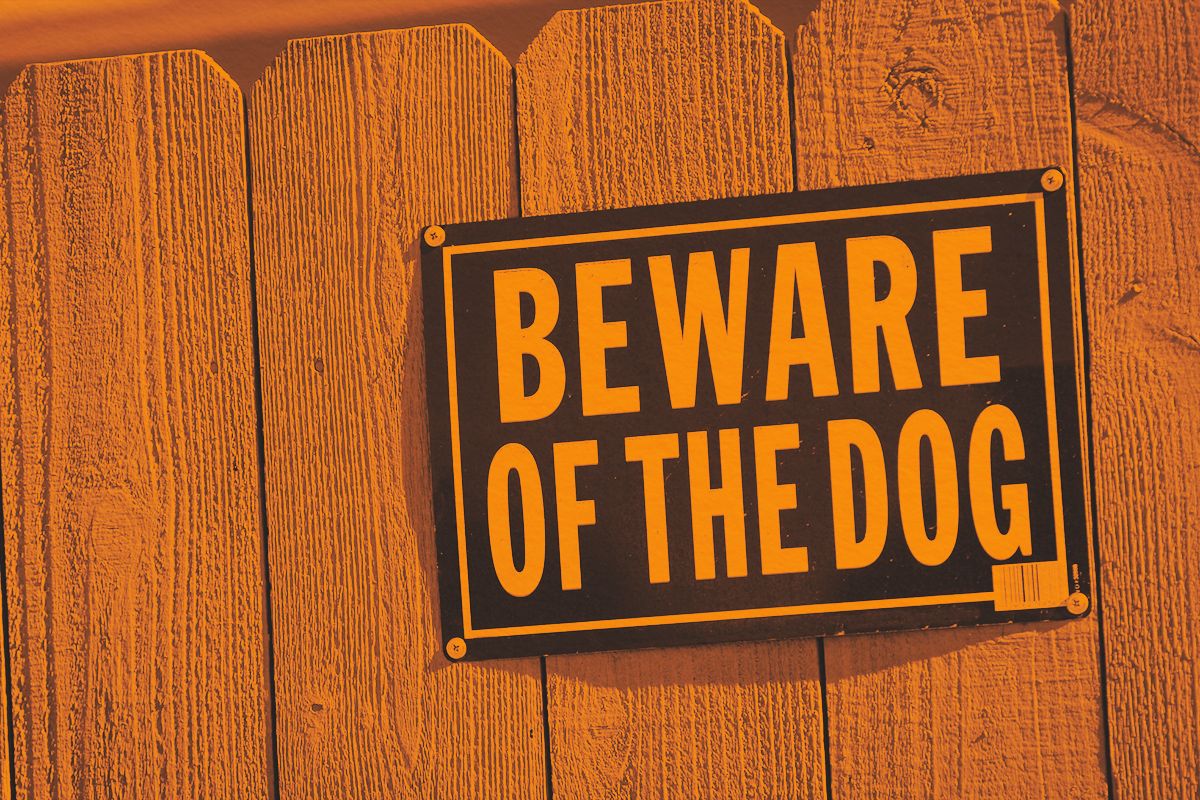
Missing: several conjugations. Suspect: the verb “beware.” Have you ever used the phrase “I bewared”? Probably not. That’s because “beware” belongs to a special category known as “defective verbs,” which lack several regular tenses and forms otherwise found in English verbs. Unlike most verbs, “beware” appears in only two forms: the imperative, as in “Beware of the dog,” and the infinitive, as in “You need to beware of online scams.” You wouldn’t say, “I am bewaring the dog,” or “I bewared the scam.” These aren’t real tenses — at least not anymore.
“Beware” is a rare case of a Modern English verb becoming defective through extinction. The present and past participle tenses “bewaring” and “bewared” were common in Middle English, but they fell out of use, leaving only the infinitive and imperative forms today. However, many other defective English verbs have always been limited in form.
Most verbs are grammatical chameleons, shifting into various tenses, moods, and conjugations to blend in with the intended context. For instance, the verb “walk” can be used in the infinitive (“to walk”), present (“walk”/”walks”), past (“walked”), present participle (“walking”), and past participle (“have/had walked”). Even irregular verbs such as “eat” (with the forms “eats,” “ate,” “eating,” and “eaten”) still follow the full range of conjugations.
Defective verbs, on the other hand, don’t have all those moving parts. They’re fully functional — they just don’t conjugate in all the typical ways. Most of them are also modal verbs, which means they express states and levels of necessity, possibility, permission, or ability. Consider the modal verb “must,” which exists only in the present. There is no infinitive (“to must”), past (“musted”), present participle (“musting”), or past participle (“have/had musted”). Similarly, “ought” doesn’t have a past or present participle (“oughted” or “oughting”). Other commonly used modal verbs deemed defective include “can,” “may,” “might,” “shall,” “should,” “will,” and “would.”
It’s worth noting that all modal verbs lack present and past participles and infinitive forms, so whether or not they are all labeled “defective” is a gray area. Some linguists argue that they aren’t defective per se because those omissions are built into the rules of modals themselves. In other words, they’re playing by their own grammar rules and are defective by design. But verbs like “beware,” which aren’t modal and have lost forms over time, add an extra layer of mystery to the evolution of language.
Featured image credit: smodj/ iStock
Advertisement
More from our network
Word Smarts is part of Inbox Studio, which publishes content that uplifts, informs, and inspires.
14 Slang Terms That Are Unique to American English
Some slang words and idioms are as American as apple pie. Here are 14 examples of the most America-centric terms and phrases on either side of the Mississippi.
The United States is home to many ideas and concepts that you’d be hard pressed to find in other countries. For instance, Americans largely rely on imperial measurements, have an unparalleled obsession with college sports, and love spray cheese that comes in a can. The version of English spoken in the United States stands out from the crowd as well. In every region of the country, there are slang terms and idioms that only Americans use — including some that are unique to that specific region. Here’s a look at a few uniquely American words and phrases.
Northeast
Jawn
Let’s begin in Pennsylvania with a catchall slang term you won’t hear anywhere else: “jawn.” It can be used in place of virtually any other noun. For instance, you could offer someone a cheesesteak by saying, “Take a bite of this jawn.” Or if you like someone’s new jacket, you might say, “That’s a great jawn.” “Jawn” originated in New York City African American communities around the 1970s as an evolution of the word “joint” (referring to a location), and it migrated to Philly, where it remains an indelible part of the collective lexicon.
Bodega
In New York City, the bodega is a cultural institution. The term “bodega” isn’t uniquely American — it was originally used by Spanish speakers to refer to a warehouse or storage area, often meant for wine. But the more modern slang usage is a New York invention. In the 1950s and ’60s, Puerto Rican communities in NYC started referring to neighborhood corner stores as bodegas. Today, bodegas are found in nearly every New York neighborhood. These stores, often open late into the night, sell food, toiletries, and other basic household goods.
Wicked
You can’t discuss Northeast slang without a Bostonian busting out the term “wicked.” This intensifier, which gained widespread popularity in the 1960s, essentially acts as a substitute for the word “very,” as in “Did you see the Red Sox game? It was wicked good!” New Englanders are also likely to say “bubbler” instead of “water fountain” and to refer to ice cream sprinkles as “jimmies.” If you hear any of these terms, you’ll know you’re talking to a New Englander.
Southeast
Cattywampus
The Southern American dialect features slang terms and idioms that are different from not just the rest of the world, but also the rest of the U.S. Look no further than the word “cattywampus,” a variant of the word “catawampus.” This 19th-century adjective is used to describe something that’s askew or awry. “Cattywampus” is still widely used among Southerners today.
Y’all
No trip to the American South is complete without hearing the word “y’all,” which you’d be hard-pressed to hear abroad. This unique pronoun refers to a group of two or more people; it’s a shortening of the phrase “you all,” and the specific spelling came about in the middle of the 19th century.
Kiss My Grits
Some Southerners may tell you to “kiss my grits” as a substitute for the more common “kiss my butt.” This cheeky little idiom originated on the sitcom Alice, which ran from 1976 to 1985. It was originally the catchphrase of Flo Castleberry, portrayed by native Alabaman Polly Holliday. Many of Holliday’s fellow Southerners were inspired by her character and follow in her linguistic footsteps today.
Midwest
Yooper
Have you ever heard someone described as a “yooper”? They’re almost certainly from Michigan’s Upper Peninsula. “Yooper” is a play on “U.P.,” an abbreviation for “Upper Peninsula.” Someone from the lower portion of Michigan, on the other hand, may be referred to as a “troll,” not as an insult, but as a reference to the fairy-tale bridge troll trope. People in lower Michigan live “under” the famous Mackinac Bridge that connects the state’s lower and upper parts.
Ope
One of the most popular colloquialisms to come out of the Midwest is the word “ope,” which Midwesterners rely on as another way to say “sorry.” One theory says the word may simply be a shorthand take on the word “oops,” but it’s hard to pinpoint the exact etymological origin.
Pop
Another dead giveaway that someone is from the Midwest is if they use the word “pop” when talking about a carbonated soft drink. In fact, each region tends to have a different word for this beverage. Northeasterners call it “soda,” some people in the South call all soft drinks “Coke,” and the Midwest uses “pop.”
West
Hella
As you head out West, you’ll hear Bay Area Californians use the word “hella” quite often. This intensifier is a substitute for “very,” much like how Bostonians use “wicked.” Geoff Nunberg, a linguist at UC Berkeley, believes the term came about in Black communities in Oakland in the late 1970s, and it was quickly adopted by various communities throughout Northern California, including surfers and skaters.
Shotgun
The slang term “shotgun” — to refer to the front passenger seat of a car — is an Americanism from the days of the Wild West. It dates to the 1850s, originally referring to the marksman who sat next to the stagecoach driver for protection. “Shotgun” gained its modern slang meaning in the 1950s, thanks to the many Western-themed films released around that time. While “shotgun” has since spread throughout the U.S., it’s a Western-origin slang term through and through.
Da kine
Now let’s go even further West to Hawaii. One of the Hawaiian islands’ most popular slang expressions is the Hawaiian pidgin phrase “da kine,” meaning “that kind.” This acts as a placeholder for pretty much any other thing, much like how people in Philly use “jawn.”
Shared Slang
Plead the Fifth
For all the regionalisms across America, some shared slang is understood in every corner of the country. The phrase “plead the Fifth” falls into this category, referring to the Fifth Amendment of the U.S. Constitution, which guarantees the right to stay silent and avoid self-incrimination. Many Americans use this phrase casually to avoid saying something embarrassing or to avoid answering awkward questions.
Sign Your John Hancock
“Signing your John Hancock” is another phrase used throughout the country. This idiom comes from the founding father who famously signed his name as big and legibly as possible on the Declaration of Independence. It took on its slang connotation in the 19th century, and now refers to signing one’s name in any capacity.
These are just a few examples of the many slang terms and idioms that Americans know and love. They may cause an English speaker in another part of the globe to scratch their head in confusion, but they’re an integral part of our collective American linguistic identity.
Featured image credit: Matijn Palings/ Unsplash
Advertisement
More from our network
Word Smarts is part of Inbox Studio, which publishes content that uplifts, informs, and inspires.
Why do we say “bigger fish to fry” instead of “larger fish to fry”? While “bigger” and “larger” may seem interchangeable, subtle differences determine how we use them. Let’s learn how you can confidently choose the correct one.
Consider this: You might call someone who reveals secrets a “big mouth,” but calling them a “large mouth” sounds fishy (unless you’re talking about a bass). Some phrases sound right to our ears because they’re a part of the everyday vernacular. That’s why we say “bigger and better,” not “larger and better,” and “larger than life,” not “bigger than life.” However, it’s not just about what sounds right. These common expressions reflect the rules behind when to use the comparative adjectives “bigger” and “larger.”
Let’s start with the basic usage of “big” and “large.” “Big” can refer to physical size, but it has a range of uses, including describing extent, intensity, importance, seriousness, popularity, or influence. “Large” is more formal and narrowly focused, referring exclusively to physical size, capacity, quantity, or scope. “Large” doesn’t have the same abstract uses that “big” does. These distinctions carry over to the comparative forms “bigger” and “larger.”
Imagine you’re exploring New York City. You could say, “Central Park is larger than Bryant Park,” or “Central Park is bigger than Bryant Park,” and either would be correct because both are comparing physical size, although “larger” applies to more formal contexts. However, when you’re not talking about size, choosing between these adjectives matters more.
Consider this example: “Times Square is a bigger tourist attraction than the High Line.” Here, “bigger” is correct because it refers to popularity and cultural significance, not physical size. On the flip side, if you’re talking about measurable quantities, “larger” should be your go-to word. For instance, you wouldn’t say, “They invested a bigger amount of money in public transportation this year,” but rather, “They invested a larger amount of money.” When discussing volume, quantifiable amounts, or data, “larger” is the better fit.
So, our final takeaway is this: Use “larger” for physical size, especially anything including dimensions and quantities, and in formal contexts. “Bigger” can still be used for casual references to size, but make sure to use it for comparisons of importance, reputation, influence, or anything abstract. Choosing the right word might seem insignificant, but it can make a bigger difference than you think.
Featured image credit: middelveld/ iStock
Advertisement
More from our network
Word Smarts is part of Inbox Studio, which publishes content that uplifts, informs, and inspires.
“While” and “although” might not be grammatical twins, but their resemblance is uncanny. More like close cousins, these conjunctions may be interchangeable under certain circumstances, but swapping them in the wrong situation can lead to major confusion.
American author and disability rights activist Helen Keller once wrote, “Although the world is full of suffering, it is full also of the overcoming of it.” Not only is this a powerful message of resilience, but it also demonstrates a valuable grammar lesson: “Although” and “while” are interchangeable in specific contexts.
In Keller’s quote, either of the conjunctions “although” or “while” could have been used because both words can express contrast or concession between two clauses. For instance, “While I agree with your opinion, I have a few questions” carries the same meaning as “Although I agree with your opinion, I have a few questions.” They are subordinating conjunctions because in both versions, the conjunction, when placed at the beginning of a sentence, introduces a subordinate clause that contrasts with the main clause. The choice, then, depends on tone: “While” often feels more conversational, whereas “although” tends to be more formal.
Now, shift the conjunctions from the beginning of the sentence to the middle: “I agree with your opinion, although I have a few questions” retains the same meaning, signaling contrast regardless of the position of “although” in the sentence. But replace “although” with “while,” and the sentence reads as a bit ambiguous: “I agree with your opinion, while I have a few questions.” “While” is a conjunctive adverb and can serve multiple uses. When “while” is placed between two clauses, it’s often interpreted as meaning “at the same time as,” as in, “I was waiting in the car while he picked up the food.” This time-related function of “while” is more dominant in English, so native speakers tend to interpret it this way instead of as a contrasting conjunction. In cases of mid-sentence ambiguity, it’s better to use “although.”
Enter your email to receive daily lessons that dive into what makes English so fascinating. Each email is packed with odd rules, etymologies, and the tools you need to be a better communicator.
Sorry, your email address is not valid. Please try again.
Sorry, your email address is not valid. Please try again.