
2 MIN READ

What’s the Difference Between an Analogy and a Simile?

Comparison is said to be the thief of joy, but it’s also one of the best tools in a writer’s arsenal. Deploying an analogy or setting up a simile is a great way to add flourish to your writing, but which is which?

by Julia Rittenberg
Close up of two separated puzzle pieces

In writing, comparison is a useful tool to provide background information or add detail to an explanation by giving your audience more context. Using an analogy or a simile is a way to creatively insert a comparison into a description, but these literary devices are often mixed up by novice writers. 

At a basic level, an analogy is a comparison, but the most common literary usage involves taking two different things and finding a quality they share in order to draw a comparison. For example, a writer might use the holidays over the course of a year as an analogy for the cycle of a person’s life, or someone giving a speech might use their dog’s sense of playfulness as an analogy for the importance of creativity and play in the workplace. Standardized tests in many United States schools use analogies for a familiar format: “Writer is to word as sculptor is to marble.” To correctly answer this question, the test taker would identify the comparison as being between the creator and the medium.

As a comparison tool, a simile is more specific in its format: Two seemingly unalike concepts are linked with the words “like” or “as.” The word “simile” comes from the Latin adjective similis, which means “similar in likeness.” In Harper Lee’s To Kill a Mockingbird, the narrator Scout uses a simile to introduce her teacher, Miss Caroline: “She looked and smelled like a peppermint drop.” This comparison gives us an immediate picture of a young woman dressed in red and white with a minty perfume, and also suggests that she’s young, fresh, and energetic. 

A metaphor is a very similar concept to a simile, but it relates two concepts directly, without the use of “like” or “as.” For example, in As You Like It, Shakespeare emphasizes the temporary nature of the world by calling it a stage play: “All the world’s a stage, and all the men and women merely players.”

Similes and metaphors are specific types of expression, while analogies encompass the whole concept of the comparison. The use of analogy is like the pollen in spring — all around us. And similes are to writing as dabbing is to painting — a specific technique, well deployed by the artist.

Featured image credit: DNY59/ iStock
2 MIN READ

What Does ‘Ante’ Mean in ‘Up the Ante’?

“Up the ante” will be familiar to poker players, but you bet we can tell you more about the phrase’s origins.

by Bennett Kleinman
card player gambling casino chips

In competitions, some people just want to win, while others seek to make things more interesting by raising the stakes. This may involve putting a cash prize or another item of great value on the line. The phrase “upping the ante” was coined to describe this practice in the game of poker, but it has evolved from the betting world to be used in other games of chance, and now it can apply to any high-stakes situation. 

The modern version of poker developed in the early 19th century. Under these game rules, the ante (from the Latin ante, meaning “before”) refers to an event before a hand is dealt. During the ante phase, participants wanting to play that hand contribute money to a collective pot, which is eventually awarded to the winner of the hand.

While antes are generally small, players developed a betting strategy of increasing the ante for bigger payouts. This strategy sweetens the prize and weeds out players with insufficient funds who may not be as serious about competing. According to the Oxford English Dictionary, the phrase “raising the ante” appeared in poker instructional manuals by the mid-1810s, indicating it was popular among gamblers, especially those with larger bankrolls.

The phrase quickly moved beyond poker tables, and by the late 19th century, it was adopted as American slang for a figurative description of an increase in an agreed-upon price. As an idiom, it might also be used in negotiations for an increase in the amount paid in advance (e.g., a down payment on a house). In time, bettors began to say “upping” as a colloquial alternative to “raising,” and the phrase “up the ante” entered the collective vernacular by the mid-1900s. Whether you’re at the poker table or the negotiating table, if someone says, “It’s time to raise [or up] the ante,” and you don’t have funds at the ready, it might be time to sit this one out.

Featured image credit: 18percentgrey/ iStock
2 MIN READ

Is It ‘Nerve-Racking’ or ‘Nerve-Wracking’?

The subtle differences between “nerve-racking” and “nerve-wracking” can leave even the most seasoned wordsmiths second-guessing. Let’s unravel the mystery behind these near-synonyms.

by Rachel Gresh
Upset woman working from home office

You know what can be nerve-racking for a writer? Making spelling errors. It would probably keep me up at night were it not for spell-check and autocorrect, wonderful by-product of the digital age. These features come to the rescue to mitigate anxiety-inducing mistakes (but they can also insert errors, especially into awkward text messages). However, some words slip through the cracks — one particular word pairing often missed by spell-checkers, editors, and the like is the perplexing choice between “nerve-racking” and “nerve-wracking.” While both forms are technically permissible, there are some caveats. 

Merriam-Webster defines “nerve-racking” as an adjective that describes something “marked by or causing agitation or uncomfortable feelings,” as in, “It was a nerve-racking exam” or “This is a nerve-racking game!” However, the term “nerve-wracking” is listed as a spelling variation. According to M-W, both versions are correct, but “nerve-racking” is preferred.  Conversely, the Oxford English Dictionary explains that “nerve-racking” predates “nerve-wracking,” but the latter is the more commonly used modern version. It seems even major dictionaries have differing opinions on these terms.

So, why are there two versions? Turning back the clock a thousand years reveals they developed not out of a spelling error, but from different Old English words, causing them to carry unique nuances. “Rack” comes from the Old English reccan, meaning “to stretch,” with the connotation of suffering or mental anguish (you might recognize “the rack” as a medieval torture device). Conversely, “wrack” stems from the Old English wracu and wræc, meaning “vengeance, persecution, or misery.” Because the words sound the same and have such similar meanings, “wrack” mistakenly replaced “rack” in “nerve-racking.”

Grammar purists may champion “nerve-racking” as the superior choice, citing its historical precedence, but either term is generally acceptable, and major dictionaries back that up. 

Featured image credit: F8/ Adobe Stock
2 MIN READ

Where Did ‘Sleep Tight, Don’t Let the Bedbugs Bite’ Come From?

Well wishes for a good night’s sleep are a common refrain, but one in particular involves a pest infestation. There’s nothing restful about bedbugs, so where did this rhyme come from?

by Julia Rittenberg
Woman sleeping in bed with a sleep mask on

It’s important for your health to sleep well and recharge, and  wishing someone a good night’s sleep is an act of common kindness. It’s such a natural habit that we’ve invented plenty of ways to send someone off to bed, including the standard “sleep well,” and the more playful “catch some Zs” and “hit the hay.”

My favorite way to tell someone good night is the classic rhyme from childhood: “Good night, sleep tight, don’t let the bed bugs bite.” I grew up hearing this phrase, but like any other nursery rhyme, it has an origin story. Interestingly, it seems the three parts of this good-night wish have separate roots. 

The Oxford English Dictionary traces the term “good night” to about 1275, around the beginning of recording the English language. That makes sense, as it’s the most common way to wish someone a decent night’s sleep. The “sleep tight” portion of the saying might have a literal origin. In the 16th century, bed frames used rope to suspend the mattress between the frame supports, and the ropes needed regular tightening. However, one  meaning of “tight” is “sound,” dating back to the early 17th century. The phrase “sleep tight” could come from the wish for someone to sleep soundly.

The rhyme ends with “don’t let the bed bugs bite.” An earlier version of this was “don’t let the buggers bite” in an 1881 book. “Don’t let nothing bite” was in an 1888 magazine, but the current version was seen the same year in a London newspaper. It’s also likely the 19th-century biting bug references were fleas, and not modern bedbug infestations. 

Whether we wish sweet dreams, some Zs, or a lack of pests, there’s a long history of people offering kindness in the form of a good night’s sleep.

Featured image credit: Unsplash+ via Getty Images
2 MIN READ

What Is a Mondegreen?

No, Elton John didn’t pen a hit song about Tony Danza, but thanks to a famous mondegreen, it sure seemed that way.

by Rachel Gresh
Close-up shot of sheet music

Every generation has a few great wordsmiths who leave an indelible mark on language — Tolstoy, Austen, Shakespeare, Dickinson, and Poe come to mind. While she may not traditionally be heralded as an accomplished writer, I look for inspiration from the fictional Friends character Phoebe Buffay, who, in my opinion, wrote one of the funniest lines of the late 20th century. 

Portrayed by Lisa Kudrow, Phoebe was known for her offbeat anecdotes and wonderfully absurd song lyrics that, now and then, included a ludicrous mondegreen. Phoebe’s season 3 rendition of Elton John’s “Tiny Dancer” became legendary when she mistakenly sang, “Hold me close, young Tony Danza,” instead of the original line, “Hold me closer, tiny dancer.” Tony Danza is a retired boxer and actor, but he wasn’t the muse for the song lyrics. The endearing misstep became one of Kudrow’s most remembered lines from the show. 

A mondegreen is a misinterpretation of a line that is spoken or sung, and this type of linguistic mix-up is pretty common. It’s why Queen’s lyric “Kicking your can all over the place” is misheard as “Kicking your cat all over the place,” and how ‘N Sync’s “It’s gonna be me” is playfully sung as “It’s gonna be May.” (The latter might be due in part to Justin Timberlake’s pronunciation, but we suspect there are people out there who hear it as a true mondegreen.)  

Any time we mishear something recited, be it song lyrics, movie lines, poetry, or the opening of a speech, it falls under the umbrella of a mondegreen. In fact, the term “mondegreen” itself is a mondegreen that originated in a 17th-century Scottish ballad called “The Bonny Earl o’ Moray.” “They have slain the Earl o’ Moray / And layd him on the green,” was often misheard as “Lady Mondegreen.” And thus, the term was born.

Today, mondegreens abound, providing a fascinating glimpse into how creative (or unintentionally funny) we can be when our brains and ears try to fill in the blanks.

Featured image credit: blackred/ iStock
2 MIN READ

Is It ‘Hear Hear’ or ‘Here Here’?

Say you want to quickly agree with someone when you’re in a group discussion or debate. Is the correct exclamation “hear, hear” or “here, here”?

by Julia Rittenberg

After a rousing toast, people may express their agreement through clapping, raising their glasses, or yelling “here, here” — or is it “hear, hear”? The phrase is widespread, but since it’s usually spoken, the spelling isn’t often questioned. But do you know which is the correct version? The verb “hear” and the adverb “here” are homophones, meaning they have the same pronunciation.

“Here” denotes place, so “here, here” could reasonably explain you’re in the same place as someone. However, when you want to agree with someone, “hear, hear” is correct. 

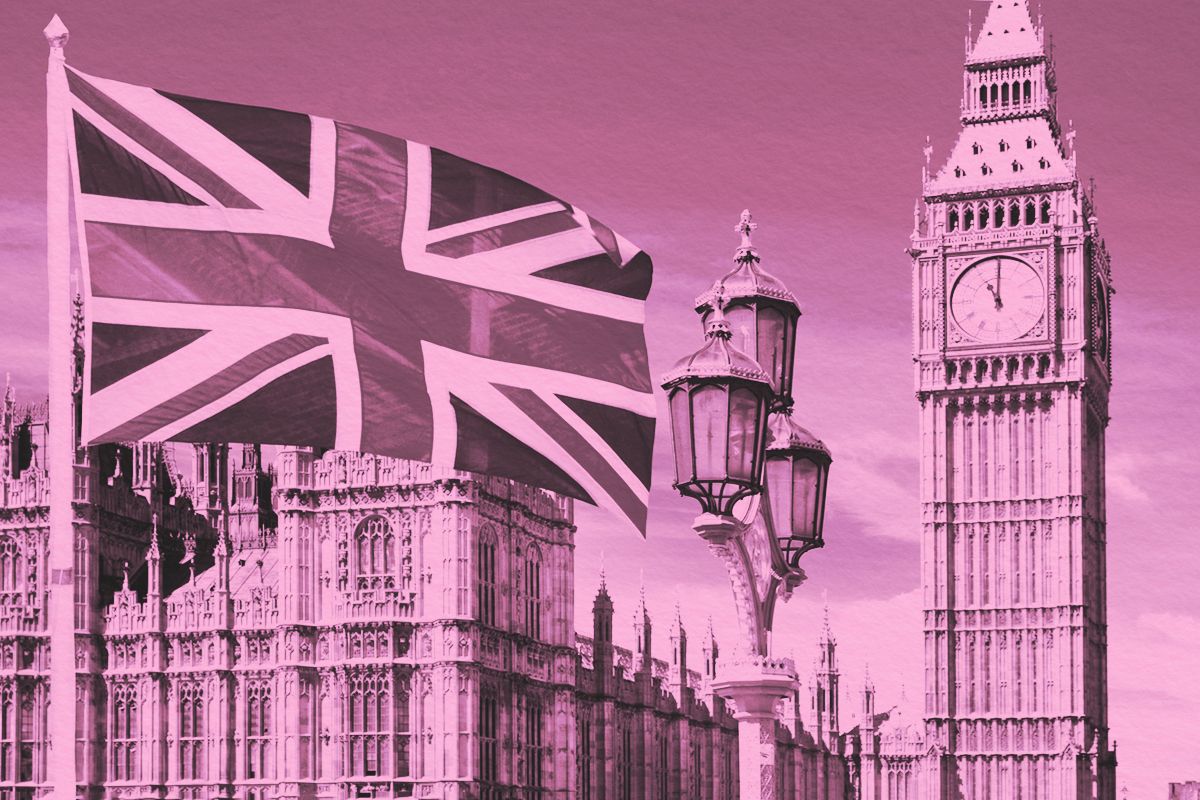
In the United Kingdom, members of Parliament are discouraged from applauding, but even hundreds of years ago, they wanted a way to show solidarity with a speaker. To confirm consensus, people in the House of Lords and House of Commons yelled “hear him, hear him” in the 17th century as a way to demand that everyone listen to the person making the point. The Oxford English Dictionary traces the written origin to 1689 in reference to agreeing with someone in the English Parliament. By 1868, the abbreviated cry of “hear, hear!” as a cheer or exclamation was widespread. It was a common enough exclamation to noun-ify it, and the British prime minister called those using the phrase the “hear-hearers.” 

If you’re not a member of Parliament bound by historical convention, you can still use “hear, hear” in regular conversation. Whatever you want to emphasize, yelling “hear, hear!” is the equivalent of “they’re right!” or in today’s parlance, a succinct “heard.”

Featured image credit: franckreporter/ iStock
2 MIN READ

Why Do We Say ‘Pull Out All the Stops’?

When we want to communicate that we’re giving something our all, we “pull out all the stops.” The phrase has a very specific origin in the operation of a musical instrument.

by Julia Rittenberg
concert hall with a beautiful facade of a large pipe organ

If you pledge to pull out all the stops during a soccer game, you aim to give the game 100% of your energy and attention. You want to run faster, kick harder, and come out with the win. “Pull out all the stops” is an idiom that means “to make a very great effort to achieve something.”

This figurative phrase has a literal origin that comes from the act of playing a musical instrument; the “stops” in the idiom refer to the stops of a pipe organ. The pipe organ dates back as far as the third century BCE, but the design that incorporated stops (rods that intersect with the pipes and are manipulated by knobs) dates to the 15th century, and the design has remained mostly the same since. 

Pipe organs are usually played by a single person in front of a keyboard (sometimes multiple), but they can be massive instruments, some with thousands of pipes. The music is produced by air being forced through the pipes, but each pipe can emit only one tone (for example, a C-pitch that sounds like a flute), so a multitude is needed to produce music. The stops are used to change which pipes are in use, and which tones are being played. When an organist literally pulls out all the stops, this means air blasts through every pipe and every tone plays from the organ at full volume. (We’re writers and editors, not musicians, so we apologize to any organists among our readers if our explanation is too simplistic.)

The jump from literal to figurative likely came in the 19th century, when English poet Matthew Arnold provided one of the first written examples of “pull out all the stops.” Since then, it’s been used regularly to indicate expending maximum effort. “Pull out all the stops” appears in articles across the internet recapping reality shows,  describing holiday event preparation, and extolling business advertising strategies. As a figure of speech, this one has avoided cliché status, and still “pulls out all the stops.”

Featured image credit: Epitavi/ iStock
2 MIN READ

Is It ‘Alright’ or ‘All Right’?

“All right” and “alright” are largely synonymous, though their usage is a source of debate. Here’s why using either term is “alright, alright, alright.”

by Rachel Gresh
Highlighted English word "all right", in dictionary

The first three words actor Matthew McConaughey  ever said on film were: “Alright, alright, alright.” The hallmark line from the film Dazed and Confused (1993) became a pop culture phenomenon, even though, as McConaughey writes in his book Greenlights, it was improvised. To the dismay of many English teachers, the casual, throwaway nature of the line helped popularize the spelling “alright” instead of the more formal “all right.” However, the single-word spelling — McConaughey’s version — is actually the original version and is permissible by modern standards, even if some grammarians still question its legitimacy.

Today, both terms are widely accepted in casual writing and are recognized by major dictionaries, but the question remains: What is the difference between them? The only notable difference we can find is their age. According to the Oxford English Dictionary, “alright” is the older term, first emerging over a millennium ago in Old English as ealrihte, meaning “exactly” or “just.” Its spelling fluctuated over the next few centuries, with variations including eallriht and alrightes. Around 1175, we see a two-word version, all rihht, indicating a long history of flip-flopping between one word and two.

In a nutshell, “all right” and “alright” are synonyms with many uses, and each is listed in the Merriam-Webster dictionary under the same entry. As adjectives, they can mean “satisfactory” (“Everything’s alright”), “safe” (“We’re going to be all right“), or “good” (“You’re alright with me”). When using either term as an adverb, it can indicate certainty (“He failed the exam all right”) or adequacy (“I did alright on the review”). Often used as interjections, “alright” and “all right” can also signal the start of a new thought or action, as in “Alright, let’s begin.” Remember, either term is an appropriate substitution in any of these examples.

The main issue of the debate lies in formality. Some argue “alright” is too informal or slangy due to its abbreviated form, while others assert there’s no meaningful distinction between the two. When in doubt, opt for the two-word version in very formal writing contexts. But if the extended cut doesn’t fit the tone, feel free to use the compact “alright,” knowing you haven’t broken any grammar laws.

Featured image credit: Lobro78/ iStock
3 MIN READ

What’s the Difference Between Gaelic and Irish?

Irish, still spoken today as a national language of Ireland, is an ancient dialect within the Gaelic language family.

by Rachel Gresh
Cliffs of Moher from overlook, in Ireland

Ireland’s awe-inspiring Cliffs of Moher attract more than a million visitors annually to their sweeping views of the Atlantic Ocean, but I also paid close attention to the road signs during my recent trip. The directional signs marking the landscape were written in two languages — English and a second language that was unfamiliar to me. I would later learn that it was Irish, with the Cliffs of Moher also bearing the name Aillte an Mhothair (meaning “cliffs of ruin,” referring to the relics of a nearby stone fort). As I ventured deeper into Ireland, I encountered more traces of this ancient language and its centuries-old connection to Gaelic.

To understand the bond between Gaelic and Irish, we must turn back the clock a few thousand years to the Celtic people of ancient Ireland. Celtic is a family of languages that flourished in the British Isles for 1,000 years, from around 500 BCE to 500 CE. The Celtic language family is divided into two branches: Britonic (Welsh, Cornish, and Breton) and Gaelic (Scottish Gaelic, Manx, and Irish). Irish, as a member of the Gaelic family, is sometimes called “Irish Gaelic” or just “Gaelic” in Ireland. This distinction can confuse non-native speakers and tourists, such as myself, but for clarity, we’ll call it “Irish.”

Two national languages coexist in Ireland: English and Irish. As one of the oldest written languages in the world, Irish became widespread across the island by the fifth century. Its influence spread further to Scotland and the Isle of Man with the rise of Christianity, which is why Scottish Gaelic and Manx share many linguistic features. The three Gaelic languages are almost identical when spoken.

Much like the English language’s evolution through Old, Middle, and Modern, Irish also underwent four defining stages: Ancient, Old, Middle, and Modern. However, by the 19th century, Modern Irish was on the brink of extinction due to political and social turmoil. It was saved by the founding of the Republic of Ireland in 1922, which sparked a national renaissance, leading to the celebration of Irish culture and the revitalization of the language.

Today, Irish is spoken by about 1.9 million people in three main dialects: Ulster (north), Connacht (west), and Munster (south). Many streets and signs across Ireland proudly display both English and Irish, a nod to the nation’s rich heritage. Beyond signage, plenty of Irish words have made their way into everyday English, including “smithereens,” “bard” (as in “poet”), “craggy,” “hubbub,” “banshee,” “divot,” “shamrock,” and — last but certainly not least — “whiskey.”  This ancient language has survived thousands of years of reinvention and made a lasting impact on the English language.

Featured image credit: KeithSzafranski/ iStock
3 MIN READ

Why Should You Know What “Craic” Means?

Discover why you should learn the Irish slang “craic” in time for St. Patrick’s Day — it’s bound to bring a whole lot of fun to your celebrations.

by Rachel Gresh
"What's the craic?" written with marker and four leaf clovers

The Irish language has given us an abundance of lively expressions, but during a recent visit to the Emerald Isle, I came across one word that we don’t often hear on this side of the Atlantic: “craic.” While enjoying a cherished Irish pastime — a pint at a pub among good company — my husband and I noticed several staff sporting T-shirts emblazoned with the phrase “Real Craic.” Curious, we asked our server about it, and with a smile, he explained, “It means you’re having a good time — a lot of fun!” If there’s one thing you can always count on in Éire (the Irish-language version of the country name), there’s always plenty of craic to be had.
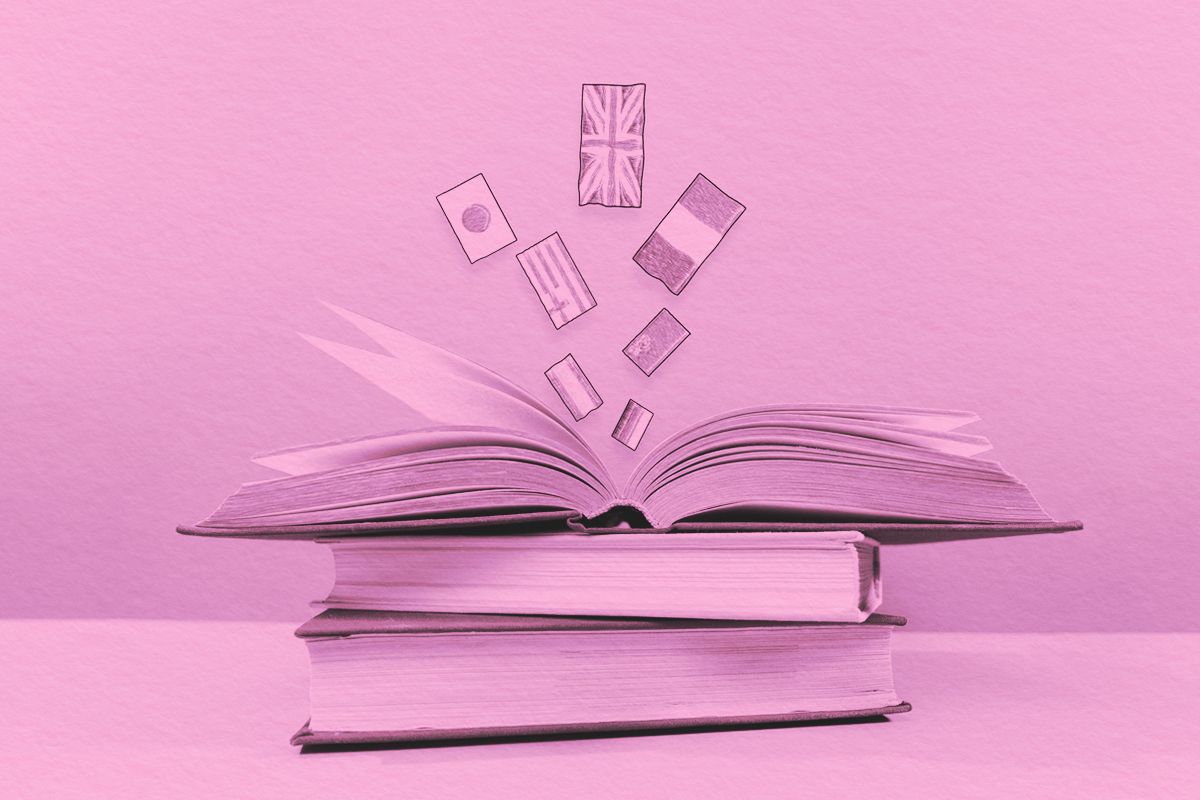
According to the Oxford English Dictionary, our server’s definition was spot-on. Pronounced just like the English word “crack,” craic refers to “fun, amusement; entertaining company or conversation.” This Irish term rose to popularity in the late 1970s as a catchphrase on the Irish-language TV variety program SBB ina Shuí, where it was used in the phrase, “beidh ceol, caint agus craic againn,” meaning “we will have music, talk, and fun.”

Because the Scottish Gaelic and Irish languages are so intertwined, craic crossed the Irish Sea to the United Kingdom, where I spotted it again later in my trip. The slang word seemed to be just as popular in Scotland, where I found it written on a keepsake mug, now one of my favorite souvenirs. 

Today, as Queen’s University Belfast notes, craic is widely used in casual conversation to describe anything that promises enjoyment. It’s often paired with complimentary adjectives such as “good,” “real,” or “great.” For example, the friend who always has a joke is “good craic,” and that long-anticipated summer concert? That’ll be “great craic.” Similarly, if you’re doing something “for the craic,” it’s simply “just for fun.” And try adopting the classic Irish greeting: “What’s the craic?” — a casual, friendly way of asking “What’s up?” or “How are you?”

As you gear up for some “real craic” on St. Patrick’s Day, don’t forget to embrace this quintessentially Irish term. It’s a perfect way to add a bit of authentic spirit from the Emerald Isle into your celebrations. Sláinte! (Health! Or Cheers!)

Featured image credit: Wavebreakmedia Ltd FUS1503Paddys/ Alamy Stock Photo