What’s the Difference Between ‘Hanged’ and ‘Hung’?
The picture was hung on the wall. The outlaw was hanged at dawn. When it comes to “hang” vs. “hung,” it’s easy to remember the difference once you know the explanation.
English is full of tricky choices: Is it “peak” or “peek”? (“Peek” is a quick look and “peak” is the top of a mountain.) Should you use “compliment” or “complement” when giving someone praise? (Compliment.) When it comes to “hanged” vs. “hung,” though, there’s only one very specific usage for the former. Both are acceptable past-tense versions of the verb “to hang,” but they are not interchangeable. The word “hanged” is grammatically correct in only one context: when referring to an execution by hanging. For example, “In the Old West, outlaws were hanged at high noon.”
In all other contexts, “hung” is the correct choice. Think of this line in the classic tale “The Night Before Christmas”: “The stockings were hung by the chimney with care.”
So, where did the difference in usage come from? The word “hang” comes from the Old English hangian, meaning “to be suspended,” but also the word hon, meaning “to suspend something.” One of those verbs was active (hon), while the other was passive (hangian). Today, both “hung” and “hanged” can function in the active and passive voice, but the two Old English root words led to “hang” developing two past participles: “hung” and “hanged.”
By the 16th century, “hanged” became the standard legal term for executions, giving it a singular function, while “hung” was used in all other contexts. Legal language is slow to change, so the word “hanged” endured to maintain clarity in judicial and historical writing.
Another thing to keep in mind is the phrase “hung up.” It evolved from the physical act of hanging an object — such as a coat or phone receiver — to gradually take on metaphorical meanings. Today, it can describe emotional fixation (“He’s still hung up on his ex”) or hesitation (“She got hung up on a tricky question”). But the phrase “hanged up” is never correct.
Featured image credit: SeizaVisuals/ iStock
Advertisement
More from our network
Word Smarts is part of Inbox Studio, which publishes content that uplifts, informs, and inspires.
Today, the dictionary can be updated with just a few keystrokes online, but even when it was a more arduous process to edit and publish new printed editions, the English language was in a constant state of flux. Many of the most commonly used words today carried entirely different meanings centuries ago. The technical term for this linguistic transformation is “semantic change.” In some cases, it has resulted in shifts so dramatic that the original meaning of a word is entirely different — and sometimes even the opposite — of its current usage. Here, we examine six words that used to mean something completely different, from gender-specific nouns to the changing meanings of “naughty” and “nice.”
Luxury
Many people today would like to live a life of luxury, but back in the 1300s, if you told someone you were seeking luxury, you might raise an eyebrow or two. Originally, the English word “luxury” meant “sexual intercourse,” and by the end of the century, “lasciviousness,” “debauchery,” and “lust.” This all came from the Latin luxuria, used to express ideas of desire, excess and deviation from a standard. Shakespeare used the word — in its lustful sense — in the 1600 play Much Ado About Nothing, when Claudio accuses Hero of being unchaste: “She knows the heat of a luxurious bed. / Her blush is guiltiness, not modesty.” At some point during the 17th century, the word began to lose its provocative connotation and took on its current usage, referring to great comfort, extravagant living, and the use of wealth for nonessential pleasures.
Girl
Originally, “girl” wasn’t gender-specific. In the 14th century, “girl” or “gyrle” referred to a child or young person, regardless of their gender. In Geoffrey Chaucer’s The Canterbury Tales (written in Middle English between 1387 and 1400), when the author refers to the “younge girles of the diocese” in the prologue, he is talking about children in general. “Girl” became specific to females sometime around the early 1500s, and referred to young women or female children by the 1650s.
Advertisement
Bully
If you’ve ever thought that “bully” was too soft a word for a playground or workplace oppressor, you might be on to something. The origins of “bully” are found in the 16th century, when it was a term of endearment similar to “sweetheart” or “darling” (possibly taken from the Dutch boel, meaning “lover”). Shakespeare was particularly fond of the word, using it as a term of affection in several of his plays, including Henry V (“I kiss his dirty shoe, and from heartstring I love the lovely bully”), A Midsummer Night’s Dream (“O, sweet bully Bottom!”), and The Merry Wives of Windsor (“God bless thee, bully doctor!”).
In the 17th century, “bully” evolved, with its meaning declining from “fine fellow” to “blusterer” and then to the entirely negative “harasser of the weak.” This latter meaning is the closest to our current usage of “bully” as someone who intimidates or harms others, especially those they perceive as vulnerable.
Clue
The word “clue” comes from Greek mythology. In the myth of Theseus and the Minotaur, Ariadne gives Theseus a ball of thread, known as a “clew,” so that he can use it to find his way out of her father’s labyrinth. The clew of Greek mythology then came to be used as a word for anything that guides or directs. The spelling “clue” emerged sometime in the mid-15th century, and held on to both of its meanings. In 1869, for example, Hugh Miller refers to “a small clue of yarn” in Scenes and Legends of the North of Scotland, while Charlotte Brontë, in the 1849 novel Shirley, uses the word in the sense familiar to us today: “You may just inform him that I have got a clue to the identity of one, at least, of the men who broke my frames.”
Advertisement
Naughty
“Naughty” derives from “naught,” meaning “nothing,” which leads us to its original usage. In the 14th century, a naughty person was someone who had nothing, being poor or needy. The meaning then evolved — unfortunately, due to its connection with the poor — into something more in line with “morally bad” or “wicked.” From the 1600s onward, the word began to settle into its current, less severe usage of “mischievous” or “badly behaved,” often in reference to children. In the mid-1800s, “naughty” developed a secondary meaning of “sexually promiscuous” — a meaning it still holds today, although it’s normally used in a toned-down, playful manner.
Today, “nice” is a perfectly amiable, if somewhat bland, way to state that something or someone is pleasant or agreeable. But the original meaning of the word is very different. It comes from the Latin word nescius, meaning “ignorant.” From there, “nice” went on an epic journey of linguistic evolution. It meant “foolish” or “simple” in the late 13th century, “dainty” or “delicate” around the 1400s, “precise” or “careful” in the 1500s, and then took on its more complimentary significance as “agreeable” or “delightful” in the mid-1700s, before it became “kind” or “thoughtful” by 1830. In another twist, Shakespeare used it to mean “wanton” or “lascivious,”— he refers to dissolute women as “nice wenches” in Love’s Labour’s Lost — although that usage didn’t become widespread. Today, “nice” is a standard, uncontroversial word, only ever frowned upon due to its overuse rather than its meaning.
Featured image credit: mzoroyan/ iStock
Advertisement
More from our network
Word Smarts is part of Inbox Studio, which publishes content that uplifts, informs, and inspires.
When you were young, you were likely taught about the importance of eating three square meals a day. But you probably never learned why it’s called a “square meal.” This phrase has little to do with the shape of the food or the platter on which it’s served; rather, it relates to the meaning of “square” when it’s an adjective, not a noun. It describes something as being “equal” or “balanced.”
First, we’d be remiss if we didn’t dispel a common myth. An oft-perpetuated theory is that “square meal” comes from the square wooden platters food was served on in the Royal Navy. But according to linguist Gary Martin, there’s no direct evidence to support this tenuous idea, and it’s likely just a folktale.
The concept of a “square meal” has to do with the word “square” itself, which can be defined as “fair or properly arranged.” This means that square meals are balanced to provide nourishing and adequate sustenance, rather than haphazardly thrown together (i.e., eating just a protein bar for lunch because you don’t have enough time). Think of a square meal as having protein, veggies, fruits, carbs, and other elements that make it evenly balanced in the eyes of any nutritionist.
However, what makes up a square meal today doesn’t match what it meant at the time of the phrase’s origination. The concept of a square meal dates to the early 19th century, and it was often used with regard to miners, troops, and mountaineers, who didn’t always have ready access to fresh foods or cooking equipment. An 1863 book about agriculture and mining in California defines a square meal as “a good meal at a table, as distinguished from such meals as men make when they are short of provisions, a condition not uncommon among men who make adventurous trips into the mountains.” Mountaineers often had to make do with what little they had on hand during their trek, so sitting down for a good square meal at an actual table was a treat.
All that is to say that enjoying a square meal or three each day should leave you feeling satisfied, especially compared to eating a less-balanced meal that leaves you feeling sluggish or still hungry.
Featured image credit: AscentXmedia/ iStock
Advertisement
More from our network
Word Smarts is part of Inbox Studio, which publishes content that uplifts, informs, and inspires.
The English saying is likely a nod to the ancient Celtic handfasting ceremony, but the symbolism of tying the knot is remarkably universal across cultures.
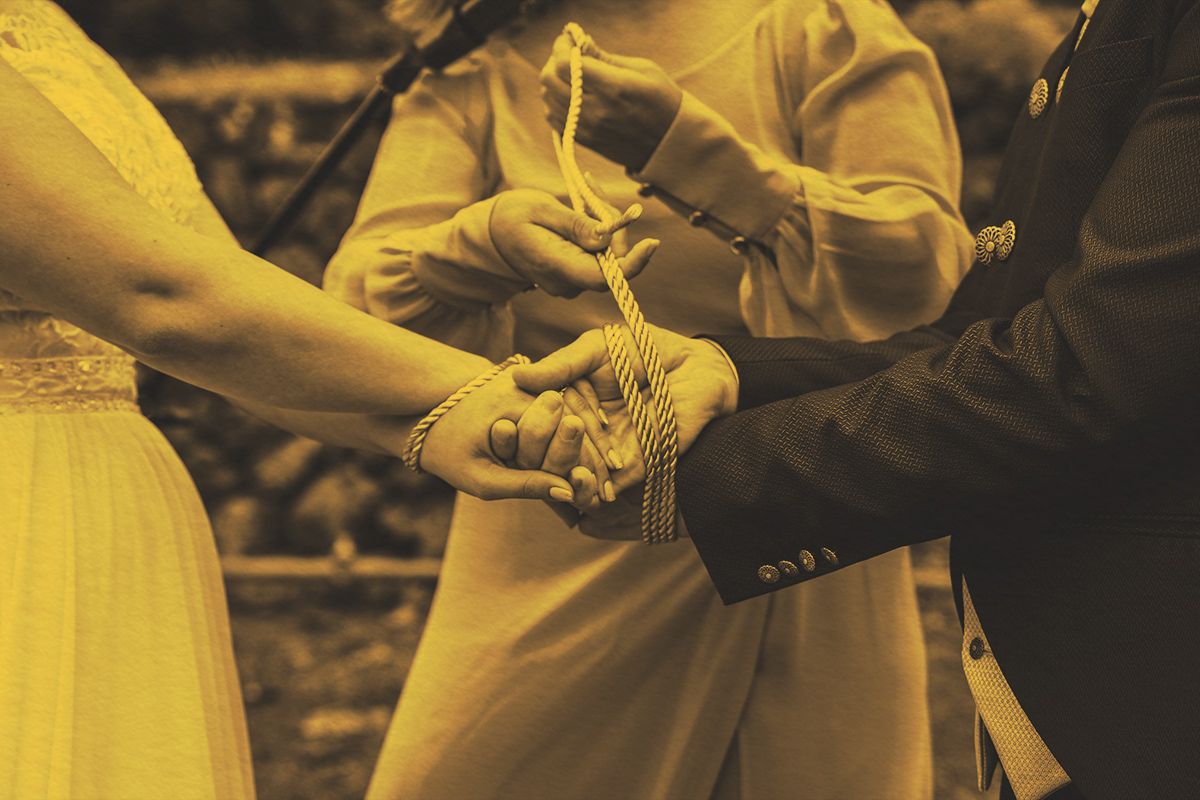
Every summer I spend at least a few weekends celebrating the marriages of close friends and family members. While my kids’ favorite part is always the cake cutting, I was struck by a wedding I went to last summer that included a ceremony of tying the bride’s and groom’s hands together with a cord. “Tying the knot” is a common metaphor for getting married, but the saying has very literal roots. The idea of tying a knot as a symbol of unity appears in traditions and languages all over the world, and it remains a popular element of modern marriage ceremonies.
One of the earliest appearances of the written phrase appears in a 13th-century Middle English poem: “Swa ye cnotte is icnut bituhhen unc tweienk,” roughly translated to, “As we are fastened and tied together, so the knot is knitted between us two.” But the concept of tying a knot as a symbol of unity is older — and more universal — than this phrasing.
The Celtic tradition of handfasting is a ceremony in which a couple’s hands are tied together with a cord or ribbon to symbolize the joining of two lives. The ritual is centuries old, perhaps dating as far back as 1200 BCE. While this connects to the modern English saying, the concept of “tying the knot” has been a significant part of weddings in many cultures and languages.
Around 1300 to 1500 CE, Aztec wedding ceremonies included binding together the clothing of the bride and groom. In ancient Rome, the “knot of Hercules” was tied to secure a bride’s wedding gown, and only the groom could break through it.
Modern Hindu weddings still include the centuries-old tradition of Granthi Bandhanam, Sanskrit for “tying of the sacred knot.” During the ritual, the bride’s and groom’s garments are tied together with three symbolic knots representing belief (manasa), speech (vaache), and action (karmena). And in the Greek Orthodox wedding tradition, the stefana— crowns connected by a ribbon — represent the unity of the couple’s minds.
In each of these cultures, marriage is interpreted as a binding force — both physical and spiritual — and the knots reflect that. Whether literal or figurative, “tying the knot” is a time-honored way of saying, “We’re in this together.”
Featured image credit: Wirestock/ iStock
Advertisement
More from our network
Word Smarts is part of Inbox Studio, which publishes content that uplifts, informs, and inspires.
Are we splitting the bill between us? Or among us? Choosing when to use “among” or “between” can be tricky, but there are a few simple rules to guide you.
Tom Petty sang, “You belong among the wildflowers,” not “You belong between the wildflowers.” And in addition to being poetry, these song lyrics illustrate an important grammatical distinction. “Between” and “among” have similar meanings, but the words are not interchangeable. The main difference is quantity. “Between” usually refers to two distinct items, while “among” is used with more than two items or an indefinite group. For example:
The shortest distance between two points is a straight line.
There is no honor among thieves.
In general, you should use “between” any time two people are involved, and when expressing a range of numbers (as in, “between 3,000 and 4,000”) or a physical space (such as “between a rock and a hard place”). But there’s always an exception to the rule: “Between” isn’t limited to just pairs. When the relationship is one-to-one — even in a group of many — “between” is still correct.
He’s choosing between apples, oranges, and bananas.
When the relationship is general or collective, go with “among.”
She found comfort among her friends. (Not one-on-one, but in the group as a whole.)
Think of it this way: “Between” draws lines to connect individual people and things. “Among” draws circles to gather people and things into groups.
But what about “amongst”? It has no distinct meaning — it’s just a fancier (and slightly older) version of “among.” Both are correct, but “among” is more common in modern usage, especially in American English. “Amongst” still pops up in song lyrics and literature, though, so it is best used when one is feeling poetic or a bit British.
Featured image credit: DNY59/ iStock
Advertisement
More from our network
Word Smarts is part of Inbox Studio, which publishes content that uplifts, informs, and inspires.
Contrary to what it sounds like, this phrase isn’t about finding answers in your chocolate mousse. The real story behind this age-old idiom is more savory than sweet.
The phrase “the proof is in the pudding” might conjure images of Sherlock Holmes or Hercule Poirot digging through their desserts in search of evidence. But like most idioms, this oddly appetizing expression doesn’t match up to the meaning of the individual words. In fact, it sounds absurd when taken at face value. Let’s grab a spoon and dig into this confusing yet enduring saying.
The idiom is used to suggest that the value or quality of something can be judged only by firsthand experience, not by guesses or theories. Someone might say, “This new mattress claims to be the best, but the proof is in the pudding — we’ll see if I actually sleep better.” They’re not talking about a bedtime snack; they’re talking about outcomes. The real test lies in personal experience — “the pudding.” But why pudding?
Advertisement
As is often the case with English idioms, the modern version is a shortened version of an older phrase: “The proof of the pudding is in the eating.” The Oxford English Dictionary’s earliest record of this expression comes from 1605. This version makes much more sense — you won’t know if pudding is any good until you try it.
The expression originated in the United Kingdom, where “pudding” can refer to savory, meat-based dishes. Traditional puddings are sausages made from meat, pork blood, fat, and cereal. The phrase “the proof of the pudding is in the eating” developed from the act of biting into a sausage to see if it was spoiled. Food safety in the 17th century wasn’t what it is today. Someone couldn’t tell by looking whether a sausage was safe, so the “proof,” or “test,” was in the eating.
Today, “proof” is used synonymously with “evidence” (rather than “test”) in this idiom. This change occurred around the time the phrase was shortened during the early 20th century. But perhaps the most surprising aspect of this idiom — at least, for American English speakers — is that it has nothing to do with a creamy dessert. And that, readers, is how the linguistic sausage is made.
Featured image credit: Garsya/ iStock
Advertisement
More from our network
Word Smarts is part of Inbox Studio, which publishes content that uplifts, informs, and inspires.
What’s in a name? This question was posed by Juliet in “Romeo and Juliet,”
but today we’re asking, “What’s in a namesake?” Let’s go back to the 17th century to find out.
The word “namesake” refers to any person or thing that was purposely given the same name as another. For example, a child named after a parent is considered a namesake, as is a company or city named after its founder. It also works in reverse, such as calling a parent named “John” the namesake of their child, John Jr. But why “namesake,” for Pete’s sake? Its origins can be traced back to the 17th-century Bible.
We find the term in Psalm 23:3 of the 1611 version of the King James Bible: “He restoreth my soule: he leadeth me in the pathes of righteousnes, for his names sake.” (The next verse is probably recognizable, even in unfamiliar spellings: “Yea though I walke through the valley of the shadowe of death, I will feare no euill: for thou art with me, thy rod and thy staffe, they comfort me.”) In this context, the use of “names sake” has less to do with literally carrying on the Lord’s name, and more to do with carrying oneself righteously in a way that honors God.
According to the Oxford English Dictionary, the word “namesake” took on its modern meaning — to be named after someone else — by the 1640s. The word breaks down as such: Namesakes are named for the sake of (meaning “for the purpose of”) another. So if a person is named after their father, for instance, they may be expected to live in a way that honors the reputation of their patriarchal ancestors.
In modern history, we can look to baseball superstar Ken Griffey Jr. as the namesake of his father, McDonald’s being named for its pair of founding brothers, or Washington, D.C., being named for the first U.S. president. In all of these cases, the namesakes pay homage to those who came before, and carry on their legacy.
Featured image credit: SolStock/ iStock
Advertisement
More from our network
Word Smarts is part of Inbox Studio, which publishes content that uplifts, informs, and inspires.
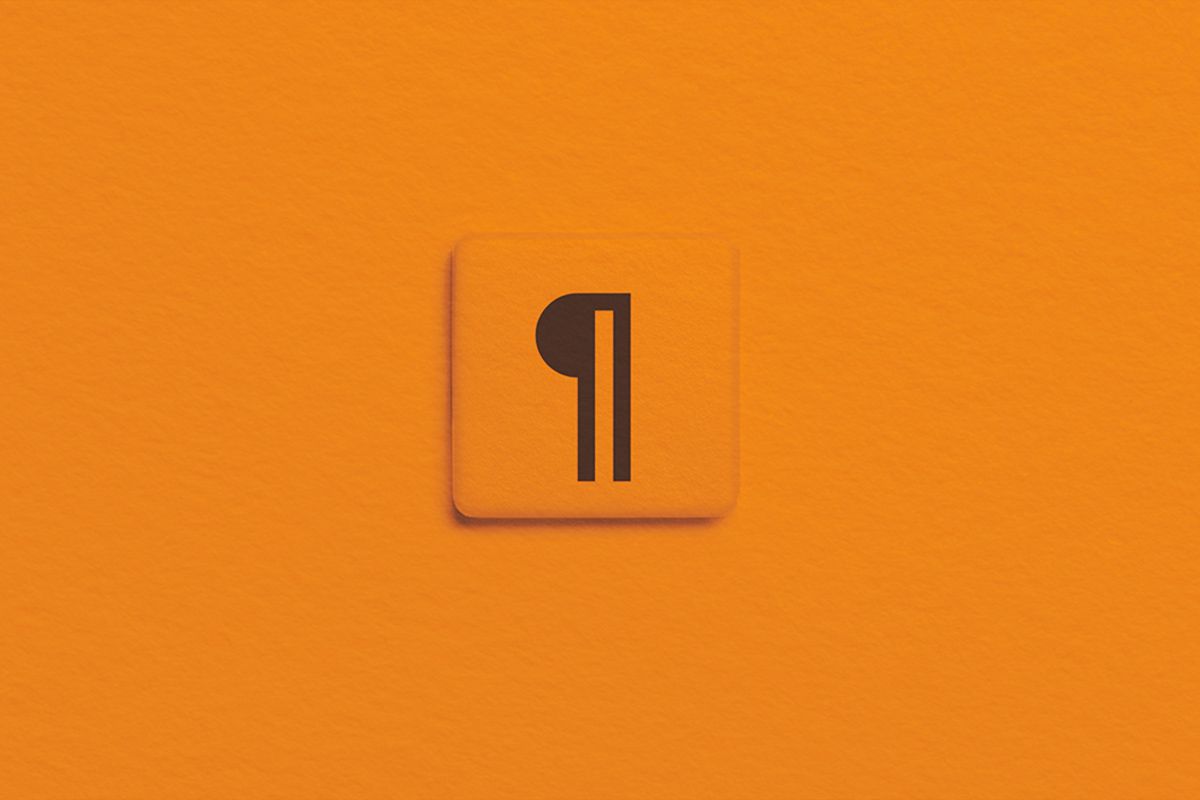
The pilcrow — a quirky backward “P” symbol — signals the start of a new thought. It once served a role in the margins of medieval manuscripts, but today it lives as an editorial mark in digital documents.
You might have noticed a curious backward “P” with an extra leg (¶) in certain editing tools or word processing systems. This strange little glyph is called a “pilcrow,” and its job is to mark the beginning of a paragraph. While it’s found today only in editing contexts, it had wider use in medieval manuscripts.
Pre-pilcrow reading was like a marathon for the brain: There were no breaks. By the Middle Ages, scribes began to use symbols to break up text, which made reading easier, but these symbols weren’t standardized. Different scribes used dashes, letters, and even personal symbols.
The first attempt at standardization came from the Latin word for “chapter,” capitulum (meaning “little head”). The modern pilcrow symbol evolved from there during the 12th century:The “C” that symbolized these breaks eventually turned into a backwards “P” with extended lines as scribes added ornate embellishments to manuscripts.
Advertisement
In the Middle Ages, the word “paragraph” could describe a distinct section of writing that was smaller than a capitulum (akin to how we use “paragraph” today), or denote the actual mark. It comes from the Greek paragraphein, meaning “write by the side.” “Paragraph” has had many variants over the centuries, including pelagraphe, pelagreffe, and pilcraft, the latter of which evolved into “pilcrow” by the 16th century.
By the late medieval period, the pilcrow symbol was a standard feature of manuscripts, used as a design element. Scribes favored drawing them in red ink, giving them visual prominence. But all good things must come to an end. Scribes often ran out of ink for such embellishments, leaving blank swaths on pages. The pilcrow’s demise was solidified with the advent of the printing press, as the hand-drawn mark slowed production. Soon, the pilcrow was abandoned, and a line break divided paragraphs instead.
Although the pilcrow largely disappeared from printed text, it never entirely vanished. It remains in editing marks in online word processors, or sometimes handwritten by editors to guide writers from one paragraph to the next. The pilcrow is a fun reminder that although many things change, some remain the same.
Featured image credit: photoopus/ Adobe Stock
Advertisement
More from our network
Word Smarts is part of Inbox Studio, which publishes content that uplifts, informs, and inspires.
Much like a fruity smoothie full of strawberries and bananas, certain words blend together quite nicely. They’re called “portmanteaus,” and you likely use some of them often.
The word “portmanteau” was created long ago for a large travel trunk capable of opening into two equal parts. It wasn’t until 1871 that the term was repurposed by Lewis Carroll, author of Alice’s Adventures in Wonderland. Carroll’s version of a portmanteau was “a word that blends together the sounds and meanings of two other words” — which is the primary usage today. If you’ve ever asked someone to brunch or checked into a motel, you’ve used one of these mashups. Here are a few of the most common portmanteaus that English speakers use regularly.
Brunch
This portmanteau combines the words “breakfast” and “lunch” in a delectable combination that denotes the meal that occurs in late morning or early afternoon — usually on weekends, sometimes including alcohol. Brunch menus tend to include both traditional breakfast and lunch fare, as the culinary lines are a bit more blurred than at other meals.
The earliest use of “brunch” dates to the late 19th century. An August 1, 1896, edition of the British magazine Punch mentions not only brunch, but also “blunch.” It reads, “The combination-meal, when nearer the usual breakfast hour, is ‘brunch,’ and, when nearer luncheon, is ‘blunch.’” Of course, the portmanteau “blunch” has faded into obscurity, whereas “brunch” has gained in popularity.
Chillax
The portmanteau “chillax” tells someone to tone it down. It blends together the words “chill” and “relax,” which are synonymous commands, and it became a popular slang alternative when it was coined sometime in the mid-1990s. Now that the ’90s are back in style, “chillax” can be revived for a quick way to warn someone to take it easy without coming across as too stern or formal.
Motel
“Motel” is a portmanteau with origins dating back to the 1920s, a time when personal motor vehicles were becoming more popular. It fuses the words “motorside” and “hotel” to refer to a type of lodging with a large parking lot, often built alongside major roadways. Nowadays, the word “motel” describes a style of hotel where each room is accessed directly from the parking lot, as opposed to through a communal lobby like in a more traditional hotel.
Biopic
Abraham Lincoln, Elizabeth II, and Mozart have all been the subject of cinematic biopics — a genre that combines “biographical” with “picture.” Biopics are movies that dramatize real events and tell the life stories of famous figures in an entertaining way. One of this portmanteau’s earliest uses came in a 1947 Variety article about Till the Clouds Roll By — a film about the life of composer Jerome Kern.
Smog
The term “smog” is believed to date to 1905, when it was used by scientist H. A. Des Voeux. He coined this term by blending the words “smoke” and “fog” to bring attention to the polluted, hazy skies throughout the British Isles. Today, there are widely considered to be two types of smog. The first is “sulfurous smog,” the type that used to plague London, which is caused by burning fossil fuels. The other type is “photochemical smog,” which is prevalent in areas such as Los Angeles, where there’s a high density of motor vehicle emissions.
Podcast
Everyone seems to have a podcast today, but we may not have had the word for these audio programs if not for Apple’s iPod, as the portmanteau combines “iPod” with “broadcast.” One of the earliest uses, if not the earliest, can be traced back to British author Ben Hammersley, who proposed the term “podcasting” in a 2004 Guardian article about the burgeoning entertainment medium. While iPods are no longer produced by Apple, this portmanteau continues to maintain its lasting appeal.
Spork
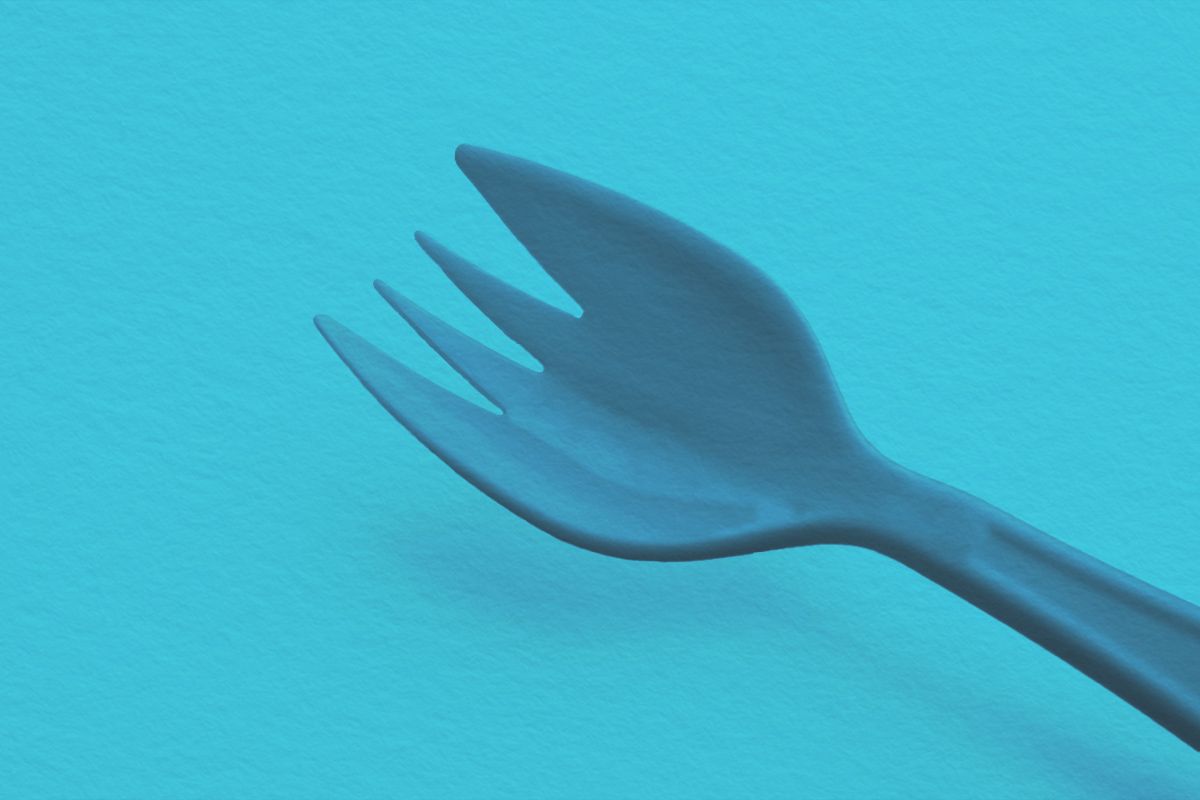
It’s a spoon … it’s a fork … no, it’s a spork! The history of this spoonlike fork dates back to before the portmanteau was coined. Dr. Samuel W. Francis filed a patent for a sporklike utensil in 1874, though it had the much more convoluted name of “Combined Knives, Forks and Spoons.” The word “spork” later appeared in a 1909 supplement to the Century Dictionary, suggesting it was coined in the intervening years. But it wasn’t until 1951 that the term was registered for a trademark, when inventor Hyde W. Ballard used “spork” to refer to a “combination spoon and fork made of stainless steel.”
Featured image credit: Pla2na/ iStock
Advertisement
More from our network
Word Smarts is part of Inbox Studio, which publishes content that uplifts, informs, and inspires.
How Do They Decide When To Add New Words to the Dictionary?
Just because a term exists doesn’t mean it’s automatically worthy of being added to the dictionary. Much like with award ceremonies, some words are inevitably snubbed while others achieve lexicographical immortality.
Dictionaries are living documents that are updated with new words each year. Recently, Merriam-Webster added more than 200 terms, from social media slang (“touch grass,” meaning “to participate in normal activities in the real world especially as opposed to online experiences and interactions”) to science jargon (“heat index,” which is “derived from a calculation using air temperature and relative humidity”). But much like how sports halls of fame induct only a select few players, dictionary editors and lexicographers don’t accept every word and slang term that comes across their desk. Their process takes into account several factors, such as the term’s longevity, popularity, and purpose. Here are some basics of how a new word makes it into the dictionary.
Merriam-Webster, one of the preeminent English language dictionaries, explains: “A word gets into a dictionary when it is used by many people who all agree that it means the same thing.” That is to say, your friend group might use a word in a certain way, but that doesn’t mean it should go straight into the dictionary. It takes time for words to spread across society, and they get added only after developing a widespread, collectively understood meaning.
Advertisement
An early step to potentially adding a new word is compiling trusted citations of it being used in articles, books, songs, and more. Researchers scour every available source, and the Oxford English Dictionary even uses crowdsourcing to bring new terms to their attention.
Beyond widespread usage, several additional criteria must be met in order for a term to be considered a worthy dictionary entry. A word should be widely understood across many regions, serve a linguistic purpose that enhances communication, and have been used for a sustained period of time. If the word meets all these criteria, it stands a better chance of making the dictionary corpus (the lexicographical term for the body of the reference book). But if a term is known to only a small group of people, or has been popular for just a few weeks, the odds of dictionary enshrinement are much less likely.
And even if a potential candidate meets all of the criteria, that doesn’t mean it’ll make the cut. It comes down to a final decision that’s made by an editor of a specific dictionary rather than some larger committee of dictionaries. Of course, some metrics are subjective, which is why some words appear in certain dictionaries and not others. However, if a word is approved, it will show up online, be published in future print editions, and is likely to trickle through to other dictionaries.
Featured image credit: Mixmike/ iStock
Advertisement
More from our network
Word Smarts is part of Inbox Studio, which publishes content that uplifts, informs, and inspires.
Enter your email to receive daily lessons that dive into what makes English so fascinating. Each email is packed with odd rules, etymologies, and the tools you need to be a better communicator.
Sorry, your email address is not valid. Please try again.
Sorry, your email address is not valid. Please try again.