The etymological roots of the term “cellphone” can be traced to the early 1970s — before cellphones even existed. However, the origin still relates to the world of communication.
Cellphones are a big part of modern society’s makeup, and it would be hard for many of us to imagine going through life without one. But the term “cellphone” has nothing to do with biology or the cells that comprise all living things. Instead, the roots of the term can be traced back to the advent of early cellular networks and how they functioned.
The word “cellular” has been associated with biology since the early 18th century, but in the 1970s it came to describe a burgeoning technology. That decade saw the launch of cellular networks — radiotelephone systems subdivided into small sections called cells. These cells were geographic regions serviced by a transmitter with limited range. They were called cells because if you looked at a map, each network cell resembled a biological cell under a microscope.
These cellular networks helped make the concept of mobile phone communication a real possibility. In fact, the first mobile phone call occurred in 1973. Ten years later, mobile phones were marketed to the public for the first time, and the devices were called “cellphones” because they relied on cellular networks in order to function.
While cellular networks have evolved over the last five decades, they’re still divided into these cell-shaped regions. Furthermore, mobile phones still require these networks to operate, so the term “cellphone” remains as true and relevant as ever.
Featured image credit: Arturo Añez/ Pexels
Advertisement
More from our network
Word Smarts is part of Inbox Studio, which publishes content that uplifts, informs, and inspires.
When you’re conversing across generations, it can feel like you’re speaking different languages. Brush up on the most-used Gen Z acronyms to bridge the gap.
In every generation, a new shared vernacular emerges. Especially in the teenage and young adult years, members of a generation develop and popularize a highly specific set of slang words that asserts their differences from previous generations, most notably their parents’. As baby boomers, Generation Xers, and millennials each reached their prime, there were massive language shifts. Now, we have Gen Z and Gen Alpha slang coming to the forefront.
People in Gen Z were born between 1997 and 2012, so the oldest are almost 30, while the youngest are just starting their high school years. Since many Gen Zers spent their youth communicating on the internet, using more acronyms became the norm. It’s also common to see the acronyms in lowercase, as capitalizing things adds keystrokes or taps. If you see a sentence written by someone 29 or younger, and you feel like you’re looking at the Enigma code, these abbreviations will help you start to decipher their shorthand.
OMW
Short for “on my way,” this is such a common phrase that Apple has integrated it into its autocorrect features. When you type the letters “omw” into an iPhone, it automatically updates to “On my way!”
NGL
“Not gonna lie” already has a shortened word in it (with “gonna” standing in for “going to”), but it’s made even shorter with this three-letter abbreviation. Either used to preface a sentence or tacked on to the end, “ngl” indicates that you know what you’re saying is a little strange or different from your conversation partner’s opinion — for example, “ngl, I don’t hate the word moist.”
HMU
When you’re requesting that someone get in contact with you at another time or send you information, you may tell them, “Hit me up.” If a Gen Zer sends you a quick “hmu” when discussing weekend plans, they probably mean they’ll try to be available, but to get in contact when you have firmer plans in place.
WYM
An acronym of an abbreviation, “wym” stands for “what you mean,” which is an ellison of “What do you mean?” With or without the question mark, it’s a quick way to ask someone to elaborate on what they’re telling you.
Advertisement
STG
Important for emphasis, “swear to God” denotes that you’re serious about a statement. If a Gen Zer texts, “i stg i would never,” they mean business. However, like many phrases that often denote seriousness, you can also use it in a winking way.
SMH
Exasperation is common in online conversations between friends venting to each other. This abbreviation for “shaking my head” communicates both irritation and resignation with the information. You can also use “smdh” for “shaking my damn head” to push it a little further.
Finally, when you want to shift topics, just tell someone to “never mind” with a short “nvm.” It’s a classic way to tell someone, “Let’s move on.” It’s not a conversation-ender, but a conversation-redirect.
Featured image credit: Oleksandr Hruts/ iStock
Advertisement
More from our network
Word Smarts is part of Inbox Studio, which publishes content that uplifts, informs, and inspires.
Why Are ‘Tough,’ ‘Though,’ and ‘Through’ Pronounced Differently?
The words “tough,” “though,” and “through” may look alike, but their pronunciations are far from the same. Their differences trace back to “ough” and its Middle English sound.
At first glance, “tough,” “though,” and “through” seem like they should rhyme with their matching endings. But say them out loud, and you’ll have three different vowel sounds. The reason for the pronunciation mismatch turns out to be an evolution of “ough” that dates to the Middle Ages.
“Ough” in Middle English included a sound that is nearly extinct in modern English: a guttural consonant pronounced in the back of the throat, similar to the “ch” in the Scottish “loch.” This raspy sound is a fricative. Words with “ough” were pronounced with a vowel sound followed by the raspy consonant.
But not all “ough” words shared exactly the same vowel sound. Spellings and pronunciations varied by dialect. “Through,” for instance, boasted more than 500 different spellings between Middle English, Early Modern English, and Old Scots. . The modern pronunciation, /θru/ (using International Phonetic Alphabet symbols) or “throo,” resulted from stressing and lengthening one Middle English pronunciation. Similarly, “though” and “tough” had various Middle English forms (though not as many as “through”), resulting in a range of vowel sounds. However, “though” landed on the long “oh” (/ðoʊ/) and “tough” on the short, lower “uh”(/tʌf/).
Many of these changes took place during and after the Great Vowel Shift (15th to 18th centuries), a period when English vowel sounds changed as speakers shifted the position of their tongues during vowel articulation. Linguists debate the exact cause, but some cite cultural shifts and geographical migration. At the same time, the fricative (guttural noise) became less common, particularly in southern England, where aristocratic speech patterns were gaining ground.
The printing press aided the process of standardizing English spelling in the late 15th century, but pronunciation was still changing. This left “ough” with the varied vowel pronunciations we know today: “uff” (tough), “oh” (though), “oo” (through), “off” (cough), “aw” (brought), and “ow” (bough). So, while the pronunciation of “ough” may seem random, it tells a story of the evolution of English.
Featured image credit: Tempura/ iStock
Advertisement
More from our network
Word Smarts is part of Inbox Studio, which publishes content that uplifts, informs, and inspires.
From cash cows to proud peacocks, the English language can feel like a figurative zoo. Let’s look at the meanings and origins behind some popular animal idioms.
When speaking idiomatically, it’s important to use terminology that others can relate to.
Many species of animals are instantly recognizable, which is why there are so many animal-themed idioms in the English language. Whether they’re pets or wild animals, these creatures tend to have traits and behaviors that we learn about from a young age, making their respective idioms easily understandable. For instance, elephants epitomize immensity, ducks represent vulnerability, and peacocks exemplify vanity. Here are eight common animal-themed idioms and the linguistic history behind them.
Eager Beaver
An eager beaver is a person who’s overly zealous and keen to do whatever is necessary, such as volunteering to tackle any pressing duties. The reason beavers were selected for this idiom is partly because of the near-rhyme, and because they’re typically considered to be industrious critters, evidenced by the fact that they’ll stop at nothing to build their dams. According to Merriam-Webster, this idiom was first coined in 1942, and it was originally used in a military context. An early source cited by the blog Word Histories shows the idiom referred to cadets who went above and beyond to please their superior officers.
Sitting Duck
To be a sitting duck means to be left in a vulnerable or defenseless position, much like how ducks resting on a pond are easy targets for hunters. The earliest known use of the idiom dates to 1942, per Merriam-Webster. The Oxford English Dictionary cites a 1942 example in which the saying was used to describe enemy tanks being left in a vulnerable position exposed to sharpshooters.
Cash Cow
To farmers, cows are a consistent and reliable source of milk, making them a highly profitable commodity. This reputation helped inspire the idiom “cash cow,” which is often used to describe a steady source of revenue for any business. Merriam-Webster puts the earliest known use of this phrase around 1972, and it remains a popular term in modern parlance.
Fly on the Wall
To be a fly on the wall means to secretly listen in or watch people without them being aware of your presence. It’s based on the idea that flies are so small, you wouldn’t know if one were in the room with you until it started buzzing around. The blog Phrase Finder points to an early example of this phrase in a 1921 edition of the Oakland Tribune: “I’d just love to be a fly on the wall when the Right Man comes along.”
Advertisement
Dark Horse
When betting on ponies, gamblers are always looking to put their money on a dark horse — a little-known contender that ends up performing well. This phrase dates as far back as 1821, though it was popularized in 1831 by Benjamin Disraeli in The Young Duke. The sporting idiom was soon adopted into the world of politics, referring to formerly obscure candidates who end up winning an election — such as James K. Polk in 1844.
Elephant in the Room
The elephant in the room is an obvious problem that you may choose to ignore, even though it’s staring you right in the face. It’s based on the idea that it would be impossible to ignore an immense elephant if it were standing feet away. Merriam-Webster puts the origins of the phrase at around 1985, but an earlier usage, referring to something incongruous, dates to the 1930s.
Lion’s Share
According to Merriam-Webster, the phrase “lion’s share” entered English in 1742 and is defined as “the largest portion of something.” The origin is much older, as the title for one of the ancient Greek stories in Aesop’s Fables. In that story, a lion, fox, jackal, and wolf go hunting together. Upon killing a stag, the lion takes charge and divides the prey into four equal parts. But rather than sharing equally, he claims three-fourths based on the fact that he considers himself king of the animals, as well as the strongest and bravest of the bunch.
With a propensity to display their bright, gaudy feathers, peacocks have a reputation as some of the vainest creatures in the animal kingdom. The phrase “proud as a peacock” was made famous by Geoffrey Chaucer in a 14th-century story titled “The Reeve’s Tale,” from The Canterbury Tales. In it, Chaucer wrote, “As any pecok he was proud and gay.” This idiom has come to describe anyone who has a high opinion of themself.
Featured image credit: KathrynWillmott/ iStock
Advertisement
More from our network
Word Smarts is part of Inbox Studio, which publishes content that uplifts, informs, and inspires.
The meaning of this idiom depends on whether you’re referring to the origin story coming from Benjamin Franklin or Charles Miner, and the spelling of the implement involved depends on whether you are speaking American English (“ax”) or British English (“axe”).
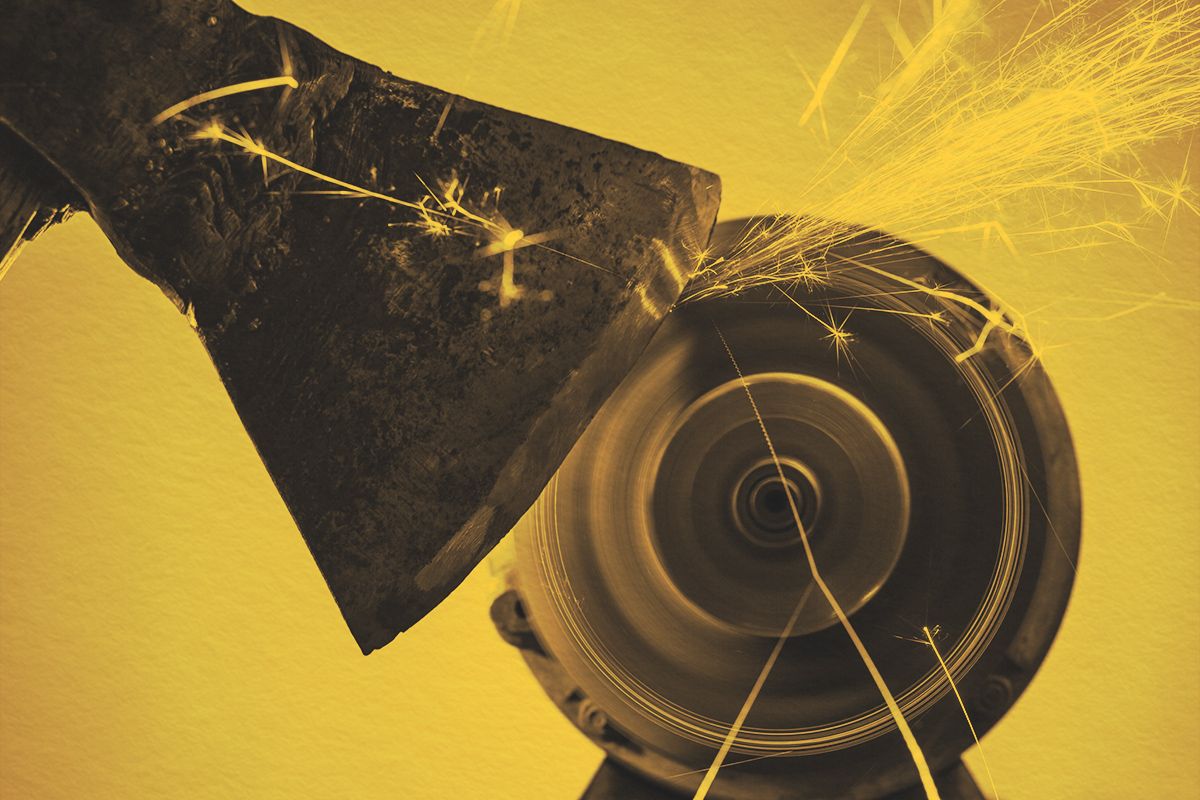
In Benjamin Franklin’s 1791 autobiography, he tells the story of a man who takes a dull, speckled (rusted) ax to a blacksmith to make it perfectly shiny and sharp. The blacksmith agrees, but only if the man turns the grindstone, which is arduous work. As the man keeps turning the grindstone, the blacksmith demands that he work even harder, because the ax is still speckled. The man finally quits, having concluded that a speckled ax is best.
Franklin’s message in the parable was that achieving moral perfection is impossible. Accepting one’s flaws is preferable to striving for the unattainable moral life, which can only lead to frustration. However, this isn’t the context for the modern usage of “an ax to grind.”
The first recorded reference to the specific phrasing “have an ax to grind” was in an 1810 article written by Charles Miner, titled “Who’ll Turn the Grindstone?” Miner was an 18th-century politician known for his anti-slavery views (not to be confused with Idris Elba’s character on The Office, also named Charles Miner).
In that article, Miner described his childhood experience of being approached by a stranger asking if his father had a grindstone with which to sharpen an ax. Using flattery, the stranger inveigled Miner to sharpen the ax for him. After he accomplished that task, the stranger turned on Miner, who had worked so long and hard, and chastised him for being late for school.
Miner reflected on that memorable day: “[O]ften have I thought of it since. When I see a Merchant, over polite to his customers, begging them to taste a little brandy, and throwing half his goods on the counter — thinks I, that man has an ax to grind.” In Miner’s take, both the stranger and the merchant used insincere flattery to accomplish their goals.
Miner then applied the same concept more broadly: “When I see a man flattering the people, making great professions of attachment to liberty, who is in private life a tyrant, Methinks, look out good people, that fellow would set you to turning grindstone.”
Today, the phrase “ax to grind” has evolved to mean “an ulterior and often selfish underlying purpose,” not necessarily always rooted in flattery. Whether the true origin and meaning lies in Franklin or Miner, it’s good to avoid anyone with an ax to grind.
Featured image credit: Misha Kaminsky/ iStock
Advertisement
More from our network
Word Smarts is part of Inbox Studio, which publishes content that uplifts, informs, and inspires.
While dishes similar to French toast are popular in French cuisine, they’re known to the French by a completely different name. The same holds true in French Canada and other locations around the world.
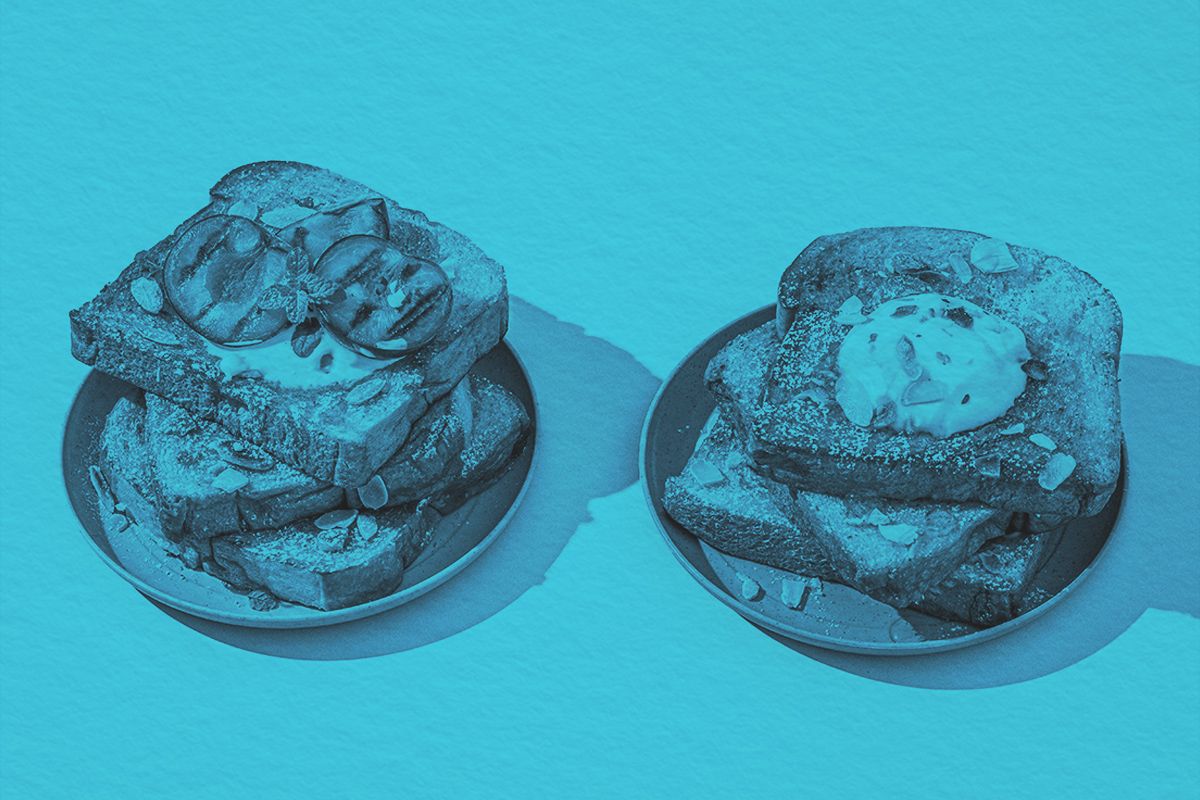
To Americans, French toast is a buttery, golden-brown stack of custardy bread, often smothered in syrup and served up for breakfast at diners across the country. But to the French, this foodstuff is known by an entirely different moniker. What Americans call “French toast,” the French call pain perdu — a name that translates to “lost bread.”
The origins of the dish can be traced to the ancient Romans, who had a recipe for aliter dulcia (roughly translated as “another sweet dish”). It involved taking bits of crusty or stale bread, soaking them in milk, frying them in olive oil, and then covering them with honey. This culinary technique was passed down throughout centuries, leading to the creation of pain perdu in France around the 15th century. The dish was a way for the French to revive stale (“lost”) bread instead of throwing it out, as the moisture from the milk, oil, and honey gave it new life.
In 1660, English chef Robert May — who studied in France — adapted this recipe for his cookbook The Accomplisht Cook, calling it “French Toasts.” The recipe came to America sometime during the next two centuries, though exactly when is unclear. According to The Dictionary of American Food and Drink (1983), the earliest recipe to include eggs — as is traditional today — wasn’t printed until 1870.
But “French toast” and pain perdu aren’t the only names for this dish. It’s called pain doré (“golden bread”)in French parts of Canada, and in Spain, it’s known as torriga, which comes from the verb torrar, meaning “to toast.” Sometimes the English also call the dish “poor knights of Windsor” — a colloquialism that refers to a 14th-century order of knights who were purportedly so poor, they could only afford to eat fried bread.
Featured image credit: Monika Borys/ Unsplash
Advertisement
More from our network
Word Smarts is part of Inbox Studio, which publishes content that uplifts, informs, and inspires.
Etymologist William Safire once claimed, “The whole nine yards is one of the great etymological mysteries of our time.” Indeed, the phrase “the whole nine yards” has different meanings depending on who you ask. To film buffs, it’s a 2000 movie starring Bruce Willis and Matthew Perry. To NFL refs, it’s one yard short of a first down. But to most people, it’s a colloquialism indicating an all-out effort. However, this idiom’s etymological origins aren’t certain.
According to the OED, one of the earliest printed uses of the phrase can be traced to an 1855 short story in the New Albany Daily Ledger titled “The Judge’s Big Shirt.” The phrase has a more literal, albeit lighthearted, usage in that context, as the plot describes using nine yards of fabric to craft a comically oversized shirt. By 1907, the phrase took on a more figurative meaning in printed periodicals, and while that offers us a timeline, linguists still debate its etymological origins.
In a 1982 article, Safire offered several possibilities that he struggled to both debunk and confirm. One theory relates to cement mixers; typical mixers could hold 9 cubic yards of cement, so the idiom may be derived from the concept of using an entire tank’s worth of cement for construction projects. Safire also cited anecdotes from the world of fashion and sailing, though he stopped short of denying or confirming any.
Linguist Geoff Nunberg also struggled to provide a definite source in a 2013 NPR piece. He mentioned potential ties to bridal trains, World War II ammunition belts, and even jokes about well-endowed Scotsmen. Nunberg also noted the idiom “whole six yards” — a similar phrase used in the South as early as 1912. This led Nunberg to theorize that as long as you start the idiom with “whole,” the words that come next (e.g., nine yards, enchilada, shebang, etc.) don’t matter, as they all achieve the same effect.
Featured image credit: Roberto Sorin/ Adobe Stock
Advertisement
More from our network
Word Smarts is part of Inbox Studio, which publishes content that uplifts, informs, and inspires.
Some objects bear names so blatantly obvious that there is no room for confusion — think of pancakes, hairbrushes, and fireplaces. But other names aren’t as precise. In grammar, when something has an incorrect or inappropriate name, that name is a misnomer. The word “misnomer” itself is very literal — it comes from the Old French mesnomer, with mes meaning “wrongly” and nomer meaning “to name.”
Misnomers arise for many reasons. Some might reflect outdated practices, such as tinfoil, which was initially made of tin but is now aluminum. Others arise from superficial features, as in the case of a koala bear, an animal that looks and acts like a bear but is actually a marsupial. Misnomers are all around us, found in everyday objects, food, animals, places, and more.
Jellyfish
Despite their name, jellyfish aren’t fish. They belong to the phylumCnidaria, along with sea anemones and corals. “Jellyfish” dates to the early 19th century, when “fish” was used broadly to refer to any type of sea creature. This vague use of “fish” is still widely used today, as seen in another misnomer with a similar origin: “starfish.” Starfish are echinoderms, not fish. True fish have backbones, gills, and fins — all absent in both starfish and jellyfish. The “jelly” part of the latter is accurate, though, tracing back to a 14th-century English word for gelatinous foods. Today, marine educators often prefer the term “sea jelly” for accuracy.
Peanut
Peanuts are legumes in the pea family, Fabaceae, and they are grown for their edible seeds. While this connection drives the beginning of the name, the back half is deceiving. Botanically, peanuts are not nuts at all, though the name comes from their similarities to true nuts such as chestnuts and hazelnuts — specifically, their hard outer shells and crunchy, nutlike texture and taste.
“Peanut” originated in the early 19th century, around the time that the plant’s cultivation became common in the United States. Before becoming popular in the U.S., peanuts were called “ground nuts” (another misnomer) in England. In the southern U.S., “goober,” the dialectical term for peanuts, comes from the Kimbundu word for the plant, “ŋguba.” The name was introduced by enslaved people in the South.
Arabic Numeral
An Arabic numeral is any of the number symbols 0 through 9. Despite being labeled “Arabic,” the numerals originated in India during the sixth or seventh century. Later, during the 12th century, they were introduced to Europe through the writings of Middle Eastern mathematicians, from whom they took their name. By the mid-18th century, the name “Arabic numeral” was firmly established in English.
Because of this mix-up, a more precise name, “Hindu-Arabic numerals,” is preferred by some. It acknowledges the work of Indian scholars without diminishing the efforts of Middle Eastern mathematicians who popularized the numbers.
Advertisement
Dry Cleaning
Contrary to its name, dry cleaning isn’t dry. Consider its definition: “the cleansing of fabrics with substantially nonaqueous organic solvents.” While “nonaqueous” means “without water,” other liquids are used during the process. The textiles are cleaned with chemical solvents, allowing for stain removal without water damage. The term “dry cleaning” emerged during the mid-19th century (when the process was invented) as a way to differentiate it from traditional water-based cleaning.
Greenland
Greenland may just have the most misleading geographical name in the world. More than 80% of the North Atlantic island country is covered in ice — hardly a verdant landscape. But during the summer of 982 CE, when Viking Erik the Red first landed on the isle, it was greener than it is today, according to fossil records. Therefore, in keeping with the Viking tradition of naming a place after how they perceived it, he called it “Greenland.” By the 14th century, however, temperatures on the island cooled, and the landscape became much snowier and was surrounded by sea ice, making its name a misnomer.
It’s a common misconception that the country names for Greenland and Iceland were switched to confuse settlers. In reality, settlers named Iceland for its many glaciers and cold winters. In fact, 11% of the country is still covered with a permanent ice cap. So, while Iceland isn’t much of a misnomer, Greenland certainly is.
Funny Bone
It’s no laughing matter to hit that spot on the back of the elbow that sends a jolt of pain up the arm. We know that spot as the funny bone, but the pain is caused by hitting a nerve, not a bone. The ulnar nerve runs down the back of the arm, and at the elbow joint, it rests near the humerus. When it’s bumped, it gets compressed, sending a tingling sensation down the arm.
The term first emerged in English during the early 19th century. According to the Oxford English Dictionary, its early usage might also be a pun on the name of the upper arm bone, humerus, and the word “humorous.”
No, we aren’t writing with sticks of toxic lead. This misnomer is one of the most enduring, stemming from a 16th-century misunderstanding in England, where graphite was discovered. The discovery predated modern methods for determining chemical composition, so it wasn’t yet named “graphite.”
Sheep farmers began marking their herds with it, deciding it was an excellent writing tool. Its deep color looked a lot like lead, so some called it “plumbago” (the Latin for “lead” is plumbus), while others called it “black lead.” The latter stuck. The sticks were wrapped in string or sheepskin to facilitate writing, and by the late 18th century, the name “graphite” (from the Greek graphein, meaning “to write”) was introduced to distinguish it from real lead. Today, modern pencils are made with a mix of graphite and clay.
Featured image credit: pepifoto/ iStock
Advertisement
More from our network
Word Smarts is part of Inbox Studio, which publishes content that uplifts, informs, and inspires.
“Arguments” and “fights” often travel in the same circles, but they’re not always the same thing. While an argument certainly can be a fight, the formal definition is more reasoned.
“Argument” and “fight” can be treated as synonyms, but each word carries distinct tones. In Ian McEwan’s World War II novel,Atonement, for instance, “argument” appears in moments of urgency without implying hostility: “They were right in its path and there was no time for argument.” By contrast, McEwan uses “fight” signals aggression or conflict, as in, “No will to fight for their own country.” Throughout the novel, “argument” conveys disagreement in pursuit of a solution, while “fight” suggests hostility, sometimes with physical implications. This distinction mirrors how the words are used in everyday speech.
An argument is a reasoned case open to discussion. Merriam-Webster defines it as “a set of reasons, statements, or facts offered in support of a position, common in academic, legal, and formal settings,” or “a reason given for or against a matter under discussion.” In these contexts, an argument is not a fight. Consider a commonplace example: “The committee presented a strong argument for increasing HOA fees.” Here, the word suggests a structured case; it doesn’t imply that the committee is fighting with anyone.
But in casual usage, “argument” has taken on a secondary meaning: “an angry quarrel or disagreement.” Consider: “She was in an argument with the HOA about the increased fees.” The tone of “argument” changes from a cooperative discussion to an emotional situation. In this sense, “argument” is closer to “fight.”
Even so, the two are not identical. A fight implies anger and confrontation, as its dictionary definition notes: “to contend in battle or physical combat.” Whether physical or verbal, a fight carries a heavier weight, while an argument remains potentially cooperative. Saying, “We had a fight after dinner,” sounds far more severe than saying, “We had an argument after dinner.”
In English, words can carry multiple meanings, and context determines which applies. In formal settings, “argument” refers to reasoning; however, emotional arguments may resemble fights. The distinction depends on the circumstances.
Featured image credit: Andrey Zhuravlev/ iStock
Advertisement
More from our network
Word Smarts is part of Inbox Studio, which publishes content that uplifts, informs, and inspires.
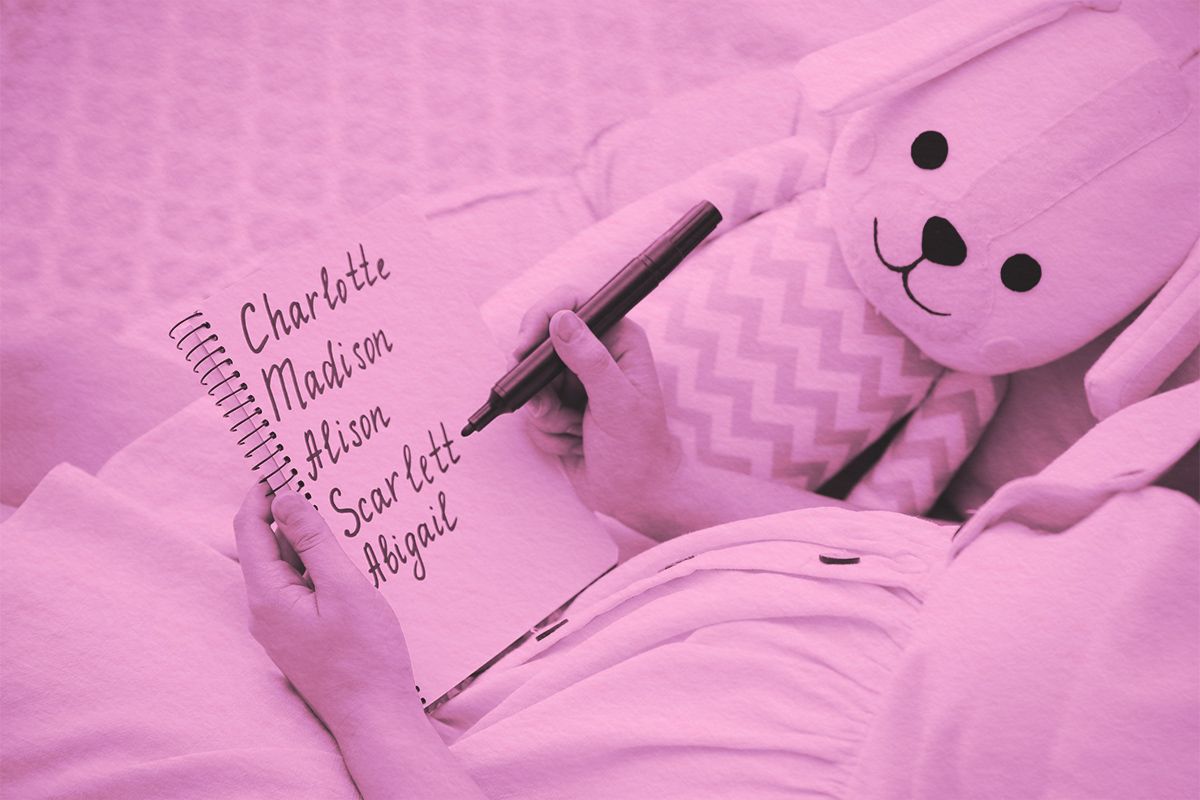
Depending on where you live, there may be restrictions on what types of baby names are permitted. Let’s examine some of these rules and the reasons for them.
Some parents name their newborns after family members, for TV characters, or based on how pleasant the moniker sounds. But there are rare occasions when a name is frowned upon, and some countries have gone so far as to ban certain names.
Frequently, name bans are instituted to protect the child from being called something offensive or embarrassing. Some places also ban symbols and characters, as they’re unpronounceable and make it difficult to fill out government forms.
In the United States, rules vary state to state. For example, in New York, a judge can deny a name change request if the name is offensive, misleading (such as Officer or Doctor), the name of a famous person (Chance the Rapper), or the name of a company (such as Google). Some states have character limits for practical purposes, as names that are too long cause issues with official recordkeeping. Other states, including California and New Jersey, are among those that ban any obscene monikers (e.g., curses, sexual content, etc.). While obscenity is relative, this ban exists, in part, to protect children from enduring ridicule down the line.
Elsewhere around the world, Australia bans names such as Admiral, Bishop, President, and Dame to avoid confusion with formal titles. Portugal maintains a list of government-approved names that adhere to Portuguese language traditions and abide by local customs. In 2025, Japan unveiled new restrictions to discourage creativity in the naming process, claiming that less traditional names were causing confusion in places such as hospitals or schools. In Germany, surnames are banned as first names, so you won’t find a “Schmidt” or “Merkel” as a first name.
Featured image credit: ruizluquepaz/ iStock
Advertisement
More from our network
Word Smarts is part of Inbox Studio, which publishes content that uplifts, informs, and inspires.
Enter your email to receive daily lessons that dive into what makes English so fascinating. Each email is packed with odd rules, etymologies, and the tools you need to be a better communicator.
Sorry, your email address is not valid. Please try again.
Sorry, your email address is not valid. Please try again.