Whether you’re indicating that something is boring or need a phrase that acts as a fill-in-the-blank, “blah” repeated three times gets the job done. But how did this filler word become an accepted phrase on its own?
We’ve all been guilty of excessive talking at some point. If you’re telling a long-winded story or giving confusing directions, the dreaded response from someone is “blah blah blah.” “Blah” functions as a nothing word, a fill-in to a sentence, but repeating it three times can leave an impact. This rejoinder boils down to “you’re talking too much” or “this is not interesting.”
“Blah” as a noun is defined as “silly or pretentious nonsense.” As an adjective, it means “dull and unattractive.” It’s a 20th-century word; one of the earliest written accounts in the Oxford English Dictionary is in a 1918 diary. Though the origin is a little fuzzy, it could have come from the French word blasé, which has been carried over into English, meaning “apathetic to pleasure or life especially as a result of excessive indulgence or enjoyment.” If you’re feeling blah or blasé about something in your life, it may be because it’s boring or repetitive. Also a noun, “the blahs” is a colloquial phrase for mild depression — as in, “He fights off the blahs every winter when it’s cold and dreary.”
Then we arrive at “blah blah blah.” The more boring or tedious you find something, the more “blahs” must be added. Punk rock icon Iggy Pop released an album called “Blah-Blah-Blah” in 1986, and it was certified gold in 1987. He wrote the majority of the songs with David Bowie, and despite the title, the album tapped into Iggy Pop’s rageful voice, especially through Bowie’s intense lyrics. The title track “Blah-Blah-Blah” spoke to disaffection with the world. The album’s popularity could have led to a wider adoption of repeating “blah” three times to indicate alienation with something.
Whether you’re bored during a long lecture, or a punk rocker angry about posers, calling out the “blah blah blah” unites us all.
Featured image credit: Andrii/ Adobe Stock
Advertisement
More from our network
Word Smarts is part of Inbox Studio, which publishes content that uplifts, informs, and inspires.
Let’s unravel the truth behind “off of,” a common phrase with a bad rap, and explore why everyone — dictionaries and singers alike — can’t help but use it.
The double prepositional phrase “off of” might receive a red pen strikeout from an editor, but this common quirk has cemented itself in American English. Just think of Frankie Valli belting out “You’re just too good to be true / Can’t take my eyes off of you.” If a careful editor critiqued the lyrics of this 1960s ballad, they might consider trimming “of,” labeling it redundant. But let’s consider its charm.
Merriam-Webster recognizes “off of” as a valid idiom, noting its relevancy in speech where it typically functions like “off,” as in, “I’d like to get off of the bus.” This usage dates to the mid-16th century. Before then, in Old English, “off” was established as a stronger version of the adverb “of.” Their pairing, with “of” as a helper or intensifier for “off,” is used out of habit or to create rhythm.
Since the 1990s, there has been an increase in this usage in the U.S., likely reflecting its relevance in digital writing. In an additional function, “off of” operates much like “from.” Consider “I got the quote off of Facebook” as a casual version of “I got the quote from Facebook.”
“Off of” is also used as an informal replacement for “on” in “based on.” Seton Hill University English professor Dr. Jerz wrote in a blog post that he wouldn’t correct students for saying “based off of” in class, but he does flag it in written work. He recognizes it as a natural evolution of language: “I suspect in another generation only the most linguistically conservative will bother to notice, much less correct, this usage.”
So, while “off of” is grammatically redundant and can almost always be shortened, it is not incorrect. If you’re a meticulous writer, feel free to omit the superfluous “of,” just as the editors at the MLA Style Center recommend. However, keep in mind that this might sound unnatural in informal contexts, as it undermines a staple of colloquial American English.
Featured image credit: SolStock/ iStock
Advertisement
More from our network
Word Smarts is part of Inbox Studio, which publishes content that uplifts, informs, and inspires.
What’s a five-letter word for “appearing frequently”? There are several answers to this question, though for cruciverbalists (crossword players), some of those words are more common than others.
Crossword puzzles are a part of many people’s daily routines — mine included. What began as a casual hobby has grown into a years-long obsession, as evidenced by a 1,700-day streak (and counting). In my crossword experience, I’ve come to notice some words appear more often than others, and I’m not the only one who’s observed this.
In 2013, former New York Times product engineer Michael Donohoe published data regarding the most common words in the NYT crossword from 1996 to 2012. In turn, visual data analyst Noah Veltman created a list of the most common answers, plus a separate category of words he felt demonstrated a special level of “crosswordiness” (his word). While this data is over a decade old at this point, the NYT crossword hasn’t changed in format, and I expect the data to have remained relatively consistent since 2013. In addition to being a word nerd, I can be a data nerd, too. Let’s dig into some of the most interesting findings.
Most Common Words
The most common crossword answers tend to be short, vowel-packed words. At the top of the list is “ERA,” appearing in 323 NYT puzzles during the aforementioned time span, which amounts to roughly 5% of the total puzzles. Rounding out the top five answers are “AREA, “ERE,” “ONE,” and “ELI.”
The reason those compact, vowel-heavy words are so common is that they provide a useful service to the crossword writers and editors. The people putting those puzzles together need a way to connect the longer, more distinctive words, and the most efficient way to do that is by implementing these briefer, more malleable pieces.
In other words, the shorter a word is, the likelier it is to fit into those parts of the puzzle where there’s limited space. Also, the more vowels, the better, given how common those letters are in the English language. A word such as “ERE” is perfect because it can easily connect two longer words, so long as each of them contain an “E” — the most common letter in the English language.
In 2018, engineer Jonathan Tan provided an update to support Donohoe and Veltman’s original findings, expanding the data to include 1994 through 2017. The results showed the same five words listed above still topped the list. That said, Tan’s findings showed each of those words has declined slightly in its frequency since 1994, though “ERA” continues to appear in more than 20 NYT crossword puzzles each year.
“Crosswordiest” Words
What exactly does “crosswordiness” mean? Veltman coined this term to describe a certain type of crossword answer that appears particularly often, and he even devised a scientific formula to back it up.
The easiest way to define the term comes from Veltman himself, who says, “Crossword puzzlers know that certain words that never show up in real life pop up in crosswords all the time.” In other words, words that exude “crosswordiness” are far more useful as puzzle answers than they are in any practical quotidian (a crosswordy word meaning “daily”) scenarios.
The data shows “ASEA” — meaning “on the ocean” or “in the direction of the sea” — exudes the most “crosswordiness.” This is followed by “SMEE” — the name of a pirate character in Peter Pan. In third place is “URSA,” a constellation-related answer that’s often paired with the clue “___ Major” or “___ Minor.” Personally, I always found the words “EWER” and “EPEE” (“a large jug with a wide mouth” and “a sharp-pointed dueling sword, respectively)” to fit this category, though according to Veltman’s formula, they don’t rank as highly as I would’ve guessed.
Tips for Crossword Solving
Looking to improve your crossword skills but don’t know where to begin? Familiarizing yourself with the most common words is a good first step, but that’ll only get you so far.
To take your crossword skills to the next level, you’ll need a greater understanding of how the clues are written. Some clues contain built-in hints meant to guide you, so here are a few tips:
If the clue is plural, so is the answer.
If the clue contains a list connected by the word “and,” the answer is also plural. If the list is connected by “or,” the answer is singular.
If the clue is in a foreign language, the answer will be in the same language (minus any accent marks or other diacritics).
If the clue mentions a city or country (e.g., “Money, in Mexico”) the answer will likely be in the predominant language spoken there (“DINERO”).
If the clue is in italics, it relates to the puzzle’s overall theme. These answers may be a bit cryptic on their own, but they will coalesce into a theme once taken all together.
If a clue ends in a question mark, the answer likely has an unexpected meaning that incorporates some sort of wordplay (e.g., a double entendre or pun).
Follow these tips, brush up on some common crossword answers, and you’ll be well on your way to becoming a skilled cruciverbalist in no time.
Featured image credit: Garrett Aitken/ iStock
Advertisement
More from our network
Word Smarts is part of Inbox Studio, which publishes content that uplifts, informs, and inspires.

One of the simplest ways to instantly level up your communication is to diversify your vocabulary choices. By swapping in more sophisticated words, you can sharpen your arguments and impress your audience.
Adverbs provide a versatile avenue to sprinkle in new words, as they modify verbs, adjectives, and other adverbs. However, the most commonly used adverbs are “very” and “really,” which is a shame because they don’t add much to the conversation. Another overused adverb is the topic of much debate among word nerds — is it OK to use “literally” in a figurative sense? Many respected dictionaries say yes, but we encourage you to keep it to casual usage, especially if you’re trying to increase the intellectual impact of your speech. Well-deployed adverbs typically answer the key questions of the sentence — how, when, or where. This list of “smart” adverbs can help elevate your tone as you answer those details.
The beauty of these “smart” words lies not in their syllable count but in their precision. They don’t just make you sound smart — they help you express yourself more clearly and elegantly. Songwriter Tom Waits once said, “I like to think that my main instrument is vocabulary.” So whether you’re trying to impress at a dinner party or seeking the best way to convey your message in writing, these words will serve you well.
Advertisement
Ergo: For that reason; therefore.
“I forgot my umbrella, ergo I was soaked.”
Hence: Because of a preceding fact or premise.
“Traffic was terrible, hence the delay.”
Rather: In some degree; often used as a mild intensive.
“It was rather cold yesterday, despite the sunshine.”
Indubitably: Unquestionably.
“That was indubitably the best coffee I’ve ever had.”
Vicariously: Through the experience of another.
“I live vicariously through her Instagram posts.”
Advertisement
Ostensibly: To all outward appearances; in an ostensible manner (meaning, being plausible rather than demonstrably true or real).
“The meeting was ostensibly about budget cuts, but really about office politics.”
Tacitly: Without being stated; implicitly.
“We tacitly agreed that no one would mention the incident.”
Seldom: In few instances.
“I seldom use words I do not understand.”
Presumptively: With reasonable assumption.
“He won presumptively, pending the recount.”
Diametrically: In direct opposition.
“Our opinions on pineapple pizza are diametrically opposed.”
Willfully: Deliberately; intentionally.
“He willfully ignored my advice about wearing sunscreen and now resembles a lobster.”
When pedestrians are flouting the rules of the road, they’re called “jaywalkers.” What does this moniker have to do with crossing streets, and where did it come from?
We’ve all seen them — pedestrians creeping out into the intersection against the light, ready to dash across the street, or folks running across the roadway in the middle of a block. It’s a risky (even illegal in many places) practice, but it has a cutesy nickname. This thrill-seeking pedestrian practice is known as “jaywalking.”
“Jaywalker” is the noun version of the intransitive verb “jaywalk,” which means “to cross a street carelessly or at an unusual or inappropriate place or in a dangerous or illegal direction so as to be endangered by the traffic.” Some cities have bigger jaywalker populations than others, especially those with major city centers such as New York, San Francisco, Chicago, Mumbai, and Seoul.
The “jay” in the first half of the word is a type of bird, but when the term was coined, “jay” also meant “a person lacking experience (as in city ways) or polish;an unsophisticated, countrified, or gullible person.” It’s old-fashioned slang now, but in the early 20th century, a jay in a new city didn’t understand the rules and might have embarrassed themself.
Before we had jaywalkers, though, jay-drivers were the scourge of the road — these were horse-carriage drivers who drove on the wrong side of the road. Then cars started infiltrating American cities and the term “jaywalker” entered the lexicon. In a 1911 article in the Kansas City Star, a writer spoke out against New Yorkers: “Kansas City used to consider itself a town of jay walkers. That is another line in which New York deserves the discredit of being at the front of the procession.”
In this context, the jaywalker is someone who walks in a disorganized manner purely on the sidewalk. Like its predecessor jay-driver, the original jaywalker was a pedestrian who didn’t stay in their proper lane. In a twist on the definition of the word, the insult of “jay” was applied to New York city-dwellers ruining the orderly nature of Kansas City.
The word “jaywalking” eventually evolved to apply to pedestrians leaving the sidewalk and bringing their disorderly ways out into the street. Many towns and cities have specific ordinances against jaywalking, which has preserved the terminology in the lexicon. Despite the perseverance of the word, we can’t condone the practice — don’t be a jay, and look both ways when you cross the street.
Featured image credit: NickyLloyd/ iStock
Advertisement
More from our network
Word Smarts is part of Inbox Studio, which publishes content that uplifts, informs, and inspires.

A brownie point is an unabashed win — you get credit for trying or succeeding at something. However, getting a brownie point does not mean you get an actual brownie. But even with no sweet treat involved, there’s an interesting history behind the idiom.
Before there were points, brownies popped up in fairy tales as good-natured elves who performed helpful household tasks. You can find the use of this word with this definition in Jane Eyre by Charlotte Brontë: “You talk of my being a fairy; but, I am sure, you are more like a brownie.” Young girls who were taught how to do household chores would earn the helpful-elf moniker.
The definition of a brownie point is “a credit regarded as earned especially by currying favor (as with a superior).” The key to understanding the origin is knowing that technically the “B” could be capitalized: a Brownie point. The Girl Scouts were founded in 1912 in Savannah, Georgia, by Juliette Gordon Low, and the group has grown over the past century from 18 members to a global organization with multiple tiers for all ages of girls and young women. “Brownies” is the name for the junior level of the Girl Scouts, for young girls in second and third grade, usually ages 7 to 9. The fairy-tale elves are the origin of the group’s name.
Enter, the Brownie point. In 1944, a Pennsylvania newspaper reported on a gathering of Brownie Girl Scouts: “The girls gave Brownie dances and sang Brownie songs. Awards were given to Lois Ginhaman and Helen Romig for attendance and Brownie points.” In the modern Girl Scouts organization, members receive patches in recognition for their achievements, not Brownie points.
Is this one local news report enough evidence to support the origin of the idiom? The mid-20th-century timing is right, and the Girl Scouts are popular enough that it’s plausible. It’s likely that the helpful reputation of the elves combined with the Girl Scout rewards to create the idea of “brownie points” for extra credit.
Featured image credit: Patti McConville/ Alamy Stock Photo
Advertisement
More from our network
Word Smarts is part of Inbox Studio, which publishes content that uplifts, informs, and inspires.
What’s the Difference Between ‘Though,’ ‘However,’ and ‘But’?
“Though,” “however,” and “but.” All three of these three words introduce contrasting statements, but they cast a slightly different tone, so it’s important to know how to use each of them appropriately.
“Though,” “however,” and “but.” All three words share a common goal: contrast. When any of these words appears in a sentence, the reader knows what comes next will be different from, or maybe even the opposite of, what came before.
Consider these examples:
I love ice cream, but I’m lactose intolerant.
I love ice cream; however, I’m lactose intolerant.
I love ice cream, though I’m lactose intolerant.
All of those sentences present the same facts, yet the word choice between clauses in each subtly changes the tone and rhythm. “But” is the most informal, as well as the most versatile choice. It’s a coordinating conjunction (like “and” or “so”) that connects two words or phrases, and it’s the default in everyday writing and speech. It implies a contrast between the clauses on either side of it. The phrase following “but” should be in opposition to the beginning clause. Also, remember that “but” needs a comma when connecting two complete clauses but not when connecting short phrases or simple words:
I was ready for school, but I missed the bus.
School was hard but interesting.
“However” is more formal. It is a conjunctive adverb, not a coordinating conjunction, so it needs more than a simple comma to make the connection. It may start a new sentence, or it may be used after a semicolon, beginning a new complete phrase. As with “but,” there is contrast between the two parts, usually with “however” introducing something that contradicts the first part. Other conjunctive adverbs include “rather,” “furthermore,” or “meanwhile.” Here are some examples of “however” in action:
The data is promising; however, more research is needed.
The data is promising. However, more research is needed.
The data is promising. More research is needed, however.
In terms of tone, “though” is the most conversational. Grammatically, it is a subordinating conjunction, meaning it connects a dependent clause to an independent one. A comma is not needed before “though” and the dependent clause. The purpose of “though” is to introduce something in opposition to the first part, or to qualify a statement.
I like the design though it’s not perfect.
Though it’s not perfect, I like the design. (A comma is used when the subordinating conjunction begins the sentence.)
When it comes to choosing among these three contrasting words, the choice is less about strict grammar than it is about the rhythm and tone you want to convey. For direct contrast, choose “but”: I love coffee, but I can’t drink it after 3 p.m.
Use “however” for a formal shift or a contradiction: I love coffee. However, I can’t drink it after 3 p.m.
“Though” is appropriate in casual usage or for a gentle concession: I love coffee though I can’t drink it after 3 p.m.
Featured image credit: ljubaphoto/ iStock
Advertisement
More from our network
Word Smarts is part of Inbox Studio, which publishes content that uplifts, informs, and inspires.
“Back to square one” isn’t just about frustration — it’s about resilience. Its origin likely comes from the gaming world, either in sports or in board games.
We’ve all been there — you try and try, but you fail and have to start over, “back to square one.” The phrase portrays the frustration of erased progress but also illustrates the determination to try again. So where is “square one”?
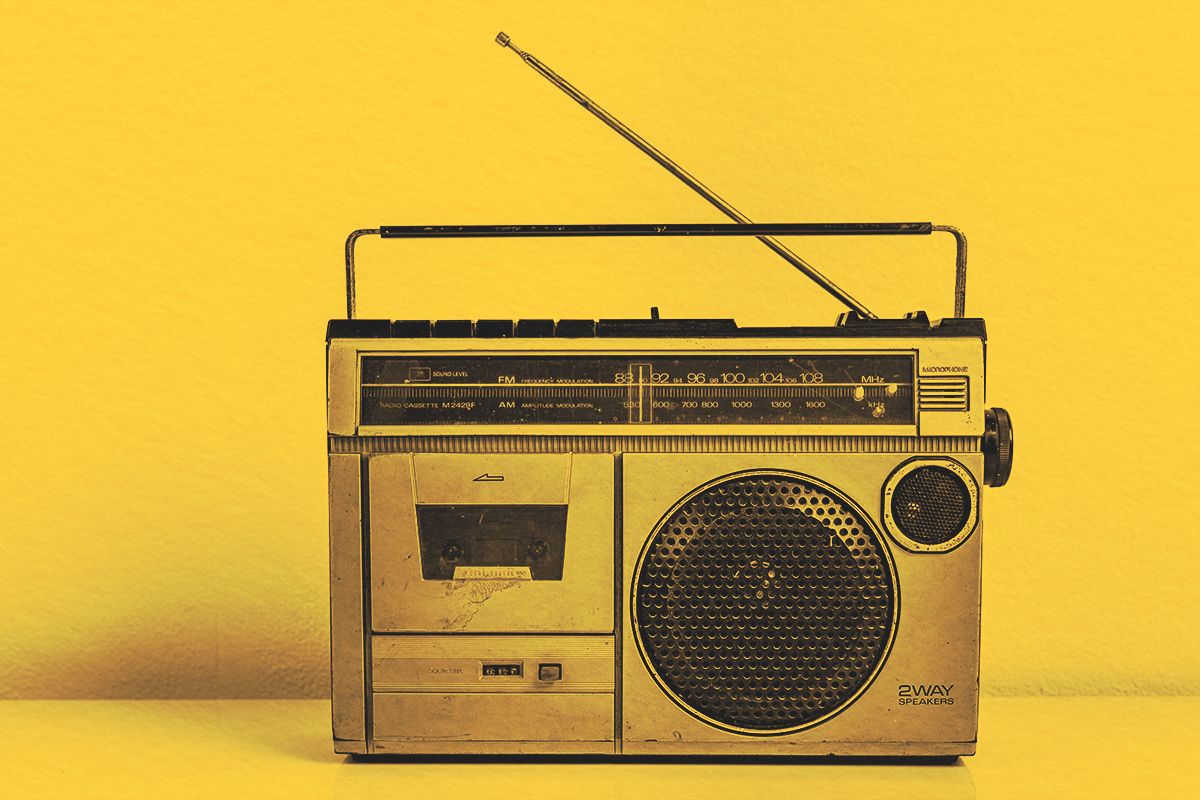
There are two main theories as to the origin of the phrase: British football (aka soccer) and board games, although both theories have their flaws. In 2007, the BBC wrote that the saying comes from the earliest live radio broadcast of a British football game in 1927. To help listeners picture the location of the ball during play, a grid of the football pitch (aka soccer field) was printed in the newspaper.
Radio commentators referenced those grid numbers during the broadcast, and “square one” was the rear left quadrant of the defender’s side of the field. That’s where the goalie would initiate a new play after an attack failed. Therefore, the ball and the players were “back at square one.”
The other theory is that “square one” is the starting point of the game Snakes and Ladders, which was inspired by an ancient Hindu game called Moksha Patamu and brought to Great Britain in the late 19th century. Americans might be more familiar with Chutes and Ladders, the version created by Milton Bradley in 1943. In the game, players roll dice and move across squares on the board, climbing ladders along the way. But a bad roll can lead to a snake or a chute, causing the player to fall back to where they started — square one.
In both the board game and the football game, “square one” was a literal location; now it is a metaphor for countless restarts. But it’s more than just starting again — “back to square one” is a state of mind. It suggests perseverance to start over and determination to not give up. You don’t go back to “square one” to take a nap. You go there when you intend to advance once again.
Featured image credit: AlenaPaulus/ iStock
Advertisement
More from our network
Word Smarts is part of Inbox Studio, which publishes content that uplifts, informs, and inspires.
Maybe you’ve been stumped by this grammatical dilemma before: Is it “toward” or “towards”; “forward” or “forwards”? This debate is a game of transatlantic tug-of-war, but the best choice often depends on your location.
Shakespeare once wrote, “Like as the waves make towards the pebbled shore, so do our minutes hasten to their end.” This line highlights a common confusion: the distinction between “toward” and “towards.” While Shakespeare used the latter preposition in his sonnet, I’ll stick with “toward.”
The right choice depends on whether you’re using American English, which prefers “toward,” or British English, which favors “towards.” Both terms are prepositions meaning “in the direction of,” and the “s,” or lack thereof, doesn’t change the definition. These variants have coexisted for centuries, originating from the Old English spellings “toweard” and “toweards.” The difference in spelling is one of many distinctions between British and American English dialects.
And the phenomenon isn’t unique to “toward.” Other directional words from Old English (typically adverbs) ending in “-ward” follow the same pattern: “forward,” “backward,” “upward,” “downward,” “inward,” “outward,” “onward,” and “afterward.” All of these often appear with an ending “s” in British English. That “s” stems from an old grammatical construct called the adverbial genitive, used in Old and Middle English to transform words into adverbs.
During the 19th century, the additional “s” at the end of directionals fell to the wayside in the U.S., partly thanks to Noah Webster (of dictionary fame), who labeled “forwards” as a corruption in his seminal 1828 dictionary. Other American grammarians agreed. In Good English (1870), Edward S. Gould called “towards” an “ignorant usage.”
Given these strong sentiments, it’s no surprise that “towards” declined in American usage during the mid-19th century, while “toward” steadily rose. In British English, “towards” remains dominant, though “toward” has also gained popularity, especially since 2000.
So, which should you use? It depends on your audience. American readers and style guides (including Chicago and AP) favor the form without the “s,” as in “toward.” But if you’re writing for an international audience — or copying Shakespeare — feel free to use “towards.”
Featured image credit: AscentXmedia/ iStock
Advertisement
More from our network
Word Smarts is part of Inbox Studio, which publishes content that uplifts, informs, and inspires.

While “chewing the fat” doesn’t sound like the most appealing of meals, it can be a pleasant way to spend your time. Where did this idiom for a casual chat or friendly small talk come from?
“Chewing the fat” refers to the act of having a conversation, typically a long, informal chat or friendly small talk. The phrase is a classic example of something we often say but without knowing why. After all, what does chewing fat have to do with casual discussion? A few theories exist to explain the expression’s origin — none of which is 100% certain.
Perhaps the most widely repeated explanation traces the phrase back to 19th-century sailors. During a voyage, sailors were often given salt pork as a protein source. The preserved meat was tough and therefore required considerable chewing, and as the seafarers gnawed their way through the chewy portions of fat, they would naturally pass the time by talking with their shipmates. Hence, chewing the fat — which then allegedly became associated with relaxed, unhurried conversation. In reality, however, there’s no direct evidence to support this origin story.
Another common theory suggests the phrase originated in rural 16th-century communities. If a family obtained a nice, fatty cut of pork, they would hang it in the parlor and invite people over to show off their wealth. Guests were then served a small piece, and they would all sit around and chew the fatty pork while enjoying a lengthy chat.
While it may sound reasonable enough, this story was entirely fabricated. According to the myth-busting site Snopes.com, an article called “Life in the 1500s” started circulating the internet in 1999. The above “chew the fat” theory about parlor pork — along with many other myths about medieval life — was spread by this spoof article, but there’s no evidence the phrase existed as far back as the 1500s. In fact, there’s proof against most of the ideas in the made-up piece.
A less common explanation claims the phrase comes from Native Americans (possibly Inuit), who would chew hides to soften them. While we know Native Americans did chew hides in this way, there’s no evidence to support this as the origin of “chew the fat.”
According to the Oxford English Dictionary, an early written usage of “chew the fat” comes from an 1885 book by J. Brunlees Patterson called Life in the Ranks of the British Army in India. In the book, Patterson discusses the frequent grumbling and griping of the soldiers, often to stave off boredom and let off steam — something he refers to as “chewing the rag, or fat.”
Here, “chew the rag” and “chew the fat” appear to be synonymous. The former phrase first appeared in print in 1875, according to the Random House Historical Dictionary of American Slang. (The relevant sentence reads in part, “Gents, I could chew the rag hours on end, just spilling out the words.”)
It’s possible, then, that “chew the fat” simply came about as a variation on “chew the rag.” Both, after all, are actions involving a lengthy chewing action — a movement much akin to talking. But as for the precise origin of “chew the fat,” it seems that may be lost to time.
Featured image credit: irabell/ iStock
Advertisement
More from our network
Word Smarts is part of Inbox Studio, which publishes content that uplifts, informs, and inspires.
Enter your email to receive daily lessons that dive into what makes English so fascinating. Each email is packed with odd rules, etymologies, and the tools you need to be a better communicator.

Sorry, your email address is not valid. Please try again.