What’s the Difference Between a College and a University?
While colleges and universities are similar in many ways, each term describes a slightly different type of institution. Let’s study up on what distinguishes one from the other.
In the U.S., the terms “college” and “university” are often used interchangeably, though if you were to take a course titled “The Linguistic Differences Between College and University,” you’d come to find that their definitions aren’t identical. While both words refer to educational institutions, they’re distinct in one specific way.
Let’s start with the word “college,” which has roots dating back to the Latin collegium, meaning “community” or “society.” It took on its association with higher learning around the late 14th century, and today, a college is “an independent institution of higher learning offering a course of general studies leading to a bachelor’s degree.”
“University,” meanwhile, is derived from the Latin universitatem, meaning “the whole” or “aggregate.” Around 1300, the word “universite” (as it was then commonly spelled) took on its education-related meaning. Today, a university is any institution of higher learning that is “made up of an undergraduate division which confers bachelor’s degrees and a graduate division which comprises a graduate school.”
Based on those definitions, the biggest difference between colleges and universities is in the types of degrees they offer. Colleges tend to be smaller and put an emphasis on issuing undergraduate degrees. Universities, on the other hand, are typically larger in size and offer both undergraduate and graduate programs. At universities you’ll find students pursuing bachelor’s degrees alongside master’s students and those studying for doctorates.
Advertisement
Certain colleges do offer graduate programs, however, which strays from the strict definition. For example, Dartmouth College offers master’s and doctoral programs in addition to its undergraduate liberal arts program. It didn’t always, though: When this Ivy League institution opened in 1769, it offered only undergraduate degrees. Graduate degrees came later, and at one time there was a push to change the school’s name to Dartmouth University. But famed orator and Dartmouth alum Daniel Webster argued the institution’s board desired to remain named as a college, and the renaming effort was denied by the Supreme Court in 1819.
You might also find that certain universities contain individual schools they call colleges. It’s not uncommon to see universities with a dedicated law or medical college, for example, among other types of similar collegiate programs.
When shoppers peruse the apple section of their local supermarket or farm stand this autumn, one of the first things they’ll notice is branding. An apple’s name can sway buyers just as easily as its appearance. And while the reason for some monikers is self-evident, others may inspire intrigue.
Many of the apple varieties you see today were developed by horticulturists through trial and error, discovery, and innovation. After cultivating a product worthy of the wider market, they then had to come up with an appropriate label for it. Here are some of the most interesting origin stories behind the names of seven apple varieties.
Red Delicious
Though the Red Delicious apple isn’t necessarily prized for its taste or texture, it’s an undeniable American classic. But it didn’t always go by the name we know today; when American farmer Jesse Hiatt submitted the new cultivar to an apple competition held by Stark Brothers’ Nursery in 1893, he called it Hawkeye after his home state of Iowa. The agricultural company selected Hiatt’s submission as the winner but began selling it under the name Stark Delicious. When the nursery introduced its Golden Delicious apple in 1914, it rebranded Stark Delicious as Red Delicious to help differentiate it.
And why was it called “delicious” in the first place? Apparently early Red Delicious apples really were delicious, but years of selection for uniform red color and thick, durable skins have reduced it to a bland, mealy shadow of its former self.
Harrison Cider
Given its name, it should be no surprise that this yellow, brown-spotted apple ends up in apple ciders. According to 19th-century horticulturalist William Coxe, the Harrison Cider apple was named after a family in Essex County, New Jersey, where it originated during the American Revolution. The second part of its moniker is owed to its dry, tart flavor, an excellent quality for making cider.
The apple had fallen out of fashion by the 20th century, possibly because of a reduction in cider production related to the temperance movement. However, it was rediscovered ata cider mill in Livingston, New Jersey, in 1976, and today the sturdy Harrison Cider is widely used in commercial ciders around the country.
Advertisement
Granny Smith
If you’re eating an apple pie in the United States, it was probably made with Granny Smiths. The Granny Smith variety is the third most popular apple in the country, and its firm texture and tart, sweet flavor make it an especially common choice for baking.
The light green apple’s namesake Granny was a real woman: Maria Ann Smith. After moving from England to New South Wales, Australia, in 1838, she and her husband bought an orchard and developed a new cultivar. Decades later, Farmers and Settlers published the story of how Smith saw the apple’s potential, and thus the name “Granny Smith” was born.
Honeycrisp
The Honeycrisp is one of the most recent additions to the apple world — and one of the most beloved. In 1982, research scientist David Bedford was working on the apple breeding program at the University of Minnesota’s Horticultural Research Center when he tasted the hybrid fruit of a tree that was set to be discarded and was enchanted by its light, sweet crispness.
Bedford rightly saw that the tree warranted more attention, and by 1998, the Honeycrisp apple was patented, produced, and being sold in grocery stores. The research center chose the name to evoke the fruit’s flavor and texture. These days, the Honeycrisp apple is one of the most produced in the United States. It even became Minnesota’s state fruit in 2006 — not bad for a young apple.
McIntosh
The McIntosh apple has humble farm origins. Before it became the national apple of Canada, farmer John McIntosh developed the cultivar on his land in modern-day Ontario in 1811 and started selling it in 1835.
While it’s no longer the most popular apple in circulation, its legacy endures in a different industry entirely. Jef Raskin, who helped develop the first Apple computers, gave them the name Macintosh, after the fruit. Like the computer, the apple has the nickname “Mac.”
Advertisement
Fuji
The Fuji apple is the most popular apple in Japan and the ninth most popular apple in the United States. It’s easy to see why: The crisp texture and light taste are perfect for snacking.
A cross between the Red Delicious and Ralls Janet apple varieties, the Fuji was developed around 1940 by the Ministry of Agriculture and Forestry in Japan. The creators named the apple after the town where it was cultivated: Fujisaki.
Knobby Russet
Also called the Knobbed Russet, Winter Russet, Old Maid, or Winter Apple, this variety is far from the platonic idea of an apple. Russet apples in general have a brownish hue and rough skin, closer to the appearance of potatoes. And the Knobby Russet in particular has a warty-looking surface. Despite its offputting exterior, it’s quite soft on the inside and has a fresh, sweet taste.
While the name can’t be traced to any one person, it was clearly inspired by the fruit’s appearance. The apple was first documented by the London Horticultural Society in 1820 after being donated by a man named Haslar Capron. Well suited to storage, Knobby Russets were popular in the 19th century but fell out of fashion when more visually pleasing apples took over the market. These days, the National Collection of Sussex Apples in England grows Knobby Russets and other historical varieties to help historians and horticulturalists understand the history of apple cultivation and create future cultivars.
For actions that occurred in the past, regular verbs follow the same conjugation pattern: You add an “-ed” or “-d” suffix (e.g., “look” becomes “looked,” “bake” becomes “baked,” and so on). But irregular verbs follow different formulas, as their past tense forms are conjugated in less predictable ways.
While there are relatively few English-language irregular verbs, they’re among the most commonly used verbs in our everyday speech. Emily Brewster, a senior editor at Merriam-Webster, said on the Word Matters podcast that there are roughly 200 core irregular verbs in the modern English language, which is less than 3% of all verbs. But that 3% includes 10 of the most commonly used verbs: “be,” “have,” “do,” “say,” “make,” “go,” “take,” “come,” “see,” and “get.” (More on those in a bit.)
So why do irregular conjugations exist? Well, they’re relics of how language used to function. Many irregular past tense verbs follow conjugation patterns that were common centuries ago in Old English and Middle English. While some grammatical rules became less common as the language evolved, several irregular verbs have maintained their popularity.
Let’s look at some examples of irregular past-tense verbs.
Light — Lit or Lighted?
With the verb “to light,” the proper past tense conjugation is “lit” — but “lighted” is considered a grammatically acceptable alternative. If someone illuminated a lamp, you’d say, “She lit that lamp.” However, when describing that lamp, you may call it a lighted lamp, as “lighted” is more frequently used as an adjective.
Advertisement
Verbs That Are Identical in Present and Past Tense
The word “put” is another curious example, as people don’t say “putted” (unless you’re referring to the act of putting in golf). Instead, “put” (as in “to place”) remains “put” whether you’re speaking in the present or past tense. It’s a relic of Germanic and Old English tendencies. Other irregular verbs that are the same in both their present and past tenses include “shed,” “burst,” and “cast.”
Germanic Strong Verbs
In Germanic languages, irregular verbs are called strong verbs. When changing present tense strong verbs to their past tense, you forgo adding a suffix at the end. Instead, these verbs are conjugated by altering the ablaut — a vowel within the verb that varies depending on the tense. Evidence of this phenomenon is present in many modern irregular English-language verbs with Germanic origins. Common examples include changing “sing” to “sung,” “fling” to “flung,” “stick” to “stuck,” “dig” to “dug,” and so on.
Irregular Verbs Ending in “-t”
You’ll also come across many irregular verbs with a “-t” suffix instead of “-ed” or “-d,” which is a holdover from older versions of English. Consider verbs such as “mean” (“meant”), “dream” (“dreamt”), “build” (“built”), and “spend” (“spent”). However, some past tense “-t” forms have fallen out of use and been replaced with a standard “-ed” ending. Among others, “clapt” is now “clapped” and “stript” is now “stripped.” This follows a theory published by Harvard University in 2007, proposing that if an irregular verb falls into disuse, it’ll inevitably be swapped out for a past tense conjugation ending with “-ed.”
Advertisement
The 10 Most Common Verbs
We briefly mentioned them before, but 10 of the most commonly used English language verbs are irregular:
“Be” → “was”
“Have” → “had”
“Do” → “did”
“Say” → “said”
“Make” → “made”
“Go” → “went”
“Take” → “took”
“Come” → “came”
“See” → “saw”
“Get” → “got”
These irregular verbs feel like second nature to native English speakers. However, as they’re rooted in centuries-old linguistic customs, they can be more challenging for those learning English. Irregular verbs are simply relics of once-common and now-unfamiliar language mechanisms, though they’re not immortal by any means. Irregular verbs that are common in today’s English may disappear entirely as English continues to evolve.
An onomatopoeia is a word that mimics the sound it’s meant to describe. You might be familiar with some of the more overt examples, such as “buzz,” “splat,” “hiss,” “pow,” and “boom” — think of the words that used to be splashed on the TV during fight scenes in the original Batman cartoons. Some onomatopoeic words, however, aren’t as obvious. Here are eight examples of onomatopoeias that are hiding in your regular vocabulary.
Cliché
A cliché is “a trite phrase or expression” — for example, “don’t judge a book by its cover” or “actions speak louder than words.” The term came about from 19th-century French print workers using printing presses, which made clacking sounds, to make copy after copy of the same design. The French clicher, meaning “to stereotype,” developed from the sound of the copies being made. The word “cliché” came into English in the 1880s.
Tinker
When you tinker with something, you’re likely repairing or adjusting it. The word isn’t specific to any one material today, but when it emerged in the late 14th century, it referred to folks who mended pots or pans, which in many cases were made from tin or other metal. Etymologists suggest the term “tinker” comes from the sound that the person’s tools would make when coming into contact with metal.
Owl
Children learn that “hoot” is the sound an owl makes, but that wasn’t always the word people most closely associated with owls. In Old English, an owl was called an ule — a term meant to emulate the wailing sound that the bird made. There are similar words in other languages, such as Dutch (uil) and German (Eule). Over time, the English spelling evolved into the modern “owl.”
Advertisement
Cough
The actual sound of a cough can range from a light expulsion of air to something emulating a lion’s roar. But in a strictly etymological sense, the word “cough” is onomatopoeic. It reflects the sound made between the closure of the glottis (the middle part of the larynx) combined with the noise made by air whizzing through the trachea (the windpipe).
Flicker
People often associate the word “flicker” with a shimmering light or candle, but that meaning didn’t come about until around the year 1600. The term was previously coined as a reference to the sound made by a bird’s wings quickly fluttering through the air.
Bounce
When you think of someone bouncing around on a pogo stick, your first thought may be the onomatopoeic word “boing.” But the word “bounce” is also an onomatopoeia. It likely comes from the Dutch bonzen or German bunsen (both meaning “to thump”), which were coined to imitate that sort of reverberating sound.
Advertisement
Ping-Pong
While it’s known as table tennis at the Olympics, many people call the game Ping-Pong — a trademarked name coined to reflect the variety of sounds the ball makes during gameplay. The “ping” is meant to imitate the sound of the ball hitting a racquet, whereas “pong” is akin to the sound made when the ball hits the table.
Bumblebee
Ask a kid to make the sound of a bumblebee and they’ll probably start buzzing at you. But the term “bumblebee” itself is an onomatopoeia. The word was coined in the 1520s as a replacement for the Middle English “humbul-be,” which itself was derived from the earlier Middle English term “bombeln.” Those words meant “to boom” or “to buzz” and were coined to emulate the sound bees made.
‘Yacht Rock,’ ‘Looksmaxxing,’ and More New Words in 2026
Every year, Merriam-Webster adds hundreds of terms to its digital pages. Here are a few of the 1,400 words that achieved lexicographical immortality in 2026.
Just because a word isn’t printed in the dictionary doesn’t mean that it’s not a word. You might hear it used for years or even read it in newspapers without an official definition on the books. But there comes a point when that widespread usage can no longer be ignored, and the word is granted a permanent place amid the annals of lexicography. Merriam-Webster recently added 1,400 entries to this prestigious club, spanning Gen Z and Gen Alpha slang, technology jargon, culinary insights, and plenty more terms that got their start on social media. Here’s a look at 10 of the new entries that caught our eye.
Yacht Rock
If you’ve jammed out to artists such as Steely Dan or Kenny Loggins, you may be a fan of yacht rock. This newly enshrined musical term is “a style of soft rock music originating in the 1970s and 1980s.” The term postdates the genre: It was coined in 2005 as the title of a comedy web series called Yacht Rock, whose episodes focused on fictional portrayals of the musicians now associated with the genre.
Looksmaxxing
The term “looksmaxxing” refers to a social media phenomenon in which people go to “sometimes extreme or dangerous measures intended to increase one’s physical attractiveness.” It may involve something as simple as giving up sugar, but it also includes more drastic interventions, such as intense plastic surgery procedures or even whacking one’s jaw with a mallet to slightly alter its shape (don’t do this). The suffix “-maxxing” can be applied facetiously to other unofficial terms such as “sleepmaxxing” (improving one’s sleep habits) and “proteinmaxxing” (eating a lot of protein in each meal).
Advertisement
Superfood
You might have seen the term “superfood” on the menu at your favorite salad spot or smoothie bar. It refers to any food that’s rich in nutrients, antioxidants, fatty acids, and other elements considered to be good for health. Common superfoods include salmon, broccoli, blueberries, and more.
Trash Panda
What some people call “raccoons,” others humorously refer to as trash pandas — a moniker that now holds a place in Merriam-Webster’s official dictionary. This silly name was first used in 2014 as part of an innocuous comment made on the website Reddit by a person with the username CarlPeligro. What seemed like a simple throwaway became adopted by internet users far and wide.
Sunday Scaries
Have you ever felt anxiety creep in as the weekend winds down and the workweek fast approaches? Then you’ve likely experienced a typical case of the Sunday scaries, another name for those “feelings of anxiety or sadness that arise on Sunday from the knowledge that the weekend is almost over.” It may not be listed in any medical books, but a recommended remedy for Sunday scaries is to order takeout and stream a few episodes of your favorite Netflix show.
Advertisement
Uncanny Valley
If you watch a video and it makes you uncomfortable because you can’t determine whether the people in it are real or AI-generated, that’s a demonstration of the uncanny valley. It’s a “psychological effect characterized by feelings of unease or revulsion in response to the nearly but imperfectly lifelike quality of something.” With the rise of AI, this feeling is becoming much more widespread, so be on the lookout for those feelings of unease.
Parasocial
The word “parasocial” applies to the relationship that many diehard fans have with their favorite celebrity or even a fictional character. A parasocial relationship is “a one-sided emotional connection with someone whom one does not know personally.” The term was coined in 1956 by two sociologists trying to name the new types of relationships they saw people developing with TV personalities.
Mandela Effect
Poll a large group of people on the status of Nelson Mandela, and many of them will claim he died in prison in the 1980s. But that didn’t actually happen, despite many people believing it did. This shared confusion gave rise to the term “Mandela Effect,” a “phenomenon in which many people collectively misremember a specific fact, event, or detail in a consistent manner.” Other examples include people thinking that Darth Vader said, “Luke, I am your father,” or the idea that the Fruit of the Loom logo features a cornucopia (both untrue).
Advertisement
Limerence
When you’re in the early stages of falling in love, you might be overcome by a sensation of limerence. It’s “a state of blissful usually temporary infatuation experienced during the early period of a romantic relationship.” Limerence doesn’t necessarily mean you’re actually in love; rather, it’s a feeling of being infatuated by something that’s new and exciting.
Meme Coin
You’ve probably heard of Bitcoin, which holds actual value to its holders. But all across the internet you’ll come upon various examples of a meme coin, which is virtual currency created in honor of Internet memes or celebrities, often without any actual use or value. One of the most popular examples is Dogecoin, named after an internet meme that was popular in 2013, featuring a Shiba Inu speaking in broken English.
There are a few linguistic tricks we all tend to fall back on to sound smarter, such as tossing around an obscure term, dropping in some piece of specialized jargon, or choosing a formal-sounding word when a simpler one will do.
Sometimes, those attempts to sound sophisticated can backfire — and not because of a mangled attempt at a complicated pronunciation. In fact, one of the most revealing examples of grammar gone wrong can be found in a tiny two-letter word: “me.”
Somewhere along the way, “me” acquired a bad reputation. We’ve been taught that “I” is the more proper choice, and “myself” can sound even more polished. So instead of saying, “Please send the report to Victoria and me,” someone might opt for “Please send the report to Victoria and myself,” apparently hoping to give the sentence a little grammatical oomph.
Unfortunately, this ends up doing the opposite.
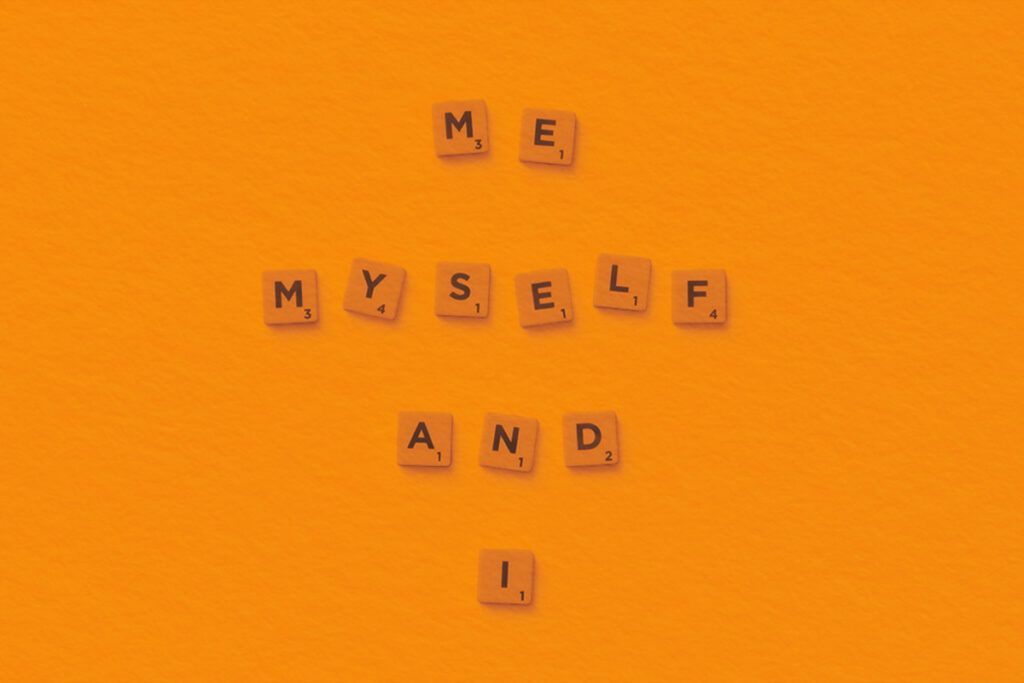
Me, Myself, and I
There’s a name for this particular grammatical overreach: hypercorrection. In other words, we’re so afraid of getting it wrong that we use a word we think sounds more correct — and end up getting it wrong anyway.
“Me” vs. “myself” is a particularly good example.
There’s nothing inherently wrong with “myself.” It’s a perfectly useful word when it’s doing what a reflexive pronoun is supposed to do, which is refer back to the subject of the sentence. You can say, “I hurt myself,” “I bought myself a new car,” or even “I told myself to calm down.” In each case, “myself” is referring back to the person doing the action. (If you replace the subject of each of the examples with “she” or “he,” you would use the corresponding reflexive pronoun, “herself” or “himself.”) A reflexive pronoun can also be used for emphasis, as in, “I myself confirmed the order.”
Advertisement
What you generally can’t do is use “myself” as a more sophisticated stand-in for “me.” That’s where sentences such as “Please send the report to Victoria and myself” go wrong. The report is being sent to Victoria and “me.” Adding another person to the sentence can make the pronoun choice feel trickier, but it’s not. There’s a simple way to check your grammar: Take Victoria out of the sentence.
“Please send the report to myself.”
That sounds wrong because it is. You’d say, “Please send the report to me.” So put Victoria back in, and you get: “Please send the report to Victoria and me.”
Of course, it’s not only “me” that gets incorrectly replaced. Sometimes the appropriate pronoun is “I.” The same problem crops up when “myself” gets put into the subject position: “Victoria and myself will attend the meeting.”
Again, take Victoria out: “Myself will attend the meeting” is clearly wrong. The correct version is “Victoria and I will attend the meeting.”
Why We Keep Getting It Wrong
The trick above is useful for native English speakers who have an ear for correct grammar, but the problem still persists, even among folks who pride themselves on their proper spelling and punctuation. It goes back to one of the most deeply ingrained grammar lessons many of us received in school: Don’t say “Me and Victoria.” Say “Victoria and I.”
That advice isn’t wrong. In “Victoria and I went to the meeting,” “I” is part of the subject. But the lesson is often remembered as simply: “I” is good; “me” is bad. And that’s where things start to go sideways.
Consider these two sentences:
“Victoria and I went to the meeting.”
“The client called Victoria and me.”
Both of these examples are correct. In the first one, we are both performing the action, so “I” is correct. In the second, we are both the objects of the action, so “me” is correct.
If you’re unsure, again, remove the other person from the sentence. You wouldn’t say, “Me went to the meeting.” You also wouldn’t say, “The editor called I.”
Advertisement
“Between You and I …”
The fear of getting that distinction wrong has given us one of English’s most enduring hypercorrections: “Between you and I … ” It sounds formal. It sounds polished. It sounds like something someone who cares deeply about grammar might say. It’s also traditionally considered incorrect.
Since the word “between” is a preposition, the pronoun that follows it should be in the objective case: “between you and me.”
Again, “I” isn’t a fancier version of “me”; they’re two words that simply have different grammatical jobs. And “myself” isn’t a fancier version of either one. That may be the central lesson of the hypercorrection phenomenon: A word doesn’t magically become more correct just because it sounds more formal.
The slang term “dude” is as versatile as a plain white T-shirt or utility baseball player. You can use it to greet a good friend (“What’s up, dude?”), as a generic synonym for “guy” (“Some dude just paid for my coffee”), or in common expressions to convey approval or emotion (“Rock on, dude” or “No way, dude”). Or maybe someone did you wrong, causing you to shout, “Dude, why did you do that?”
But as wide-ranging as the uses of “dude” may be today, the term was once much more specific and came with an insulting connotation. Let’s look at the origins of this word, which some believe goes back to before the American Revolution.
One theory, from linguists Barry Popik and Gerald Cohen in 2013, claims “dude” was likely derived from “doodle,” as in the 18th-century folk song “Yankee Doodle.” While the song is considered patriotic by many today, it was initially a song of mockery by the Brits toward Americans.
The lyrics of that ditty mention a “yankee doodle dandy,” where “yankee” referred to New Englanders, “doodle” came from the German Dödel (meaning “fool”), and “dandy” was and still is defined as “a man who gives exaggerated attention to personal appearance.” Essentially, the character Yankee Doodle was an oafish American who tried to emulate his fancy European counterparts by sticking a feather in his cap.
Advertisement
“Dude” is believed to be a variant of “dood,” a shortened version of the word “doodle,” but it wasn’t coined until more than a century later, in the 1880s. Residents of New York City began using it in a derisive manner to describe foppish men — those who were very concerned with their appearance and wore the height of fashion. The word became more and more popular by the day, appearing in poems and New York Times articles.
Linguistics professor Michael Adams is less sure of the connection to “Yankee Doodle” than Popik and Cohen, but Adams concurs that the word “dude” was firmly established as an insult by the late 19th century. “It’s not a friendly term at that point,” he told Reader’s Digest.
As the decades went on, however, “dude” shed its insulting connotation. The change didn’t happen overnight, of course: There was a brief transition in the 19th century where “dude” was used by Westerners to describe visitors from big cities on the East coast. This gave rise to touristy attractions called dude ranches, where city slickers (or dudes) could stay and pay to experience the cowboy lifestyle.
During the 20th century, “dude” shifted from its original meaning even further as younger generations embraced the term as a generic way to refer to a person. While traditionally male, it has become fairly gender-neutral. Linguist Michael Adams believes “dude” is popular today because of the term’s use in 1980s cinema such as Fast Times at Ridgemont High, Bill & Ted’s Excellent Adventure, and Ferris Bueller’s Day Off. These films helped forever change the definition of “dude,” Adams told Reader’s Digest, “from an East Coast person who doesn’t know a saddle from a stirrup to a guy who is righteous and whom everybody admires.”
The theme from the TV show Cops repeatedly asks, “Whatcha gonna do when they come for you?” But curious linguists may pose an entirely different question: Where does the word “cops” come from? While it’s common to refer to the police as cops, the terms don’t seem that similar, beyond a few shared letters. But there’s one backstory that explains the entire situation, as well as a few popular, albeit untrue theories we’d like to dispel.
One oft-repeated theory is that “cop” is an acronym for “constable on patrol,” but that’s not true. Another common misconception is that it references the copper badges and buttons worn on vintage New York City police uniforms — also false. The plain reality is that “cop” is derived from the dated verb “to cop,” defined as “to seize” or “to capture,” as one might nab a criminal.
The English verb “cop” is of northern British origin, coined in the early 18th century. It may come from the French term caper, meaning “to seize,” which itself comes from the Latin capere, meaning “to take.”
The term “copper” — as in a police officer — came about in 1838, used in the February 3 edition of Cockney Adventures: “Do it at vonce, else the coppers ‘ill come,’ said he of the short pipe.” This evolution of the verb “cop” to the noun “copper” was pretty straightforward. It follows the trajectory of how other verbs became nouns, such as “make” to “maker,” “pitch” to “pitcher,” and so on.
Advertisement
Within two decades, the noun “copper” was shortened to just “cop.” In other words, we went from the verb “cop” to the noun “copper,” and then back to “cop,” but this time as a noun. The slang made its way to the United States by the late 1850s, as people began referring to police officers as cops far and wide.
Other informal and slang terms have similarly clear backstories. For example, “po-po” is a shortened form of “police” that repeats the first syllable, and “five-0” (the numeral 0, not the letter “O”) comes from the television series Hawaii Five-0. (The name comes from Hawaii being the 50th state.) But origin stories aren’t always so well documented; for instance, nobody knows why people refer to police as fuzz, and yet the slang persists.
You might have heard about “murders of crows” and “flamboyances of flamingos.” Those are just a few examples of the many terms — some of which are downright silly — used to describe groups of animals.
In 1486, the St. Albans Press in England published a work about heraldry, falconry, and hunting, titled the Boke of Seynt Albans — or Book of Saint Albans in modern spelling. Traditionally attributed to Dame Juliana Berners, the book is most famous for publicizing a list of collective nouns to denote certain animal groups. These collective nouns — known more specifically as terms of venery — have maintained lasting appeal, and some of them remain a part of our collective lexicon centuries later. We covered some of our favorites in a previous piece, but here are a few more that caught our eye.
Singular of Boars
It may seem oxymoronic to suggest that a group of boars could be described by the term “singular.” But in this case, the word is derived from the French sanglier, which refers to a full-grown wild boar. Adult boars do indeed have a reputation for living on their own, but that didn’t stop Dame Berners from co-opting the term to refer to groups of them.
Peep of Chickens
Marshmallow Peeps are a popular Easter confection. But the term “peep” can also refer to a group of actual chickens instead of ones made from sugar. The term is a reference to the sound that young chicks often make, which is known as peeping.
Leap of Leopards
The collective noun “leap of leopards” sounds perfectly pleasant rolling off the tongue. But this term of venery is more than just a playful case of alliteration. It references the incredible leaping ability of leopards, which can jump up to 10 feet in the air or 20 feet leaping ahead.
Advertisement
Murmuration of Starlings
The word “murmuration” has two definitions, one of which relates to low noises called murmurs. But in this case it refers to big flocks of birds, specifically starlings. A murmuration can consist of several hundred or even thousands of starlings, which can be seen soaring into the sky as if part of a giant wave.
Pace of Asses
Donkeys — or asses, as they’re sometimes known — are among the most reliable pack animals that exist. For this reason, a group of donkeys is called a pace, referring to the slow and steady nature of their gait as they tote materials around.
Muster of Peacocks
The word “muster” can be defined as “the act of assembling.” It’s commonly used when talking about military formations, though according to the Book of St. Albans, it can also be used to refer to groups of peacocks. An alternative term for a group of peacocks is “ostentation,” which is defined as “an excessive display” — much like a peacock’s set of showy feathers.
Advertisement
Labour of Moles
Long before the Book of Saint Albans was published, other authors wrote about the hardworking nature of moles. Take the Roman poet Virgil, who wrote of the animal, “For gather’d Grain the blind laborious Mole.” “Labour of moles” uses the British spelling of “labor.”
Dule of Turtledoves
The word “dule” (or “dole”) means “grief” or “sorrow.” In folklore, turtledoves — a bird native to parts of Eurasia — were thought to have a melancholy voice that evoked senses of sorrow in mourners. So it made sense to call a group of turtledoves a dule or dole, playing off their reputation.
Harass of Horses
This collective noun has nothing to do with horses going around harassing people who don’t provide apples. It comes from the Middle English haras, referring to an enclosure for herds of stud horses. That word comes from the Old French haraz, meaning “troop of horses.”
Advertisement
Dissimulation of Birds
If you’re dealing with birds but don’t quite know what type, you can refer to the group as a dissimulation. This term means “the act of dissembling” or “to hide under a false appearance.” Given the Book of St. Albans tackles the topic of hunting, it’s thought to come from the idea that birds fly in large packs to give off a false perception of being much larger, which might confuse predators and hunters.
SOS — used as a distress signal from sinking ships, castaways on a desert island, hikers lost in the wilderness, and others in emergency situations — is the most universally understood cry for help on the planet. But ask someone what it stands for and there’s a good chance you’ll receive an answer that is both common and completely wrong. “SOS” does not stand for “save our souls” or “save our ship.” In fact, it wasn’t built from words at all. Here we take a look at the roots of the famous three-letter sequence and how it became so ingrained in the global consciousness.
Dots, Dashes and Distress
In the mid-1800s, nations used different distress signals, primarily at sea, designed to be sent via Morse code, flag signals, or both. Morse code — a signaling system using dots, dashes, and spaces — was created in the 1830s by Samuel F.B. Morse and Alfred Lewis Vail, and was well established by the turn of the century, making it a natural choice for calling for help.
The British, who were the preeminent maritime and naval power during the 19th century, used the code CQD. This sequence was established by the Marconi Company, a British telecommunications and engineering company. Its wireless operators used CQ as a code to signal all stations along a telegraph line, and the distress code CQD was an extension of this, meaning “All stations. Distress!” (It did not stand for “Come Quick, Danger,” an apt phrase that was applied later.)
The Germans, meanwhile, used the code SOE as a general inquiry call; the Americans used NC (meaning “call for help without delay”); and various other nations had their own unique codes. But having different signals was not ideal, especially in emergency situations, and eventually an international conference was arranged to do something about it.
Advertisement
The Adoption of a Universal Signal
In 1906, the International Radiotelegraph Conference was held in Berlin, Germany. On the agenda was the standardization of ship-to-shore communications. During the conference, 27 countries signed one notable provision: the adoption of SOS as a truly international distress signal.
The code wasn’t chosen to spell out a particular word or abbreviate a specific phrase. It didn’t even take into account individual letters. It was adopted purely for its simplicity within the Morse code system that Vail and Morse had built decades earlier. Radio conditions at sea were often poor, and any signal chosen needed to be short, unmistakable, and impossible to confuse with routine chatter. The solution was a continuous string of three dots, three dashes, and three dots — easy to remember, quick to type, and clear in its interpretation.
The sequence came to be called SOS only after it was selected, because that particular pattern matches the individual Morse code sequences for S (three dots), O (three dashes), and S (three dots) again. In other words, the letters were a readable side effect of a pattern telecommunications engineers deemed effective, not a phrase someone chose first and then translated into code.
SOS Goes Global
The first confirmed use of SOS in a genuine emergency came in June 1909, when the RMS Slavonia ran aground near the Azores. Nearby ships picked up the distress signal and rescued everyone aboard. Then, on August 11, 1909, the steamer SS Arapahoe ran into problems off the coast of Cape Hatteras, North Carolina. The telegraph operator was initially confused about which distress signal to send, as SOS had only recently replaced the CQD signal he was more familiar with. He decided to send both signals, in what became the first transmission of SOS in America. Three years later, the RMS Titanic sank in the North Atlantic Ocean. Its operator also sent out both CQD and SOS calls for help, in the most widely reported and tragic use of SOS after its adoption.
From there, SOS spread far beyond maritime radio. Its rhythm is so simple and distinct that it can be tapped out audibly or flashed with a light, making it just as useful for earthquake survivors trapped under rubble as for stranded hikers stuck on a mountaintop. The letters are also instantly recognizable when written out — perhaps most famously by castaways who spell out “SOS” on sandy beaches in the hope of signaling passing aircraft. And this isn’t just a trope in Hollywood movies. Numerous real-life cases exist, including a recent 2020 stranding on the tiny Pikelot Island in the South Pacific, from which three men were rescued after writing “SOS” on the beach using foliage and debris.
Advertisement
“Darling, Can’t You Hear Me? SOS.”
SOS has since grown to be a universally recognized signal for distress — not only in actual emergencies but also in pop culture. ABBA used it to great effect in their 1975 hit song “SOS,” while the classic 1979 rock track “Message in a Bottle” by The Police features Sting singing, “I’ll send an SOS to the world.” More recently, Rihanna and the Jonas Brothers have released tracks featuring the famous distress code.
Despite the universal nature of SOS, the actual meaning of the letters is still widely misunderstood. Many people believe that they stand for something — typically “save our souls,” “save our ship,” or even “send out succor” — when in fact they stand for nothing at all. These are all instances of what is called a backronym — a phrase made up to fit the letters of an existing word (or sequence of letters, in the case of SOS), treating it as if it’s an abbreviation when it’s not.
Another example of a backronym is “Amber Alert,” originally named after a missing child, Amber Hagerman, but later given the backronym “America’s Missing: Broadcast Emergency Response.”
In any case, SOS has proved to be incredibly effective, not only by its continued use in emergency situations but also by its widespread adoption in popular culture. But its success has little to do with any hidden meaning and everything to do with simplicity. A signal designed to be heard clearly through static, using a code invented decades earlier, is still just as easy to recognize a century later, whether it’s tapped out in Morse code, stomped into snow, sung by Sting, or texted to a friend to request immediate extraction from an awkward date.
Enter your email to receive daily lessons that dive into what makes English so fascinating. Each email is packed with odd rules, etymologies, and the tools you need to be a better communicator.
Sorry, your email address is not valid. Please try again.
Sorry, your email address is not valid. Please try again.