The term “plastic surgery” has nothing to do with actual plastic or any other type of synthetic polymer. Instead, like a lot of things, it comes from ancient Greece.
Plastic surgery is “a branch of surgery concerned with improving the function or appearance of parts of the body through reconstructive or cosmetic procedures.” Both serve a purpose — reconstructive surgery, in particular, is critical to recovery after some types of trauma — but critics of cosmetic procedures sometimes call out cases in which they think the patient ends up looking overly artificial. For this reason, many people assume the “plastic” in “plastic surgery” has something to do with synthetic polymers. In reality, the word “plastic” is derived from the 19th-century development of the medical field and the Greek language.
The Greek adjective plastikos means that something is “capable of being molded or shaped.” To the ancient Greeks, the word was widely used in relation to pottery and other handmade goods. In time, plastikos spawned the Latin plasticus, which then became the English term “plastic,” meaning “capable of shaping or molding a mass of matter,” around the 1630s — long before the material called plastic was developed.
Around the early 19th century, “plastic” spread to the surgical world. In 1818, a German surgeon named Karl Ferdinand von Graefe pioneered new techniques related to molding and reshaping noses. He published a study called Rhinoplastik — combining the prefix rhino-, meaning “nose,” and the Greek-inspired suffix -plastik. In the wake of publication there was a spike in other surgeons conceiving of and performing various “-plasties” that targeted other physical features.
Advertisement
With the emergence of so many similarly named reconstructive surgeries, it wasn’t long until the umbrella term “plastic surgery” emerged. The Oxford English Dictionary cites the earliest known instance in an 1837 edition of the Lancet medical journal, which refers to the concept as “a branch of surgery in which alone the operating surgeon becomes a real artist.” In 1838, surgeon Eduard Zeis helped popularize the term in a textbook titled Handbuch der plastischen Chirurgie (Handbook of Plastic Surgery).
So you can see that in an etymological sense, plastic surgery is clearly derived from the Greek plastikos and not our modern understanding of plastic materials. Human-made plastics weren’t invented until the 1860s — several decades after “plastic surgery” was coined as a surgical term.
Meemaw or Nana? 15 Regional Names for Grandparents
From Mom-Mom and Pop-Pop to Meemaw and Pawpaw, the names we give our grandparents can be surprisingly regional — and sometimes carry traces of immigrant languages and local history.
Your grandparents may occupy roughly the same place on the family tree as someone else’s, but what you call them could depend on where that tree took root.
In Pennsylvania, a grandmother and grandfather might be Mom-Mom and Pop-Pop, respectively. Head north into New England, and you’re more likely to encounter Grammy and Grampy; head south and Meemaw and Pawpaw enter the conversation. Elsewhere, grandparents answer to Nana, Papa, and an ever-expanding collection of family-specific monikers.
These names aren’t random. Some reflect regional speech patterns or the influence of immigrant communities; others are variations on words for mothers and fathers. And many are simply the linguistic handiwork of kids, who have a long history of turning difficult words into easier — and often much cuter — options.
A grandparent’s nickname can offer clues about where their family is from, what languages they speak, and sometimes even which generation got to decide what everyone would call their parents’ parents. Here are some of the most popular and distinctive regional names for grandparents and the stories behind them.
Advertisement
Mom-Mom and Pop-Pop
Few grandparent names announce a Mid-Atlantic connection quite like Mom-Mom (also spelled as MomMom or Mom Mom) and Pop-Pop (also PopPop or Pop Pop). The names are particularly associated with Pennsylvania and neighboring states, according to a survey by baby gear brand Chicco, although their reach extends beyond the region.
The doubled syllables sound like baby talk, and in a sense, that’s exactly what they are: Reduplication, the repetition of a sound or syllable, is common in words used by and with young children. Nana, Mimi, Maw-Maw, and Paw-Paw follow the same pattern.
But Pennsylvania’s grandparent vocabulary has also been linked to the region’s German and Pennsylvania Dutch population, signalling that familial names sometimes come from a family’s country of origin.
Grampy and Grammy
In New England, Grampy has long been a familiar alternative to Grandpa, while Grammy joins the broader American collection of names for grandmothers.
The “-y” ending is another way English speakers turn names into affectionate diminutives: Compare Daddy, Mommy, Granny, and Nanny.
Meemaw and Maw-Maw
The American South has perhaps the richest collection of grandparent names. Meemaw, Mamaw, Maw-Maw, and Memaw are particularly associated with Southern speakers. They appear alongside Granny, Grandma, and Nana, with a particular name often held as tradition in a family.
These names may look like completely different words, but many are variations on Mama and Ma, reshaped to distinguish a grandmother from a child’s mother.
Advertisement
Pawpaw and Papaw
In Southern-speak, Pawpaw and Papaw are Meemaw’s grandfather counterparts.
The spellings vary, as do the pronunciations, but the underlying construction is familiar: a child-friendly repetition or alteration of Pa or Papa.
While pawpaw is also the name of a fruit, the two words have different histories. In American English, Pawpaw is a family term, while the fruit name ultimately comes from the Spanish papaya.
Nana
Unlike some of its more geographically distinctive cousins, Nana refuses to stay in one place. It is one of the most popular grandmother names in the U.S., appearing across regions and generations. That ubiquity makes it harder to pin to a single American origin, though its first known usage dates back to the end of the 19th century.
Pa and Papa
Pa and Papa are similarly widespread, particularly across the Midwest and South. Both are short, easily pronounced words that have equivalents in numerous languages, making it difficult to assign them to one particular American region or ethnic group — which might help explain their staying power. Papa, which is also commonly used for one’s father in British English, originated in 1677.
Abuelo and Abuelito
Not all regional grandparent names are variations on English words. In parts of the U.S. where there are large Spanish-speaking populations, such as Florida, Abuelo and the less formal Abuelito are natural terms for one’s grandfather. Abuela and Abuelita are the female equivalents.
Advertisement
Opa and Oma
Similarly, families with German backgrounds may refer to a grandfather as Opa and a grandmother as Oma. According to a Preply survey, Opa is the most popular name for grandfathers in Nebraska, while Oma rules for grandmothers in Pennsylvania and New Mexico.
Tutu
In Hawaii, Tūtū is a familiar term for a grandparent, with Tūtū kāne and Tūtū wahine used to specify grandfather and grandmother, respectively.
Like Abuelo, it is a reminder that the country’s familial vocabulary reflects the many languages and cultures that have shaped American communities.
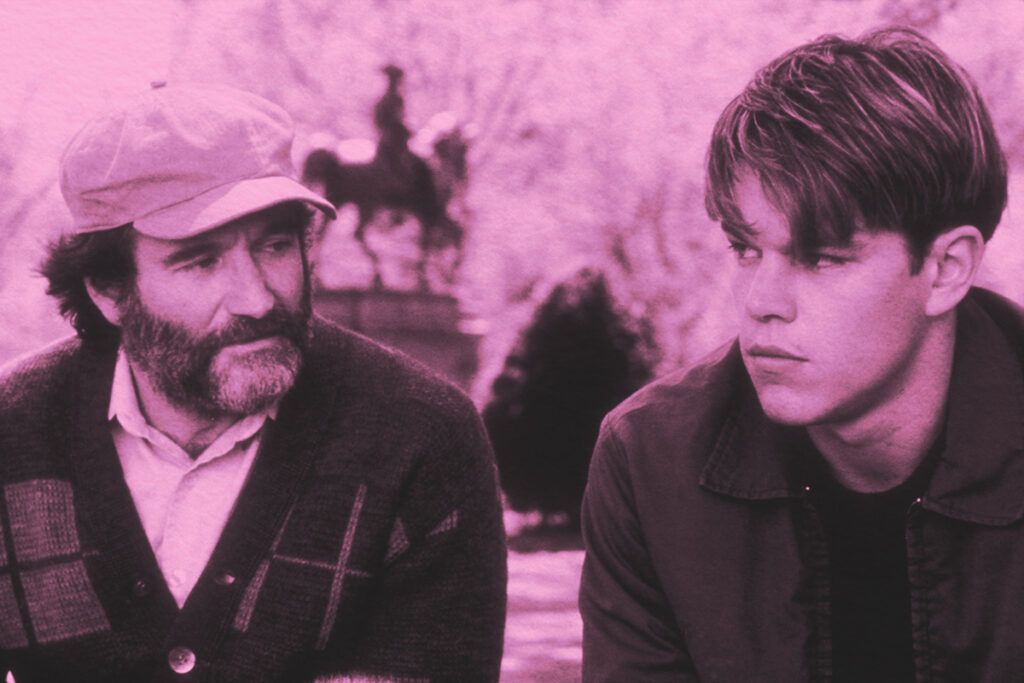
Ask someone from Boston how their day is going, and there’s a strong chance they’ll say it’s “wicked good” — a phrase that includes a word whose dictionary definition means the opposite of good entirely. It’s one of the most recognizable quirks of the New England dialect, showing up everywhere from Good Will Hunting (“My boy’s wicked smart”) to local retailer Newbury Comics’ slogan, “A wicked good time!”
But why “wicked”? Are the god-fearing Puritans and the Salem witch trials to blame, as one popular theory suggests? While that makes for a colorful story, the truth is more complicated.
From “Wicca” to “Wicked”
There is a genuine witchcraft connection buried in “wicked,” but it predates Salem by centuries. Etymologically, the word traces back to the Old English wicca and wicce, the same roots that eventually gave English the word “witch.” In its original usage, “wicked” broadly referred to sorcery and evil influence — and it was not directly tied to 17th-century Massachusetts. The word appears in writing as far back as the 13th century, and Shakespeare used “wicked” in its ordinary, negative sense decades before the Salem trials began in 1692; take, for example, the famous line “Something wicked this way comes” from Macbeth (Act 4, Scene 1), written around 1606.
Advertisement
A Clever New Meaning
The modern New England usage of “wicked” isn’t its original form. Rather, it’s an intensifier: a word that adds force, emphasis, or degree to another word (e.g., “very” or “extremely”). “Wicked smart,” for example, carries the same meaning as “very smart.” This usage is mostly closely associated with the northeastern corner of the U.S. today, but it didn’t originate there.
Restoration-era dramatist Thomas Porter made linguistic history as one of the first to use “wicked” as an intensifier. As Danny Erker, associate professor of linguistics at Boston University, explained to Boston.com, the first recorded use of “wicked” as an adverb comes from Porter’s 1663 playA Witty Combat, or, the Female Victor: “Yesterday was a hot day, a wicked hot day.” So, the usage was coined in England — not in America by a Puritan.
According to Merriam-Webster’s documentation of the word, the widespread use of “wicked” as an intensifier in New England is a distinctly late-20th-century phenomenon, arriving roughly 300 years after Salem. It’s safe to say, then, that neither the Puritans in general, nor the Salem trials more specifically, can lay claim to the popularization of “wicked” in the New England lexicon.
Advertisement
“Wicked” Takes New England
Linguists generally point to a more mundane phenomenon to explain New England’s embrace of “wicked.” Rather than having anything to do with 17th-century witch trials, it’s a simple case of grammaticalization — a linguistic process in which independent words with clear, concrete meanings turn into abstract grammatical markers. Here, “wicked” — a word with a strong negative meaning — was gradually repurposed as an intensifier, stripped of its original significance.
English has a long history of doing this. Words such as “terribly” and “insanely” also trace back to negative meanings — terror and insanity — yet today they simply mean “very.” If someone says, “That was an awfully good cup of tea,” everyone knows there’s nothing awful about it — quite the contrary, in fact.
“Wicked” appears to have followed the same well-worn linguistic path. New Englanders simply did what English speakers have always done with intense words: They borrowed one that meant something bad and repurposed it to mean something good — wicked good — instead. Why exactly it gained such traction in New England is unknown. At some point during the 1900s, the expression seems to have caught on, eventually growing so widespread that it became not just a part of the New England dialect, but a part of the regional identity.
When we talk broadly about the evolution of languages, we often use timelines spanning many thousands of years. Some linguists believe there might even have been a single original “Proto-Human” language — one from which all others evolved — spoken some 150,000 years ago. Since then, innumerable languages have evolved independently, flourishing and fading with the rise and fall of societies and civilizations.
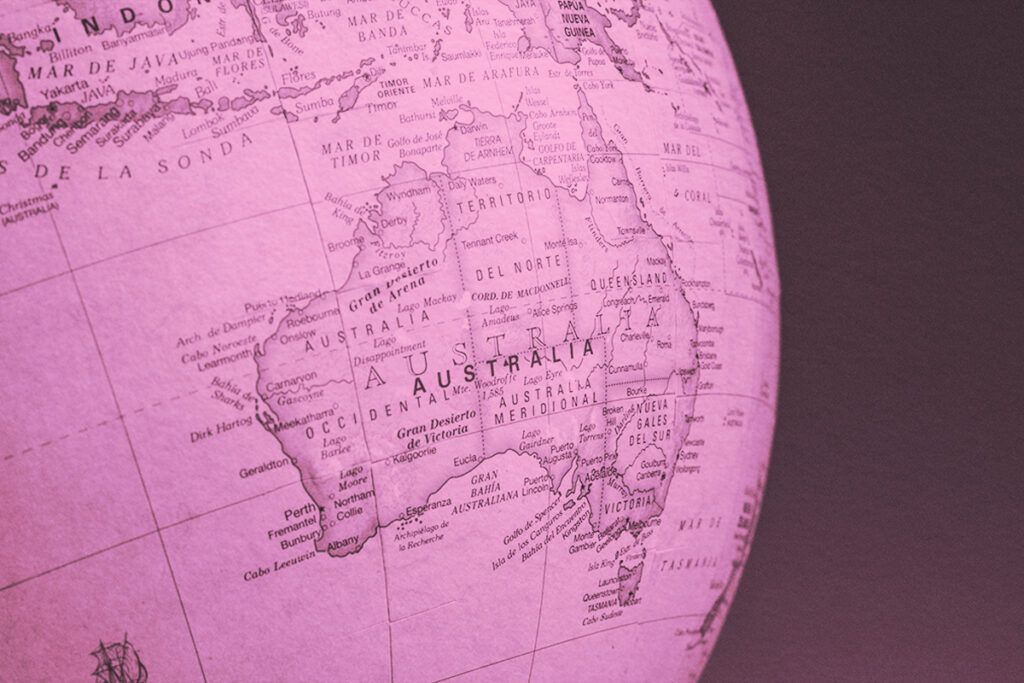
The evolution of a language tends to be a lengthy process, with changes occurring relatively slowly — often so slowly that one generation barely notices any real change in the way the next generation speaks, apart from the inevitable emergence of new slang. But one language spoken in Australia’s Northern Territory has bucked this trend entirely. Light Warlpiri, spoken today by around 350 people in the remote community of Lajamanu, is among the only languages in the world whose birth was actually witnessed and documented by linguists as it happened.
Out of the Mouths of Babes
The linguist Carmel O’Shannessy came across Light Warlpiri while working as a teacher in Lajamanu in the late 1990s. She noticed that adults in the community, typically those up to around 35 years old, were speaking a distinct new language. Older members of the community were practiced at switching between traditional Warlpiri, English, and Kriol (an English-based creole dialect), but this was something different, distinct, and unified.
Through her research, O’Shannessy traced the language’s roots back to the 1970s and ’80s — and its existence originated with the children of Lajamanu. Rather than simply absorbing one dominant language, the children began reshaping the way the adults spoke into something new. For many children in the small community, it became their first language.
Advertisement
“During my four years living and working in the community,” O’Shannessy explained to Australian Geographic, “I realized that when children spoke to each other, every sentence contained both Warlpiri and English/Kriol.” But this was more than code-switching, the process of shifting from one language or dialect to another, depending on the context; according to O’Shannessy, it was a new language system, independent of the other languages spoken by the elders, with rules and patterns the children had never been explicitly taught by their parents. The kids of Lajamanu were, as she puts it, “active agents of language change.”
A Genuinely New Grammar
Light Warlpiri is particularly remarkable because it doesn’t just borrow words from multiple sources — plenty of languages do that, whether as loanwords, from slang, or elsewhere. What makes Light Warlpiri so fascinating is that it combines borrowed pieces from the mix of languages spoken by the older generations, creating an entirely original grammatical system found in none of its parent languages.
For example, most of its verbs and verb structure come from English and Kriol, while many of its nouns have Warlpiri suffixes attached to them. However, the sentences are formed using what O’Shannessy calls a “radically innovative” structure independent from the languages previously spoken in Lajamanu. Even more unusual, Light Warlpiri has developed its own tense system. This includes distinct present and past forms that don’t come from any of the languages it descended from.
Advertisement
Combined, these elements have created a way of talking so different from Warlpiri, Kriol, and English that Light Warlpiri clearly constitutes a new language — one of around 7,170 in use across our planet today — even though it has existed for only about half a century. If you want to hear what Light Warlpiri sounds like, O’Shannessy created a charming picture book-style video narrated by a 7-year-old from the Lajamanu community.
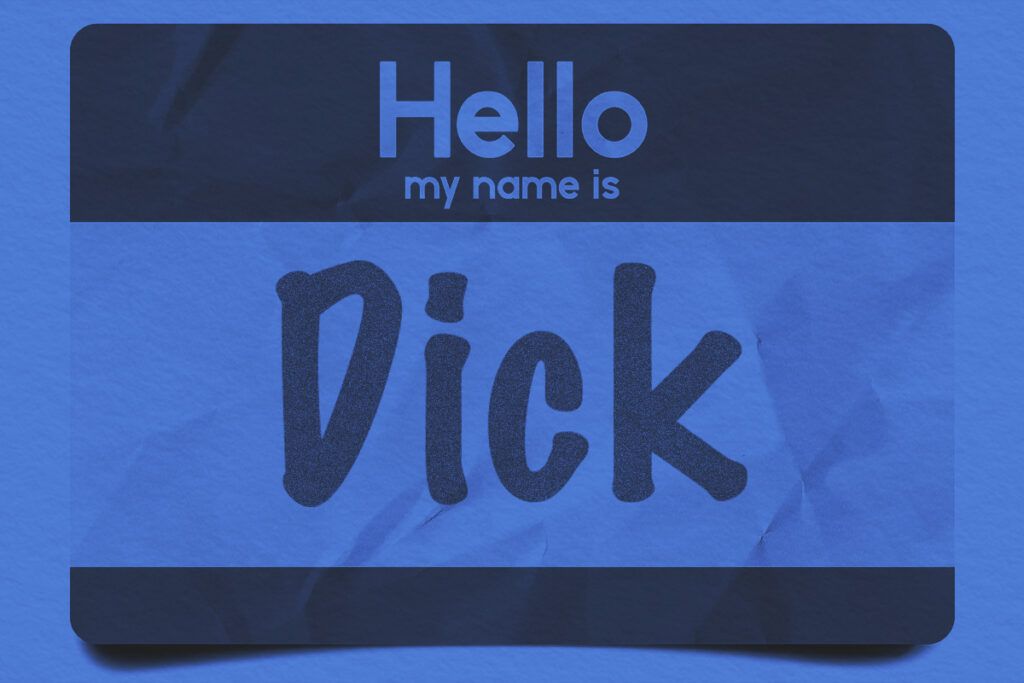
The name Richard doesn’t seem to have much in common with the nickname Dick, and yet the latter is still widely used as a shortened version of the former. This is just one of many cases where a full name is shortened to a seemingly peculiar abbreviation. We’re talking about Johns who go by Jack, Margarets known as Peggy, and Marys who are called Polly.
While these nicknames may seem odd based on their spelling, there’s a logical origin story behind many of them. During the Middle Ages, it was a popular practice to shorten names and swap certain letters, resulting in a playful rhyming nickname. Here are several examples of this phenomenon, and some other curious nickname origin stories that follow completely different trajectories.
Dick (Richard)
The name Richard was among the most popular male names in medieval England. In fact, it was so common that scribes came up with several shorthand versions, including Rich and Rick, to save time and effort while writing. Then, in the early 13th century, the trend of rhyming sobriquets emerged. This produced nicknames such as Hitch, Hick, and, of course, Dick. While most of these rhymes have faded in terms of widespread use, the name Dick has experienced lasting popularity.
Bill (William)
Deriving the nickname Bill from William is another example of this playful medieval naming mechanism. It follows the same logic as above — William was shortened to Will, and in time, people rhymed it with Bill.
Peggy (Margaret)
Margaret was among the most popular female names in the Middle Ages, and it needed a playful nickname. Diminutive monikers such as Margot, Magge, Magot, Mog, and Meg soon appeared, and the latter two examples followed the rhyming shift that was popular at the time, giving us Pog and Peg. Sometimes a “-y” was tacked onto the nickname, giving us Poggy (not so common today) and Peggy, which was quite common in the mid-20th century.
Advertisement
Polly (Mary)
Centuries ago, the nickname Mally was a common shorthand for people born Mary, but it largely fell out of use by the mid-18th century. Molly as a nickname for Mary also died out by the end of the 18th century, though it remains a common baby name on its own. But from Molly we got the rhyming moniker Polly, and that somehow stuck around long after Mally and Molly.
Jack (John)
The shift from John to Jack is yet another example of medieval nicknames with lasting appeal. In the Middle Ages, John — an extremely popular male name — was made into nicknames such as Johnkin, Jankin, and Jackin. Eventually, Jackin was shortened to simply Jack, which has maintained its popularity all these years later.
Sasha (Alexander)
Disconnected nicknames aren’t only an English-language phenomenon. In Russian culture, Sasha is a common nickname for Alexander (or the Russian equivalent Aleksandr). When it comes to Russian nicknames, it’s common to add “–sha” as a diminutive suffix. Take Aleksandr, shorten it to Sandr, and then replace the final few letters with the “–sha” suffix, resulting in Sasha.
Pepe (José)
The name José is the Spanish version of the English name Joseph. The original version was Josepe, which was shortened to José over time. This explains, in part, why Pepe is a common nickname for people named José. It’s an abbreviation of the old name José comes from, taking the end portion and doubling it.
Advertisement
Kit (Christopher)
You may be surprised to learn that Game of Thrones actor Kit Harington’s birth name is Christopher. It’s not as common a nickname today as it was centuries ago, but Kit is indeed a sobriquet for the given name Christopher. Meaning “bearing Christ,” this name is an abbreviated form of the first portion of Christopher, taking out three letters and changing the “C” to a “K” for a more prominent starting sound.
But some words have a more meta job: They describe other words. English has a surprisingly rich vocabulary for doing just that — one that captures the tricks, quirks, accidents, and downright oddities that make language so much fun. Here are 14 of them.
Mondegreen
If you’ve ever heard Jimi Hendrix sing, “’Scuse me while I kiss this guy,” you’ve experienced a mondegreen — a misheard word or phrase, especially in song lyrics. (Jimi actually sang, “’Scuse me while I kiss the sky,” in the 1967 hit “Purple Haze.”) The term “mondegreen” came from a similar mishearing: Writer Sylvia Wright thought she heard the name “Lady Mondegreen” in a Scottish ballad where the actual words were “laid him on the green.” She officially coined the term “mondegreen” in 1954.
Eponym
You know that people can have sandwiches named after them (see: the Reuben), but did you know that “sandwich” itself is named after a person? (That would be John Montagu, the 4th Earl of Sandwich.) This makes it an eponym, or a word that comes from a (real or fictional) person’s name. “Boycott,” which comes from Charles Boycott, a 19th-century English land agent who became the target of a famous campaign of social ostracism, is another example.
Neologism
Before a word officially becomes a word, it can be a neologism, or a newly coined term created to describe something genuinely new or as a bit of wordplay. “Blog,” “selfie,” and “doomscrolling” all began their lives as neologisms. The term itself, which derives from the French néologie, meaning “the coining of new words,” is much older; its first known use was in 1754.
Advertisement
Retronym
A retronym is a type of neologism where a new word or phrase is created to distinguish an older version of something from its newer model. “Acoustic guitar,” for example, became a useful retronym after the invention of the electric guitar. Similarly, terms such as “snail mail” and “landline” emerged to distinguish older technologies from their newer counterparts.
Portmanteau
A portmanteau is a word formed by blending parts of two or more other words, combining their sounds or spellings — and usually their meanings, too. “Brunch,” for example, combines “breakfast” and “lunch.” We have Lewis Carroll to thank for “portmanteau”; it comes from Through the Looking-Glass, where the word, a play on an old term for “suitcase,” is used to describe a word packed with two meanings.
Backronym
A backronym is an existing word, phrase, or name that’s later turned into an acronym — an abbreviation formed from the initial letters of a series of words — through the invention of a phrase to fit its letters. For example, SAD, or seasonal affective disorder — a type of depression that typically occurs in the fall and winter months and is triggered by fewer daylight hours — was given the name so that the acronym would be appropriate for the disorder. “Backronym,” a portmanteau of “back” and “acronym,” first appeared in 1983 in The Washington Post, when columnist Bob Levey asked readers to submit their best neologisms. He credited it as “the brainchild of Meredith G. Williams of Potomac” and defined it as the “same as an ‘acronym,’ except that the words were chosen to fit the letters.”
Advertisement
Ghost Word
The scariest thing about a ghost word, a term that appears in a dictionary or other text but doesn’t actually exist in the lexicon, is that it typically got there because of a typo, transcription error, or misunderstanding (oh, the horror!). “Dord,” which appeared in the second edition of Webster’s New International Dictionary for years before editors realized it was a mistake caused by a notation being misread as a word, is one famous example.
Eggcorn
An eggcorn is a mistaken version of a word or phrase that sounds like the original but makes its own kind of sense. For example, “for all intensive purposes” is an eggcorn for “for all intents and purposes”: It’s wrong, but it plausibly could work. The term “eggcorn,” coined by linguist Geoffrey Pullum, comes from someone mishearing “acorn.”
Malapropism
Similar to an eggcorn, a malapropism is the accidental use of a word that sounds similar to the one intended but has a wildly different meaning. One famous example comes from former President George W. Bush during a 2000 campaign speech, when he declared, “We cannot let terrorists and rogue nations hold this nation hostile or hold our allies hostile.” (He meant “hostage,” not “hostile.”) Though its first known use was in 1826, “malapropism” comes from Mrs. Malaprop, a character in Richard Brinsley Sheridan’s 1775 play The Rivals, who had a memorable habit of making such verbal blunders as describing someone as “the pineapple of politeness” instead of “the pinnacle of politeness.”
Advertisement
Spoonerism
Rev. Dr. William Archibald Spooner, an Oxford dean and lecturer, was a noted scholar but reportedly prone to regular verbal mix-ups — so much so that the accidental switching of sounds between two or more words, resulting in a funny new phrase, became known as a spoonerism. Saying “blushing crow” instead of “crushing blow” is one of the most famous examples attributed to him.
Contronym
A contronym is a word with two meanings that contradict each other. “Sanction,” for example, can mean either “to approve something” or “to impose a penalty,” while “cleave” can mean “to split apart” or “to cling together.” These linguistic double agents have multiple names, including “autoantonym,” “antagonym,” or “Janus word,” a reference to the Roman god Janus, who was traditionally depicted with two faces looking in opposite directions.
Heteronym
If you’re prone to spelling mistakes, a heteronym has probably been to blame at least once. Derived from Greek roots meaning “different name,” “heteronym” refers to a word that’s spelled the same as another word but pronounced differently and with a different meaning. For example, “lead” can refer to the metal when pronounced “led,” or to guiding someone when pronounced “leed.”
Homograph
“Lead” is also a homograph, which is a broader term for words that are spelled alike but differ in meaning, pronunciation, or both. Not all homographs are heteronyms, though: “Bear,” for example, is spelled and pronounced the same whether it means the animal or “to endure something.” (To be a heteronym, the noun and the verb would be pronounced differently.) The term comes from Greek roots meaning “same writing.”
Advertisement
Nonce Word
If you love Lewis Carroll’s 1871 poem “Jabberwocky,” you’re a fan of nonce words. These are words invented for a very specific occasion or context and that are not meant to become a permanent part of the language — though some do catch on. The term comes from the phrase “for the nonce,” meaning “for the particular occasion,” so a nonce word is quite literally a word made for the moment. “Chortle,” a chuckle-snort combo, is one of Carroll’s nonce words that has stuck around.
Along with the many quirks and exceptions to English language rules there are many fossilized relics that leave us wondering. Take the letter “W,” for instance, which is pronounced “double-U,” despite looking more like two “V’s” smushed together, and which has a sound unique from either “U” or “V.” This dissonance between how the letter “W” looks and sounds stems from changes made to the Latin alphabet around the time that Old English appeared.
We’ll get to that in a bit, but first let’s go back to ancient Rome, where there was no letter “W” (nor a letter “U”) in the Latin alphabet. Instead, Romans used the letter “V” to represent two sounds: the vowel sound /u/ and the consonant sound /v/. This is why if you look at ancient Roman monuments, you’ll often see the letter “V” etched in stone where the letter “U” would make more sense to the modern English ear. It was also easier to etch sharp angles into stone than curved shapes, but we’ll touch upon the form of the letters again later.
Sometime during the third century CE, Germanic tribes in northern Europe developed a runic alphabet, which featured symbols for the /u/, /v/, and /wuh/ sounds. There was feoh (ᚠ) for any /f/ or /v/ sounds, ūr (ᚢ) for the /u/ sound, and wynn (ᚹ) for /wuh/. This runic alphabet inadvertently highlighted various ways in which the Latin alphabet came up short — namely that it lacked distinct letters for /u/ and /wuh/ sounds.
Advertisement
When Old English came around in the fifth century, it relied on a runic alphabet before switching to a Latin-inspired alphabet around the seventh century. But while the original Latin alphabet used by Romans had a “V,” that letter was missing from the earliest alphabet used among Old English speakers. Instead, they relied on the letter “F” to produce those /v/ sounds. There was also a new letter used to replicate /u/ sounds — the “U” shape we know today.
However, there was still no letter to represent a /wuh/ sound, at least initially. Scribes decided that rather than invent an entirely new letter, they could repurpose the letter “U” as an effective way to replicate a /wuh/ sound in written text. In an interview with Reader’s Digest, English professor Michael Adams noted how it was common historically to use extant letters rather than to create new ones. “We search for ways of representing the sounds with the letters we’ve got,” Adams said, “rather than increasing the number of letters.”
And so scribes began writing “UU” whenever there was a /wuh/ sound. This was briefly swapped out for the runic wynn symbol around the eighth century CE, but the “UU” returned after the Norman Conquest of 1066. The Normans preferred using Roman and Greek-inspired alphabets, shunning the runic letters of northern Europe. The “UU” shape was aptly known as “double-U,” even though it would soon be replaced by the “VV” shape.
If you look at early handwritten manuscripts from medieval times, you’ll probably see many instances of “UU,” as it was simpler for scribes to write that shape by hand. But the opposite was true for the Romans: It was easier to carve angular shapes into stone than curved ones. Angular letter shapes also proved to be preferential after the invention of the printing press in the 15th century. So, if you look at printed materials from the medieval era, “VV” is far more common, as typographists preferred using that shape.
Advertisement
As the printing press became more widespread, so too did the shape “VV” for the letter “double-U.” But despite this typographical shift, nobody seemed interested in changing the pronunciation of the letter. The vocalization stayed as “double-U” while the “VV” shape was popularized around the world.
Let’s say your friend Bruce has a friend of his own. When talking about his other friend, you may be torn between saying “a friend of Bruce” or “a friend of Bruce’s.” The latter is an example of a double possessive — a grammatical construct that uses both “of” and “’s” to convey a sense of personal possession. Some double possessives are unnecessary, while others help draw a clear line between association and ownership.
In the case of Bruce and his friend, you could just say “Bruce’s friend” and be done with it. There are many instances where a singular possessive does the job and a double possessive muddies those grammatical waters. That said, both “a friend of Bruce” and “a friend of Bruce’s” are acceptable. However, there are potential snags to consider.
In this scenario, the construction “X of X” makes both grammatical and semantic sense. However, it can lead to confusion in other scenarios. For instance, maybe your friend Jo painted a picture. The problem here is that saying “painting of Jo” could mean a number of things — it could describe a painting that depicts Jo as the subject, or a painting made by Jo. For this reason, it’s essential to consider the context. If there are several potential meanings, then it’s smart to avoid the “X of X” construction for the sake of clarity.
Advertisement
As for the double possessive (“friend of Bruce’s”), some argue that it’s unnecessary, and in many cases it is. But let’s look at when a double possessive is appropriate. It has to do with the genitive case — a grammatical case that conveys feelings of ownership or association. Double possessives can be helpful for differentiating between a situation where a subject owns something and one where they are only associated with it.
Let’s go back to the scenario with Jo and her painting. If you said “this painting of Jo,” it sounds like someone painted Jo. But saying “this painting of Jo’s” helps clarify that Jo created or owns said painting. It’s entirely possible that she’s also the subject, though that’s a point you can clarify in another sentence. Alternatively, you could say “Jo’s painting,” but that might imply that it’s simply a possession, not a painting explicitly painted by Jo.
Finally, it’s important to note that double possessives work only if humans or animals are the subject that’s possessing something. If a sports team wins a championship, it makes sense to say “the championship’s winner” or “winner of the championship” — but “winner of the championship’s” doesn’t work grammatically.
Many silent letters seem extraneous, but they exist for a reason. Here’s a look at some common silent letter patterns and why we encounter them so often.
Silent letters may feel like they exist just to make crossword puzzles and games of Scrabble more difficult. But they actually serve various useful functions. For one thing, they can help etymologists understand the origins of certain words, as well as their connections to other dialects. Silent letters are also helpful for discerning between homophones — how else would you tell “knight” and “night” apart? Here are some of the more common silent letter patterns we see in English and why they exist.
What Letters Are Silent?
While some letters operate in silence more frequently than others, there are examples of all 26 letters in the English alphabet appearing in a silent form. Roughly half of them show up silently quite often.
Take the letter “L,” for instance, which is silent in “salmon” and “chalk,” to name a couple of examples. “W” also makes frequent appearances as a silent letter, such as in “wrestle” and “sword.” Even the letters “X” and “Z” — which typically have rather strong sounds — are silent in the French loanwords “faux pas” and “chez.”
Advertisement
Common Patterns and Their Origins
Silent letter patterns may trip up anyone who’s learning English, but many are quite familiar to fluent and native speakers. For instance, you’ll often see a silent “K” or “G” appearing before the letter “N,” as in the words “knight” and “gnome.” This spelling is a relic of how those words were pronounced hundreds of years ago, when the letters “K” and “G” were said aloud in conjunction with the /n/ sound. Over time, those words were simplified into a single /n/ sound, as it was easier to say, but the spellings remained fossilized examples of those former pronunciations.
You’ll also often find a silent “B” after the letter “M,” as in “comb,” “crumb,” and “limb.” This, too, is due to the fact the “B” used to be pronounced with the “M” before those sound clusters evolved and were simplified into just an /m/.
When a word begins with a silent “P,” it signifies that it likely has ties to the Greek language. “Psychology” and “pneumonia” are both Greek in origin, with psukhē meaning “soul, mind,” and pneumōn meaning “lung.” The ancient Greeks pronounced the “P,” as do German and French speakers today. But English speakers dropped it, as doing so made the words easier to say, a linguistic process called historical sound change. In 1909, Oxford English Dictionary editor J. A. H. Murray argued in favor of restoring that “P” sound in English, but his recommendations were largely ignored.
Words that start with a silent “H” are also indicative of their original language. “Honest” and “hour” are both derived from Latin, where the “H” sound was pronounced. But that “H” sound weakened as Latin evolved into Romance languages such as Spanish and French, both of which are among the many languages with examples of a silent “H.”
Advertisement
Words With the Most Silent Letters
While many English words may have only a single silent letter or perhaps two, some really lean into the idea. One example with a staggering five silent letters is the British English term “ploughwright” (pronounced “PLOW-rite”) meaning “a person who makes ploughs.” The five silent letters include both sets of “gh” as well as the “w.”
There’s another chiefly British word with many silent letters that’s also quite common in American English: the word “queue.” (Do you think it contains three or four silent letters? It’s up for debate.) “Queue” is a helpful example of how silent letters play a key role in discerning between homophones, given that “queue” (“a waiting line”) has a much different meaning than just the letter “Q.”
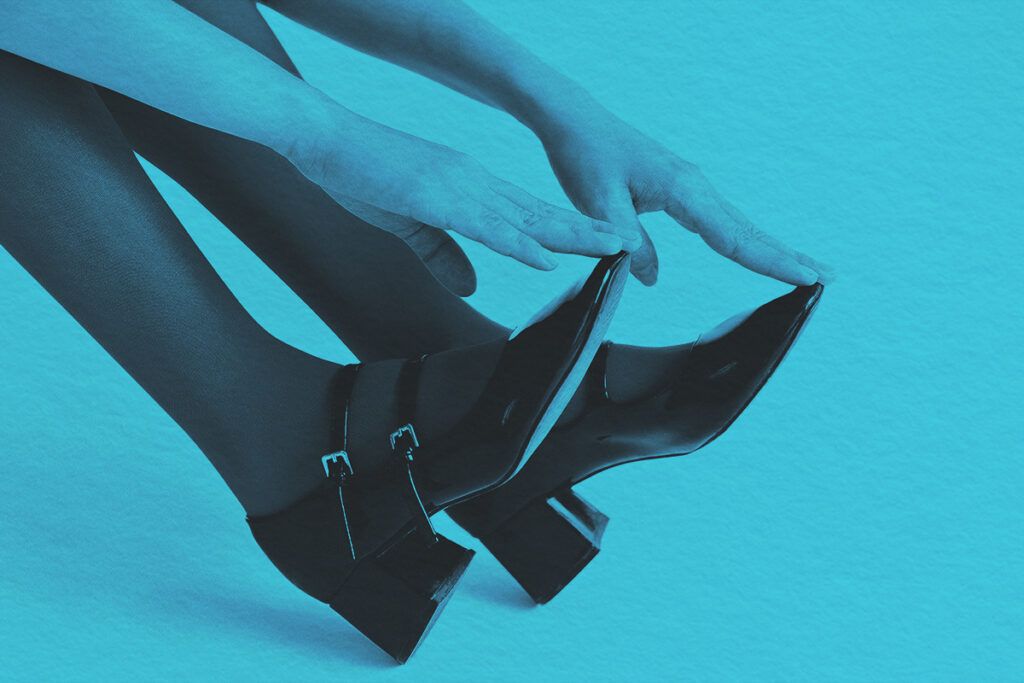
Used in goods ranging from formal footwear to watch bands and wallets, patent leather is a stylish, extremely durable material relied on by clothiers around the globe. By definition, patent leather is “a leather with a hard smooth glossy surface,” and it’s known as much for its eye-catching luster as for its water- and scuff-resistant nature. But is this style of leather actually under patent, or is the term less literal in nature?
The Oxford English Dictionary records the term “patent leather,” referring to leather coated in a protective varnish, appearing in print by the end of the 18th century. The process for creating patent leather in those times was later described in detail in an 1857 edition of Scientific American. It involved boiling a mixture of linseed oil and white lead, rubbing that into traditional leather to form a protective layer, and then finally applying a varnish to give the leather its shiny appearance.
Advertisement
As to the etymological origins of the term,there’s a likely connection to English tanners of the late 18th and early 19th centuries. Many of those tanners received patents related to leathermaking; among them was one patent from 1799 for “a method of painting and colouring all kinds of leather.”
But patent leather, as we know it today, was perfected and popularized in America by inventor Seth Boyden. During the 1810s to 1820s, Boyden took inspiration from those European leather workers and came up with an American version of varnished leather. While this was referred to as patent leather — carrying over from the Europeans who had previously patented similar techniques — Boyden never actually patented his own process.
Enter your email to receive daily lessons that dive into what makes English so fascinating. Each email is packed with odd rules, etymologies, and the tools you need to be a better communicator.
Sorry, your email address is not valid. Please try again.
Sorry, your email address is not valid. Please try again.