“Begs the question” is a common phrase to introduce a follow-up question, but it’s technically incorrect. The mix-up is the result of a translation rooted in philosophy.
“Begs the question” doesn’t always mean what you think it does. It’s often used as a synonym for “raises the question,” but by formal standards, that’s not quite right. Consider this example: “Another major department store is closing its doors. This begs the question: Are shopping malls going extinct?” As you can see, the phrase often introduces a follow-up question, or, as Merriam-Webster puts it, it “elicits a question logically as a reaction or response.” However, this modern usage isn’t historically accurate.
The phrase dates back to Aristotle’s principles of formal logic. It comes from the Latin petitio principii, meaning “assuming the original point.” “Begging the question”is the fallacy of assuming the conclusion is within your premises. In simpler terms, it’s when your argument already assumes the very thing it’s trying to prove. This results in a logically flawed circular argument.
In the context of this philosophical argument, petitio principii was translated into English as “begging the question” during the 16th century, originally meaning “to pass over or ignore a question by assuming it to be established or settled.” It uses an archaic definition of “beg,” meaning “to take for granted the matter in dispute” or “to assume without proof.”
A more precise modern translation of petitio principii might be “assuming the original conclusion.” For example, “Wool sweaters are better than cotton sweaters because they contain more wool” begs the question, since it assumes what is already established (wool is better than cotton). A correct philosophical usage of “begs the question” would be: “The car commercial begs the question when it says the brand is superior because it sold more cars last year.”
You can now see why those who favor the philosophical version dislike the modern usage — the two are very different. However, in informal situations, using “begs the question” to mean something like “raises the question” is widely understood, and dictionaries recognize it as valid. Nevertheless, this usage should be avoided in formal writing.
Featured image credit: Alexander Mils/ Unsplash+
Advertisement
More from our network
Word Smarts is part of Inbox Studio, which publishes content that uplifts, informs, and inspires.
What’s a shebang, is there such a thing as part of a shebang, and what’s the origin of the idiom “the whole shebang”?
These are important questions, and we find some answers in the earliest usage of the word. Merriam-Webster says it appeared in English during the Civil War, as seen in Walt Whitman’s diary entries. He used “shebang” to refer to a type of crude dwelling: Soldiers were living in “shebang enclosures of bushes” and coming “out from their tents or shebangs of bushes.”
A few years later, Mark Twain used “chebang” (an alternate spelling) to refer to any matter of concern. “I like the book, I like you and your style and your business vim, and believe the chebang will be a success,” he wrote in a letter to his publishers in 1869. To complicate matters, in 1872, Twain used “shebang” in reference to a vehicle in his novel The Innocents at Home: “You’re welcome to ride here as long as you please, but this shebang’s chartered.”
The meaning of “shebang” as it relates to a structure was expanded in 1878 in Hallock’s American Club List & Sportsman’s Glossary: “Shebang, any sort of structure from a shanty to a hotel.” Andin 1901, Canadian novelist H. G. Parker authored a book about a heavy-drinking Montreal lawyer, in which he wrote, “There were people who called the tavern a ‘shebang.’”
None of these writers coined the term — they were using it because it was already in the wider lexicon. So where did “shebang” come from? Both Merriam-Webster and the Oxford English Dictionary point out its obscure origin, but that obscurity hasn’t stopped etymologists from speculating.
There are a few possibilities:
Irish, seibin, “a small mug,” which in English became “shabeen, shebeen,” meaning an illegal drinking establishment
Irish, síbín, meaning “illicit whiskey”
French, chabane, meaning “hut”
French, char-á-banc, meaning “a carriage or coach with benches”
Each of these options can address some 19th-century usage of “shebang,” but what about the idiom “the whole shebang”? “The whole shebang” is recorded from 1869, but how it relates to huts, structures, hotels, taverns, or vehicles is unclear. The saying is used to mean “everything that is included in something.” The fact is that some idioms have unknown origins. It may simply be that “shebang” came to refer to so many disparate things that it now refers to the whole of just about anything — the whole shebang.
Featured image credit: D. Lentz/ iStock
Advertisement
More from our network
Word Smarts is part of Inbox Studio, which publishes content that uplifts, informs, and inspires.
9 of the Most Overused Words in English (and What To Use Instead)
Certain words are overused to the point that they lose their meaning and intended impact. Here are nine examples, as well as some alternatives to use in their place.
If you open a copy of Merriam-Webster’s dictionary, you’ll find thousands of words at your fingertips. With an almost limitless vocabulary to choose from, it makes you wonder why some people consistently repeat the same boring, basic terms over and over. If everything is “good,” can anything be “better” or “best”? Varying your word choice makes for stronger writing and more engaging speech. Here’s a closer look at nine of the most overused English words, and some alternative options to give your message more nuance.
Bad
Overusing the word “bad” is, well, bad. According to the mega-popular YouTube account Interactive English, “bad” is the 23rd most common English adjective, used to describe all sorts of unpleasant situations. The issue is that while “bad” does an OK job of conveying negativity like it’s supposed to, it also omits details that could make the story more interesting. For example, if you’re feeling ill and a friend asks how you are, responding with “achy” or “nauseated” paints a clearer picture than “bad.”
Very
While it’s very useful, the word “very” can almost always be swapped out with a more descriptive alternative. Open up the thesaurus and look for synonyms that match the intensity you’re looking for. For example, “jubilant” can replace “very happy” and “vile” can substitute for “very mean.”
Like
When using “like” to introduce a set of examples, it’s best to swap out the word for “such as.” If you say, “The lunch will have several vegetarian options, like tomato soup, quiche, and a portobello sandwich,” that technically reads as if the lunch options will be similar to the listed items, but may not include those items. Use “such as” instead of “like” to clarify that you mean the listed examples.
Many
The word “many” is among the vaguest quantifiers imaginable. “Many” to one person may be five, but to another, “many” may be 500. If you know the exact number or a close estimate, we suggest using that instead of “many.” If you don’t have a numerical estimate, there are plenty of synonyms to describe amounts, such as “countless,” “droves,” “copious,” “sundry,” “abundant, “myriad,” or “umpteen” — pick one that works for your context.
Advertisement
Nice
While “nice” is a familiar and versatile word, it’s been overused to the point that it’s just plain boring. It also leaves out details that could potentially make a more intriguing point. For example, instead of telling a colleague they had a “nice idea,” consider describing it as a “thought-provoking idea.” And instead of calling someone “nice,” say they’re “kind” or “charming.”
Thing
Without context, the word “thing” doesn’t mean much. If you don’t know what an object is, call it a gadget, device, tool, or even a thingamabob (it’s in the thesaurus). If you’re detailing things you have to do, tell someone about your plans, activities, exploits, or undertakings. If you need to say you have things on your mind, you could instead talk about your feelings, concerns, matters, worries, or preoccupations. If you can’t remember that thing someone said, maybe it was a remark, a statement, an utterance, or a pronouncement. When it comes to “thing,” there’s always a better synonym.
Basically
Not only is “basically” basic, but its presence is almost always unnecessary. There’s no reason to start a sentence with “basically,” as it’s just filler before getting to the point. If you need an adverb to make the point,, we’d suggest “fundamentally” or “essentially,” both of which add nuance to your message.
We’ve all claimed that something is amazing even if it’s only mildly OK. But even if something wows you, “amazing” has been overused to the point that it has lost any power it may have once had. Consider alternatives such as “remarkable,” “stupefying,” “prodigious,” or “marvelous.” If you hear something is “amazing,” you may take it with a grain of salt, whereas hearing that something is “thrilling” means it warrants attention.
Really
People really enjoy using the word “really,” despite it lacking specificity. Such is the case with most adverbs, which can often be replaced with a stronger alternative verb (“devoured” instead of “ate quickly,” for example). Try swapping out “really” for a less overstated term, such as “genuinely.” Using a more specific adverb will add emphasis and sincerity.
Featured image credit: DrAbbate/ iStock
Advertisement
More from our network
Word Smarts is part of Inbox Studio, which publishes content that uplifts, informs, and inspires.
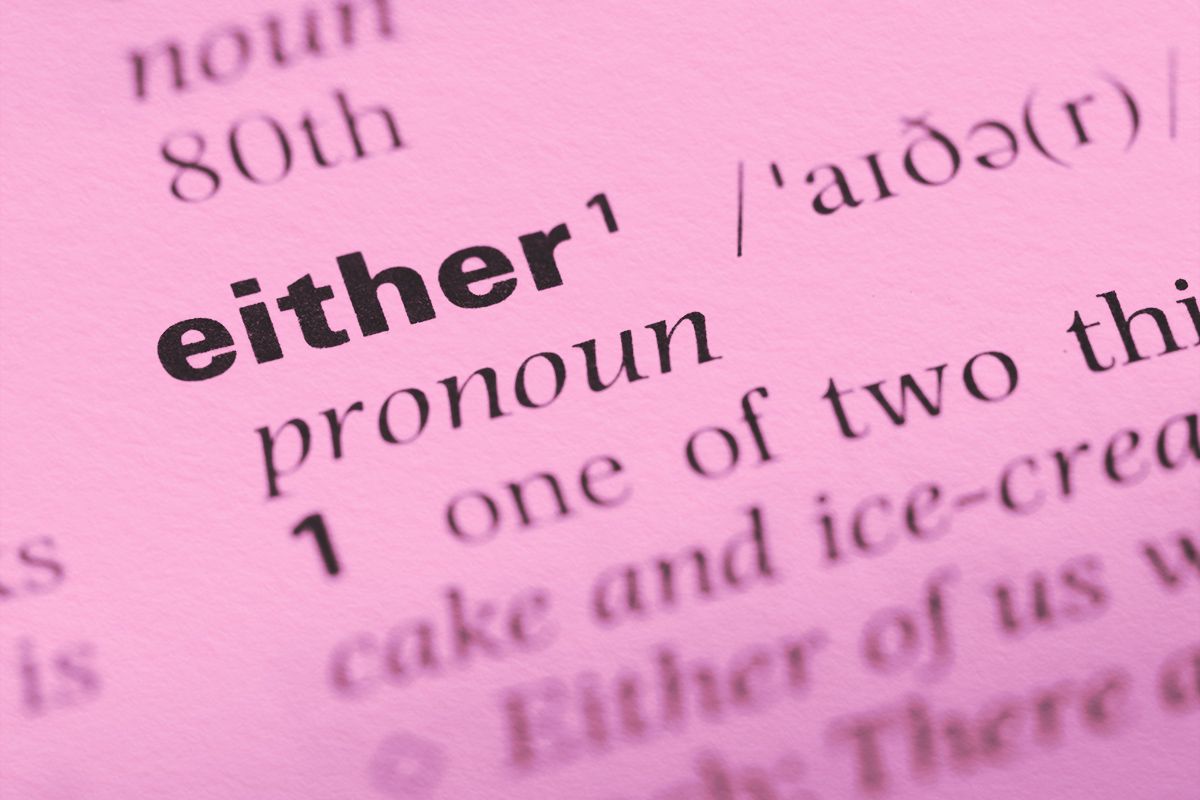
“Either” is a flexible word; not only can it serve as an adjective, pronoun, conjunction, or adverb, but it also has two widely accepted pronunciations.
How do you pronounce the first vowel sound in “either”? It’s one of the most commonly used English words, yet its pronunciation isn’t settled, as is apparent in popular movies. In The Lion King, for instance, Rafiki tells Simba, “The past can hurt. But the way I see it, either [EYE-thur] you run from it or learn from it.” But in The Dark Knight, Harvey Dent notoriously claims, “You either [EE-thur] die a hero, or you live long enough to see yourself become the villain.” So, which Hollywood blockbuster got it wrong? Neither. (“NEE-thur” or “NYE-thur”?)
As it turns out, both pronunciations are perfectly acceptable. According to Merriam-Webster‘s pronunciation guide, this word can be pronounced /ˈē-t͟hər/ (“EE-thur”) or /ˈī-t͟hər/ (“EYE-thur”). Similarly, the Oxford English Dictionary pronunciation guide states that the word can be pronounced two ways: /ˈiːðə/ (“EE-thuh”) or /ˈʌɪðə/ (“EYE-thuh”). The ending syllables differ between dictionaries, based on American and British English vowels.
An English teacher and translator who hosts a YouTube show called “English with Max” addressed the issue in a recent episode. She explained that “EE-thur” is more popular among Americans, while “EYE-thuh” is slightly more common among the British. In her home country of Australia, both pronunciations seem to be used equally. This rule applies similarly to “neither“: Both versions, “NEE-thur” and “NYE-thur” are correct.
The vowel shift appears to have occurred naturally over centuries, but a closer look at the etymology of “either” reveals what could be the original pronunciation. The word stems from the Old Englishægðer, a contraction of æghwæðer, meaning “each of two, both.” In Old English, the vowel æ was pronounced like the “a” in “bad,” the consonant “g” could be pronounced like “y” (Old English ġeard is “yard”), and the letter ð (known as “eth”) was pronounced like the “th” in “then.” Putting all of this together, the supposed Old English pronunciation sounds closer to the modern “EYE-thur.”
Featured image credit: TungCheung/ Adobe Stock
Advertisement
More from our network
Word Smarts is part of Inbox Studio, which publishes content that uplifts, informs, and inspires.
The Correct Terms To Call Locals From All 50 States
People have a lot of pride in their home states, and the names for locals from all 50 states reflect that. Some of these demonyms might seem familiar, while others may surprise you.
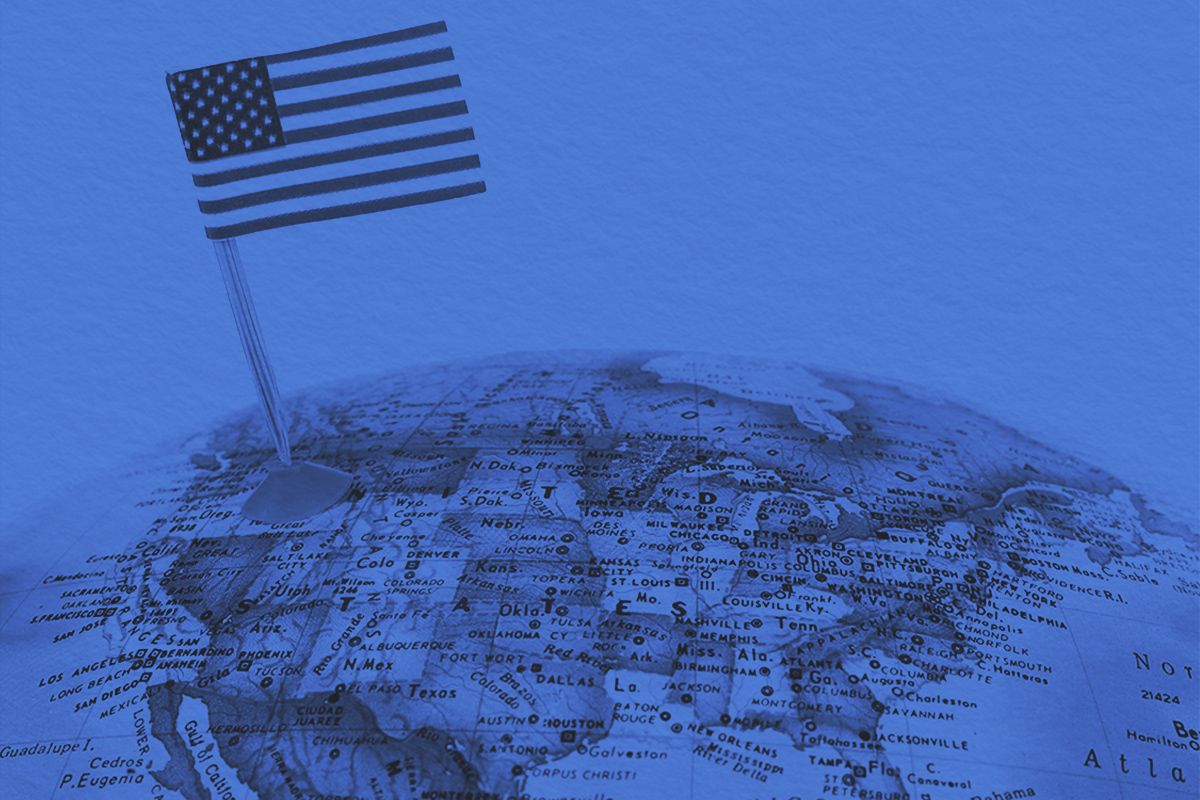
At some point in grade school, we’re taught the names of all 50 states and their capitals. For most of us, however, there likely wasn’t a similar lesson on what to call residents from each of those states. Sure, you can say “person from Indiana,” but it’s so much more interesting to say “Hoosier.” The word used to denote a person from a specific country, state, or city is a demonym, from the Greek dēmos, meaning “the people,” and onoma, meaning “name.” Many demonyms for states are formed using simply the state name with a suffix tacked on, but others, like “Hoosier,” have novel origin stories. Let’s take a look at the correct terms for locals from all 50 states.
Alabama
The official demonym for a person from Alabama is “Alabamian.” However, “Alabaman” (drop the “i”) is an acceptable, lesser-used alternative. In a 1994 New York Timescolumn, author William Safire commented on how, after using the term “Alabaman” in an earlier piece, he was told that locals prefer to be called Alabamians.
Alaska
Non-native inhabitants of Alaska are called Alaskans. But many locals have roots that date back to before Alaskan statehood, and those people specifically are called Alaska Natives. Some also choose to go by the name of their Indigenous tribe.
Arizona
The term “Arizonian” has been used in print since at least 1857 — six years before the area became a territory and 55 years before statehood. The term “Arizonan” was coined a bit later, in 1866, but has since become the preferred demonym among locals, even though both are technically acceptable.
Arkansas
“Arkansan” is the most familiar term for talking about locals from the Natural State. But “Arkansian” has been in use since the 1840s and remains a popular alternative. There’s also “Arkansawyer,” which was first coined in the 1870s as a helpful reflection of how the state’s name is pronounced.
California
In such a large state, residents might claim demonyms specific to their city, like “San Diegan,” “San Franciscan,” or “Angeleno” — the latter of which refers to folks from Los Angeles. But when discussing the state as a whole, all locals are Californians
Colorado
According to 1982’s The American Language, demonyms have specific rules. Add an “-an” suffix when a place name ends in “-o,” but if the place’s name is of Spanish origin, then drop the “-o” before adding “-an.” This has led to a bit of a jumble in Colorado, where locals call themselves either Coloradans or Coloradoans.
Connecticut
The official term for a Connecticut resident is “Connecticuter.” But the unofficial nickname is “Nutmegger,” which is derived from a local legend. The story goes that early inhabitants were so shrewd that they made and sold wooden nutmegs, fooling buyers who thought they were the real thing. This gave rise to the term “Nutmegger,” which remains popular today.
Delaware
If you’re from Delaware, you’re a Delawarean. This demonym owes a debt to Virginia in a roundabout way. The state was named after the Delaware River, which was named in 1610, when explorer Samuel Argall gave a nod to the governor of Virginia, Thomas West, Lord De La Warr.
Florida
“Floridian” is the most widely used term for people from the Sunshine State. But there are still occasions — some intentional and some by mistake — when people drop the “i” and use the word “Floridan” instead.
Advertisement
Georgia
The term “Georgian” denotes any local from the Peach State, but a resident of Atlanta may be quicker to claim their “Atlantan” demonym, as this metropolitan city holds more than 6 million of the state’s 11 million residents.
Hawaii
Use of the term “Hawaiian” is strictly reserved for native inhabitants of Hawaii. Those without any native heritage are officially known as Hawaii residents. There are also relevant terms in the Hawaiian language: kamaaina denotes a person who’s lived in Hawaii for a long time, whereas malihini is used for newcomers.
Idaho
No matter where they live, all residents of the Gem State are Idahoans. But those who hail from Boise are Boiseans, locals from Meridian claim to be Meridianites, and folks from Nampa are Nampans.
Illinois
People who reside in Illinois are called Illinoisans, though there are far more specific demonyms based on the city you live in. For example, people in Chicago are Chicagoans, which could aptly describe more than 20% of the overall state population.
Indiana
While the term “Indianan” was once considered the official demonym of Indiana, the official state guidelines changed in 2016. Locals are now called Hoosiers, a term that’s been in use since the 1830s. Despite its widespread use, no one seems to really know what it means, other than “someone from Indiana.” It’s also the name for athletes from Indiana University.
Iowa
All you need to do is tack on a single letter to the state name to get “Iowan,” the official term for a local from Iowa. Residents may also be colloquially called Hawkeyes, referring to the University of Iowa, which is said to have been inspired by the scout named Hawkeye in James Fenimore Cooper’s 1826 book The Last of the Mohicans.
Kansas
Most people from Kansas are simply referred to as Kansans. But there are a few other unofficial monikers derived from various state nicknames, including “Jayhawkers” (University of Kansas) and “Sunflowers” (the state flower).
Kentucky
The official spelling for a Kentucky resident is “Kentuckian.” That said, the alternative spelling of “Kentuckyan” — which sounds identical — is an acceptable option. You may even come across a Kentucker or a Kentuckyite when wandering around the state.
Louisiana
While “Louisianian” was once a more popular term — and one that remains technically correct today — it’s far more common to drop the “i” and use the word “Louisanan.” Louisiana locals may also go by “Cajuns” or “Creoles.” The former term refers to locals of French Canadian descent, and the latter refers to residents of mixed European heritage.
Advertisement
Maine
Even though the playful term “Mainiac” appeared in a 1938 edition of Time magazine, it never caught on as the official demonym. The official term is simply “Mainer.”
Maryland
It’s no surprise that folks from the Old Line State are called Marylanders. But based on the state nickname, they’re also sometimes referred to as Old Liners. This nickname is a reference to Revolutionary War-era regiments that were located throughout the region.
Massachusetts
While the government of the Commonwealth of Massachusetts has designated an official state cat (tabby cat) and an official state doughnut (Boston cream, natch), it doesn’t rule on an official demonym. Either “Massachusettan” or “Bay Stater” are valid options.
Michigan
People from Michigan are either Michiganders, Michiganites, or even Michiganians. But there’s been a decades-long debate over which should be considered the “most” official. The term “Michiganian” topped the list in 1981, but in 2017, state Senator Geoff Hansen sponsored a bill that declared the official demonym to be “Michigander.”
Minnesota
Tack on a single “n” to get “Minnesotan,” which is the official demonym for folks who hail from the Land of 10,000 Lakes. The state and its residents are named after the Dakotan term Mni Sota, which means “clear blue water” and refers to the local Minnesota River.
Mississippi
If you’re from Jackson, Tupelo, Natchez, or anywhere else in the Magnolia State, you’re a Mississippian. Both this demonym and the name of the state and the river are derived from the Ojibwe gichi-ziibi, which means “big river.”
Missouri
People from Missouri are called Missourians, though the alternative spelling of “Missouran” is also acceptable. While this matter seems settled, locals continue to argue over whether to pronounce the state’s name with an “ee,” “eye,” or “uh” sound at the end.
Montana
Residents of Big Sky Country are Montanans, though local demonyms can be broken down even further if you go city by city. People from Billings are Billingsites, those from Bozeman are Bozemanites, and locals in Missoula are Missoulians, just to name a few examples.
Nebraska
While the official demonym for any Nebraska local is “Nebraskan,” they’re sometimes referred to as Cornhuskers. This nickname dates from 1900, when a local sports reporter began calling the University of Nebraska football team the Cornhuskers, referring to the state’s prolific corn industry.
Advertisement
Nevada
If you’re one of the more than 3 million people in Nevada, you’re simply known as a Nevadan. But if you live in Sin City, then you’re called either a Las Vegan or just a Vegan. Take note: This term is pronounced with a starting “vay” sound. This differs from those who adhere to a vegan diet, as that term begins with a “vee” sound.
New Hampshire
New Hampshire residents are typically called New Hampshirites. However, the name is known to be broken down by gender, albeit far less frequently. You might encounter New Hampshiremen or New Hampshirewomen on a visit to Nashua.
New Jersey
People who call the Garden State home are known as New Jerseyans. Sometimes you may hear locals being called New Jerseyites, though that demonym is less common.
New Mexico
Much like how people from Mexico are called Mexicans, people from New Mexico are New Mexicans. However, locals who identify as having Hispanic heritage may refer to themselves as Hispano or Nuevomexicano.
New York
Calling yourself a New Yorker may mean you’re from the state as a whole or New York City, specifically. If you do live in NYC, there are demonyms based on the borough you reside in. You can be a Bronxite, Brooklynite, Manhattanite, or Staten Islander, but curiously enough, there’s no largely agreed-upon demonym for people from Queens. It’s common for Queens residents to go off of demonyms based on their neighborhood.
North Carolina
There are a lot of Tar Heels (also the name for students and athletes from the University of North Carolina) living in North Carolina — the nickname is derived from the state’s history as a major producer of tar and similar materials. It was originally a derogatory term used to target workers in so-called dirty professions, but it came to be embraced during the Civil War. Officially, however, people from the state are called North Carolinians.
North Dakota
Those from North Dakota are called North Dakotans. Any prediction for what people from South Dakota are called?
Ohio
The traditional demonym for Ohio locals is “Ohioan.” However, many choose to go by the term “Buckeyes.” This name has been associated with Ohio since 1788 and refers to the fruit of the buckeye trees grown throughout the state.
Oklahoma
“Oklahoman” is the official term for people from the Sooner State. But they may also be called Okies — a nickname that dates to the early 20th century. When John Steinbeck published 1939’s The Grapes of Wrath, the term “Okie” had a negative connotation associated with poverty, but it shed that in the 1960s.
Advertisement
Oregon
If you’re from Oregon, you’re an Oregonian. However, a debate still rages over how to pronounce the state’s name. Locals insist that it ends in a “gin” sound with a hard “g.” But non-Oregonians typically say “gone” instead.
Pennsylvania
People from Pennsylvania are officially known as Pennsylvanians. But if you’re from Pittsburgh, you may be either a Pittsburgher or a Yinzer — the latter of which is derived from the catchall slang term “yinz.”
Rhode Island
Rhode Island residents are called Rhode Islanders. In rare cases, you may hear them referred to as Rhodians. This is the same name that you’d use to refer to people from the Greek island of Rhodes, an island that may have inspired the name of the state.
South Carolina
People from South Carolina are called South Carolinians. But they’re also sometimes referred to as Sandlappers. This old and somewhat archaic term is used for locals who live in sandy areas, such as those along the coastline.
South Dakota
Much like their neighbors to the north, people from South Dakota tack on an “-n” to get the demonym “South Dakotan.” We’d have to assume this naming convention would apply if there were also an East or West Dakota.
Tennessee
Colloquially, people from Tennessee can be called Volunteers (as well as students and athletes from the University of Tennessee) or Butternuts — the latter of which refers to the tan-colored uniforms of local Confederate soldiers during the Civil War. But generally, Tennessee locals are simply called Tennesseans.
Texas
If you come from Texas, you’re probably known as a Texan. But if you’re a Texan of Hispanic or Native American origin, you may prefer the alternative term “Tejano.” This is a particularly popular demonym in southern Texas toward the Mexican border.
Utah
To those who were born outside of Utah, the term “Utahn” may look like a misspelling; indeed, outsiders have sometimes erroneously spelled the word as “Utahan.” Locals know the official term is simply “Utahn.”
Vermont
Much like many other states in the New England region, Vermont tacks on an “-er” to get the nickname “Vermonter.” Some locals, however, are known as Woodchucks, which refers to folks who literally chucked wood.
Advertisement
Virginia
“Virginian” is the proper term to describe anyone from Virginia. But if a person lives in Virginia Beach, you’d keep the word “Virginia” unchanged. Instead, the person would be a Virginia Beachian.
Washington
When George Washington served as president, little did he know that one day down the line, some 8 million people would be Washingtonians. But some locals prefer to be known as ’Toners, which is a more colloquial alternative.
West Virginia
People who live in West Virginia are simply called West Virginians. However, they’re sometimes referred to as Mountaineers — a name, shared by athletes at the University of West Virginia, that refers to the state’s Appalachian terrain
You may have heard Wisconsin residents referred to as Cheeseheads before, which plays off of the state’s prolific dairy industry. But the official demonym for residents is just “Wisconsinites.”
Wyoming
Last (at least, alphabetically), we have people from the state of Wyoming, who are known as Wyomingites. However, the term “Wyomese” has popped up here and there, including in this 1903 article from the Chicago Daily Tribune.
Featured image credit: DHEER/ Adobe Stock
Advertisement
More from our network
Word Smarts is part of Inbox Studio, which publishes content that uplifts, informs, and inspires.
Today’s potluck tables are filled with Tupperware and tinfoil pans, but the word “potluck” can be traced back to the 16th century, when people ate out of real pots containing culinary hodgepodges.
Potlucks are a great way for friends to gather and enjoy one another’s company and cooking. But they’re not a modern invention — the term is derived from a 16th-century hospitality practice. Often, guests showed up at homes or inns hoping to be fed, though there was rarely, if ever, a written menu of dishes to pick from. Instead, they would have to rely on the luck of the pot.
With only rudimentary kitchen equipment, home cooks and innkeepers often prepared one big meal in a pot for all to share. These meals rarely took into consideration the personal tastes of any one individual, and everyone ate the same dish. In the event that an unexpected guest arrived after the food was prepared, they’d have no choice but to abide by the luck of the pot. In other words, they’d have to hope the food was to their liking, as there’d be only one choice available.
Though this explains the roots of the term “potluck,” it wasn’t until the Great Depression of the 1930s that potluck meals came to be more reflective of what they are today. Large groups often gathered to share communal stews that incorporated any ingredients people had on hand. As the American economy recovered, these potluck-style gatherings became less of a necessity and more of a way for friends to share favorite recipes.
We’d also like to dispel the notion that potlucks have an association with an Indigenous American ceremony called a “potlatch” — a ceremonial gathering in which property and gifts were distributed based on social status. There’s a myth of a connection between these similar terms, but “potlatch” and “potluck” don’t share an etymological root.
Featured image credit: halbergman/ iStock
Advertisement
More from our network
Word Smarts is part of Inbox Studio, which publishes content that uplifts, informs, and inspires.
The score at the end of a game dictates the winner, but “four score” also means “80.” To understand why “score” has a specific numerical value, let’s take a look at ancient farming traditions.
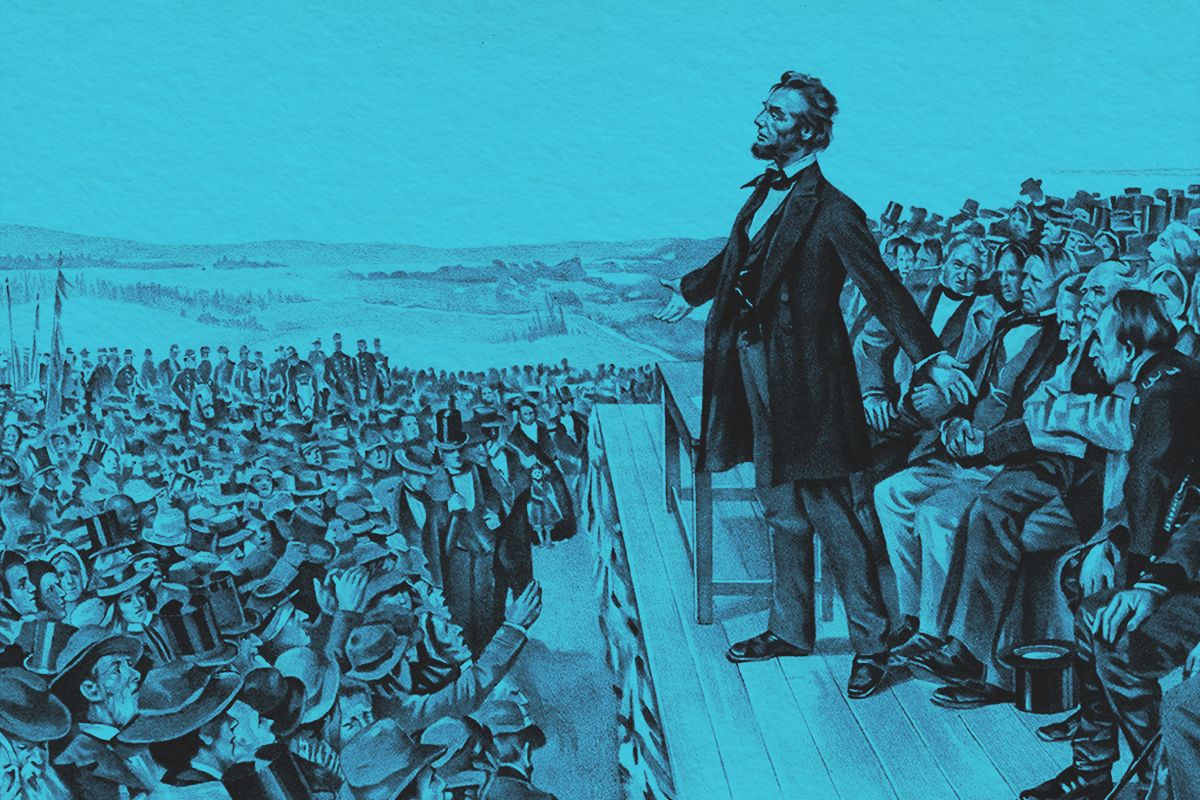
One of the most recognizable spoken lines in American history begins, “Four score and seven years ago…” These six words opened Abraham Lincoln’s Gettysburg Address, delivered November 19, 1863. In this context, Lincoln used “score” as a synonym for “20,” turning the phrase into an eloquent way to say “87 years ago.” But to our modern ears, there’s no clear reason why “score” means “20,” so let’s examine the etymology.
To better understand this meaning, we need to look to the act of scoring. It wasn’t used originally in the context of determining the winner of a competition. “Score” is derived from the Old Norse skor, meaning “a mark” or “a notch.” It’s believed that some early sheep herders would make physical notches in their wooden sticks while counting large flocks. Rather than make a notch for each individual sheep — which would be too much work and take up too much space — they’d make one skor for each group of 20. The word came into Old English as scoru, meaning “20.”
But why 20 instead of 10? While many modern peoples count by 10s, ancient Celtic cultures used a vigesimal counting system, in which they counted by 20s. This helped further solidify the connection between the number 20 and the word “score.”
In time, the usage of “score” expanded far beyond counting sheep. Orators and writers would often pair “score” with a cardinal number to denote larger periods of time (“threescore” for 60 years, “fourscore” for 80 years, etc.). While Lincoln’s speech is likely the most well-known example of this, he certainly wasn’t the only speaker to use “score” in this context.
Featured image credit: Niday Picture Library/ Alamy Stock Photo
Advertisement
More from our network
Word Smarts is part of Inbox Studio, which publishes content that uplifts, informs, and inspires.
As you flip through the pages of your Merriam-Webster dictionary, you’ll find a plethora of words pronounced exactly how they’re written (according to standard English pronunciation rules). But you’ll occasionally happen upon an outlier whose pronunciation isn’t so obvious. In these cases, two distinct groups tend to form — people who say the word correctly, and people who think they say the word correctly, even though they’re slightly off.
We all learn words in different ways, and there’s no shame in discovering you’ve been mispronouncing a word you’ve been using for years. Maybe it’s a tricky loanword, or it’s a term you’ve only read in print and never actually heard aloud. Let’s examine 10 thorny words that frequently trip up folks trying to pronounce them.
Antennae
The word “antennae” is the plural form of “antenna,” referring to the long sensory organs atop a bug’s head or any metallic rods that receive radio waves. People frequently pronounce this as either “an-TEN-uh” or “an-TEN-eye,” but neither is right. The proper way to pronounce this word is “an-TEN-ee,” with an elongated “e” sound at the end. It’s similar to how you’d pronounce the word “algae.” This logic applies to the word “larvae” as well, which should be pronounced “LAR-vee.”
Forte
The term “forte” is defined as “one’s strong point,” and American English speakers commonly pronounce it as the two syllable “FOR-tay.” However, according to Merriam-Webster, many experts recommend an alternate pronunciation that’s just one syllable long: “FORT.” Of course, “forte” has another meaning as a musical direction instructing the player to be loud. In that case, it should be pronounced “FOR-tay,” as it accurately reflects the musical term’s Italian origins.
Primer
There are two types of primers — one defined as “a short informative piece of writing” and the other as “material used in priming a surface.” When it comes to the former, the word is actually pronounced “PRIMM-er” and not “PRI-mer.” In other words, the first syllable should rhyme with “him” when describing an educational bit of writing. If you’re talking about a coat of paint, the first syllable should rhyme with “eye.”
Advertisement
Pho
If you’ve ever dined at a Vietnamese restaurant, you might have indulged in a delicious bowl of pho. Many English speakers pronounce this popular noodle soup as if it rhymes with “foe,” but that’s incorrect. This mispronunciation dates to around 1935, when the English word “pho” first appeared in print. But the original Vietnamese word is actually phở, pronounced “FUH.” The accent marks were dropped when it was anglicized, which is why so many English speakers mix up the pronunciation today.
Mischievous
Not only do many folks pronounce this word as “mis-CHEE-vee-us,” but they also write it down as “mischievious,” adding an “i” between the “v” and “o.” But according toMerriam-Webster, both that pronunciation and that spelling are considered nonstandard. The adjective should be pronounced “MIS-chuh-vuhs,” putting an emphasis on the first of three syllables.
Boatswain
“Boatswain” refers to a petty officer on a merchant ship or a naval warrant office in charge of the equipment. In either case, several of the letters are silent; this word should be pronounced “BOW-sun.” Similar logic applies to the word “coxswain,” which is the captain of a rowing team. That word is pronounced “COX-sun.”
Advertisement
Remuneration
Did you know that “renumeration” — pronounced “reh-noom-er-AY-shun” — isn’t really a word? It’s an oft-repeated misspelling of the real word “remuneration,” where the “m” comes before the “n.” For whatever reason, people often jumble the “m” and “n,” leading to mistaken pronunciations. Just remember that putting “m” and “n” in alphabetical order will give you the proper pronunciation: “reh-myoo-ner-AY-shun.”
Açai
An açai bowl is a trendy lunchtime option that incorporates the açai berry — a small, purple fruit native to Central and South America. But the word “açai” is often erroneously pronounced as “ah-KAI.” It should be pronounced “ah-sah-EE,” adding one additional syllable and putting the stress at the end. The cedilla (“ç”) accent changes the hard “k” sound to a softer “s” sound.
Prelude
A prelude is an introductory performance or action, occurring before a main event. While “PRAY-lude” has become a common and acceptable pronunciation, the word was meant to be pronounced differently. The correct pronunciation is “PRELL-yude,” meaning the first syllable should rhyme with “spell” or “tell.”
The words “triathlon” and “biathlon” are often pronounced with an extra “a” shoehorned in before the “-lon” suffix. But it’s not entirely clear why people make that mistake so often, because the words aren’t spelled that way. The actual pronunciation is “tri-ATH-lon” or “bi-ATH-lon,” depending on how many events are competed in.
Featured image credit: Fotolite/ iStock
Advertisement
More from our network
Word Smarts is part of Inbox Studio, which publishes content that uplifts, informs, and inspires.
To quote the legendary “Macho Man” Randy Savage, “the cream rises to the top.” But in another idiomatic context, “cream” doesn’t have anything to do with dairy.
With our apologies to those who are lactose intolerant, it’s time to talk about cream. The good news is when it comes to the idiom “cream of the crop,” the cream isn’t actually dairy. It relates to a figurative meaning of the word “cream” — an alternate definition that dates to the late 16th century.
In addition to its widely known dairy-related meanings, “cream” is defined as the choicest or best part of something. This usage can be traced back to 1581, according to the Oxford English Dictionary.
That brings us to the idiom “cream of the crop,” which became popular around the mid-19th century. The Americanism was likely inspired by the French idiom crème de la crème — meaning “the very best.” This Frenchism was spotted in English in the 1840s, and the idiom “cream of the crop” appeared soon after. According to the Oxford English Dictionary, an early printed example appears in an 1851 article from the Boston Daily Atlas: “Their customers require goods made of the best cotton, the cream of the crop.”
Sometimes the phrase is used in a more literal sense. People can describe the most pristine produce from a single harvest (e.g., apples, corn, or any product without any obvious blemishes) as the “cream of the crop.” However, it’s mostly used in a figurative context. Today, it’s typically used to describe the very best in any context, from the finest smartphone on the market to the most talented NBA players, and so on.
Featured image credit: FreshSplash/ iStock
Advertisement
More from our network
Word Smarts is part of Inbox Studio, which publishes content that uplifts, informs, and inspires.
White elephant gift exchanges are playful events among friends and colleagues today. But there was a time when actual white elephants were exchanged, and it was usually done for backhanded reasons.
When you picture a white elephant gift exchange, you might imagine lighthearted prank gifts such as an empty toilet paper roll or a coffee mug with a hole at the bottom. That’s because in a modern context, a white elephant gift is any gift that the recipient may consider useless or burdensome, often exchanged in a humorous context. However, the phrase is derived from a time in Southeast Asia when real white elephants were exchanged for insincere reasons.
As the story goes, the phrase comes from Siam (modern-day Thailand), where white elephants were considered rare objects of veneration that fell under ownership of the Siamese king. Given the animal’s elevated status, white elephants were rarely made to perform labor and were instead pampered with food and nonstop care. This treatment might be considered standard in a royal palace, but it would be burdensome for a normal household.
Here enters the cursed blessing of the gift of the white elephant. These pale creatures were gifted to people who had fallen into ill favor with the king. Given the fact that they were so highly honored, the giftee had no choice but to care for the animal. However, doing so would drain them of all their resources, leaving that person in a state of financial ruin (just as the king hoped).
By the 1720s, the literal act of gifting a white elephant gave rise to the figurative phrase. One of its earliest uses appears in a 1721 edition of the London Journal:“In short, Honour and Victory are generally no more than white Elephants.” Today, “white elephant” mainly refers to little tchotchkes and other goofy gifts exchanged among friends for laughs.
Featured image credit: DeanDrobot/ iStock
Advertisement
More from our network
Word Smarts is part of Inbox Studio, which publishes content that uplifts, informs, and inspires.
Enter your email to receive daily lessons that dive into what makes English so fascinating. Each email is packed with odd rules, etymologies, and the tools you need to be a better communicator.
Sorry, your email address is not valid. Please try again.
Sorry, your email address is not valid. Please try again.

















)