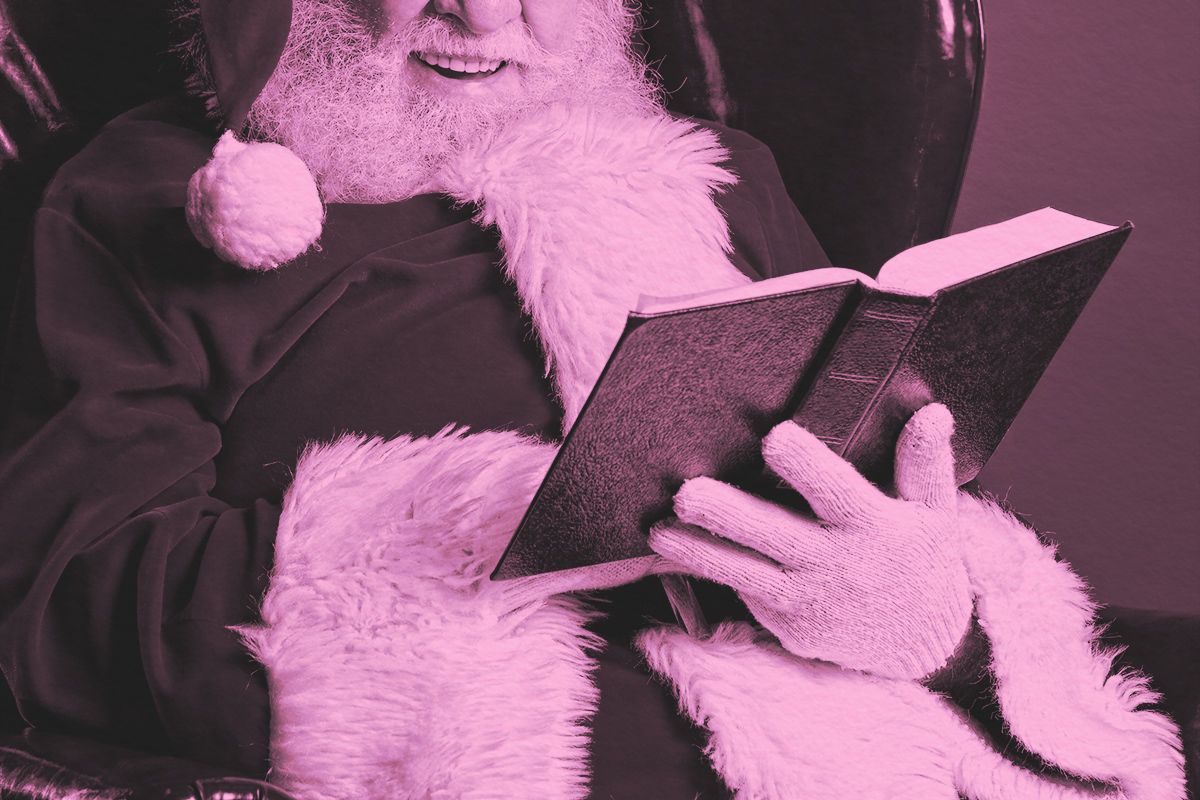
What do you get when a master storyteller becomes Santa Claus? For J.R.R. Tolkien’s children, Christmas meant opening mail from a world only he could invent.
It’s a favorite tradition for lots of children to send letters to Santa, but J.R.R. Tolkien’s children instead received letters from Santa Claus. Every year, they received an envelope that bore a North Pole postmark, containing a letter handwritten in strange, spidery script, complete with sketches and color drawings. They discovered incredible tales of life at the polar workshop — and each letter was signed by Father Christmas himself.
It was, of course, Tolkien assuming the guise of Santa. For more than 20 years — starting in 1920, when Tolkien’s oldest child, John, was 3 years old — he carefully crafted the annual letter, instilling each one with the same imagination and wonder that defined his most famous works, The Hobbit and The Lord of the Rings. The tradition continued through the childhoods of his three other children, Michael, Christopher, and Priscilla.
Tolkien unleashed his creative genius in his fantastical Christmas correspondence by crafting an entire mythology around Father Christmas and his household, with a cast of memorable characters including the North Polar Bear and his two nephews, Paksu and Valkotukka, and Santa’s clever Elven secretary, Ilbereth. And while Santa did most of the writing, sometimes his friends took over, using their own distinctive scripts. When, for example, the North Polar Bear added a note, it was written in a thick scrawl due to his large paws, with his spelling mistakes attributed to the fact that his first language was Arktik — the mythical tongue spoken at the North Pole — instead of English.
These delightful Yuletide letters were preserved and later published in Letters From Father Christmas, a volume posthumously released in 1976, three years after Tolkien’s death. Edited by Baillie Tolkien, the wife of Christopher Tolkien, the beautiful book contains the letters, drawings, and envelopes that came from Tolkien’s Santa. It’s a charming collection — one that reveals both Tolkien’s extraordinary creativity and the lengths he went to as a father to imbue his family’s Christmases with priceless childhood wonder.
Featured image credit: inhauscreative/ iStock
Advertisement
More from our network
Word Smarts is part of Inbox Studio, which publishes content that uplifts, informs, and inspires.
Can you tell if a boomer is texting you, or if it’s a millennial? The punctuation might give it away. Certain punctuation habits have changed over the decades and reveal the generational divides.
Can punctuation really give away your age? If our everyday texts and emails are any clue, the answer is, “Yes.” Just as music and fashion trends have evolved by decade, so too have our grammar and punctuation habits. That’s why millennials have a habit of ending sentences with “lol,” while baby boomers might trail off with an ellipsis (“How are you…”).
In a survey on punctuation habits, people of different age groups revealed interesting variances. Less than one-quarter of Gen Z respondents use punctuation in casual communication, while more than half of baby boomers (55%) report always using it while texting or posting online. Meanwhile, only 16% of Gen Z and 28% of millennials consistently use periods at the end of sentences. But these survey results don’t mean punctuation is disappearing; it’s evolving.
The Generational Divide
Each generation has its own unique linguistic quirks, including slang, tone, and punctuation use. In an informal poll of the editorial team staff, we surfaced some notable differences in the texting habits of different generations. Baby boomers, for example, are known for their love of ellipses. They’re everywhere: to end a sentence, to soften the tone, or to indicate trailing thoughts. For instance, a boomer might text, “Hey, can we talk…” — and for that generation, it’s a perfectly friendly request for a chat. But for a millennial or Gen Z recipient, it might cause a downward spiral. To younger folks, the ellipsis conveys an ominous or hesitant tone, possibly suggesting bad news is coming or indicating passive aggression.
We notice that younger texters do use ellipses, but usually for dramatic effect in negative contexts, as in, “I got another parking ticket today… ” This stems from the modern practice of using ellipses to create drama and suspense, a habit often employed by creative writers. Think of the Star Wars opening crawl — “A long time ago in a galaxy far, far away …” — where the anticipation is taken to another level through punctuation.
Still, millennials seem to be more likely to skip ellipses altogether and instead add a mood-appropriate emoji or a common texting abbreviation, such as “lol,” as in, “I got another parking ticket today lol” — yes, acronyms are the new punctuation for this generation. Whether meant sincerely or ironically, this trend has become a standard way to close a sentence.
Where does this leave Gen X? True to form, they borrow habits from both, sitting comfortably in the middle. They blend the formal writing habits of baby boomers with the casual texting tone of millennials and Gen Z, creating a hybrid. For instance, you might receive a text from a Gen Xer saying, “Hi! We’re really looking forward to this weekend… It’s going to be FUN… 💃 lol”
Advertisement
How We Got Here
According to linguist Adam Aleksic (known online as “Etymology Nerd”), there’s a perfectly good reason for these differences. Boomers favor ellipses and other “dated” punctuation habits because they used very different forms of communication when they were younger. They grew up writing postcards and letters, where space was limited, and ellipses served as a handy tool to separate ideas or mimic a paragraph break.
Even in the early days of texting, users paid per message, so sending out one large message separated by ellipses was more economical than sending several separate thoughts. Today’s texters reap the benefits of unlimited text messaging, so there’s no need for bulky blocks of text anymore. As a result, the ellipsis has fallen out of use and the continued usage is now viewed as quaint, confusing, or even unsettling when the tone is misinterpreted.
Similarly, baby boomers tend to be more reserved with their emoji usage than younger generations, especially when it comes to the nuance of emoji meanings. Sure, boomers were around for the rise of texting in the 2000s and social media in the 2010s, but they didn’t grow up with this technology, so their learned habits are different. A boomer might write, “Hi! 😊 Just checking in…” — a simple, polite message — but the emoji doesn’t replace the punctuation.
Millennials add creative flair and replace traditional punctuation. Instead, they might ask, “What’s up 👀” The emoji stands in for the question mark, indicating punctuation, tone, and context all at once. We also have younger generations (and even some older texters) taking a maximalistic approach to punctuation: “This is so EXCITING!!!!” Here, the simple repetition of punctuation and capitalization conveys tone without requiring elaboration.
Advertisement
Punctuation Is Part of History
The rise of technology and the evolution of communication have changed how we use and interpret punctuation. The 15th-century printing press, for example, produced new conventions for spelling, spacing, line breaking, and hyphenation. It featured punctuation marks that are now extinct, such as the percontation point, a reversed question mark used for open-ended questions.
During the 19th century, communication underwent rapid changes as the telegraph and, later, the typewriter revolutionized writing. In fact, double spaces after punctuation are a remnant of typewriters — the extra space before a new sentence made it easier to read monospaced typewritten correspondence. Today, most style guides prefer one space after punctuation, and Microsoft Word now marks two spaces as an error. But those from the typewriter generation might still use two spaces, as they learned how to type hitting that space bar twice.
A significant divergence between formal and informal punctuation began in the 1990s and 2000s, when personal computers emerged. Shorter sentences and fast communication were the goal, and as a society, we became obsessed with this new way of connecting. By the 2010s, when people became glued to their cellphones and tablets, these grammar conventions evolved further into a new tech language that became as important to learn as formal English.
As social media continues to influence casual language in the 2020s, brevity, tone, emojis, and GIFs are now the focus. We use as few words as possible and add flourishes in the form of emojis, memes, or even short videos. These can be considered new forms of punctuation, as they not only help organize language but also convey emotion and intent — going far beyond the humble period or question mark. This makes language more engaging than ever, but it’s also nuanced and can lead to generational divides that cause misunderstandings.
So, what comes next? Will Gen Alpha — the children in grade school now — reinvent punctuation once again? It’s hard to imagine what that will look like. But if linguistic trends are anything like fashion trends, we may soon see the ellipsis make a comeback, much to the dismay of millennial parents.
Featured image credit: Liubomyr Vorona/ iStock
Advertisement
More from our network
Word Smarts is part of Inbox Studio, which publishes content that uplifts, informs, and inspires.
Traditional grammar rules say that double negatives are bad news, but here’s why you should consider using them occasionally to refine your writing skills.
Double negatives have a reputation as grammatical villains that are to be avoided at all costs. But like most habits, everything has its time and place. Just ask the Rolling Stones. In their hit track “(I Can’t Get No) Satisfaction” (which reportedly came to Keith Richards in his sleep), the lyrics use a double negative to hit just the right rhythm. And the famous opening line from Pink Floyd — “We don’t need no education” — works because it goes against formal grammar rules.
Negative words are “no,” “not,” and contractions such as “can’t” and “don’t,” but the category also includes words such as “neither,” “hardly,” “nothing,” and “nobody,” as well as negative prefixes such as “un-” and “in-.” Pairing negative words is traditionally not allowed in the same sentence because when a double negative is used, they cancel each other out. However, as seen in the examples above, creative license allows for the literal meanings to be warped. But when else might double negatives be appropriate?
Double negatives are sometimes used for rhetorical effect, such as in the phrases “not uncommon,” “not inappropriate,” and “not unimportant.” Saying, “It’s not uncommon for the train to arrive late,” has a slightly different meaning than “It’s common for the train to arrive late.” The first suggests it happens occasionally, while the latter conveys a more frequent occurrence. This tool allows writers to subtly express an affirmative by using a negative of the contrary (a rhetorical device called “litotes“).
So, while double negatives can be automatic grammar faux pas (“I don’t want no broccoli”), there is nuance to this grammatical tool. They can provide lyrical flow, soften absolutes, and add complexity and nuance to statements. In these cases, double negatives don’t confuse or cancel out the intended meaning; they refine it.
Featured image credit: ImageFlow/ Adobe Stock
Advertisement
More from our network
Word Smarts is part of Inbox Studio, which publishes content that uplifts, informs, and inspires.
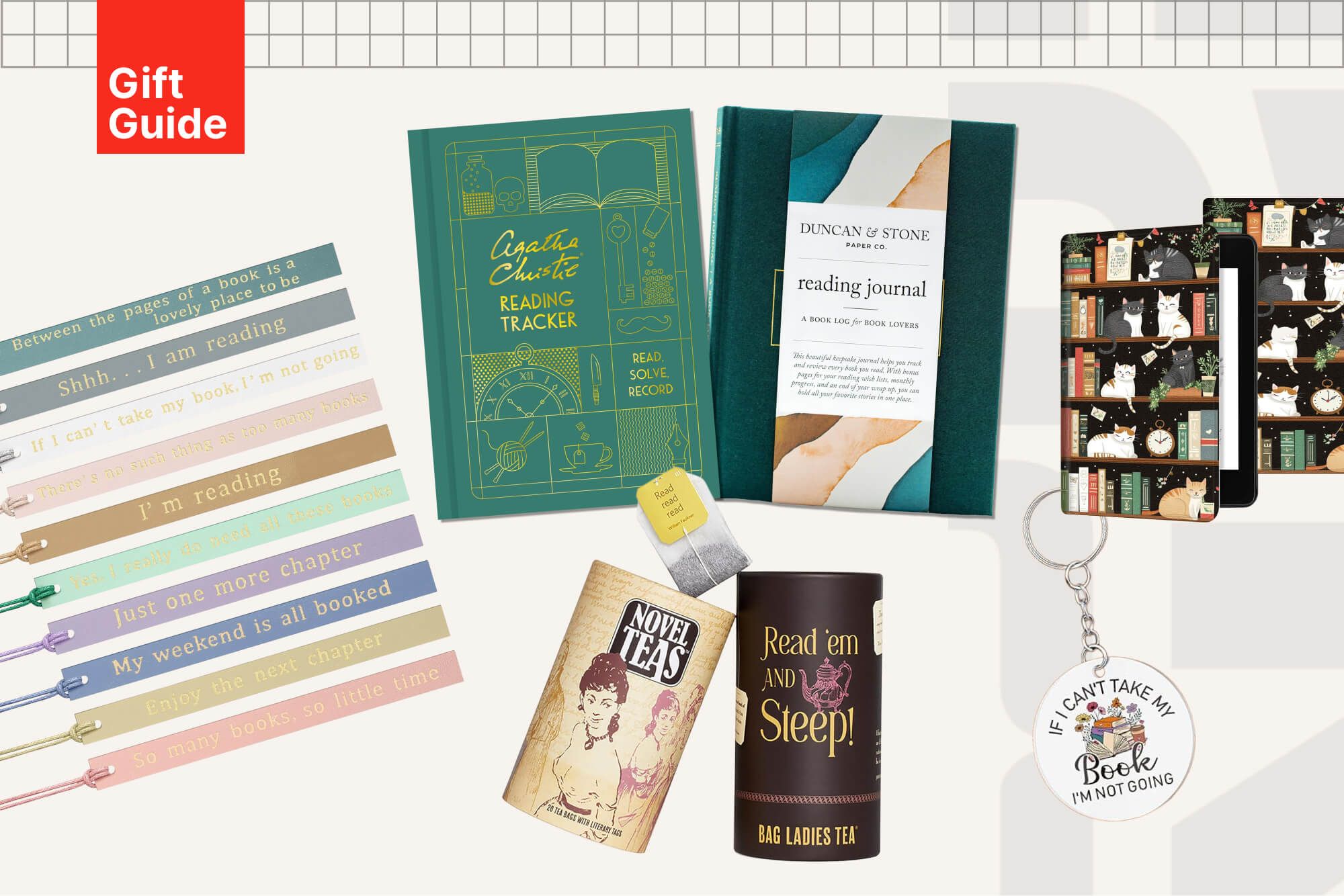
Book club is my favorite monthly event because it’s always a lively conversation. We prioritize discussable books over ones that are universally beloved, so it always leads us down interesting roads. To show my appreciation for the book club, I wanted to find a variety of themed gifts around our shared love of reading. Everyone in the club has different reading goals, styles, and favorite genres. That’s the fun of a book club: we all are attracted to the form of storytelling and all its genres.
Whether you’re looking for presents for the whole group to track reading together, or find specific ways to show appreciation for your fellow bookworms, you’ll find the perfect bookish gift.
If you have a mystery book club or a reader friend who wants to get started on Agatha Christie’s work, this tracker will help them through the process. They can also try to solve the mysteries before Poirot and Miss Marple.
There are tons of reading apps available for tracking, but sometimes a written journal is the best way to organize your thoughts about a book. It’s also a nice way to track towards a reading goal, as there are 52 book-logs in the journal.
A bookish cover is a nice reminder that your e-reader is full of stories. This cover also features cats being mischievous and silly in the bookshelf. It’s a great reminder for a feline pet parent as well.
Stickers are not just for elementary schoolers. Whether you want to decorate a bullet journal, planner, water bottle, laptop, or anything, they’re an excellent flourish. This beautiful collection of bibliophile stickers will bring joy to any book lover.
Personalized bookplates are a great item for a home library, but you can also use them if you have a shared book club library. Or they’re an excellent gift for your book club friends to get excited about adding their favorite reads from your book club to their personal collections.
A library stamp brings me back to the joy of volunteering in my school library. The outgoing stamp was my favorite part. This stamp is an excellent way for everyone to personalize their book collection, as well as notebooks and journals.
And one more method of personalizing your books. Embossers let you leave a raised impression on the page, like a notary. This embosser has five different plates you can use to add the pressed design to your page. It’s always fun to come across when you’re reading. Try embossing both the title page and the final one.
If you’re looking for a gift for a large book club, small items like key chains are a great idea. The variety in the package of key chains will also let you match them to each book club member’s distinct personality.
The biggest trend in bookish ephemera right now is sprayed and stenciled edges. If you have a book club friend who’s particularly arty, you can get your own bookish stencils to paint and decorate the edges of your favorite books. You can also get the stencils and plan a holiday book club based around the craft.
For the book people who love special editions, an Illumicrate subscription is a fabulous gift. Each monthly package includes a book with sprayed and stenciled edges, along with bookish swag to round out the gift.
For voracious readers, there’s no better subscription than Book of the Month. You’re allowed to choose from a variety of genres every month, and it’s a great way to get introduced to authors, genres, and writing styles you may not have picked up on your own.
Instead of using a random receipt as a bookmark, gift your book club friends a nice, sturdy one to keep their place in their book. The matching bookmarks are extra fun for a club that prefers to do physical books instead of e-readers.
A good book should always be accompanied with a nice mug of tea. Your book club friends will definitely appreciate some whimsy and bookish jokes alongside their hot cuppa.
Decorative enamel pins are an excellent accessory for the devoted book lover. I have a denim jacket dedicated to enamel pins, but they’re also great pieces of flair for fabric tote bags. Your book club will appreciate a small token of their bookish affection.
Featured image credit: Images courtesy of vendors
Advertisement
More from our network
Word Smarts is part of Inbox Studio, which publishes content that uplifts, informs, and inspires.
Why Is Rhode Island Called an Island When It Isn’t One?
The names of some U.S. states don’t need much explanation — for example, New Mexico and Washington. But Rhode Island isn’t an island, so let’s dig into its name.
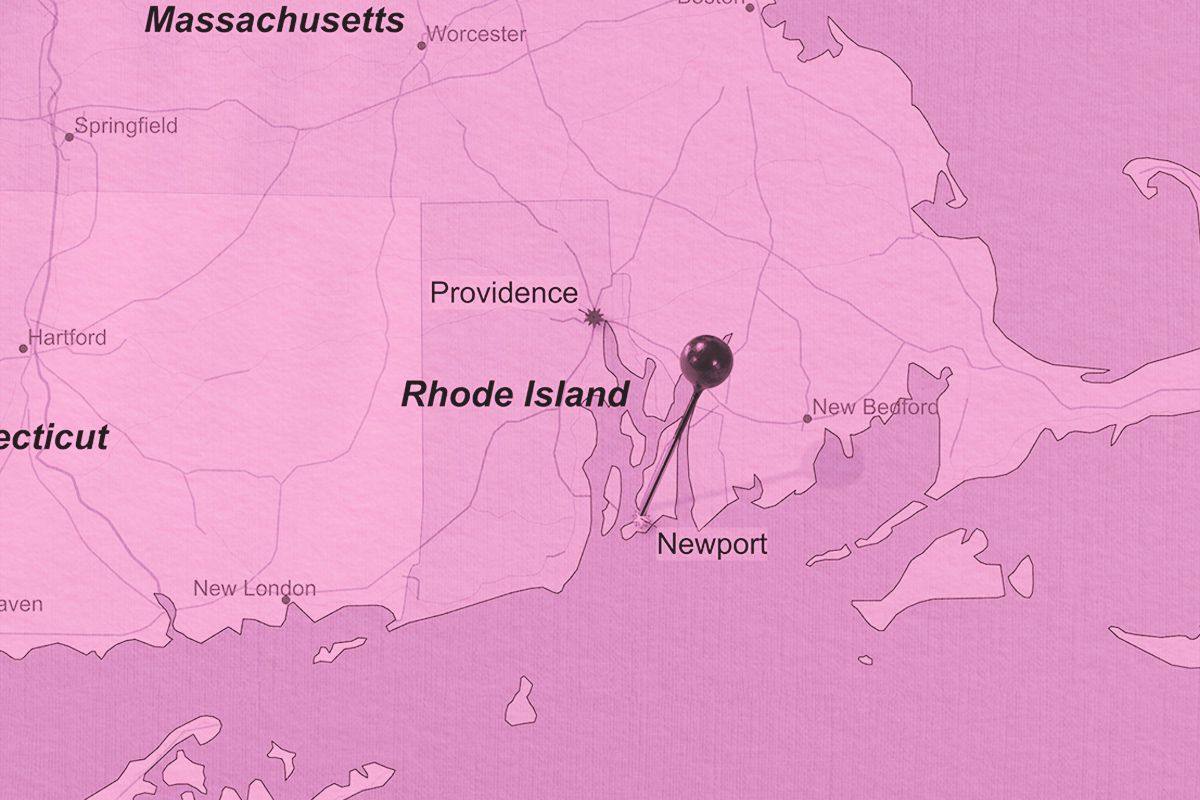
Rhode Island is only 37 miles wide and 48 miles long, but it has more than 400 miles of coastline (thanks to deep bays and, yes, a few islands), earning it the nickname of the “Ocean State.” But zoom in on a map and you’ll see clearly that the bulk of its 1,214 square miles are connected to the mainland of the United States, making it distinctly not an island. Geography definitions aside, there are some oft-repeated and reputable theories about the name of Rhode Island, dating back to the 16th and 17th centuries.
One theory relates to Italian explorer (backed by the French) Giovanni da Verrazanno, who came to the region in 1524. He discovered an island roughly 22 miles off the mainland, and said its rolling hills, plentiful trees, and size all reminded him of the Greek island of Rhodes.
Another hypothesis has to do with Dutch explorer Adriaen Block, who arrived in 1614. It’s believed that Block passed by an island known to the Indigenous Narragansett tribe as Aquidneck Island, and was struck by its reddish soil. In turn, Block decided to name it Roodt Island — Dutch for “red island.”
There’s no clear answer to why the state of Rhode Island is named such. But it’s likely that one or both of the aforementioned theories inspired Rhode Island founder Roger Williams when he settled the region in 1636.
What we can say for sure is that Aquidneck Island, specifically, came to be called Rhode Island on March 13, 1644. A decree stated, “Aquethneck shall be henceforth called the Ile of Rods or Rhod-Island.” When a royal charter was granted in 1663, it mentioned the “Colony of Rhode Island and Providence Plantations” (referring to both the island and plantations on the mainland). In 2020, however, voters opted to get rid of the “Providence Plantations” part of the name because of its connection to slavery. Today, the state’s official name is simply the State of Rhode Island.
Featured image credit: Craig Taylor Photo/ Adobe Stock
Advertisement
More from our network
Word Smarts is part of Inbox Studio, which publishes content that uplifts, informs, and inspires.
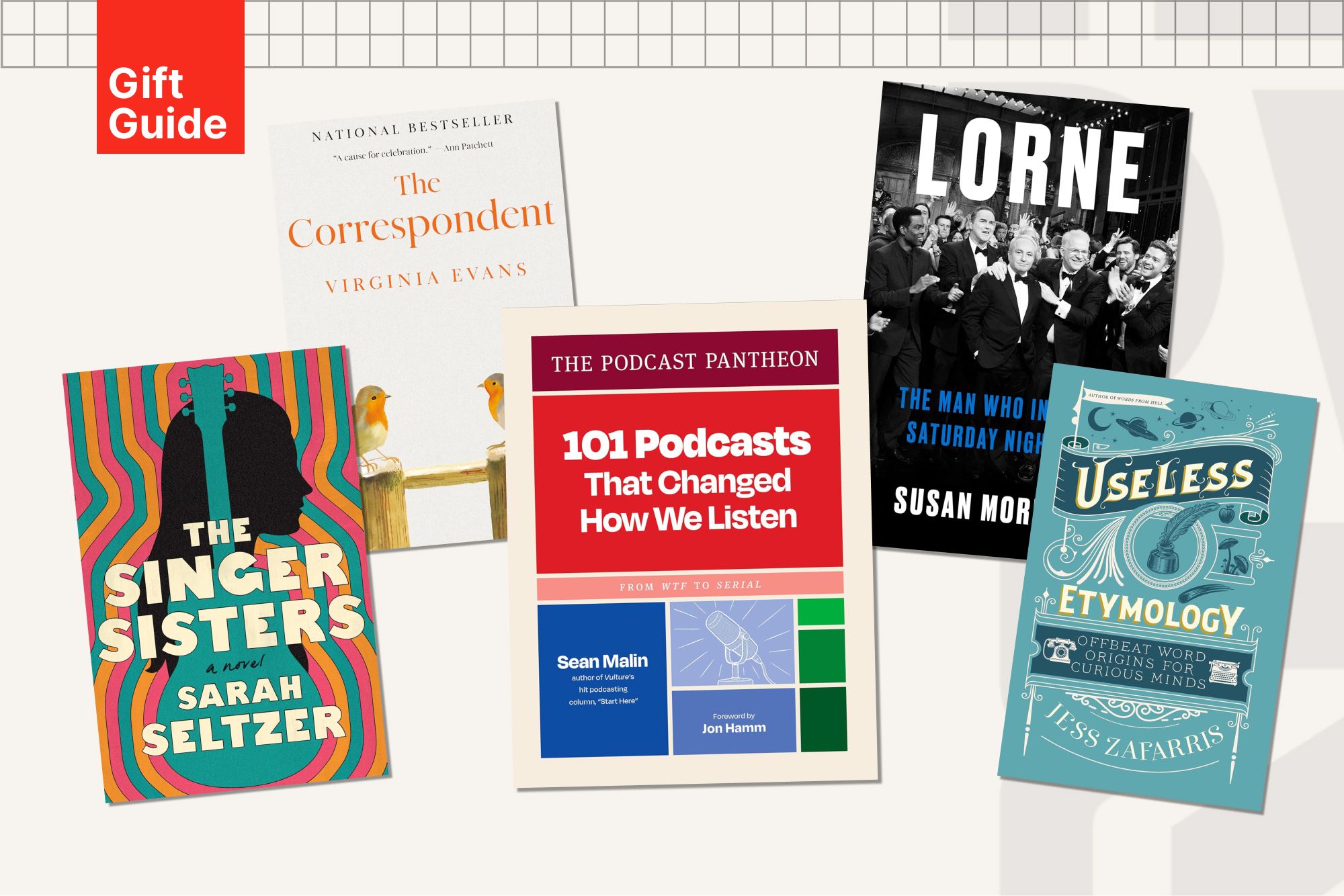
Holiday gifting can feel like a puzzle, but a well-chosen book rarely misses the mark. From clever wordplay explorations to gripping biographies and inventive fiction, this year’s most giftable reads offer something for every curious mind on your list.
Picking out the perfect holiday gift can be tricky, but we’re of the mindset that a good book is always welcome. In recent years, the Icelandic tradition of exchanging books on Christmas Eve — known as Jólabókaflóð, meaning “Christmas Book Flood” — has gone global, with the tradition adopted by bookish revelers worldwide.
In that spirit, we’ve put together a list of some of the most giftable books we enjoyed this year, with some extra picks for the logophiles and bibliophiles (word nerds and bookworms) in your life.
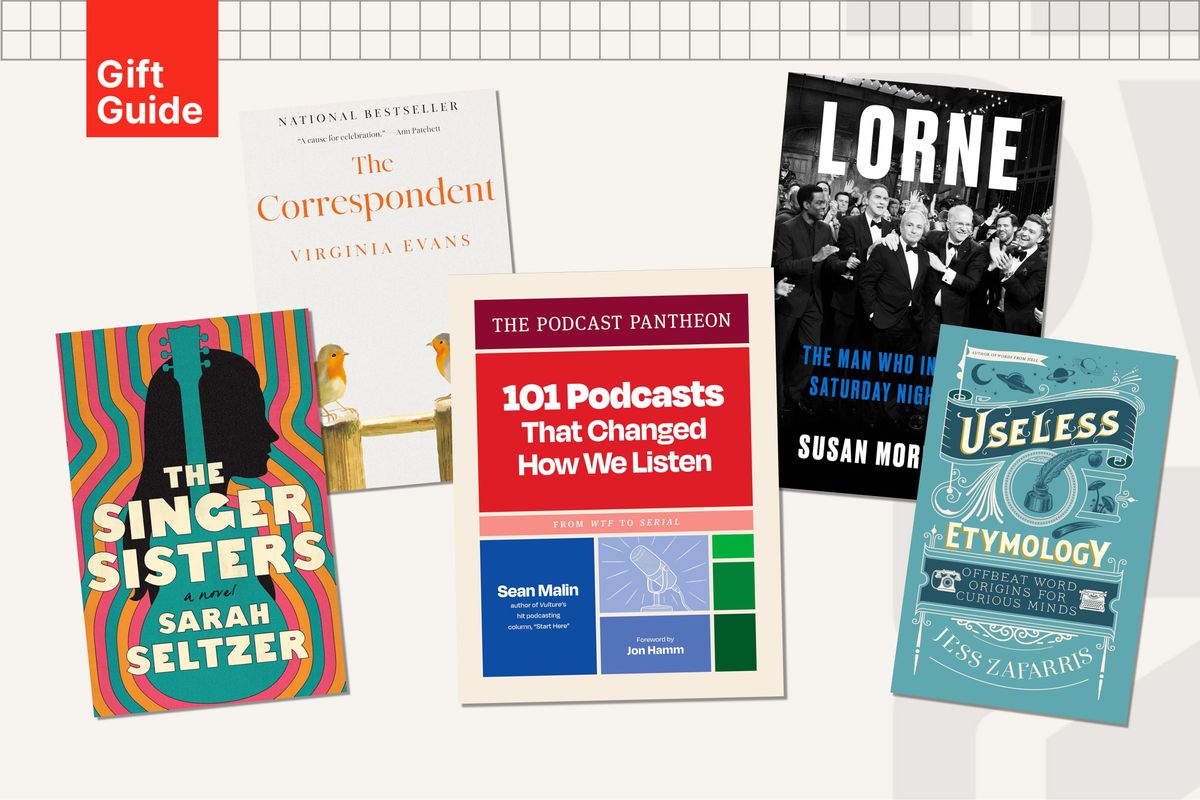
This book is full of fun facts and obscure history, making it a great gift for the trivia fan in your life. Written by the host of the “Words Unravelled” podcast, Useless Etymology reveals the surprising ways common phrases and terms came to be.
If there is a podcast lover (or maker) on your gift list, look no further than this comprehensive guide to the history and culture of podcasting. You could even take the gift up a notch by pairing it with a new set of headphones.
Consider this one for your long-distance friend. This novel is told through handwritten correspondence that the protagonist writes and receives, slowly revealing details about her life. Send the book with some pretty stationery, your own handwritten letter, and perhaps a resolution to keep in touch.
Your bookworm friend might be celebrating another holiday in December — Jane Austen’s 250th birthday. There are many new Austen-inspired works to mark the occasion, and this new nonfiction examines Austen’s legacy in a way that is both entertaining and academic.
For music lovers, this novel about a family of talented musicians spans decades of rock history. The story covers the 1960s hippie folk movement to the 1990s alt-rock scene, making it a great pair with a music documentary about Woodstock or Lilith Fair.
If you know someone who enjoys Clueless or Legally Blonde, gift them a book exploring the word “like” and its role in popular culture. Like explores the word’s history, its role in the “Valley Girl” stereotype, and its evolution into an essential tool of modern communication via Facebook’s “Like” button.
Pick up a copy of this clever guide to entertaining as a gift for the host of a holiday party. It features party inspiration alongside recipes and charming illustrated guides. This book is sure to earn you an invite to the next gathering.
If you know a lover of history and literature, you can’t go wrong with a biography. Mark Twain is a comprehensive portrait of one of the most important figures in American history, written by the author of the AlexanderHamilton biography that inspired the musical.
History buffs will appreciate this posthumously published memoir written by the last surviving World War II spy. This is nonfiction, but it reads like a spy thriller, so it would be a good gift for a fan of TV shows such as Slow Horses or Killing Eve.
For your chronically online friend, Algospeak is a wordy deep dive into how the internet — especially social media — is shaping the evolution of language. This may also be a good gift for someone who spends a lot of time with teenagers and wants to understand them better.
Any comedy fan knows the name Lorne Michaels, but despite his 50-year career in the public eye, he has remained remarkably private. Lorne is the first biography authorized by Michaels himself, and it’s a fascinating look at what happens behind the scenes of TV history.
This illustrated memoir makes a great gift for the science and art enthusiasts in your life. The author left her job at an art gallery to work as a janitor at the McMurdo Station in Antarctica, and the book blends her personal stories with hand-drawn maps and scientific diagrams.
If you know a world traveler or adventure seeker, pick up this novel that blends mystery and “what if” history. Set against the backdrop of San Francisco’s world’s fair in 1939, this historical fiction starts with the disappearance of a world-renowned maritime explorer.
Any bakers on your shopping list? A TikTok star who researches and cooks retro recipes compiled this cookbook featuring regional classics such as beignets from New Orleans, gooey butter cake from St. Louis, and strawberry pretzel salad from Pittsburgh.
For animal lovers, this cozy novel imagines a mysterious health clinic that prescribes cats specifically chosen to suit the patient’s needs. Complete the set by adding the sequel, We’ll Prescribe You Another Cat, and don’t forget to buy a gift for their cat, too.
Featured image credit: Images courtesy of vendors
Advertisement
More from our network
Word Smarts is part of Inbox Studio, which publishes content that uplifts, informs, and inspires.
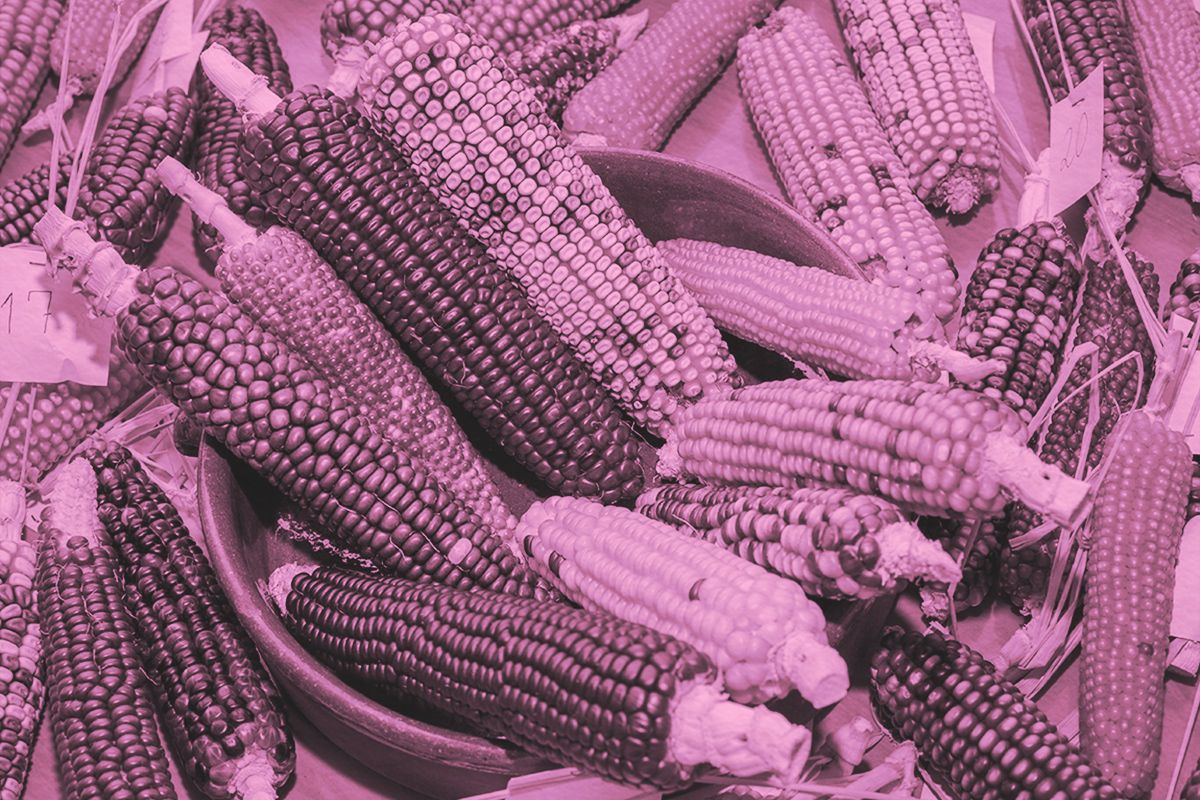
Certain foods are tied to specific holidays and times of year. We might eat corn year-round, but we tend to talk about maize specifically in the fall months, at least in the United States. References to the latter crop are usually tied to the Thanksgiving holiday, but around the world, there’s a much broader usage.
So what’s the difference, if any, between maize and corn? If we’re talking about the cereal plant scientifically known as Zea mays, then corn and maize are the same thing. Zea mays was first domesticated by Indigenous peoples in what is now southern Mexico about 10,000 years ago, from a wild grass called teosinte. Later, when European explorers arrived in the Americas and encountered the golden-kerneled grain, they needed a name for it. And this is where things get more complicated, etymologically speaking.
The word “maize” comes from the Spanish maiz,which itself derives from the Indigenous Taíno word mahiz, referring to the Zea mays plant. The Taíno people inhabited the Caribbean islands where Columbus first landed, and while the Europeans likely didn’t know the impact the crop would have, they sent it with the first shipments to Europe. Following the Columbian exchange, the word “maize” stuck, and the name for this staple crop entered European vocabularies (with various similar-sounding derivatives). Today, “maize” remains the preferred term in much of the world to refer to the crop Zea mays, and it’s commonly used in scientific contexts and in international trade.
Advertisement
Then, of course, we have the word “corn.” The word “corn” comes from Old English and Germanic, in which it could refer to a single seed of a wide range of cereal plants, or a range of plants that produce grain when growing in fields. “Corn,” therefore, didn’t refer to a specific plant, but it could be locally understood as denoting whatever crop happened to be most common in a particular area. In England, for example, “corn” might refer to wheat, while in Scotland and Ireland, it meant oats. Later, when English settlers arrived in North America and encountered maize — which became their main grain crop — they called it “Indian corn” or just “corn.” Over time, “corn” became exclusively associated with maize in North America — ultimately creating some linguistic confusion across international borders.
Today, when Americans say “corn,” they are referring specifically to maize. But in British English, “corn” can still carry its older, broader meaning — potentially encompassing a range of cereals including wheat, rye, barley, oats, and maize. This is especially true in the case of crop fields. When a native of the United Kingdom refers to a cornfield, that field could contain wheat, barley, or maize. In a British supermarket, however, you will see the word “corn” labeling products such as sweet corn and corn on the cob. So, while maize and corn are exactly the same in relation to the crop Zea mays, the precise usage and meaning of “maize” and “corn” can change to varying degrees depending on where you live and who you’re talking to.
Featured image credit: rugercm/ Adobe Stock
Advertisement
More from our network
Word Smarts is part of Inbox Studio, which publishes content that uplifts, informs, and inspires.
Is the Name of the Bird Related to Turkey the Country?
Why does a quintessentially American bird share its name with a country half a world away? The answer involves global trade routes and the mistaken identity of the guinea fowl.
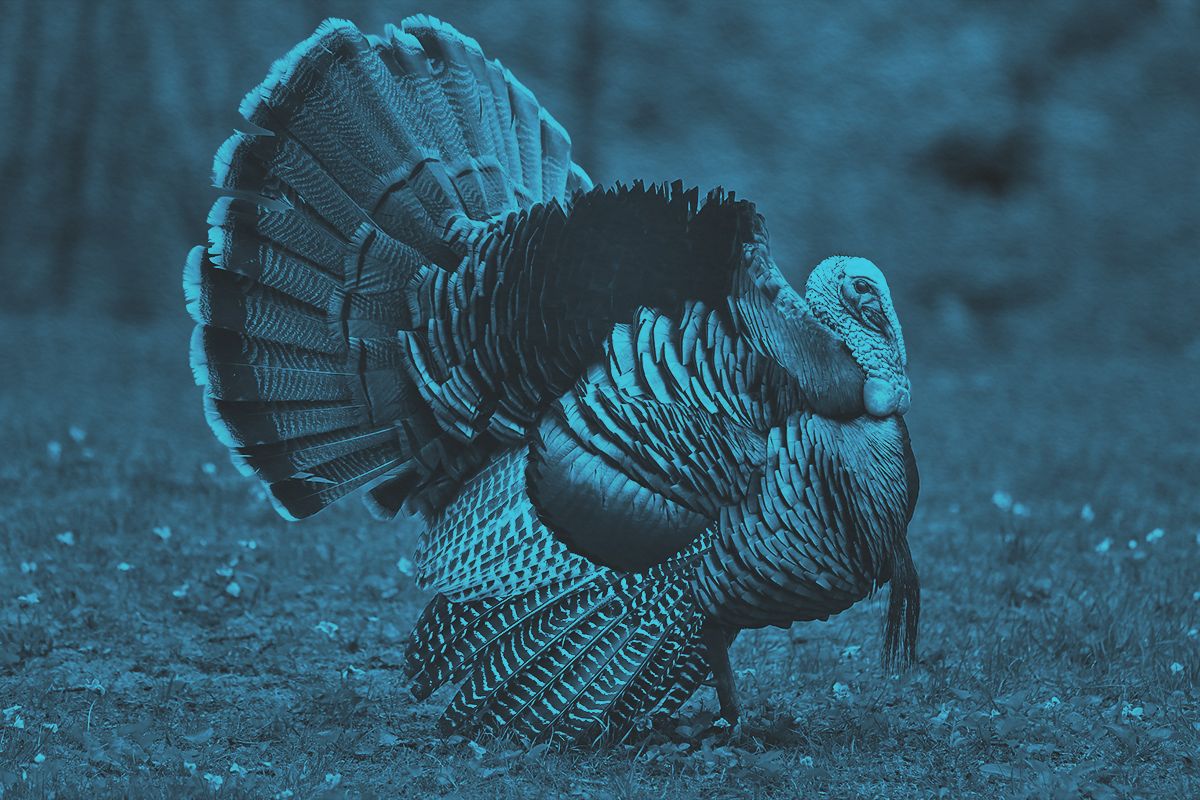
Every year on Thanksgiving, we sit down to share a meal with family, friends, and loved ones in the spirit of gratitude and abundance. Traditionally, this meal includes sides such as mashed potatoes and gravy, cranberry sauce, green bean casserole, and sweet potatoes, with pumpkin pie for dessert. The star of the meal, however, is a roasted turkey. If you’re the curious sort, you may have wondered if the name of the poultry on your Thanksgiving dinner table is related to the name of Turkey, the country.
The answer is yes, but only because the bird resembles a guinea fowl. This requires an explanation.
Wild turkeys (Meleagris gallopavo) are native to the Eastern and Southwestern United States and Mexico. The Maya of what is now southern Mexico domesticated them about 2,000 years ago — the birds were called huehxōlō-tl in Nahuatl. In the early 16th century, Spanish explorers in the Americas took turkeys to Europe, where, after breeding, they became farm animals (Meleagris gallopavo domesticus), raised for food.
This is where the naming gets a little complicated. In the 16th century, Portuguese traders exported the guinea fowl (Numidameleagris), a native species of sub-Saharan Africa, to European countries through the Ottoman Empire. Europeans called it the turkey-cock or turkey-hen because it came from the Turks. When a similar-looking fowl was sent to Europe from the Americas around the same time, it was called a turkey. But neither the guinea fowl nor the turkey is native to Turkey.
Advertisement
Why Turkey for the country? The Turks are “members of numerous Asian peoples speaking Turkic languages who live in a region extending from the Balkans to eastern Siberia and western China.” “Turk” is connected to the Medieval Latin Turcus, referring to the same group of people. After the fall of the Ottoman Empire in the early 20th century, the republic of Turkey formed, taking on the name Türkiye — a name long applied to that region by its inhabitants.
To add to the naming confusion, in some languages, the word for the bird turkey is based on “India.” For example: In French, it’s coq d’inde, or dinde; in Polish, indyk; and in Basque, inioliar. In Turkish? The bird is called hindi. Why? Guinea fowl were often imported into Europe from near modern-day Ethiopia, which misguided Europeans often confused with India.
Now that you’re informed about the convoluted history of this word, at the Thanksgiving feast this year, you can talk turkey and save the disputes for important things, such as whether sweet potatoes should be served with marshmallows.
Featured image credit: Robert Winkler/ iStock
Advertisement
More from our network
Word Smarts is part of Inbox Studio, which publishes content that uplifts, informs, and inspires.
In English, we have myriad ways to express abundance. We can talk about a bounty, a multitude, or a profusion, or describe something as opulent, plentiful, or lavish. “Cornucopia” fits as a synonym for “abundance” with its definition of “something that produces an overflowing and inexhaustible supply, especially of desirable things.” And around Thanksgiving time, we often see depictions of a horn overflowing with food — this is also called a cornucopia.
“Cornucopia” is derived from the Latin phrase cornū cōpiae, which translates to “horn of plenty.” Though it’s a Latin phrase, it has roots in Greek mythology. Amalthaea was a nymph who fed Zeus goat’s milk to raise him into the powerful Greek god he became. The goat that provided the milk broke off one of its horns, and Amalthaea filled it with flowers and fruit and presented it to Zeus. This horn became known as the horn of plenty.
The Greek myth that served as the root of “cornucopia” inspired its original definition: “a curved goat’s horn from the mouth of which fruit and ears of grain overflow, used as a decorative motif in art, architecture, and design.” The horn shape references the abundance conferred by Amalthaea. The meaning of “an abundant supply” has been in use since the 16th century.
We use the term “cornucopia” in its second, figurative sense, whether or not the abundance is in a goat’s horn. When someone says there’s a cornucopia of options on the Thanksgiving table, they mean there’s plenty to share. And when we think about the cornucopia on our family’s table, we can reflect on the care Amalthaea offered through the original mythical cornucopia. The holidays are a time of celebrating the abundance we can find throughout our lives.
Featured image credit: LPETTET/ iStock
Advertisement
More from our network
Word Smarts is part of Inbox Studio, which publishes content that uplifts, informs, and inspires.
If you know your idioms, you know that a “gravy train” can be a sweet place to be. This expression refers to a job or situation that provides easy money with little or no effort. By definition, “gravy train” means “a much exploited source of easy money,” as in, “He’s been riding the gravy train ever since joining that startup.”
The idiom is typically used to suggest that the rewards might not be entirely deserved, or that something questionable is happening behind the scenes. But it can also simply mean that someone is being well paid for relatively little effort. So, when did a metaphorical train come into the picture?
The phrase “gravy train” lacks a well-documented origin, but several sources suggest that it originated among railway workers in the early 20th century. Since “gravy” was already slang for “easy money” or “something easy,” the term “gravy train” likely described a short-haul railway job that paid well. Over time, it evolved into the broader idiom we use today for any situation that brings steady, effortless profit.
The word “gravy” itself can mean “something additional or unexpectedly pleasant or valuable,” as in, “This new gig is gravy!” While it’s unclear where or when this connection originated, it likely relates to the idea that gravy is a bonus or an enhancement to an already satisfying meal. But “gravy” isn’t only tied to money. In slang, you’ll hear it as a synonym for “fine,” “good,” or “awesome.” For instance: “It’s going to rain during the concert? That’s OK — it’s all gravy.”
Featured image credit: FotoBob/ Adobe Stock
Advertisement
More from our network
Word Smarts is part of Inbox Studio, which publishes content that uplifts, informs, and inspires.
Enter your email to receive daily lessons that dive into what makes English so fascinating. Each email is packed with odd rules, etymologies, and the tools you need to be a better communicator.
Sorry, your email address is not valid. Please try again.
Sorry, your email address is not valid. Please try again.