




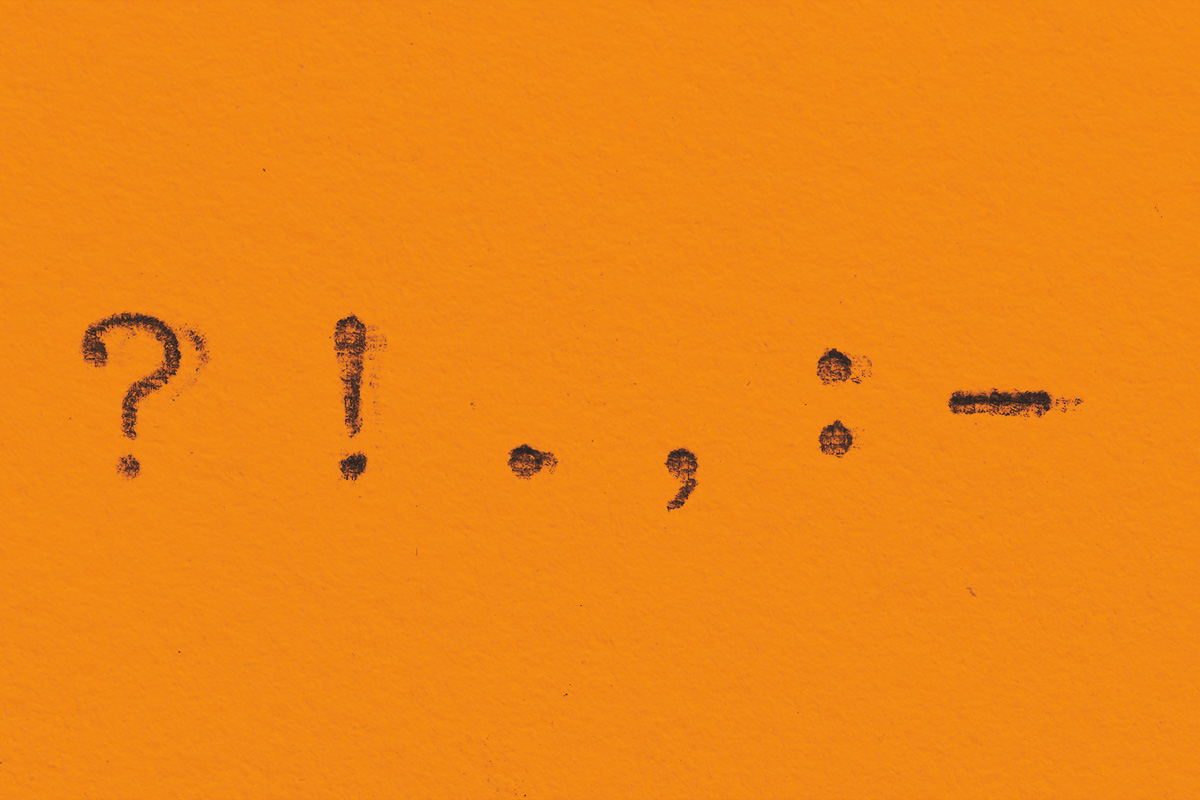
Punctuation choices matter. The right mark can sharpen your tone, drive home a point, and improve readability. But choose the wrong punctuation, and your sentence becomes disjointed or difficult to understand. Two of the most commonly confused punctuation marks are em dashes and semicolons, which serve distinct purposes.
An em dash is expressive and flexible, often used in creative writing to create a dramatic pause. In some cases, a pair of em dashes can be used together to interrupt a thought, as seen in this example from P.L. Travers’ Mary Poppins (1934): “The same substance composes us — the tree overhead, the stone beneath us, the bird, the beast, the star — we are all one, all moving to the same end.” These em dashes create a conversational tone, drawing the reader deeper into the idea.
Alternatively, in recording everyday conversation, you might use an em dash as a way to set off a thought that needs emphasis: “I can’t believe I forgot my book on the train again — ugh!” Em dashes are a great creative tool, but it’s best not to overuse them in formal writing, as they do lose their impact.
Sometimes, writers use an em dash when they actually need a semicolon. Here’s an example of an em dash incorrectly replacing a semicolon: “It rained heavily this morning — we managed to go to the park anyway.” A semicolon is a better choice for this sentence because the clauses are meant to be linked, not separated.
Semicolons are precise and formal, forming a bridge between two closely related, yet independent, clauses. Think of them as a soft transition between ideas without dramatizing them. A Tale of Two Cities (1859) by Charles Dickens provides an example of semicolon use: “There were a king with a large jaw and a queen with a plain face, on the throne of England; there were a king with a large jaw and a queen with a fair face, on the throne of France.” Here, the semicolon joins two connected, complete thoughts.
If you’re ever unsure which to use, remember that em dashes isolate or interrupt, while semicolons join together.
More from our network
Word Smarts is part of Inbox Studio, which publishes content that uplifts, informs, and inspires.