4 MIN READ

Order Up! The Origins of Sandwich Slang

The nicknames for sandwiches are almost as numerous as the toppings they can be served with. Let’s dish up some of America’s favorite regional sandwich slang.

by Bennett Kleinman
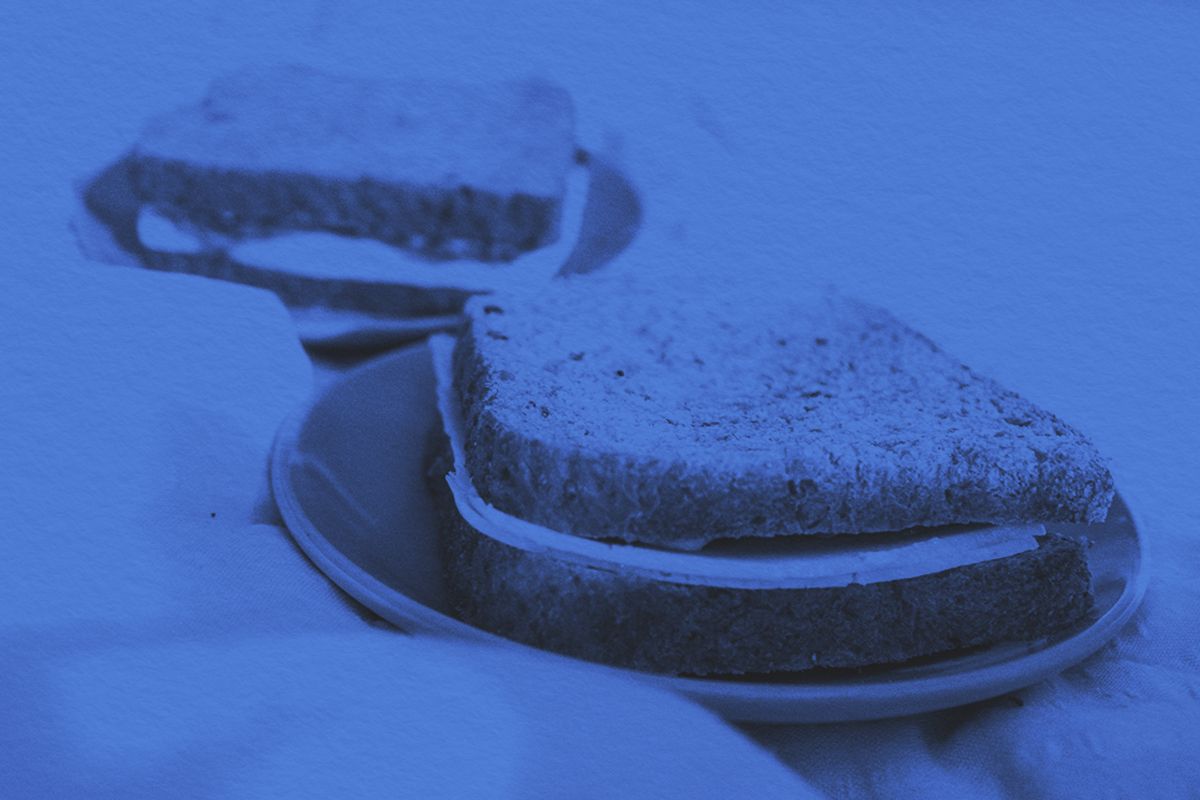
Two sandwiches on plates

Walking up to the deli counter is a lot like an artist approaching a blank canvas — there are few limits to your creativity. But whether you’re the Picasso of provolone or the Caravaggio of cured meats, there are so many names for sandwiches, you might freeze when your number is called. The general term “sandwich” originated in 1762, as an eponym referring to John Montagu, the Fourth Earl of Sandwich, who enjoyed eating meat between sliced bread during his marathon gambling sessions. In the late 19th century, Italian-inspired sandwiches made with long pieces of bread became particularly popular throughout the United States. These were known as “submarine” sandwiches to many, though various regions have developed their own slang for these tasty lunchtime staples. Here are the backstories behind a few of those terms.

Advertisement
Submarine

The term “submarine” is perhaps the most widely used sandwich slang in the U.S., at least according to a Harvard Dialect Survey. The origins of this term are simple: The long pieces of bread resemble the shape of a submarine boat. According to the Oxford English Dictionary (OED), the first usage of this slang dates to 1931 in the Paterson Evening News, and delis across the country began advertising “subs” soon after.

Grinder

“Grinder” is common sandwich slang among residents of New England. The roots of this term are disputed, but one origin story is nautical in nature: “Grinders” was a term used to refer to the Italian American dockworkers who enjoyed snacking on these long sandwiches during their lunch hour. However, a more probable origin story has to do with the nature of the food itself. “Grinder” might refer to the act of grinding your teeth to bite into the thick bread and copious amounts of cold cuts loaded onto the sandwich.

Advertisement
Hoagie

As we descend down the Northeast Corridor, we arrive in Philadelphia, where the term “hoagie” was conceived. One of the prevailing origin stories for this word is also nautical in nature: There was a World War I-era shipyard in south Philly called Hog Island, where workers enjoyed eating “hoggies” — a name that evolved into “hoagie.” Another, perhaps more reputable origin story is that the name originated in the 1930s at a sandwich shop owned by jazz musician Al DePalma. He made sandwiches so large that a friend commented that only a hog could finish one. In turn, DePalma began calling the sandwiches “hoggies,” though his customers pronounced them more like “hoagies” (which makes sense if you imagine “hoggie” said with a thick Philly accent). 

Hero

The term “hero sandwich” is primarily used around New York City. In the 1930s, Clementine Paddleford — food columnist for the New York Herald Tribune — wrote about a sandwich so large that “you had to be a hero to eat it.” From there, the name “hero” stuck.

Wedge

“Wedge” is a hyperspecific slang term used by residents of Westchester County, New York, and nearby Fairfield County, Connecticut. Some say “wedge” refers to the diagonal knife cut made in the middle of the sandwich, while others claim it’s tied to wedging all of the ingredients between two slices of bread. Still others assert that the term was coined at Landi’s Deli in the town of Yonkers. “Wedge” — or a similar sound — was purportedly used by the Landi family as a truncated version of the word “sandwich.”

Spukie

“Spukie” is a Boston-area term based on the Italian word spuccadella, which is a long roll. This is particularly popular in the Italian-heavy neighborhoods  in the southern part of the city, and you’re unlikely to hear “spukie” from anyone outside of Boston.

Poor Boy

“Poor boy” is the longer nickname for the sandwich also known as a “po’boy.” The poor boy sandwich originated in 1929 during a streetcar strike in New Orleans. It was created at Martin Brothers’ French Market and Coffee Stand, whose proprietors were former streetcar workers themselves. Whenever a striking worker entered the eatery, one owner would call out to another, “Here comes another poor boy!” The term was quickly adopted by the residents of New Orleans and shortened to just “po’boy.” A New Orleans-style po’boy can have any variety of fillings (fried shrimp and fried oysters are popular), and fully dressed includes lettuce, tomato, pickles, hot sauce, and mayo. The crucial ingredient, however, is the bread. To qualify as a po’boy, the sandwich must be served on fresh French bread. 

Featured image credit: Tatjana Dimovska/ Unsplash
2 MIN READ

Why Do We Say ‘Break a Leg’?

Why do actors tell each other to break bones before a performance? It’s not malicious — the idiom “break a leg” has roots going back to ancient Greece.

by Bennett Kleinman
Professional ballet dancer in motion, performing on theater stage

Telling someone to “break a leg” is another way of saying “good luck” — unless they’re especially clumsy, in which case we’d suggest an idiom that’s less likely to jinx them. You may wonder, though, how a phrase that sounds so menacing on the surface can have such a positive connotation. While the origins are murky, there are a few popular theories behind why we say “break a leg” as an encouraging expression.

Advertisement

The most common belief is that the phrase originated in the theatrical community, which is known for its superstitions. Actors worry that the simplest thing can bring about bad luck, such as saying “Macbeth” in a theater (it’s called “The Scottish Play” instead), whistling backstage, or, indeed, wishing a fellow performer “good luck.” Instead, many actors use the term “break a leg” as an ironic way of wishing other actors well. The exact start of this practice is unknown, but it was noted in a 1921 edition of The New Statesman in an essay called “A Defence of Superstition” by Irish writer Robert Wilson Lynd. He said the best way to wish luck was through an opposite sentiment, such as saying, “May you break a leg.”

Another purported, albeit unlikely, origin story involves audience reactions to live performances in both ancient Greece and the Elizabethan era. The Greeks were said to stomp their feet instead of clapping, while Elizabethans would bang their chairs on the ground to express praise. Ferocious stomping meant they enjoyed the performance all the more. So, people may have begun saying “break a leg” in the hopes of generating a response powerful enough to risk snapping both human and chair legs.A nontheatrical origin story involves the German phrase Hals- und Beinbruch! — literally translated as “may you break your neck and your leg!” The Oxford English Dictionary cites this use around 1900 in a hunting context, then 1913 in a theatrical context, but lexicographers note there’s not a strong connection for influence on the English idiom and theatrical usage.

Featured image credit: Master1305/ Shutterstock
5 MIN READ

These Halloween Traditions Came From Shakespeare

“Something wicked this way comes…” Shakespeare transformed Elizabethan ideas of ghosts, witches, and other spooky beings into perpetual Halloween traditions.

by Rachel Gresh
Owl silhouette on tree branch in dark scary forest

Halloween entertainment is brimming with images of warty witches and bubbling cauldrons (we love the Sanderson sisters in Hocus Pocus), and ghosts both friendly and not haunt our dreams and our screens throughout spooky season. (Uttering the name of a certain green-haired ghost — Beetlejuice, Beetlejuice… Beetlejuice! — might send chills down your spine.) But otherworldly beings began captivating audiences long before blockbuster films offered thrills and chills. Let’s go back to a time when a certain English playwright was transforming ghoulish stereotypes onstage. Over 400 years ago, Shakespeare unwittingly crafted several Halloween traditions that still haunt us today.

Advertisement
Wicked Witches
“Double, double toil and trouble; / Fire burn and caldron bubble…” 

You might be able to chant this eerie couplet from memory without realizing it came from the Bard. It appeared in Macbeth Act IV, the “Song of the Witches.” In addition to providing these spooky lines, this section contributes much to our modern interpretation of witches. 

Macbeth’s titular character receives a shocking prophecy from three witches: He will become king of Scotland. The 17th-century play was published around the height of Scotland’s devastating witch trials, so it makes sense that Macbeth’s downfall was initiated by a chance encounter with three “Weyward Sisters.” Many editions call them “Weird Sisters,” but the meaning of “weird” is not as we use it today as a synonym for “odd” or “quirky.” Instead, “weird” is a synonym for “supernatural” or “otherworldly.”

Shakespeare transformed the imagery of witches through their depiction in Macbeth. The witch trials (in Scotland and in the colonies) stoked fears that witches were hiding as everyday women, casting spells in the midst of the community. The Weird Sisters are humanlike, but their physical appearance is chilling and sinister, with deep wrinkles of the “chappy finger.” The “Song of the Witches” passage also introduced the imagery of a bubbling caldron, to which the sisters add “Eye of newt and toe of frog, / Wool of bat and tongue of dog, / Adder’s fork and blind-worm’s sting, / Lizard’s leg and howlet’s wing…” Believed by some to be a real spell, these verses left a lasting impact on the perception of how witches cast spells and the unsavory objects they use to do so.

Shakespeare’s witchy imagery is far-reaching. Consider: “By the pricking of my thumbs / Something wicked this way comes…” Said by the second witch in Macbeth, this famous phrase refers to the old-fashioned superstition of tucking the thumb into the palm to protect against supernatural entities. Like so many Shakespearean lines, it has become a stand-alone expression. Author Ray Bradbury borrowed part of it for the title of his 1962 dark fantasy novel, Something Wicked This Way Comes.

Advertisement
Owls and Omens

Owls were a symbol of wisdom and prophecy in ancient Greece, but their benign reputations darkened in Renaissance England. The association with prophecy took on sinister undertones, and according to the Bard of Avon, these birds of prey are nefarious. 

Owls (or “howlets” as they are called in the “Song of the Witches”) are harbingers of bad luck in many of Shakespeare’s works. The owl plays a vital role as an evil omen in Macbeth: “It was the owl that shrieked, the fatal bellman, / Which gives the stern’st good-night. He is about it.” The “fatal bellman” is a reference to the custom of a “passing bell” to ring when someone in town was close to death.

Similarly, in Act IV of Richard III, when the titular character receives bad news on the battlefield, he exclaims, “Out on you, owls! Nothing but songs of death.” Thus, owls’ close association with death was firmly established. 

Ghastly Ghosts

Shakespeare pushed the ghostly envelope and changed the way people imagine spirit apparitions. In pre-Elizabethan literature, ghosts were typically described as orbs of light without a discernible shape — and certainly no human characteristics. Shakespeare’s ghosts were markedly different. For the first time, spirits were purported to appear much like their previous human forms.

Characters such as Brutus, Macbeth, Hamlet, and Richard III are plagued by these familiar spirits. Imagery of ghosts lurking about a graveyard in A Midsummer Night’s Dream or shrieking through the streets in Julius Caesar created new ideas of what ghosts ought to be. In Julius Caesar, the famous Roman general’s ghost appears in his likeness, immediately recognizable to startled characters. “The ghost of Caesar hath appeared to me / Two several times by night — at Sardis once…” 

Perhaps the most influential Shakespearean ghost is Hamlet’s father, who directs Hamlet to avenge his murder by killing his uncle, Claudius. The ghost reveals himself to his son in Act I of Hamlet

“I am thy father’s spirit, / Doomed for a certain term to walk the night / And for the day confined to fast in fires / Till the foul crimes done in my days of nature / Are burnt and purged away…” 

Had Hamlet’s father appeared as an orb of light and not a king suited in armor, would it have had such a profound impact on audiences — or the plot? Likely not. Shakespeare crafted his supernatural characters so compellingly that over 400 years later, we still imagine them in much the same way he did.

Featured image credit: andreiuc88/ Shutterstock
5 MIN READ

Learn Some Scary Smart History of These Halloween Words

Learn this list of chilling words and their histories to get fluent in the language of Halloween … if you dare.

by Jennifer A. Freeman
close up of a female vampire's mouth with blood running out

Halloween parties give even the most timid wallflower a chance to put on a new persona and become the life of the party. Between the “Monster Mash” and the costume contests lies the art of good (spooky) conversation. Brush up on these chilling words and their histories so you can impress the witches, zombies, and superheroes alike with your knowledge of the language of Halloween.

Advertisement
Haunt

The verb “haunt” might call to mind a crumbling mansion with ghosts and evil spirits wandering cobwebbed hallways. But for centuries, “haunt” was more neutral, and implied just visiting a place often. Around the 1500s, the ghostly connotation crept in, and “haunt” began to reference distress and harm. A nice walk through a haunted house on Halloween is just what the mad scientist ordered.

Ghost

The word “ghost” has been in use for at least a thousand years, and as a noun it originally referred to someone’s vital spark or intelligence. Eventually the usage morphed into the souls of the dead. The Old English spelling was both gost and gast (the root of “ghastly”), but it turned into “ghost” by the end of the 16th century. This was also when the usage as a spiritual soul of someone, distinct from the physical nature, came into use. The usage of “ghost” to mean “an apparition, a spectre, a phantom, often haunting a specific location” has been in use since at least the 12th century, but it was not the primary usage until a few centuries ago.

The most modern usage of “ghosting” refers to disappearing from someone’s life (usually romantic relationships) without a trace, but the word has been used as a verb for centuries. In the 17th century, Shakespeare used “ghosted” in Julius Caesar to describe Brutus hanging around a location. Another usage, going back to the 17th century, uses “ghost” to refer to someone being an annoying presence. A more modern usage refers to smooth, gliding movement, perhaps in the manner of a ghost. A 2020 Guardian article referenced an athlete as such: “He dribbled past five England players before ghosting away from Shilton.”

If you spot a specter draped in a sheet at your Halloween party, charm them with your etymological knowledge of this ancient term.

Advertisement
Vampire

The myth of the bloodthirsty undead preying on the living dates back to ancient Greece, meaning it’s older than the word to refer to the aforementioned undead, “vampire.” The original name of the creepy creature came from Eastern Europe, where Serbian stories about the vampir were popular in the early 18th century. “Vampire” was popularized in English through late 19th-century Gothic novels (Dracula by Bram Stoker was published in 1897) and has been sucking our blood ever since. The “vampire” bat moniker was given to a species of South American bloodsucking bat by a biologist in 1774, and the term “vamp,” referring to a seductive woman, was coined in the early 20th century.

Banshee

Originally a Gaelic word meaning “woman of the fairyland,” this fanciful term acquired a dark turn through its lore. In legends, banshees are the spirits of women who scream outside the windows of doomed households. If you heard one wail, you would know someone in your home would die before daybreak.

Advertisement
Goblin

Over the centuries, “goblin” has come to represent a creature more mischievous than monstrous. The word comes either from the Greek kobalos, which is a mischievous sprite, or the German Kobold, which is a spirit that haunts houses and lives underground in caves or mines. The goblin representation in myths and literature exists anywhere on the scale from playful and full of pranks, to ugly yet harmless, to menacingly evil.

Specter

Meaning “a visible disembodied spirit,” the word “specter” is rooted in the Latin spectrum, which means “image or apparition.” The verb form is specere, which means “to look.” Many English words pertaining to appearance have come from the same verb: “spectacle,” “inspect,” and “conspicuous,” to name a few. Specters can also be ghostly, fearsome visions conjured by the imagination. Or are those just Halloween decorations?

Wraith

Historically, a wraith is the replica of a living person appearing as a specter to foreshadow something bad, like that person’s death. (The wraith might also appear directly after someone’s death.) An old synonym for the ghostly appearance of a living person is “doppelgänger,” but now this German loanword is more commonly used for someone who looks exactly like another individual. Perhaps you’ll find your doppelgänger at a party if you dress up as Carmy from The Bear or the witch Agatha Harkness.

Ghoul

Although it shares letters with the Old English words ghost and ghastly, “ghoul” didn’t enter the language until the 1700s. The word was introduced to the West by the translation of One Thousand and One Nights (sometimes known as Arabian Nights) into French. In the book, the Arabic word ġūl was used to describe an evil being who robbed graves and ate corpses.

Featured image credit: sdominick/ iStock
3 MIN READ

Zombies, Ghosts, and Devils Come From Around the World

The roots of ghostly words come from cultures around the world. Get into the Halloween spirit with these spooktacular words.

by Jennifer A. Freeman
Group of white ghosts

It’s the time of year when doorsteps are decorated with jack-o’-lanterns and spiderwebs, and shopping carts fill with candy in preparation for trick-or-treaters. While American children and adults embrace the modern Halloween spirit, the roots of ghostly words come from cultures around the world. Get into the Halloween spirit with these spooktacular words.

Advertisement
What Goes Bump in the Night?

Ghosts go by many names. In English, “phantasm” means “a figment of the imagination,” but in Spanish, fantasma refers to a ghost, and in Haitian-Creole, the spooky figure is a fantom. Maybe they’re all figments of the imagination, but they’re easy to find in fictional stories. Ghosts can be portrayed as kind as Casper, or as more malevolent. In Germany, a Poltergeist will make a noisy entrance by moving objects around a room; in Northern England, the boisterous creatures are called “boggarts.”

The word “zombie” has a few possible origins: Jumbie is the West Indian word for “ghost,” and Nzambi is the supreme deity (and ruler of death) in Kongo spirituality. The Haitian-Creole dialect also has zombi, which has roots in Haitian vodou folklore. Unlike in modern zombie stories, which often employ technology or a virus to create the undead, a bokor (a sorcerer) could create a zombie by controlling an individual’s spirit. (They were actually anesthetizing and paralyzing people through animal- and plant-derived neurotoxins.) While the word “zombie” may come from distinct cultures, it was the 1968 movie Night of the Living Dead that popularized the modern idea of an undead creature who moves robotically and seeks human flesh.

Advertisement

For other creatures of the night, multiple languages use similar words to identify them. Both Hungarian and German use vampir/Vampir to describe bloodsucking monsters, and the French use vampyre. And while many languages have versions of “werewolf”(or werwolf), Spanish-speaking countries know these creatures as hombre-lobos. Portuguese speakers call them lobisomem.

Cryptid Sightings

Cryptids, or creatures that science hasn’t been able to prove exist, go by many different names around the world. Perhaps the most famous example is the Scottish “Nessie,” the Loch Ness monster. Said to resemble a dinosaur with a long neck, it supposedly has flippers and can breathe underwater. Written references and supposed Nessie sightings date back to the seventh century. But Scotland isn’t the only country to have a lake monster legend. Argentina has Nahuelito, supposedlyliving in the Patagonian Mountains, with the same features as Nessie, down to the long neck.

Legends talk of cryptids on dry land. Bigfoot (also known as Sasquatchin Canada and the yetiin the Himalayas) is described as at least 8 feet tall and covered in hair — possibly half man, half ape.

Then there are regionally specific cryptids, such as the Jersey Devil,which comes from colonial New Jersey lore. Described as having horse hooves and the wings of a bat, the Jersey Devil popped up in stories when Deborah Leeds gave birth to her 13th child in the early 1700s and claimed that the baby was a child of the devil. Since then, countless New Jerseyans swear they’ve spotted the creature across the state.

Whether scientists back up the folklore or not, Halloween will likely bring many ghosts, zombies, werewolves, and Bigfoots to your doorstep — if only for trick-or-treating.

Featured image credit: Content Pixie/ Unsplash+
2 MIN READ

Why Do We Say ‘Graveyard Shift’ and ‘Skeleton in the Closet’?

Ghoulish figures have a place in our lexicon year-round, in frightening expressions such as “graveyard shift,” “skeleton staff,” “skeleton in the closet,” and other similar turns of phrase.

by Bennett Kleinman
The upper half of a human skeleton

Spooky season is in full swing, and it’s the perfect time to scare yourself silly by watching your favorite horror flicks again and again. But gothic imagery and ghoulish figures have a place in our lexicon year-round, in frightening expressions such as “graveyard shift,” “skeleton staff,” “skeleton in the closet,” and other similar turns of phrase.

Advertisement

The term “graveyard shift” is another way to say “night shift,” referring to an overnight job during the quietest and darkest hours of the day. People often work the graveyard shift alone, surrounded by silence and darkness. The idiom was first seen in print in an 1897 article in The Salt Lake Tribune: “The police changed shifts for the month yesterday. This month Sergeant Ware takes the morning relief. Sergeant Matt Rhodes the middle and Sergeant John Burbidge the graveyard shift.” The word “graveyard” in this context is deeply evocative of the eerie feeling you may get while working solo.

Skeleton staff” is defined as “the smallest number of people needed for a business or organization to operate” — it has nothing to do with dapper  skeletons in suits and ties. The phrase relates to the skeletal structure’s basic function of support for the rest of the body. While one of the earliest mentions of a “skeleton staff” dates to a 1925 article in Strand Magazine, similar phrases meaning “in the nature of a skeleton” have existed for centuries. Alexander Hamilton wrote about the “skeleton state of our regiments” in a 1778 letter that discussed imperfections within the U.S. military at the time.The phrase “skeleton in the closet,” meanwhile, originates from across the pond, with the Anatomy Act of 1832. This piece of legislation allowed British doctors to acquire dead bodies (often criminals) for research. Doctors would often keep the skeletons, perhaps tucked away in a closet, for further anatomical study. Though less literal, and much less morbid, having a skeleton in the closet today means having some embarrassing baggage you’d rather keep private.

Featured image credit: Alex Shuper/ Unsplash+
2 MIN READ

Why Do We Call Someone Who Takes Risks a Daredevil?

Daredevils (stuntmen, thrill seekers, and swashbucklers) have been called many things, but they surely aren’t evil. Where did this compound word come from?

by Rachel Gresh
Action shot of two dirt bikers mid-air.

The year was 1966, and a soon-to-be-famous Evel Knievel had a plan to drum up business for his motorcycle shop in Moses Lake, Washington: He’d jump his motorcycle over 40 parked cars, some rattlesnakes, and a caged cougar. He didn’t quite make the jump — he landed in the pile of rattlesnakes — but somehow he escaped unscathed, and a star was born. Most called him crazy, some called him a genius, but everyone called him a “daredevil.”

Advertisement

Renowned daredevil Evel Knievel lived up to the title. When used as a noun, a daredevil is a “recklessly bold person,” and when used as an adjective, “daredevil” describes the “recklessly and often ostentatiously daring.” “Daredevil” first appeared in English in the late 18th century, in the writings of English poet and satirist John Wolcot. The term spread quickly, likely due to the popularity of circus performers. In the burgeoning industrial world, entertainment-based daredevils were more popular than ever, whether walking on high wires, jumping bicycles through flaming hoops, or going over Niagara Falls in barrels. However, circus performers and thrill seekers aren’t devilish or sinister, so why is the word “devil” used in this fashion?

Etymologists say it isn’t about labeling the person a devil, but “one who dares the devil.” A similar word formation is seen in “scarecrow.” The field-dwelling decoy isn’t a bird, but it scares birds away. In other words, it’s “one who scares crows.” “Pickpocket” was formed this way, too, as in “one who picks pockets,” or someone who steals. So, the masses weren’t calling daredevil Evel Knievel evil. Although, Robert Knievel did legally change his first name to “Evel,” so we doubt he’d mind the sinister connotation.

Featured image credit: PeopleImages Yuri A/ Shutterstock
3 MIN READ

Why Is ‘I Before E Except After C’ Incorrect?

The saying “I before E except after C” is a popular spelling rule, but does it have too many exceptions to really help?

by Rachel Gresh
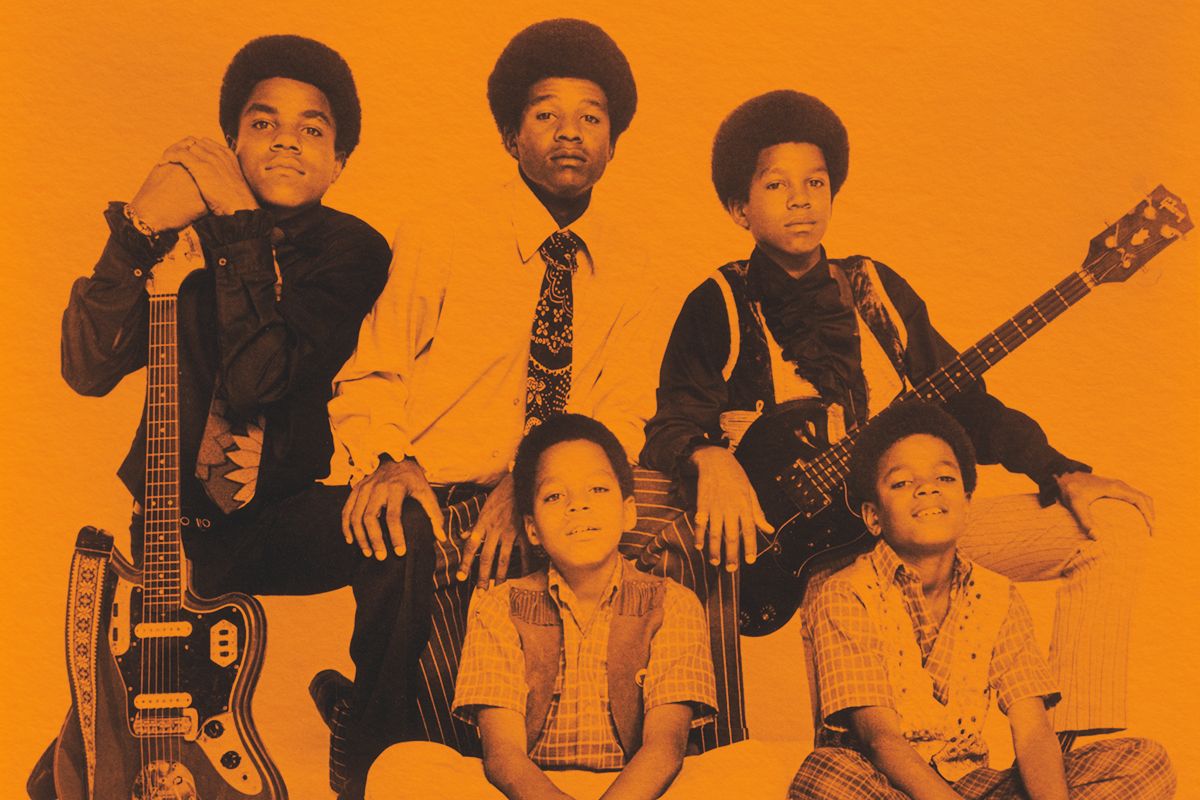
Jackson Five Singing Group, 1969

The Jackson 5 had an undeniable influence on pop culture, but while audiences were swooning, they were also learning classroom fundamentals with the hit song “ABC.” We hear one of the most famous mnemonic devices in English in the song’s opening lines: You went to school to learn, girl / Things you never knew before / Like “I” before “E” except after “C” / And why two plus two makes four… This elementary edict of “I” before “E” except after “C” sticks in our collective memory, thanks in part to one of the most popular songs of the 1970s, but it doesn’t always hold true. 

There is no blanket English grammar rule — everything has exceptions, and this spelling rule is no different. The rule best applies to French-derived words with the /ē/ sound, such as “grief” and “relief.” This fulfills the first half of the guideline, and then words such as “receive,” “deceit,” and “receipt” fulfill the second half — “except after ‘C.’”

Here’s where things get iffy. There are many words that put “E” before “I” without a “C.” Some of these words, such as “eight,” “weigh,” and “sleigh,” have Old English origins. However, it’s often impossible to guess a word’s origin on sight, so this isn’t a reliable method for spelling rules. An extended version of the jingle attempts to account for this spelling: “I” before “E” except after “C” or when sounding like “A” as in “neighbor” and “weigh.” Surely this improved version is a guaranteed path to flawless spelling, right? Not quite.

Advertisement

Don’t forget about words such as “weird,” “glacier,” “fancier,” “seizure,” “science,” and “ancient.” It turns out “ei” and “ie” make a lot of different sounds when paired together. Instead of memorizing a pithy rhyme with lots of exceptions, it can be more helpful to understand how pronunciation affects spelling. In English, the combination “ei” can make the sounds /ā/ (as in “vein”), /ē/ (as in “protein”), and /ī/ (as in “Fahrenheit”). When the letters “ie” follow a “c,” they can be split into two syllables, as in “sci-ence,” or the “cie” can make a “shh” sound, such as “ancient” or “efficient.”However, even pronunciation rules have caveats, and teaching grade school kids this method can be confusing. The mnemonic device is a logical development.

As it turns out, implementing “I” before “E” except after “C” is not “as easy as 1, 2, 3.” It can be a useful tool for spelling basic English words, such as the phrase “a piece of cake,” but the full rule (along with its pitfalls) is much more complicated.

Featured image credit: Bettmann via Getty Images
3 MIN READ

What Are the Newest Emojis?

The latest emoji release is bringing a quirky mix of new symbols to spice up your digital conversations.

by Jennifer A. Freeman
Various Emojis with different emotions

Ever watch a true crime special and want to text a friend about the plot developments? New emojis for that are coming: a fingerprint and a shovel. And if you’re someone who needs at least three cups of coffee before you feel awake enough to talk to someone, there will be a new emoji for that, too: a sleepy face with bags under its eyes. Eight new emojis (including a leafless tree, a root vegetable, a harp, and the flag of Sark, a British island territory) were announced as Emoji 16.0 in September 2024, but they’ll take time to appear on your emoji keyboard.

Advertisement

Emojis aren’t magic; they come from the Unicode Consortium, a global nonprofit founded in 1988 to provide character encoding standards. When you look at your computer screen or smartphone, you see colors, images, videos, fonts, and emojis, but the information is sent across the data signal as numbers. All the fancy stuff you see is assigned a numerical value by Unicode (to simplify computer programming to an extremely basic level). The first emojis — illustrations designed to be more complex than the punctuation-based emoticons such as 😉 — were released in 2015, but it’s a democratic process (and one we’ll cover in more detail in a future edition). Anyone can submit a proposal to Unicode for a new emoji. Once the new emojis are selected and announced to the public, designers take the sample image and any other specifications included in the proposal and create the actual images for each platform. 

You might have noticed that emojis look slightly different when you send them between iPhones and when they appear on Facebook or when sending between an Android and an iPhone. This is because Unicode only provides character codes for the emojis, and then it’s up to each vendor to decide how the emojis display on their platform or device. Developers add the new designs to the emoji keyboards, and these will appear with software updates. (If you see a white box where a new emoji should be, update your operating system. Stop procrastinating on that phone update!)

While the harp emoji likely won’t be ready for Christmas carol texts this year, you should be able to use Emoji 15.1 by now. This release includes Head Shaking Vertically 🙂‍↕️, Head Shaking Horizontally 🙂‍↔️, Phoenix 🐦‍🔥, Lime 🍋‍🟩, Brown Mushroom 🍄‍🟫, Broken Chain ⛓️‍💥, and various skin tones and directional variations for individual people walking, running, in a manual wheelchair, in a motorized wheelchair, with a cane, and kneeling. 

Featured image credit: Red Vector/ Shutterstock
2 MIN READ

When Do You Say ‘Somebody’ Instead of ‘Someone’?

While “someone” is usually considered more formal, in some contexts “somebody” is more important.

by Samantha Abernethy
Unknown female person silhouette

If almost any millennial hears the word “someBODY…” blaring from a speaker, they can finish the first line of Smash Mouth’s 1999 hit song “All Star”: “Somebody once told me the world is gonna roll me / I ain’t the sharpest tool in the shed.” But what would happen to the song if it started with “someone” instead of “somebody”? The two words have virtually the same meaning and are often used interchangeably. However, “All Star” would not be the same if you changed that first word.

Advertisement

“Someone” is considered the more formal of the two, so it’s preferred in legal and academic writing. This may be one of those language rules you’ve followed without noticing, but give it a try now. The use of “one” as a pronoun is very formal: “One may find that using ‘someone’ is more appropriate in professional settings.”

“Someone” and “somebody” are indefinite pronouns, meaning they refer to a nonspecific or unidentified person. Both should be written as single words — the two-word variants “some one” and “some body” went out of style around the early 19th century. Other indefinite pronouns include “anyone”/”anybody” and “everyone”/”everybody.” As with “someone,” the words “anyone” and “everyone” are also preferred in formal writing.

While “someone” is more formal, “somebody” can be more important. Comedian Lily Tomlin said, “I always wanted to be somebody, but now I realize I should have been more specific.” Here, the use of “somebody” is more specific — it’s used as a noun instead of as an indefinite pronoun. Tomlin was joking that she may have become famous, but she should have specified the type of fame, and her quote illustrates when we might want to choose “somebody” over “someone.” This slight grammatical shift drastically changes the meaning of the word. Instead of an unnamed person, now “somebody” refers to a person of particular importance, fame, or power. 

Featured image credit: Koldunov/ iStock