2 MIN READ

When Should I Use ‘Further’ Versus ‘Farther’?

Learn a simple trick to master the difference between “further” and “farther” — two commonly confused words that even skilled writers mix up.

by Jennifer A. Freeman
Open highway road

It’s a common conundrum: Is that store further or farther away? What’s the difference? Or do they mean the same thing?

Advertisement

“Further” and “farther” are two of the most notoriously confused words in English. While they have distinct usages today, they sprouted from the same etymological root hundreds of years ago. As the Oxford English Dictionary entry for “further” explains, both “further” and “farther” come from the Old English word fyrðrian, and the original usage of both words was a comparative form of “far,” meaning “more forward, more onward.” The only difference was in the vowels used to spell the words, and that was simply because spelling was not yet standardized at the time.

However, as English developed, the words deviated slightly in meaning, and now there’s a distinct usage for each. “Farther” holds onto the usage of “more far” in relation to physical distance. For example, “We walked farther today than we did yesterday.” There’s a measurable direct comparison. “Further” relies on the meaning of “more onward” in a metaphorical sense; it’s an extension of time or degree. For example, “I need to look into the issue further before I decide,” or “Let’s move the party further in the month.” There’s still a comparison, but no specific measurement.

A good trick to decide when to use “further” or “farther” is to ask the question, “How far?” If there’s a simple answer to that question, use “farther.” For example, “How far did you walk yesterday? A mile.” Compare that to “How far did you look into the issue?” There’s not a concrete answer to that question, so “further” is appropriate. You could technically answer the question of “How far should we move the party?” with a specific answer, but there are always exceptions in the English language. Just remember that “further” is used with extensions of time. 

Featured image credit: Brian Wangenheim/ Unsplash
2 MIN READ

What Is a Malapropism?

Whether “dancing the flamingo” or “visiting the Sixteenth Chapel,” this theater-inspired literary device is designed for a laugh.

by Bennett Kleinman
Woman Laughing While Reading Book

Speaking in English isn’t always that sample (simple), as it’s easy to make my steaks (mistakes). One of the most common arrows (errors) that people make is using a similar-sounding term in place of the correct word. While often unintentional, it produces a humerus (humorous) effect in many dramatic and comedic literary works. The concept is known as a “malapropism,” and this opening paragraph contains quiet (quite) a few examples of the literary device.

Advertisement

The term “malapropism” was inspired by an 18th-century English play called The Rivals. This 1775 comedic work by Richard Brinsley Sheridan features a character named Mrs. Malaprop, who unintentionally used incorrect — but similar-sounding — words, producing an amusing effect. Sheridan likely constructed her name from the French phrase mal à propos, meaning “inappropriate.” Mrs. Malaprop’s lines include: “He is the very pine-apple [pinnacle] of politeness,” and “I have since laid Sir Anthony’s preposition [proposition] before her.”

It took about 50 years after The Rivals premiered for the word “malapropism” to appear in publication, drawing direct connection to the Mrs. Malaprop character. An 1830 theater review read: “Mrs. Glover’s … Mrs. Malaprop … wants the highest relish of contrast in its malapropism.” But the literary device wasn’t invented by Sheridan’s play; it was merely given a name. An 1890 edition of Harper’s Magazine called to classic examples: “Lemaître has reproached Shakespeare for his love of Malapropisms.” 

In modern use, a malapropism is “the usually unintentionally humorous misuse or distortion of a word or phrase.” You might recognize examples in phrases such as “dancing the flamingo” (instead of “flamenco”), “Jesus healing the leopards” (“lepers”), or “going to Vatican City to visit the Sixteenth Chapel” (“Sistine”). If you find yourself inadvertently using the wrong word, just laugh and accept a gentle correction, because the malapropism probably amuses those around you as well.

Featured image credit: Irene Miller/ Shutterstock
3 MIN READ

How Are Emojis Chosen?

Discover how new emojis make their way onto your phone — and why you might want to submit your own proposal.

by Jennifer A. Freeman
Emojis hovering over a laptop

If someone sends a text that says, “i need to tell you something,” it might inspire worry about whether it’s good or bad news. But what if they added some emojis? “i need to tell you something 👀😉” — now we have the allure of some potentially hot gossip coming our way. Text-based communication has always lacked context, even before computers and smartphones, but there’s something about the ease of digital channels that makes it even more likely someone will misunderstand the nuance of a message. 

Advertisement

In the early days of 1990s chat rooms and message boards, smileys (also called “emoticons”) conveyed a simple frown 🙁 or a wink 😉 with the keyboard, and the truly sophisticated could shrug ¯\_(ツ)_/¯. Soon, developers had an idea for image-based communications. The first emoji set was created in 1999 by Japanese artist Shigetaka Kurita for DOCOMO, Japan’s main mobile phone carrier. The 176 pixelated characters are now on permanent display at the New York Museum of Modern Art. Emojis exploded in popularity across Japan in the early 2000s, and by 2007, there was a petition in front of the Unicode Consortium to standardize the coding. 

Unicode is a global nonprofit founded in 1988 to provide character-encoding standards, and getting the organization on board with emojis meant these tiny graphics were a legitimate form of communication. The turning point came when engineers from Apple and Google joined forces and submitted an official proposal to adopt 625 new emoji characters into the Unicode Standard. The proposal was accepted in 2010, bringing emojis under the purview of Unicode. That means Unicode decides what is included in the library of emojis, and provides guidance on what they should look like. Each vendor (Apple, Facebook, Google, etc.) has their own designers to dictate how the artwork appears on their platform, but the types of emojis that are available are consistent across the board. 

Emoji 1.0 was released in 2015 with 722 emojis, and we’re now at Emoji 16.0, with more than 3,600 emojis including variations of faces, genders, skin tones, and more. Each new release contains dozens of emojis, or just a few new options. (We talked about the newest emojis in a recent edition.) But it’s a democratic process to select a new emoji: Anyone can submit a proposal to the Unicode Consortium, which might end up in a release. The key is to submit ideas that fulfill needs not served by existing emojis and have cultural importance. 

For example, the Lime 🍋‍🟩emoji is one of the most recent additions to the lexicon, added as part of Emoji 15.1 in 2023. The proposal suggests multiple uses, including for “hanging out and socializing” and representing “the limelight.” The proposal writers offered: “Limes are visually and purposefully distinct fruits that have cultural significance around the world. Limes are of particular prominence in Asian and Hispanic culture due to their abundance in [crops] and inclusion in foods and drinks.”

What would you submit for an emoji proposal?

Featured image credit: J Studios/ DigitalVision via Getty Images
2 MIN READ

What Is a Euphemism?

Euphemisms allow us to lessen the blow linguistically by choosing a word or expression that is less offensive or more palatable than the original.

by Rachel Gresh
Hands holding blank speech bubble signs

If you have a friend who was recently laid off, you might describe them as “between jobs” instead of as “unemployed.” This swap is called a euphemism — a form of figurative language used to discuss sensitive, negative, or taboo topics in a gentler or more socially acceptable way. 

Advertisement

Euphemisms are used in all styles of speech, from everyday conversation to formal communication. They tend to be kinder, milder, and less abrasive than the alternatives, or, at the very least, more indirect or vague in meaning. A euphemism can soften the impact of a negative or sensitive topic. For instance, instead of saying someone is broke, you might say they’re “in a rough patch financially,” which has a more polite tone. Similarly, “let go” often replaces “fired,” and if you back out of something, you might say you “threw in the towel” instead of “quit.” In the same sense, “oh my gosh” often replaces a potentially offensive use of religious figures. Euphemisms such as “darn,” “fudge,” “heck,” and “shoot” are stand-ins for curse words — we’ll let you guess the corresponding profanities.
Although euphemisms are incredibly popular in modern dialogue, they aren’t new. The term “euphemism” entered the English language around 1650, derived from the Greek word euphemismos, meaning “use of a favorable word in place of an inauspicious one, superstitious avoidance of words of ill-omen during religious ceremonies.” By the end of the 18th century, “euphemism” gained a broader usage of “choosing a less distasteful word or phrase than the one meant,” a definition that still holds true today.

Euphemisms aren’t exclusively used in harsh or embarrassing situations; they can also create variety, humor, or irony. If you come home to a shriveled-up houseplant post-vacation, it’s perfectly acceptable to say, “It died,” but you might lightheartedly use the idiomatic euphemism “It kicked the bucket” instead. “Kicked the bucket” is both an idiom (a phrase that means something different from how it sounds) and a euphemism serving as a less direct way of saying something died. 

Featured image credit: BlackSalmon/ iStock
2 MIN READ

Why Do We Call It a ‘Pet Peeve’?

Do the sounds of someone chewing drive you to distraction? If you call that, or some other annoying habit, a “pet peeve,” you might want to learn where the term came from.

by Bennett Kleinman
annoyed adult woman hiding face, head down

Don’t you hate it when people arrive late after you tell them to be somewhere at a specific time? Or how about when people wear outside clothes on the bed? Or maybe it annoys you when people loudly scroll through TikTok on a public train and all you want to do is yell at them to use headphones!

… Sorry, that last one really rubs me the wrong way.

Advertisement

These are examples of pet peeves, or seemingly minor but still annoying issues. The term “pet peeve” is a recent creation that dates back to a little over a century ago, but let’s break down each component.
The word “pet” has been used as an adjective since the late 16th century, originally referring to privately owned animals. In the 19th century, the meaning broadened to include things or beliefs we hold near and dear. Soon, people began using it ironically in terms such as “pet hatred” and “pet aversion.” 

“Peevish,” meanwhile, is a 15th-century term used to describe things that evoke a feeling of spite or fretfulness. “Peeve” was created from “peevish” via back formation in the 20th century to fulfill a need for a term to describe personal annoyances. A back formation is when a new word is created by chopping off a real or supposed suffix or affix from an existing word.

“Pet” and “peeve” were combined in print in the 1910s, cementing the term in the public lexicon. A 1916 article from The Chicago Daily Tribune asked, “What is your little pet peeve? Hearing the baby scratch hubby’s collar.” This denoted one of the first known published instances of the term “pet peeve,” but people continued complaining in print throughout the 20th century. From a 1976 edition of the National Observer: “Poorly designed parking garages have riled me for a long time, but they’ve become a full-fledged pet peeve in recent years.” And in a 2002 copy of Time Out New York: “This touches on my biggest peeve with today’s..society.” More than a century after the term’s creation, folks continue to vent their pet peeves. The Instagram hashtag #petpeeve has 158,000 posts and counting. 

Featured image credit: Slladkaya/ Shutterstock
2 MIN READ

Why Is Sweetbread Neither Sweet Nor Bread?

An uninformed diner may get a surprise if they’re expecting a decadent dessert by ordering “sweetbreads.” What is this dish if it’s not sweet or bread?

by Bennett Kleinman
Closeup of cooked fried beef sweetbreads thymus organ gland

The word “sweetbread” may evoke images of a delicious pastry coated with icing, sugar, and plenty of sprinkles. But in reality, sweetbreads aren’t much of an after-dinner treat. These culinary delicacies are uncommon in the United States, but they’re popular throughout parts of Europe, the Middle East, and Latin America. Sweetbreads aren’t to everyone’s taste, though, so here’s a little explainer before you order them off the menu.

Advertisement

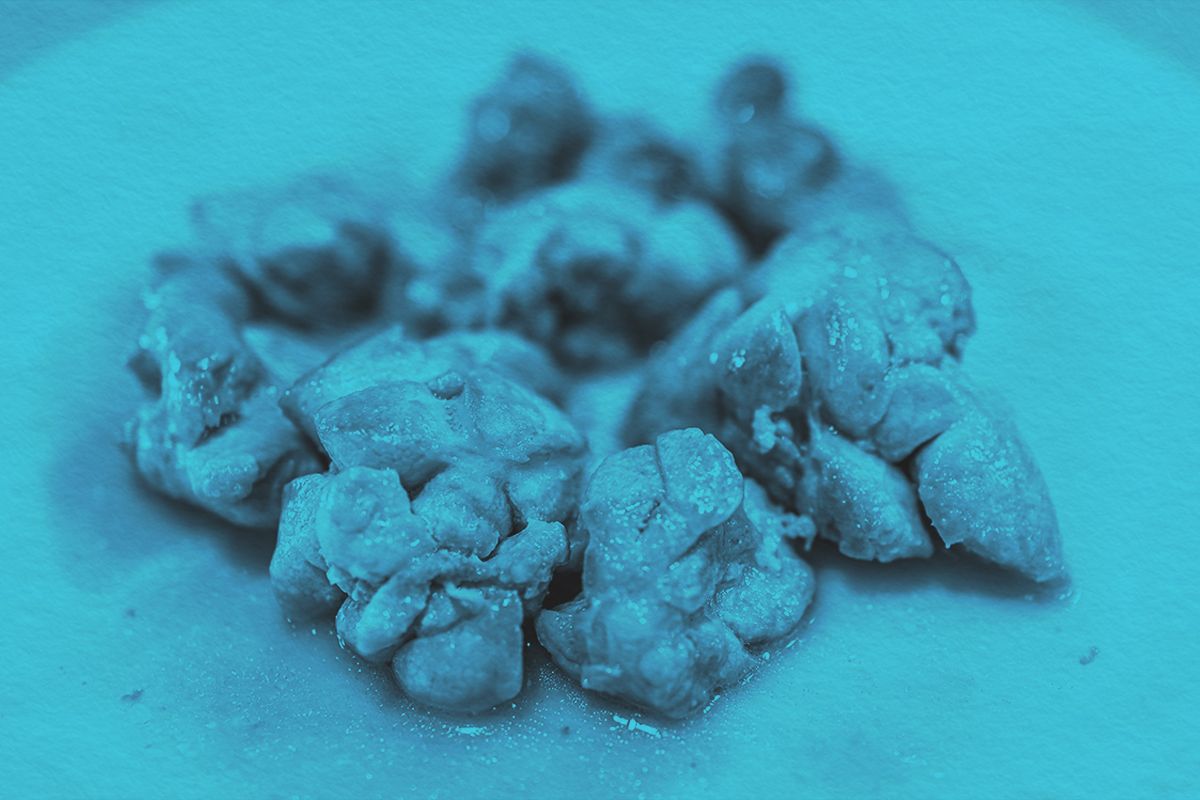
The term “sweetbreads” refers to two glands harvested from calves or lambs — the thymus, near the throat, and the pancreas, near the stomach. Both are edible when cooked and have a mildly mineral, slightly sweet flavor. To prepare them to be eaten, sweetbreads are usually soaked in water or milk, blanched, and then grilled or fried before being topped with lemon and a garnish.

The first written record of the word is in the 1578 English book The Historie of Man. Author John Banister described the thymus as the “most pleasant to be eaten … the sweete bread.” In this context, “bread” didn’t refer to baked goods; it was a variant of the Old English bræd, meaning “animal flesh.”

As for Banister’s use of the word “sweete,” he likely meant in comparison to other parts of the animal. While sweetbreads aren’t dessert-sweet, they have a sweeter and more delicate flavor compared to other organ meats such as kidney and liver. If you’re in the mood for an adventurous eating experience, sweetbreads may be worth trying. Just be aware of what you’re ordering, because it certainly isn’t anything close to a decadent cake.

Featured image credit: Kristi Blokhin/ Shutterstock
2 MIN READ

When Is the Witching Hour?

Is there a certain hour of the night when witches are more active? When should you be watching for broomstick activity? It depends on who you ask.

by Bennett Kleinman
Witch flying on broom during witching hour

If you’re a fan of TV’s How I Met Your Mother, then you’re aware that “nothing good happens after 2 a.m.” The show’s writers may have been onto something, as popular beliefs pin the “witching hour” to one hour later at 3 a.m. (or midnight, depending on which traditions you’re following). Does this phrase evoke images of women flying through the air on broomsticks and turning children into mice using their magical powers? *Insert spooky noises here* Yes, the origins of the phrase bring us to stories of witchcraft, but parents of young children also use “witching hour” to refer to a stretch of early evening when babies seem more prone to crying. And stock traders will be familiar with the term as the last hour of trading in each month — the market is especially volatile during that time period.

Advertisement

But back to the magical witches. Around 1600, William Shakespeare wrote a soliloquy in Hamlet that included the line, “‘Tis now the very witching time of night.” This denoted the first known use of a phrase similar to “witching hour.” Elizabeth Carolina Keene then penned the specific pairing of the words with the line “Tis the baleful witching hour” in the 1762 poem “Nightmare.” The term held onto its literary presence through the end of the 20th century with the publication of Anne Rice’s 1990 supernatural horror novel, The Witching Hour.

While it may be used for babies and stock markets, it still primarily refers to  an hour of the night/early morning when supernatural events are more likely to occur. But there’s a debate about when exactly the witching hour takes place. Many people think it falls between 3 a.m. and 4 a.m., a belief that’s rooted in religious history. Biblical scholars posit that Jesus Christ died at 3 p., and in turn, 3 a.m. became known as the “devil’s hour” — a term that evolved into “witching hour.” Other traditions claim the witching hour begins at  midnight, but in essence they all agree on the same thing: The witching hour is when supernatural and mysteriously diabolical events take place while shrouded in darkness.

Featured image credit: DNY59/ iStock
2 MIN READ

What Does ‘Roger That’ Mean?

What does it mean when someone says, “Roger that”? The answer is in the alphabet.

by Bennett Kleinman
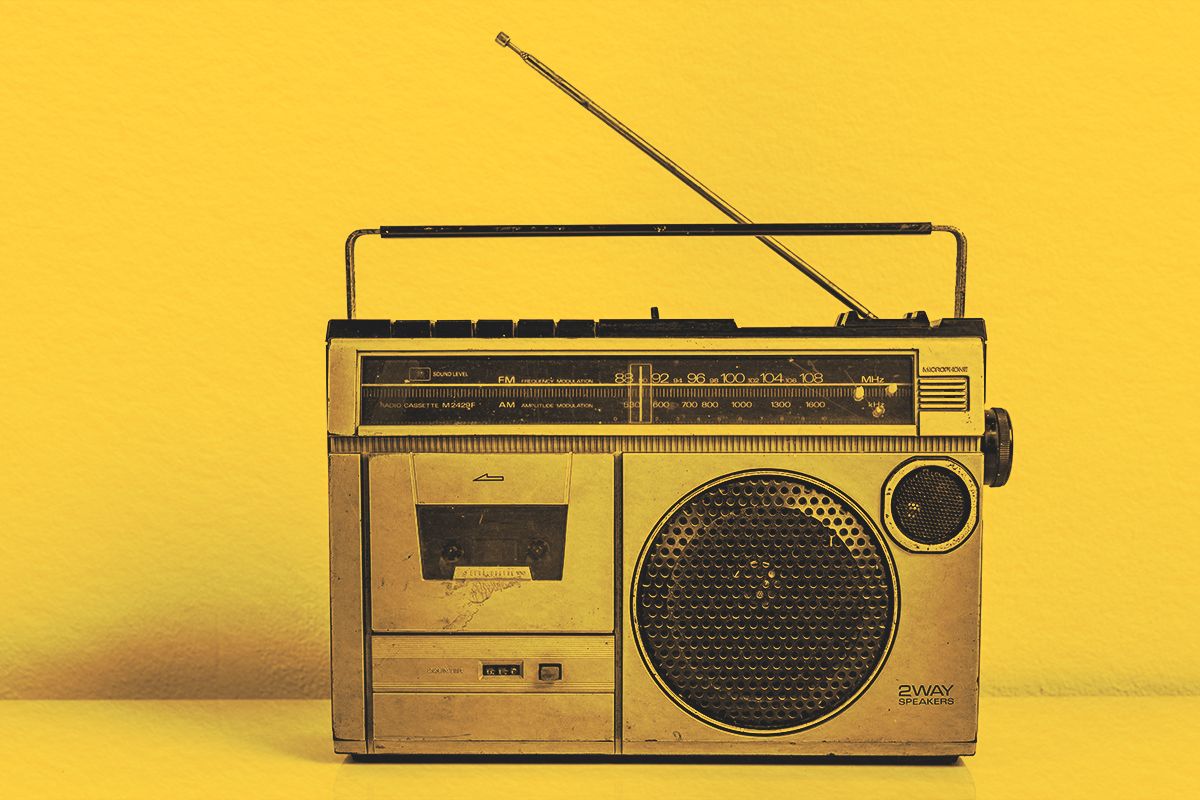
Retro old radio

If I ended a phone call with you with the sign-off “roger that,” you may think to yourself, “Who’s Roger and why is he so important?” I could be talking about tennis legend Roger Federer; Roger Moore, former James Bond star; or Roger Rabbit, who was 100% innocent, by the way. But “roger that” isn’t referring to a person named Roger at all. It’s a reference to the NATO phonetic alphabet and old-school radio communications in the United States.

Advertisement

You may have heard “roger” is an acronym for “received order given, expect results,” but that’s a myth, and the actual meaning is far simpler. “Roger that” dates back to the early 1940s, when “Roger” was used in place of the letter “R” in the Joint Army/Navy Phonetic Alphabet. It was nicknamed the Able Baker alphabet after its first code words. In radio communications, using the code word “Roger” indicated a message had been received loud and clear. While “Roger” was replaced by “Romeo” in the NATO phonetic alphabet that was adopted in 1956, many two-way radio users still say “Roger” for the same reason that it’s always been used. 

Advertisement

According to Dictionary.com, “Roger” became widely used after public broadcasts of NASA’s Apollo missions of the 1960s, when the term was used during radio communications between mission control and the astronauts. The public began using “Roger” as a verb, noun, and interjection, all of which meant that something was understood. So, when someone says “roger that,” you know that they’ve heard the message clearly and concisely.

Featured image credit: PitukTV/ Shutterstock
2 MIN READ

Why Is It Called a Pipe Dream?

This term has roots in a centuries-old illicit practice, but today it has a wishful connotation that can be hard to let go.

by Bennett Kleinman
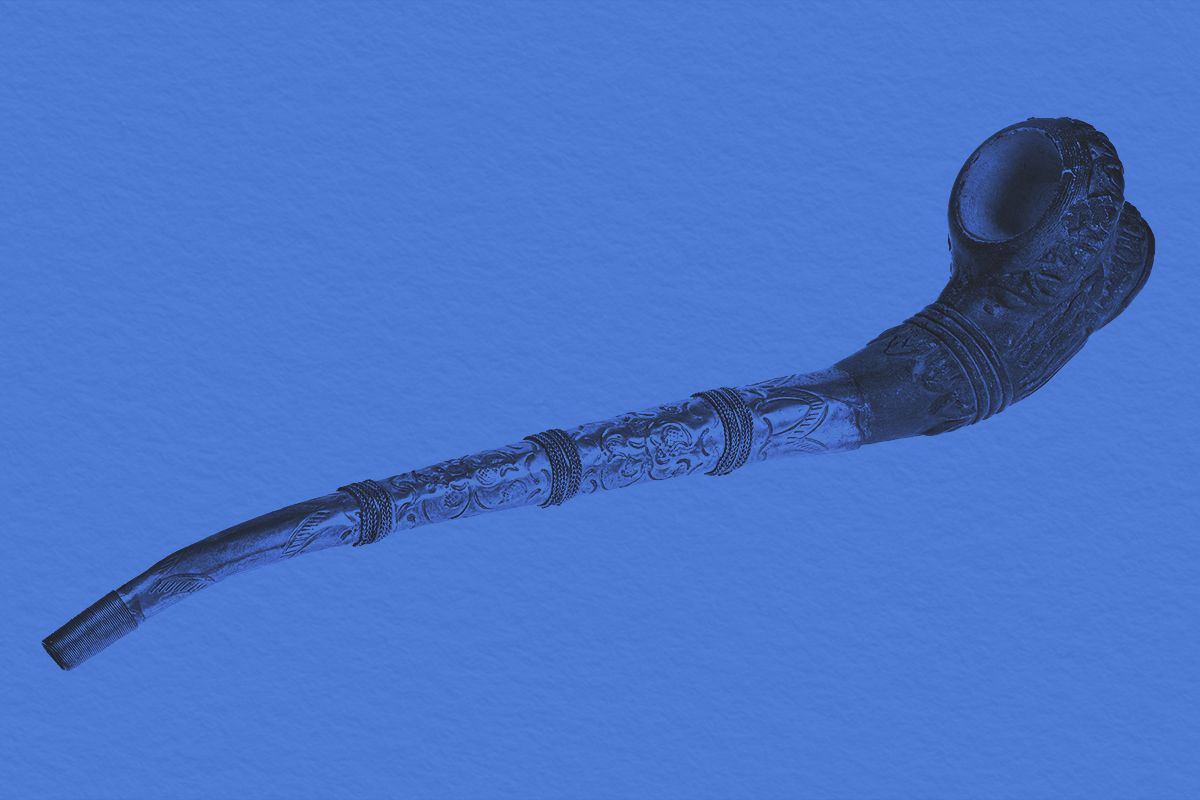
vintage opium pipe

The term “pipe dream” may sound like the title of a Blue Man Group song or what the Nintendo character Mario thinks about while he’s sleeping, but according to Merriam-Webster, it refers to “an illusory or fantastic plan, hope, or story.” Let’s say that someone who has never been in a movie wants to earn fame as an Oscar-winning actor, or someone who has never played a sport has dreams of being an all-star athlete. While both of these goals are possible, they’re also improbable, and are thus considered pipe dreams.

Advertisement

This turn of phrase originated in the late 19th century, though at the time, it had a provocative connotation. It came from the dreamlike state people would fall into after smoking an opium pipe (the 1800s version of opiates). People who smoked opium often experienced hallucinations, and the thoughts in that trance were called “pipe dreams.”

The first-known usage of this phrase in print is in the 1870 book Tales of Life and Death by Grantley F. Berkeley, when a feverish character recalls “last night’s pipe-dream.” Skipping into the mainstream just a few decades later, in 1890, the Chicago Daily Tribune reported how aerial navigation “has been regarded as a pipe-dream for a good many years.” However, in this case, the pipe dream became a reality with the Wright brothers’ first flight at Kitty Hawk in 1903.

Today, the term rarely refers to drug use, as many countries around the world have long outlawed opium. Instead, “pipe dream” is simply an expression of the unlikely hope that someone’s far-fetched dreams will come true. However, stranger things have happened, and it’s sometimes worth keeping a cherished pipe dream alive.

Featured image credit: Bjoern Wylezich/ Shutterstock
2 MIN READ

What Is ‘Rizz’?

Have you adopted the Gen Z slang term “rizz” yet? It’s popular enough for mainstream vocabulary, but make sure you know what you’re saying.

by Bennett Kleinman
Rizz, Gen Z slang for Charisma

To older generations, younger generations often sound like they’re speaking an alien tongue. “Skibidi” could very well be the name of a far-off planet, while “delulu” could be the name of a comet streaking through the sky. (The former is a Generation Alpha nonsense word that comes from internet memes, and the latter is Generation Z’s way of saying “delusional.”) But some terms have transcended the generational divides. Take, for example, “rizz,” which is such a popular slang term that the Oxford University Press named it the 2023 word of the year. If you missed this word’s rise to the top, we’ll explain. It’s a shortened version of a familiar word: “charisma. “Rizz” is pulled from the middle syllable of “charisma,” much like “flu” is part of “influenza.”

Advertisement

Oxford’s honor has seemingly given license for the mainstream to use “rizz,” but it started in the Gen Z lexicon. If a Gen Zer (someone born between 1997 and 2012) claims that someone has rizz, it’s a pretty major compliment, as they’re suggesting that a person is stylish and charming. “Rizz” is often used specifically in the context of attracting romantic partners. Often, having rizz transcends physical appearance, as a person with rizz is said to be more successful at dating people who would normally be deemed “out of their league.”

This catchy word’s popularity soared in 2022, thanks in part to internet streamer Kai Cenat, who used it during Twitch broadcasts. (Twitch is a streaming platform often used for video games.) Usage of “rizz” exploded from there, and soon it was everywhere on TikTok and spreading far beyond high school cafeterias and Gen Z exchanges. What youthful slang will we adopt from Gen Z (or even Gen Alpha) next?

Featured image credit: Josie Elias/ Shutterstock