2 MIN READ

When Should You Use ‘While’ vs. ‘Although’?

“While” and “although” might not be grammatical twins, but their resemblance is uncanny. More like close cousins, these conjunctions may be interchangeable under certain circumstances, but swapping them in the wrong situation can lead to major confusion.

by Rachel Gresh
Two people engage in a conversation on a rooftop

American author and disability rights activist Helen Keller once wrote, “Although the world is full of suffering, it is full also of the overcoming of it.” Not only is this a powerful message of resilience, but it also demonstrates a valuable grammar lesson: “Although” and “while” are interchangeable in specific contexts.

In Keller’s quote, either of the conjunctions  “although” or “while” could have been used because both words can express contrast or concession between two clauses. For instance, “While I agree with your opinion, I have a few questions” carries the same meaning as “Although I agree with your opinion, I have a few questions.” They are subordinating conjunctions because in both versions, the conjunction, when placed at the beginning of a sentence, introduces a subordinate clause that contrasts with the main clause. The choice, then, depends on tone: “While” often feels more conversational, whereas “although” tends to be more formal.
Now, shift the conjunctions from the beginning of the sentence to the middle: “I agree with your opinion, although I have a few questions” retains the same meaning, signaling contrast regardless of the position of “although” in the sentence. But replace “although” with “while,” and the sentence reads as a bit ambiguous: “I agree with your opinion, while I have a few questions.” “While” is a conjunctive adverb and can serve multiple uses. When “while” is placed between two clauses, it’s often interpreted as meaning “at the same time as,” as in, “I was waiting in the car while he picked up the food.” This time-related function of “while” is more dominant in English, so native speakers tend to interpret it this way instead of as a contrasting conjunction. In cases of mid-sentence ambiguity, it’s better to use “although.”

Bottom line: “Although” and “while” can often be used interchangeably, but the best choice depends on your intended tone and the context.

Featured image credit: BongkarnThanyakij/ iStock
6 MIN READ

Where Did the United States Get Their Names?

Discover the fascinating origins behind all 50 U.S. state names, from Native American languages to European influences.

by Jennifer A. Freeman
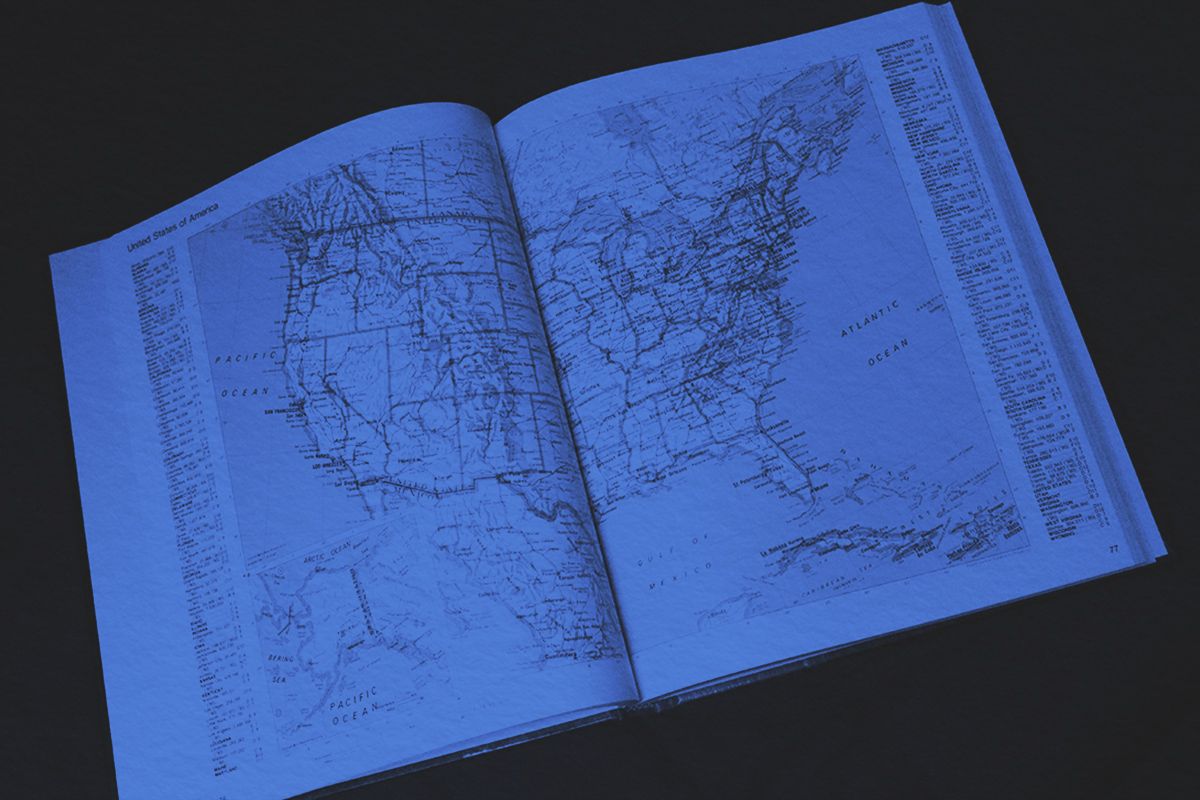
Book opened up to a page of the United States map

Every state in America has its own unique culture, flavor, and history — including its name. State pride is alive and well from Alabama to Wyoming, but do you know the story of how your state got its name?

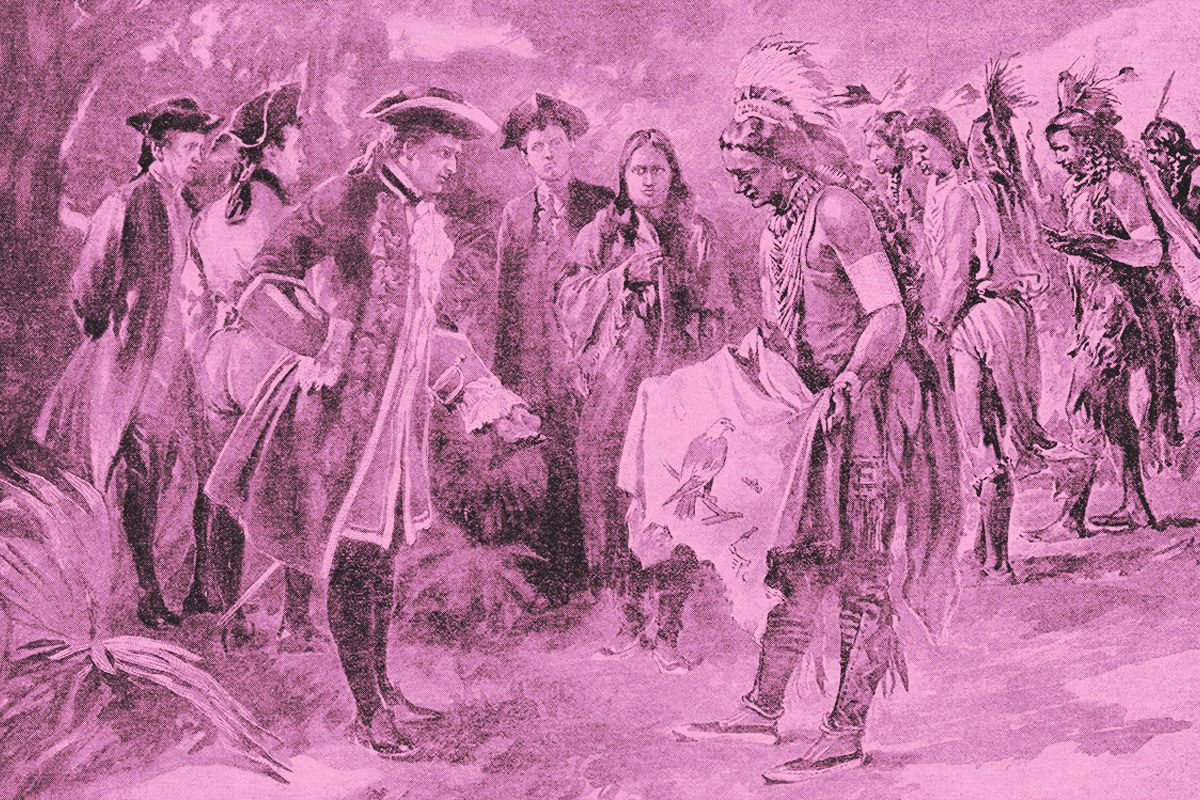
While the etymology for some state names is a bit muddled, in general, a good number are derived from Native American tribes and languages, such as Algonquin, Sioux, and Iroquois. Others are nods to the origins of the European settlers who claimed patches of America as their own.

Here’s a guide to where all 50 state names came from, and what they mean.

Origins of State Names

Alabama comes from the Choctaw word albah amo, meaning “thicket-clearers” or “plant cutters.”

Alaska has ties to the Aleuts and the Russians, with the words alaxsxaq and Аляска, respectively, essentially meaning “mainland.”

Arizona has ancient roots with the Uto-Aztecan word ali sona-g, which was adopted by the Spaniards as Arizonac, meaning “good oaks.”

Arkansas is the French version of an Algonquin name for the Quapaw people, akansa.

California is a magical place — so magical, it’s named after a fictional world invented by the 15th-century author Garci Ordóñez de Montalvo. Spanish explorers adopted the name when setting foot on the gold coast.

Colorado is another Spanish-influenced name that essentially means “ruddy.” The name was first applied to the Colorado River for its distinctive reddish color.

Connecticut, much like Colorado, was named for the river running through it. The word possibly stems from the Native American term quinnitukqut, meaning “beside or at the long tidal river.”

Delaware is also named for a body of water, and that body of water was named for Baron De la Warr, the first English governor of Virginia. The baron’s name is Old French for “of the war.”

Advertisement

Florida taps into its Spanish roots by referencing Pascua florida, meaning “flowering Easter,” as Spanish explorers found the lush area during that holiday season. There’s also a tie to the Latin word floridus, meaning “strikingly beautiful.”

Georgia may be the Peach State, but it’s named for King George II from Great Britain.

Hawaii comes from the Polynesian word hawaiki, meaning “place of the Gods.” It was also named the Sandwich Islands by James Cook in the late 1700s.

Idaho has roots in the Athabaskan word idaahe, meaning “enemy.” The name was originally applied to part of Colorado before being attached to the Gem State.

Illinois has a silent “s” at the end, because it’s of French origin. “Illinois” means “Land of Illini,” giving a nod to the Native American population. Illini is the Algonquin word for “man” or “warrior.”

Indiana, as you might expect, stems from the English word “Indian.” The Latin suffix tacked on the end roughly means “land of the.”

Iowa comes from the Dakota word yuxba, meaning “sleepy ones.”

Kansas references the Kansa tribe, meaning “people of the south wind,” which makes sense for the region nicknamed “Tornado Alley.”

Kentucky is yet another state named for the river running through it, inspired by the Shawnee word for “on the meadow.”

Advertisement

Louisiana, like Georgia, was named for a regent of colonial times, Louis XIV of France.

Maine has uncertain origins, though “Maine” was also the name of a traditional province in France.

Maryland is a nod from King Charles I to his wife Henrietta Maria.

Massachusetts comes directly from the Algonquian word Massachusett, which means “at the large hill.”

Michigan is based on the Algonquin word meshi-gami, meaning “big lake.”

Minnesota, like many other Midwestern state names, comes from a Native American language. In this case, the Dakota word mnisota means “cloudy, milky water.”

Mississippi means “big river” in Algonquin Ojibwa, although the spelling is based on the French variation of the word.

Missouri relates to the Algonquin word wimihsoorita, which translates to “people of the big canoes.”

Montana has some Spanish inspiration that links back to the Latin mons, for “mountains.”

Nebraska stems from the Sioux name for the Platte River, omaha ni braska, meaning “flat water.”

Advertisement

Nevada comes from the surrounding Sierra Nevadas, which essentially means “snowy mountains,” or “snowcapped” in Spanish.

New Hampshire begins the list of many states and cities named as new outposts of other parts of the world. In this case, Hampshire is a county in Southampton, England.

New Jersey was named by Sir George Carteret of the Channel Island of Jersey.

New Mexico is based on what was then the Spanish Nuevo Mexico. Fun fact: The ancient Aztec capital was named Mexihco.

New York was named for the Duke of York and the future King James II.

North and South Carolina are named after King Charles II, as Carolus is the Latin version of Charles.

North and South Dakota come from the Dakota people, and the word means “friend or ally” in Sioux.

Ohio comes from a body of water, the Ohio River. The Seneca word meant “good river.”

Oklahoma comes from a Choctaw word meaning “red people.”

Advertisement

Oregon’s origin is less clear, although some scholars point to Algonquin as the source.

Pennsylvania was named after Admiral William Penn, under King Charles II. It literally means “Penn’s woods.”

Rhode Island is the subject of multiple theories, including the idea that Dutch explorer Adrian Block applied the name Roodt Eylandt, meaning “red island,” to reflect the red cliffs of the region. Alternatively, it may come from the Greek island of Rhodes.

Tennessee comes from the Cherokee village name ta’nasi, but the meaning is unclear.

Texas is a Spanish name from the word tejas, meaning “friends or allies.”

Utah comes from the Spanish yuta, the name given to Indigenous Uto-Aztecan people of the mountains.

Vermont comes from the French mont vert, meaning “green mountain.”

Virginia and West Virginia are a nod to Elizabeth I, the Virgin Queen.

Washington is named for President George Washington. His surname means “estate of a man named Wassa” in Old English.

Wisconsin may come from the Miami word meskonsing, which was spelled by the French as mescousing and then shifted to ouisconsin.

Wyoming has origins from the Algonquian chwewamink, meaning “at the big river flat.” There is another theory, however, that proposes Wyoming comes from a word for “mountains and valleys alternating.”

Featured image credit: Domino Studio/ Unsplash
2 MIN READ

How Did July Get Its Name?

July and August are prime summer vacation months in the U.S., and the history of their names can be traced back to Roman emperors.

by Bennett Kleinman
July written in the sand

“Caesar” is more than the name of a delicious salad —  it’s also perhaps the most powerful surname in ancient Roman history. Julius Caesar was a famed Roman statesman, and his adopted son Augustus served as the first Roman emperor from 27 BCE to 14 CE. Both men were so important in Roman history that they had months named in their honor, and their legacy is still present in our modern calendar.

When March was the first month of the Roman calendar, July and August were the fifth and sixth months, respectively. At that time, July was called Quintilis  (translating to “fifth month” in Latin), while August was known as Sextilis (“sixth month”). These names existed for years until they were both changed during the first century BCE.

After Julius Caesar was assassinated in 44 BCE, the Romans named a month in his honor. He was born on the 12th day of Quintilis in 100 BCE, so his birth month was renamed “Iulius” (which was how “Julius” was spelled in Latin before the letter “j” was added to the alphabet in the 17th century).  

Emperor Augustus was the one making these name changes, and he decided to rename Sextilis after himself. Over time, as English developed partially from Latin influences, “Iulius/Julius” and “Augustus” turned into “July” and “August,” respectively. 

Along with the name changes, two months were added to the beginning of the calendar year, and a leap year every four years was created. Julius Caesar made some of the changes, and Augustus made the rest, but it was called “the Julian calendar,” which kept time for around 400 years.   

Featured image credit: Toltek/ iStock
2 MIN READ

Why Is It Called a ‘Baker’s Dozen’?

In Western culture, 13 is often considered to be unlucky. But in the world of baked goods, 13 is a “baker’s dozen,” and it’s always been a positive thing for the average consumer.

by Bennett Kleinman
Close-up of dough before being baked

It doesn’t take a mathematician to tell you that 12 does not equal 13. And yet, we often refer to a set of 13 as a “baker’s dozen,” even though “dozen” is clearly defined as “a group of 12.” This confounding term actually makes more sense once you learn its origin story, which can be traced back to the Middle Ages.

Let’s first talk about why certain goods are sold by the dozen. According to The New York Times, the practice comes from a time when shillings — a former form of British currency — were divided into 12 pence (roughly equivalent to pennies). So, many merchants sold individual goods for a single pence, or bulk goods by the dozen for a single shilling, as it made making change easier.

The concept of a baker’s dozen comes from merry old England and its medieval-era commerce. A 13th-century law called the Assize of Bread and Ale regulated the weight of bread and beer to prevent consumers from being ripped off. If a vendor failed to meet the legal standards, they’d be subject to fines or punishments. Breadmakers were so fearful that they’d be fined for selling underweight goods that they’d throw in an extra loaf to meet the minimum weight threshold. The “baker’s dozen” came out of this practice, with 13 items regularly making up an order for a dozen. 

While it was a 13th-century consumer protection law, we don’t see evidence of the phrase until a few hundred years later. That’s not to say people weren’t using it until the 16th century — books just weren’t being printed. The Oxford English Dictionary cites one of the earliest references in a 1596 pamphlet from English poet Thomas Nashe: “Conioyning with his aforesaid Doctor Brother in eightie eight browne Bakers dozen of Almanackes.” Later in 1864, “baker’s dozen” was defined in a contemporary slang dictionary as follows: “This consists of thirteen or fourteen; the surplus number, called the inbred, being thrown in for fear of incurring the penalty for short weight.” Nowadays, bakers needn’t fret too much about being penalized, though the idiom (and sometimes the practice) remains in use.

Featured image credit: Monika Grabkowska/ Unsplash+
3 MIN READ

What Is ‘Ç’ and How Is It Pronounced?

The English language rarely relies on diacritical marks, whereas other languages do. Here’s a look at one accent mark in particular that can be found in Romance and Turkic languages around the world.

by Bennett Kleinman
Capital and Small Letter Ç

Much like there’s a wide variety of pasta shapes, accent marks come in an assortment of shapes and sounds. Accent marks are also called diacritics, and while there are hundreds of choices across the world’s languages, we commonly see the tilde (~), the umlaut (ö), and the cedilla (Ç). The first two are sometimes used in loanwords, such as “piñata,” “jalapeño,” “über,” and “doppelgänger.” The latter is not found in English, as the words that used to contain the accent mark have dropped it in the English spelling (“facade,” for example). However, it’s commonly used in both Romance and Turkic languages around the world. Here’s a closer look at the cedilla and how it affects pronunciation.

The cedilla (pronounced “suh-DEE-yuh”) is often used in Romance languages,  such as French, Portuguese, and Catalan. The accent mark appears as a squiggle at the bottom of a letter (usually “c”), but “ç/Ç” also exists as its own letter in various Turkic scripts, such as Albanian, Turkish, and Kurdish. The symbol is Spanish in its origin, evolving out of the “Visigothic Zet” that preceded it. The Visigoths ruled over Iberia from the fifth to eighth century, and their version of the letter “z” was written as “ꝣ” and sounded like a soft /ts/. As Visigothic influence in the region waned and the Spanish language began to take shape, “ꝣ” evolved to become “ç.”

The word “cedilla” dates to the late 16th century, coming from the Spanish cedilla (a diminutive term meaning “little z”). As it was adopted into French and Catalan, “ç” came to represent a soft-“c” sound, pronounced similar to the letter “s.” The cedilla was required to distinguish from the harsher “k” sounds sometimes associated with the letter “c” on its own.

For example, although the word “facade” has dropped the cedilla from its original French spelling façade, it’s pronounced “fuh-SAHD” thanks to the cedilla (or cédille in French),  which softens the pronunciation of the “c.” If it weren’t for that small squiggly line, we may pronounce “facade” as “fuh-KAYD” (rhyming with “arcade”) instead.

To be clear, the cedilla refers to the dangling squiggly line itself rather than the entire letter. It’s most commonly used on a “c,” but  “Ş” is used for a soft /sh/ sound, and “Ţ” represents a soft /ts/ sound.

Featured image credit: photoopus/ Adobe Stock
2 MIN READ

When Are Redundancies OK?

Sometimes a writer gets caught up searching for the perfect word and they end up saying the same thing twice — like “new innovations” or “revert back.” English is full of these redundant expressions, hiding in plain sight until you learn to spot them.

by Rachel Gresh
New beginning text on typing machine

The evening news is scattered with buzzwords used for dramatic effect, but one phrase recently caught my attention. A news anchor announced a “major breakthrough” in a case, and I wondered: Is there any other type of “breakthrough?” By definition, a breakthrough is “a sudden, dramatic, and important discovery or development.” Calling it “major” repeats what’s already implied. Subtle redundancies like this can trip up even experienced writers.

Once I tuned into this kind of redundancy, I noticed more throughout news broadcasts. A report mentioned a “protest against” a new school board budget — but a protest is, by definition, a demonstration against something. Then came talk of “new innovations” in public transportation, another redundancy because innovations are inherently new.

Redundancies aren’t limited to TV news, of course — they’re everywhere, especially in advertising. Take the classic “free gift with purchase” offer. Gifts are free by definition, so you don’t really need that first word. Other everyday examples include “blend together,” “revert back,” “absolutely certain,” and “new beginning.” Here, the words “together,” “back,” “absolutely,” and “new” serve no real purpose; they’re simply reiterating the definition. Why have these phrases persisted in the English language when the colloquial trend is to abbreviate or turn phrases into acronyms? As it turns out, we all use redundancy for emphasis, whether in national news headlines or texts between friends.

So, is using redundant phrases wrong? Not necessarily, but it depends on the context. In casual, creative, or emotional writing, redundancy can enhance tone, rhythm, or interest. Think of the fairy-tale line “forever and ever.” While redundant, it’s stylistically meaningful. The key is knowing when your audience will appreciate redundancy and when it might be distracting. As for formal and technical writing, follow the style guides and trim excess by avoiding redundancy.

Featured image credit: Pixelbliss/ Adobe Stock
4 MIN READ

Down Under Dictionary: Essential Australian Slang

Think you speak English? Not everywhere. Australia’s unique slang can leave American English speakers scratching their heads.

by Jennifer A. Freeman
Australian flag waving over Perth Water

American travelers might assume they’ll have no trouble communicating in Australia, but they’re often in for a linguistic surprise. Yes, we technically speak the same language as Aussies, but Down Under, English has evolved into something uniquely and wonderfully Australian. From casual greetings to everyday objects, Australians have developed their own colorful lexicon that can leave visitors both amused and confused. Whether you’re planning a trip to Sydney’s beaches, Melbourne’s coffee shops, or the vast Outback, prepare with this guide to Australian slang.

Arvo

If you’re meeting up for a midday lunch, you’ll probably greet your tablemate with “good arvo” (pronounced “ah-vo”). If you add an “s” to the beginning, as in “s’arvo,” you’ll be saying “this afternoon,” so you might say something like “meet me at the beach s’arvo.”

Ridgy-Didge

Are you lying, or are you telling the ridgy-didge? This funny-sounding word is slang for “truth.”

Doona

When you cuddle up under the covers at night, you’ll be pulling up your doona — or what North Americans know as a duvet or comforter.

Chockers

This word, which rhymes with “shockers,” is used to describe anything that’s jam-packed or full. For example, you might say, “The subway was chockers on the way to work this morning.”

Advertisement
Galah

It’s pronounced like the word “gala,” but it has a far less elegant definition. Aussies use the term “galah” to refer to a fool or silly person, after a supposedly dim-witted bird of the same name.

Sanger

In North America, a slang term for a sandwich is “sammie,” but Down Under, you might hear it’s “sanger,” “sambo,” or “sambie.”

Bingle

Did you get into a bit of a fender bender with your car on the way to work? You’ve had a bingle, mate.

Esky

When you’re heading to the beach, you need to be equipped with an esky, or what Americans would—we’d call a cooler, ideal for loading up drinks and frosty treats.

Advertisement
Pash

This one is slang for a deep kiss — it’s a shortened form of “passionate,” so if you have a vacation fling, make sure it lives up to the adjective inspiration.

Fair Dinkum

You could use this strange expression as an interjection, much in the same way you’d have an excited exchange of “‘Really?’ ‘Honestly!’” As in, “‘Fair dinkum?’ ‘Fair dinkum!’” It’s a flexible term — when it’s used as an adjective it’s a synonym to describe something as honest or genuine. When it’s an adverb, it’s used to emphasize sincerity or truth, such as “I’m fair dinkum about our chances to win the match.”

Cossie/Cozzie

Pick either spelling; these two words are pronounced the same and have the same meaning. They’re nicknames for a women’s swimsuit.

Trakky-Daks

A lot of Australian speech has a certain singsong rhythm, and part of it comes from Aussies’ affinity for taking components of words and making them into cute rhymes. “Trakky-daks” stems from “track pants.”

Furphy

If something seems truly unbelievable or absurd, you might proclaim it’s downright furphy.

Macca

Australians love shortening words — “Chrissy” is “Christmas,” “prezzies” are “presents” — and that extends to brand names, too. If you’re heading for a bite at the Golden Arches, aka McDonald’s, you might invite someone to join you at Macca’s.

Hooroo

To wrap things up, let’s say goodbye, Aussie-style, with this quirky word.

Featured image credit: Benny Marty/ Shutterstock
2 MIN READ

Is It ‘Gray’ or ‘Grey’?

Who knew one vowel could cause such a fuss? Whether you spell it “gray” or “grey” depends on where you are, what you’re writing, and sometimes, what you’re naming. Let’s break down the spelling exceptions of this colorfully confused word.

by Rachel Gresh
Earl grey tea bags

There are some English words whose spelling depends on where you are in the world. In the United States, the color that is a mixture of black and white is called “gray,” but across the pond, it’s spelled “grey.” That’s because British English uses the older version of the word, which first appeared in Middle English, descending from the early Old English “greig.” The spelling variant “gray” gained popularity in the United States in the 18th century, perhaps inspired by the Scottish spelling of the word, which underwent several historical variations of its own (gra, grae, graye) before settling on gray.

In most cases, “gray” and “grey” are interchangeable, even in specialized terms and compound words, including “grayscale/greyscale,” “graying/greying,” and “gray/grey whales.” However, there are a few exceptions that always use one spelling. Brand names retain their specific spelling and should not be altered. For example, “Grey Poupon” (a Dijon mustard) and “Grey Goose” (a vodka brand) are both French companies, and as such, they use the British-influenced “grey.”

Beyond brand names, a few well-known terms consistently use one specific spelling. “Earl Grey tea” is a type of black tea named after Charles, the second Earl Grey and British prime minister during the 1830s. The greyhound dog breed similarly retains only one spelling. It originates from the Old Norse word “grey,” meaning “bitch” (“a female dog”) — it was not intended to reference the color of the breed, whose coats come in a range of shades.

In physics, the spelling “gray” is used to refer to a standardized unit of the absorbed dose of ionizing radiation, which corresponds to 1 joule per kilogram. This unit, named in the 1970s after English radiobiologist Louis H. Gray, is a reminder that proper nouns retain their original spelling, regardless of regional preferences. However, keep in mind that, in most instances, whether you use “gray” or “grey” depends on geography and context. When in doubt, choose the version most suitable for your audience’s location. 

Featured image credit: Martin of Sweden/ Adobe Stock
2 MIN READ

Why Do We Say ‘Won’t’ Instead of ‘Willn’t’?

Every group has its rebel — and in the world of contractions, that rebel is “won’t.” By all logic, it should be “willn’t” if it followed the usual pattern. Here’s the centuries-old story behind English’s most defiant contraction.

by Rachel Gresh
Fred Rogers Of "Mister Rogers Neighborhood"

“Won’t You Be My Neighbor” was the cheerful theme song of the long-running TV show Mister Rogers’ Neighborhood, sung by none other than Fred Rogers himself. This friendly tune is easy to sing along with, but imagine how it would sound if the contraction “won’t” were replaced with “willn’t.” If it followed the usual pattern for contractions, “will not” should become “willn’t.” But of course, we use “won’t.” How did that happen? Centuries of language evolution are to thank for this unique contraction.

Most standard English contractions follow one of three patterns: drop the first letter of the second word (“I’m,” “they’re,” “how’s”), drop the second letter of the second word (“shouldn’t,” “don’t,” “isn’t”), or drop the first two letters of the second word (“it’ll,” “he’ll”). “Won’t” appears to follow the second rule by dropping the “o” in “not,” but there’s something unusual about it. Unlike with “don’t” (“do not”) or “isn’t” (“is not”), the first part of “won’t” doesn’t clearly come from the first word (in this case, “will”). So, why not just say “willn’t”?

The answer lies in a rather messy evolution of language that dates back a now-extinct Middle English word, “wynnot.” Back then, “wyn” was a common spelling variant of “will,” so “wynnot” simply meant “will not.” By the 15th century, “wynnot” was replaced with “wonnot,” a blend of “woll” and “not.” The word “woll” itself was another spelling variation of “will” used in late Middle English until the 16th century.

By the 17th century, “wonnot” had been shortened to “wo’not,” and finally, by the 18th century, it settled into the modern form we know today: “won’t.” It remains the only common English contraction to preserve an archaic form. Linguists believe that “won’t” stuck around for a simple reason: It’s easier to pronounce than “willn’t.” After all, “Willn’t you be my neighbor?” just doesn’t have quite the same ring to it.

Featured image credit: H. Mark Weidman Photography/ Alamy Stock Photo
5 MIN READ

Words We Think Should Be Pronounced Differently Based on How They’re Spelled

Have you ever seen a word written down, only to discover that its pronunciation is far different than you first thought? Not everything in the realm of phonetics is as it first appears.

by Bennett Kleinman
Mens rowing team being lead by the coxswain

An interesting hallmark of a well-read person is that they may mispronounce certain words. It’s not that they don’t know the meaning of the word — in fact, it’s quite the opposite. There are some words that don’t come up regularly in spoken conversation, but are employed more frequently in books and journalism, and a person of letters will be familiar with this vocabulary. Within this subset of words are those that have a pronunciation that is at odds with the way the word is spelled. Consider the word “receipt” — it’s a common enough word, but it serves as an example for us. How is a reader supposed to know the “p” is silent? 

This pronunciation mismatch is rife across the English language because of its widespread etymological history. Sometimes a single word might have undergone an evolution that pulls from both Latin and Germanic influences. When a reader looks at an unfamiliar word, it can be tricky to know where to place the emphasis, which letters to pronounce, and which might be silent.Here are six examples of this phonetic disconnect.

Epitome

Correct Pronunciation: uh-PI-duh-mee

Alternate Pronunciation: EH-pi-tohm

“Epitome” — a word meaning “the perfect example of” — is arguably the epitome of the topic at hand. Part of the confusion stems from the word “tome,” which is pronounced “tohm” and means “a large, scholarly book.” However, that word has nothing to do with the etymological roots of the word “epitome.” Instead, “epitome” comes from the Greek ἐπιτομή, which means “incision” and is pronounced in a similar fashion to the modern English word. However, the similar spelling of “epitome” and “tome” causes an understandable pronunciation mix-up.

Queue

Correct Pronunciation: kyoo

Alternate Pronunciation: KWEH-weh

So many vowels in a row are tricky to parse out, but we think it would make sense for the “que” in “queue” to be pronounced with a “kweh” sound — much like in the word “question.” But in truth, the last four letters of this odd term are essentially silent, as “queue” is pronounced more like the letter “q.” This is because “queue” is likely derived from the Old French cue or coe, meaning “tail.” Today, the word is primarily used among British English speakers as a term for a line of people.

Advertisement
Colonel

Correct Pronunciation: KER-nul

Alternate Pronunciation: KER-nul (but it should be spelled differently)

The pronunciation of “colonel” comes from French, but the modern spelling comes from Italian, which is where the mismatch comes from. It’s derived from the French coronel, referencing the commander of a regiment, but in the 1580s, the spelling was modified to be more in line with the Italian colonnella, meaning the same. But even though the spelling changed, many English speakers continued to use the earlier version of the pronunciation that included an “r” sound, which persists in many places today. Instead of changing the pronunciation, we vote to switch to an entirely English spelling, as it’s already been through multiple influences. Let’s go phonetic and make it “kernel.”

Viscount

Correct Pronunciation: VYE-kownt

Alternate Pronunciation: VISS-kownt

A viscount is a position in British peerage, ranking above a baron and below an earl. While it’s spelled with an “s,” that letter is silent, and the word is pronounced “VYE-kownt.” This is because it originally meant “vice count,” as in someone who provides assistance to a higher-ranking count. The word “vice” was shortened, thus producing the “vye” sound at the start of “viscount.” This one doesn’t matter too much for American English speakers, but as there are no counts in the British peerage system, we propose to swap this pronunciation.

Coxswain

Correct Pronunciation: KAHK-sun

Alternate Pronunciation: KAHK-sweyn

Coxswain is an important position in the sport of rowing, as it’s their job to help steer the racing boat. The “cox” portion of the word comes from the Middle English cok, meaning “small boat,” while “swain” is an archaic word for “country youth.” Together, they join to form this unusual word, which drops the “way” sound that is expected from phonetics. Instead, that syllable is left unstressed, as “coxswain” is simply pronounced “KAHK-sun.” As with “epitome” and “tome,” the mismatch of spelling and pronunciation between the words causes confusion, and we’d like to bring them in line with a new pronunciation for coxswain. 

Segue

Correct Pronunciation: SEG-way

Alternate Pronunciation: SEH-guh

“Segue” is spelled in the pattern of many other familiar words — “vogue,” “vague,” and “fatigue,”  to name a few. But while those end with a guttural “guh” sound, “segue” is different. It’s pronounced “SEG-way,” as the Italian segue is pronounced. The Italian word means “now follows,” and “segue” in English implies a transition from one topic to another. While there is a strong connection to the Italian inspiration, we think it makes sense to keep the pronunciation consistent with other similarly spelled English words, even though they have different etymologies.

Do you agree with our phonetic suggestions? Or have we gone too far in disrupting the language? We’re not changing the dictionary — just offering some opinions on words we stumble over in our regular reading. Are there any words you think should change pronunciation based on their spelling? Let us know

Featured image credit: Clerkenwell/ iStock