







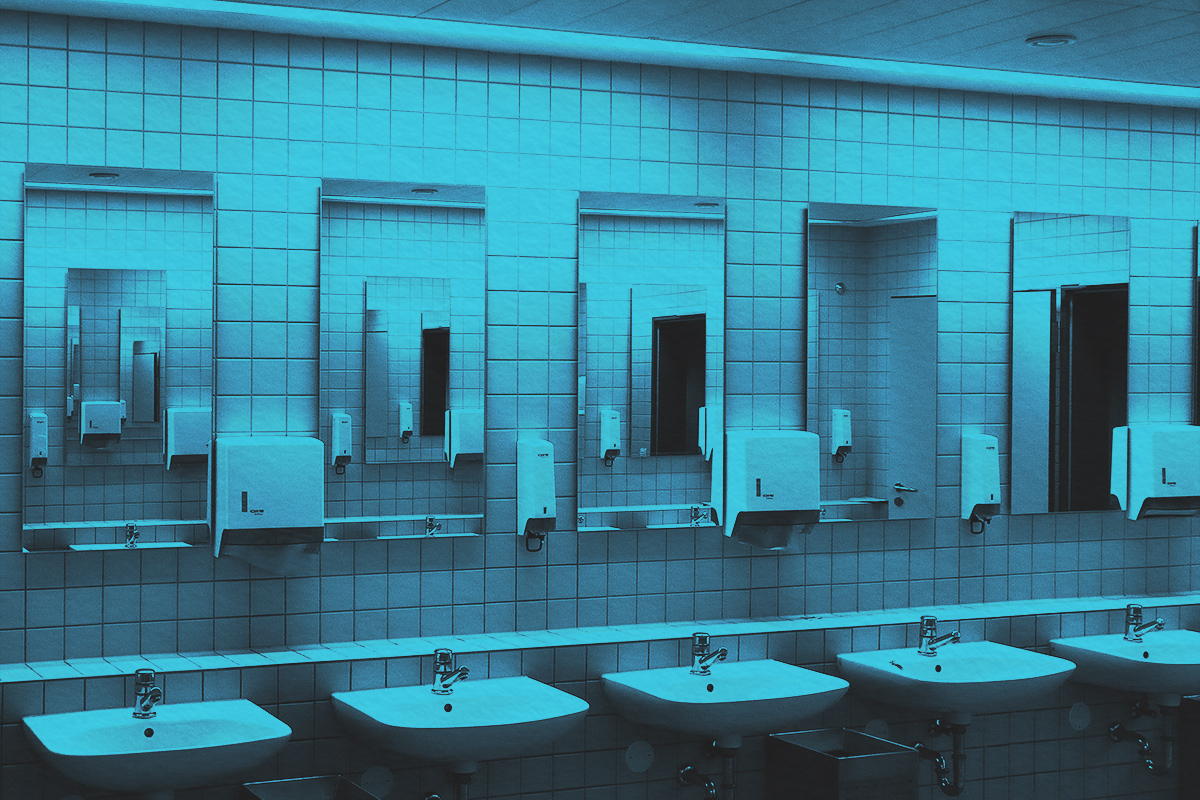
Unless you’re dealing with a bout of the flu, the odds of falling asleep in the bathroom are slim to none. The activities in a restroom are usually accomplished with efficiency. So why do we refer to these spaces as “restrooms” when people rarely rest inside them? The origins of this term can be traced back to the 19th century, a time when these rooms were used for more than just bodily functions and ablutions (washing).
Originally, restrooms were quiet spaces in public buildings or workplaces where people could relax away from the hustle and bustle. The Oxford English Dictionary traces this meaning back to 1856, when there was no guarantee that resting rooms would even have toilet facilities. But as the century progressed, these literal rooms for rest began to incorporate attached lavatories in order to make the spaces more comfortable. The inclusion of toilets was even mandated in some jurisdictions.
By the end of the 19th century, a new definition for “restroom” — as in a place to use the toilet, specifically — slowly began to supersede its original meaning. The Online Etymology Dictionary notes that by the 1930s, “restroom” had become a widely understood synonym for “lavatory”; today that’s virtually the only usage.

Similar logic explains the origins of the term “bathroom,” which has been in use since 1670. Many early toilet rooms also included bathing facilities, so the word evolved to describe any lavatory, whether there’s a bathtub or not. As for the word “lavatory,” it’s derived from the Latin lavatorium, meaning “a place for washing.”
More from our network
Word Smarts is part of Inbox Studio, which publishes content that uplifts, informs, and inspires.





