


Words have power — not just to inform, persuade, or flatter, but also to provoke visceral reactions in the people who hear them. Some words make people wince, cringe, or shudder for reasons they can barely explain. Others annoy through overuse, misuse, or superfluity, becoming the linguistic equivalent of someone scraping their nails down a blackboard.
Research into word aversion — the phenomenon of finding a perfectly ordinary word inexplicably annoying or revolting — has grown into a genuine field of linguistic study. And the words we hate fall broadly into two distinct camps: those that offend the ear and those that offend our intelligence. Here are some of the most hated words in the English language, based on the results of various polls and surveys from Oxford University Press, Merriam-Webster, Marist Poll, and more.
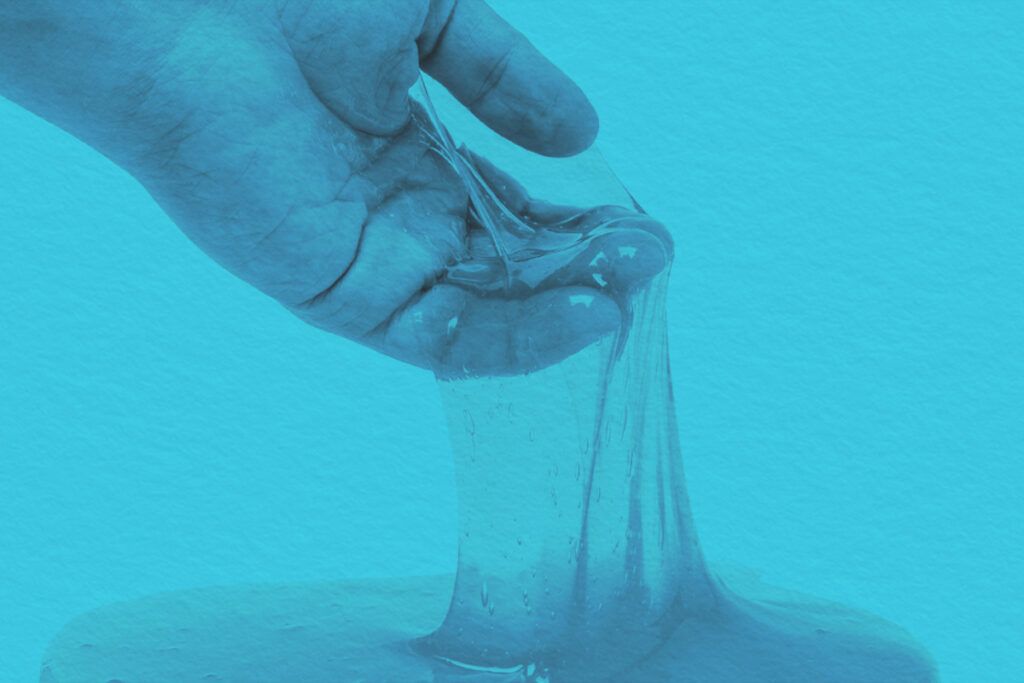
“Moist” is the undisputed champion of hated words, appearing in polls across the English-speaking world. In 2016, a study by psychology professor Paul Thibodeau found that 10% to 20% of the U.S. population is averse to the word. Perhaps surprisingly, his research suggested that the phonological properties of “moist” — the way it sounds — weren’t the primary driver of people’s dislike. Instead, it was the word’s semantic features — its association with bodily functions — that primarily caused the negative reaction. It’s notable that similar-sounding words such as “foist” and “hoist” don’t inspire such hatred, because they lack the tactile, visceral connotation.
“Phlegm” is another word that people dislike, for very much the same reasons as “moist.” The thick, sticky substance produced by the respiratory tract is unpleasant enough as a concept, and the word itself manages to sound like what it describes — heavy, clogged, and slightly threatening. Other words of a similar nature that often appear in polls include “flesh,” “cyst,” and “mucus.”
“Squelch” is a fine example of an onomatopoeic word that makes many people cringe. It accurately imitates the unpleasantly wet, sucking sound of something soft and waterlogged — doing its job almost too well. Talking to Bustle, linguist Mariana Ureña further explained how “squ” contains a consonant blend, so the speaker “has to pronounce each letter, and it’s a somewhat complex sound to make” — perhaps explaining why “squirt” and “squirm” also appear on lists of unpopular words.
“Whatever” is a perennial front-runner in polls about annoying words. It was ranked the most hated word in America for 12 consecutive years, according to the annual Marist Poll, and in 2020, it received a massive 47% of the vote. Its power to irritate lies in its antagonistic indifference — its usage and tone are often dismissive, passive-aggressive, lazy, and rude, creating a perfect storm of semantic distaste.
“Irregardless” is another word that makes people wince. The standard form is “regardless,” which carries the exact same meaning. Adding “ir-” to the front is at best superfluous, and at worst a double negative. But there is a caveat here that can be used against word pedants: “Irregardless” actually dates back to the late 18th century and has been in fairly consistent use ever since. So, while it is now considered a nonstandard word by many dictionaries (which do typically include it), it is not technically incorrect, despite being slightly annoying.
The use of “like” has been inspiring linguistic debate for decades. People have argued over whether it should be used as an adverb or as a conjunction, but the more typical complaint is simple overuse. It has, undeniably, become a hugely popular filler word, and not only in American “Valley girl” speak. As The Guardian pointed out, one episode of the British reality TV show Love Island featured a five-minute conversation in which “like” was uttered 76 times — once every four seconds. But while some people see it as a sign of laziness or a lack of education, linguists have defended “like,” arguing that it is actually a highly versatile and dynamic word.
“Bae” is a term of endearment that became popular in the 2000s as a shortened form of either “babe” or “baby.” (The idea that it’s an acronym for “before anyone else” was likely a backronym thought up after it was already in use.) It remains common today, but in a U.S. survey by Preply, 29% of respondents voted it one of the most disliked slang words, with Gen X finding it particularly obnoxious. And in the U.K., a poll conducted by the research agency Perspectus Global found that 25% of Brits were irritated by “bae.” The word’s rapid rise, its cloyingly lovey-dovey usage, and its association with influencers and performative social media clips have all helped earn “bae” its bad reputation.
In 2015, the women’s underwear brand Knix Wear teamed up with linguistics expert Mark Liberman to find out what everyday words make women cringe. The aforementioned “moist” and “squirt” topped the list, followed by “panties,” with 54% of respondents finding it “uncomfortable.” This seemingly innocuous word doesn’t have the bodily-function association of “moist,” the onomatopoeic heft of “squelch,” or any of the overuse or misuse issues mentioned previously — so why do women struggle with it? Language psychologist Paul Thibodeau, talking to Yahoo Health, explained how the word sits on an uneasy juxtaposition of childhood and eroticism. “For a very young person, ‘panties’ is almost euphemistic [for underwear] — it’s gentle,” he said. But later in life, the word “sort of takes on these sexual properties — it becomes risqué — as people grow up.” It’s yet another example of the weird ways in which the human mind takes issue with certain words that are otherwise entirely harmless.
More from our network
Word Smarts is part of Inbox Studio, which publishes content that uplifts, informs, and inspires.