


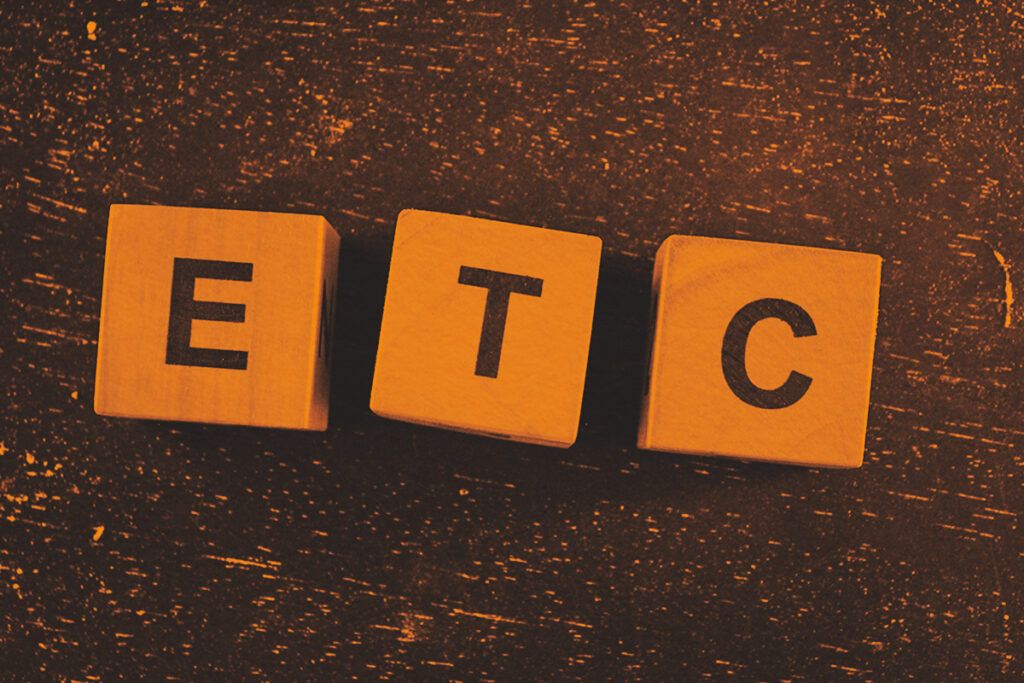
Imagine you’re writing out a shopping list for an upcoming party you’re hosting. You could list out the supplies as “Plastic spoons, plastic forks, plastic knives,” and “Paper plates, tablecloth, and napkins,” or you could write “Plastic spoons, etc.” and “Paper plates, etc.” A handy way to indicate that a list is not complete is to end it with “etc.” But what do these three little letters really mean?
The Latin phrase et cetera means “and others especially of the same kind.” In English, the noun “etcetera” (one word) is used to mean “a number of unspecified additional persons or things.” It’s been in the English lexicon since the late 16th century, but before the 20th century, it was commonly abbreviated as “&c.” Now the abbreviation “etc.” prevails.
While it’s an efficient shorthand, there are many ways to make mistakes when using “etc.”
The Latin word et literally means “and.” “Etc.” already means “and other things,” so “and etc.” is redundant.
Consider this request: “Bring supplies such as pens, silverware, etc.” Notice a problem? The rest of the items are not easily inferred from the examples given. Pens and silverware are not necessarily related, so the “and other things” could be anything.
Similar to the example above, “The app tracks mood, sleep, exercise, etc.” is unclear because we’re left to guess what else the app tracks. It would be better to be more explicit: “The app tracks daily habits, including mood, sleep, exercise, etc.”
“Etc.” is typically used for things, not people. It would be awkward to write, “We invited Alice, Jordan, Helen, etc.” It’s better to write, “We invited Alice, Jordan, Helen, and others.”
If you use “etc.” too much, your writing may seem unfinished. As you review your writing, make your intention clearer by replacing “etc.” with a category, such as “and similar items,” “and related tasks,” or “and other household expenses.”
Remember that “etc.” is an abbreviation, so the period is necessary. Otherwise, it can look like a typo.
Especially when drafting on a computer, it’s easy to mistakenly insert an extra period at the end of a sentence that ends with “etc.” You don’t need it, and inserting that superfluous period may cause your reader to wonder what other mistakes may be lurking.
More from our network
Word Smarts is part of Inbox Studio, which publishes content that uplifts, informs, and inspires.