


Clichés are the shabby old tennis shoes of language — easy to reach for, yet tired and overworked. You probably have better options. Clichés are overused phrases, comparisons, and descriptions that have lost their impact through repetition. Instead of adding flair, they flatten your writing and speech into something predictable.
Fittingly, “cliché” is an old French printing term used to describe blocks on which the same image was reproduced again and again. The figurative use of cliché first emerged in French as a “worn-out expression,” eventually making its way into English in the 1920s.
Even if a cliché isn’t boring, it’s often culturally specific, making it less effective or even confusing for international audiences. While the occasional, intentional cliché may work well — a romance novelist may use “happily ever after,” for example — most writing benefits from fresh and precise language. Let’s look at a few of the most common offenders and what to say instead.
To think outside the box is to pursue creative or unusual ideas that are not limited by rules or tradition. Ironically, this phrase does the exact opposite of that today. Vague and overused, especially in business settings, the expression has soared in popularity since the 1990s with no signs of slowing down.
Not only is it overused, but it fails because it doesn’t tell someone how to think differently. This phrase should be replaced with something more specific, such as a suggestion of a new approach. For example, instead of “We need to think outside the box on this campaign,”try “We need to reach new audiences with this campaign.”
“At the end of the day” is a phrase that should be retired from modern speech. Meaning “in the end,” its figurative sense dates back to themid-20th century, as seen in countless newspaper articles, novels, and even famous speeches — includingNelson Mandela’s address to Parliament.
Today, it’s more popular than ever, but its prevalence has led to its downfall. It has lost its punch and is now used as a filler, often delaying a point instead of strengthening it. If you need a transition in its place, try “ultimately,” “in the end,” or “consequently.”
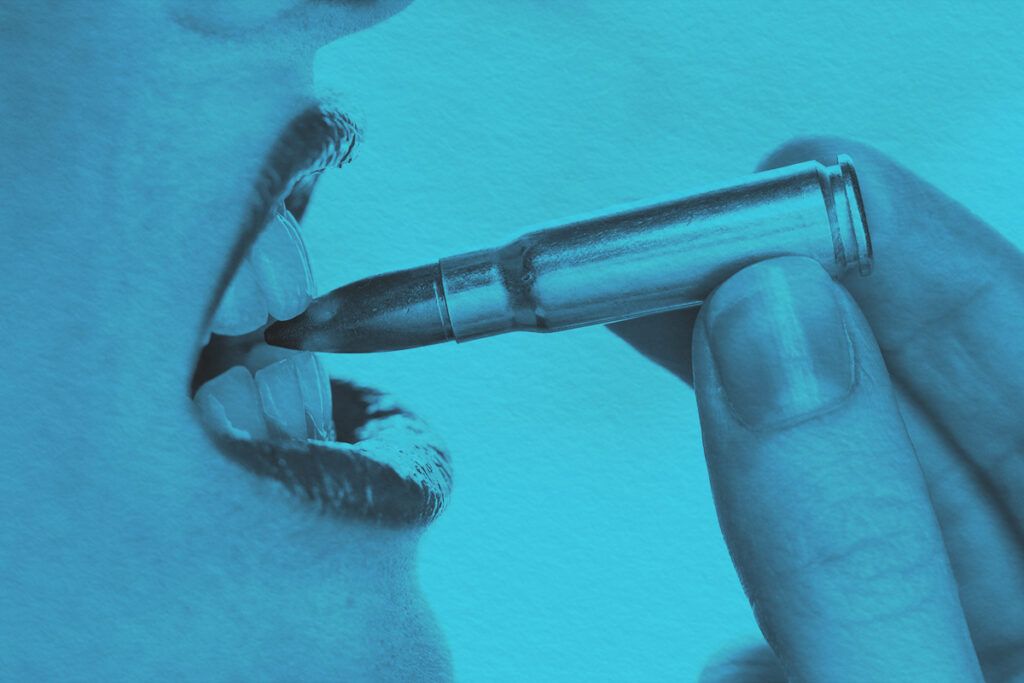
To bite the bullet is to resign oneself to a difficult or distressing situation. The idiom is derived from 18th-century military slang, referring to when people would literally bite on a bullet battlefield surgery to divert their attention. It emerged figuratively during the 19th century, but its overuse began in the 1960s.
Now, the phrase is stale and a touch too dramatic for everyday use. Rather than using the idiom, consider saying exactly what comes next. For instance, instead of “The sales team needs to bite the bullet and prepare for next quarter,” this is an opportunity to give specific guidance, as in, “The sales team needs to reach out to new clients to prepare for next quarter.” The result is clearer, and your audience will take you more seriously.
Adjectives can become clichéd, too. “Crystal clear,” meaning “perfectly or transparently clear,” has been around since the 16th century, though its use has been on the rise since the 1980s. While it garners a vivid image of clear, sparkling glass, it has become so common that it rarely adds anything new.
Consider the difference between “The results are clear” and “The results are crystal clear.” The redundancy of the expression doesn’t strengthen the message. Instead, try replacing it with a concrete detail, such as “The results show year-over-year growth.”
Here’s another idiom that you should avoid like the plague. Meaning “to stay away from as much as possible,” the expression first appeared in the mid-19th century, though older variations exist.
Its popularity has fluctuated over the decades, but today it remains a go-to for exaggerated avoidance. It’s often used to imply evasion, whether of a person, object, or situation. But its dramatic effect has been lost due to overuse, and it’s time to retire it. Instead, consider a more concise and confident replacement, such as “keep away from,” “ignore,” or “abstain from.”
“Tip of the iceberg” suggests that a small, visible part of a problem represents a much larger, hidden issue. This figurative sense stems from real icebergs, in which most of the mass lies beneath the surface of the water. The saying became popular during the 1960s, but its overuse has dulled its impact.
Often used as a transition or filler to create drama, the phrase may feel alarming in everyday conversation. Instead of saying, “These delays are the tip of the iceberg,” offer a more specific explanation, such as, “These delays signal a bigger issue with our supply chain.” This gives readers or listeners a clearer understanding of the problem while avoiding a dramatic statement.
Finally, “last but not least” is a phrase best left in the 1920s (during its heyday). Often used to reassure a reader that the final point is still important, the phrase has become so routine that it has lost all impact.
Instead of saying, “Last but not least, we need to improve customer service,” try something specific, such as “Improving customer service is a top priority moving forward.” If you need a transition word to improve flow, consider something less garish, such as “finally,” “notably,” or “to conclude.” To highlight a final item, consider using “not to be overlooked” or “equally important,” which sound more confident.
More from our network
Word Smarts is part of Inbox Studio, which publishes content that uplifts, informs, and inspires.