


In the U.S., the terms “college” and “university” are often used interchangeably, though if you were to take a course titled “The Linguistic Differences Between College and University,” you’d come to find that their definitions aren’t identical. While both words refer to educational institutions, they’re distinct in one specific way.
Let’s start with the word “college,” which has roots dating back to the Latin collegium, meaning “community” or “society.” It took on its association with higher learning around the late 14th century, and today, a college is “an independent institution of higher learning offering a course of general studies leading to a bachelor’s degree.”
“University,” meanwhile, is derived from the Latin universitatem, meaning “the whole” or “aggregate.” Around 1300, the word “universite” (as it was then commonly spelled) took on its education-related meaning. Today, a university is any institution of higher learning that is “made up of an undergraduate division which confers bachelor’s degrees and a graduate division which comprises a graduate school.”
Based on those definitions, the biggest difference between colleges and universities is in the types of degrees they offer. Colleges tend to be smaller and put an emphasis on issuing undergraduate degrees. Universities, on the other hand, are typically larger in size and offer both undergraduate and graduate programs. At universities you’ll find students pursuing bachelor’s degrees alongside master’s students and those studying for doctorates.
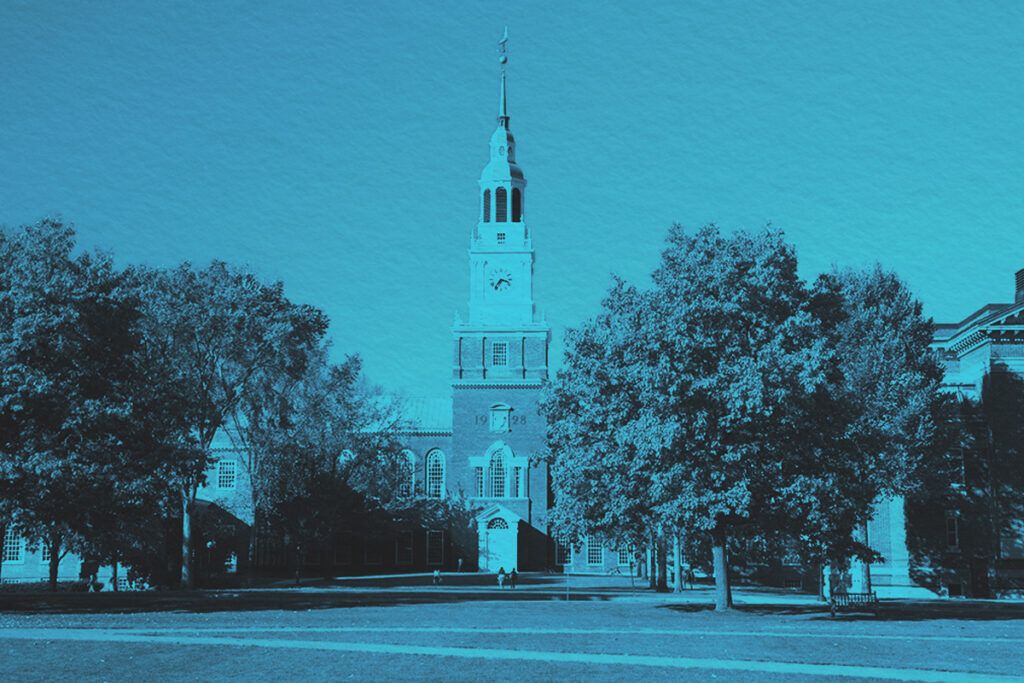
Certain colleges do offer graduate programs, however, which strays from the strict definition. For example, Dartmouth College offers master’s and doctoral programs in addition to its undergraduate liberal arts program. It didn’t always, though: When this Ivy League institution opened in 1769, it offered only undergraduate degrees. Graduate degrees came later, and at one time there was a push to change the school’s name to Dartmouth University. But famed orator and Dartmouth alum Daniel Webster argued the institution’s board desired to remain named as a college, and the renaming effort was denied by the Supreme Court in 1819.
You might also find that certain universities contain individual schools they call colleges. It’s not uncommon to see universities with a dedicated law or medical college, for example, among other types of similar collegiate programs.
More from our network
Word Smarts is part of Inbox Studio, which publishes content that uplifts, informs, and inspires.