It’s a common misconception that bats are blind. But many humans are still blind to this reality, which explains the origin story behind this biologically flawed phrase.
The world is full of widespread misconceptions. For example, Vikings didn’t wear horned helmets, and the “five-second rule” doesn’t give blanket permission to eat food that fell on the floor. Another common mix-up is that bats are blind, which is not the case, despite the popularity of the colloquialism “blind as a bat.” The quality of the mammal’s vision may vary between individual species, but bats in general can see just fine. So, why do we say “blind as a bat” when talking about poor eyesight?
Written evidence of believing bats to be blind dates to the fourth century BCE. In his work Metaphysics, Aristotle wrote, “For as the eyes of bats are to the light of day, so is the intellect of our soul to the objects which in their nature are most evident of all.” Aristotle might have been referring to bats’ habitats in caves and other dark environments — his words are understood to relate the limits of a bat’s eyesight in the dark to an analogy for the limits of human intellect, while not fully understanding that bats can see perfectly well. Actually, bats’ eyes are packed full of rod photoreceptors, making them better at seeing at night, but Aristotle wouldn’t have known that.
This idea that bats have limited eyesight continued on for more than a millennium, primarily due to the lack of any scientific evidence saying otherwise. According to the Oxford English Dictionary, we see the idiom “blind as a bat” recorded in a 1639 compendium of English and Latin proverbs. It remained popular in the English lexicon until its usage tapered off around the mid-20th century.
But the phrase saw a resurgence in the late 20th century thanks to the 1992 film Batman Returns, in which the Riddler (portrayed by Jim Carrey) exclaims that Batman is “blind as a bat.” From there, this saying reentered our pop culture lexicon and once again became popular, despite still being rooted in a misguided belief.
Featured image credit: pathdoc/ Adobe Stock
Advertisement
More from our network
Word Smarts is part of Inbox Studio, which publishes content that uplifts, informs, and inspires.
Ever wondered what it sounds like to complain, boast, or bless a sneeze in another language? These foreign language idioms — vivid, quirky, and oddly poetic — show how cultures around the world turn everyday ideas into unforgettable turns of phrase.
An idiom is useful only if it’s commonly recognized by a lot of people. We know someone exclaiming that “it’s raining cats and dogs out there!” isn’t referring to furry creatures because that phrase is widely known to mean it’s pouring rain. But a direct translation of the same phrase in German or Spanish wouldn’t make sense.Every language has its own set of amusing idioms to decode. Sometimes an English idiom gets a slight twist in a foreign language. For example, the English phrase “like a bull in a china shop,” which describes a very clumsy person, turns into “like an elephant in a china shop” in French: “Comme un éléphant dans un magasin de porcelaine.“ Other times, an English idiom can be traced back to a foreign language. “Not my circus, not my monkeys” — meaning “not my problem” — is a translation of a Polish expression (nie mój cyrk; nie moje małpy) with the same meaning. So, what are some of the most amusing idioms that exist in other languages? Let’s find out.
German: "To live like a maggot in bacon"
Meaning: To live luxuriously
This expression paints a vividly gross picture. The expression “Wie die Made im Speck leben“refers to someone living a life of luxury or abundance. For example, you might apply the phrase to a millionaire celebrity who is vacationing on their yacht. In the direct translation, the key German words are Made, meaning “maggot” or “grub,” and Speck, meaning “bacon fat.” The connection here is simple: Much like a hungry maggot in a piece of fatty bacon, this person has everything they need and more.
Latvian: "To blow little ducks"
Meaning: To talk nonsense
In Latvian, the idiom “pūst pīlītes“ means “to exaggerate, lie, or say something outlandish.” Directly translated, pūst means “to blow” and pīlītes means “little ducks” or “ducklings.” (The Latvian word for an adult duck is pīle.) In Latvia, if your friend claims to have won the lottery, you might respond with, “Stop blowing little ducks!”
Afrikaans: "The jackal is marrying the wolf's wife"
Meaning: A sunshower
If it’s raining but sunny at the same time, you can call it a sunshower. Those who speak Afrikaans — which is primarily spoken in South Africa and Namibia — call this occurrence “jakkals trou met wolf se vrou,” meaning “the jackal is marrying the wolf’s wife,” in reference to an unusual union of two things. In Zulu, another South African language, this weather phenomenon is called a “monkey’s wedding” for the same reason.
Advertisement
Icelandic: "The raisin at the end of a hot dog"
Meaning: An unexpected bonus
While finding a raisin at the end of a hot dog might not seem like a pleasant surprise, for Icelanders, this idiom is a way to convey excitement. The phrase “rúsínan í pylsuendanum” (where rúsínan means “raisin” and pylsuendanum means “the end of the sausage”) is akin to the English phrase “icing on the cake.” For example, you might say that a complimentary dessert at the end of a good meal was “the raisin at the end of a hot dog.” This quirky expression likely comes from traditional Scandinavian sausages, such as the Finnishrusinamakkara, which are made with raisins mixed in for a touch of sweetness.
Spanish: "Even if the monkey dresses in silk, it's still a monkey"
Meaning: True character can’t be changed
Similar to the English expression “you can put lipstick on a pig, but it’s still a pig,” this Spanish idiom suggests that true character is inherent: “Aunque la mona se vista de seda, mona se queda.” Although the monkey (la mona) dresses in silk (de seda), it’s still a monkey. For instance, you might use this phrase if a run-down restaurant is renovated but customer service is still lacking. Despite outward appearances, the fundamental nature or character of someone or something remains the same.
Mongolian: "God bless you and may your beard grow as big as a bush"
Meaning: Used when someone sneezes
In English-speaking places, it’s standard etiquette to say “bless you” when someone sneezes, but in Mongolia they take it up a level. The expression “бурхан оршоо бутын чинээ сахал урга” (“Burkhan orshoo butin chinee sakhal urga“) includes the standard “bless you” but also wishes the person a luxurious beard. Historically, facial hair was important in Mongolian culture — think of Genghis Khan, the first ruler of the Mongol Empire. Thus, the idiom is a wish or blessing for strength and prosperity.
Australian English: "A wigwam for a goose's bridle"
Meaning: Something absurd
It’s helpful to have a good sarcastic response ready for nosy questions. Down Under, if someone asks you, “What’s in your pocket?” you might respond, “A wigwam for a goose’s bridle.” It’s a nonsensical reply for questions that don’t need a real answer. The phrase was adopted into Australian slang from British English, where the expression is “a whim-wham for a goose’s bridle,” in which “whim-wham” refers to an ornament or a trinket. The phrase was first recorded in its Aussie form in 1917, replacing “whim-wham” with “wigwam,” which is an Indigenous dwelling but is used here for whimsical effect.
Featured image credit: Arndale/ iStock
Advertisement
More from our network
Word Smarts is part of Inbox Studio, which publishes content that uplifts, informs, and inspires.
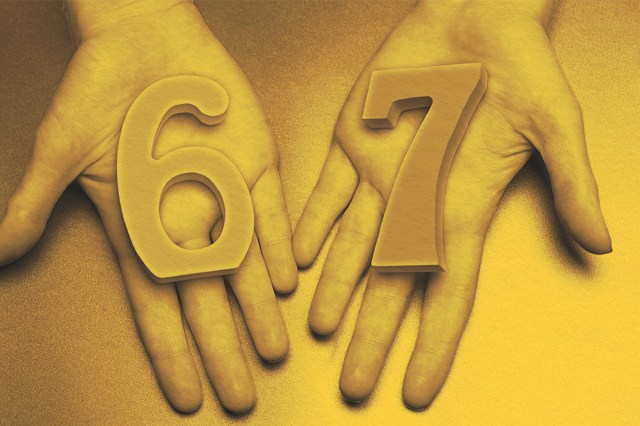
The numbers six and seven have a wildly different meaning depending on your age. To today’s youth, “6-7” is a nonsensical phrase that spread like wildfire on TikTok and among Gen Alpha over the last several months of 2025. To older generations, “to be at sixes and sevens” means enduring a state of confusion. And when we say older, we really mean it. The phrase “at sixes and sevens” originated back in the 14th century, yet it has remained relevant for more than 650 years.
According to the Oxford English Dictionary, this phrase can be traced back to English poet Geoffrey Chaucer’s 1374 work “Troilus and Criseyde.” He wrote (in Middle English), “Lat nat this wrechched wo thyn herte gnaw, But manly set the world of sexe and seuene.” At that time, the phrase referred to the consequences from the actions of a careless individual, with the “sexe” (six) and “seune” (seven) referring to a 14th-century dice game in which throwing a six or a seven was a risky roll.
The phrase evolved to describe a state of confusion or disorder by the 16th century, but it was still written in the singular form as “to set on six and seven” or just “six and seven.” By the 18th century, the plural form “at sixes and sevens” became the standard — it’s not clear why the plural became the norm, but it’s stayed that way ever since.
The centuries-old phrase is still relevant in modern contexts. Let’s say a man named Bill loses his job unexpectedly; you might say, “Bill was at sixes and sevens after being fired without warning.” Or in the case of a relationship that’s moving too fast, you might say, “Emily was at sixes and sevens after being told ‘I love you’ on the first date.” As for Gen Alpha’s “6-7” meme, it seems to be reaching its natural demise.
Featured image credit: beast01/ iStock
Advertisement
More from our network
Word Smarts is part of Inbox Studio, which publishes content that uplifts, informs, and inspires.
To have something “down pat” means that you are skillful and proficient. But does the “pat” in question refer to a person named Pat, or one of the other definitions of “pat”? Let’s get to the bottom of this.
The word “pat” has a wide array of meanings depending on the context. It can be a light physical touch, a small slice of butter, an initialism for Point After Touchdown (the extra point attempt that comes after a touchdown in American football), or a proper noun, the name Pat. But if you “have something down pat,” you’ve mastered that thing and committed it to memory. Let’s look at the origins of “down pat” and explore its enduring popularity in the English language.
To better understand the phrase, we need to break down its individual components. According to Merriam-Webster, one definition of “down” as an adjective is “completely mastered.” This usage stands without the word being followed by “pat.”
However, the idiom includes the word “pat,” which in this case is used as an adverb meaning “aptly” or “perfectly.” There’s an adjective usage meaning “exactly suited to the purpose or occasion” or “learned, mastered, or memorized exactly” that also applies here. The adverb dates to the 1570s, according to the Online Etymology Dictionary, and the adjective usage came about by the 1630s.
So when you look at those meanings, “down pat” seems a bit redundant. It translates to having something “completely mastered and memorized exactly.” It’s also not entirely clear why these two words were first paired together, as etymologists haven’t pinpointed the exact origin of the phrase. But if you want to be extra certain your mastery of a skill is getting across, “down pat” will convey the message.
Featured image credit: champpixs/ iStock
Advertisement
More from our network
Word Smarts is part of Inbox Studio, which publishes content that uplifts, informs, and inspires.
Even vegetarians can have beef with someone. This American slang dates to the late 19th century, though it doesn’t necessarily have anything to do with actual food.
“Having beef” can be extremely delicious or uncomfortably contentious, depending on the context. For instance, someone having beef at their favorite steakhouse will leave happily sated. But having beef with a bitter rival means disagreeing with them and holding a grudge. The origins of this phrase can be traced back to the late 1800s, when “beef” first came to be used as a synonym for a grievance.
According to the Online Etymology Dictionary, the verb “beef,” meaning “to complain,” has been used as American slang since at least 1888. In New York World, a farmer was quoted referring to a horse: “He’ll beef an’ kick like a steer …” While the exact reason for “beef” meaning “complain” isn’t clear, one theory is that it had something to do with soldiers complaining about meager beef rations. By the 1930s, “beef” was also in use as a noun meaning “argument.”
But “having beef” or the similar “starting beef” are phrases that are far more modern in their origins. The Oxford English Dictionary notes that these idioms became popular in African American vernacular around the 1980s. “To have beef ” means “to hold a grudge,” and “to start beef” means “to start a feud.” One well-known early example appears in the 1986 song “Proud To Be Black” by Run-DMC, which has the line, “Got the strength to go the length if you wanna start beef.” The album on which this song appeared helped Run-DMC break into the mainstream, and the lyric was likely heard by millions of devoted fans. This was just one of the ways in which “having beef” made its way into our collective lexicon, where the phrase has remained ever since.
Featured image credit: Tom Kelley Archive/ iStock
Advertisement
More from our network
Word Smarts is part of Inbox Studio, which publishes content that uplifts, informs, and inspires.
Are jumping jacks named after a real person, or are they a gym teacher’s invention? Here’s a quick examination of the etymological history behind this common exercise.
There are far too many famous Jacks to count — including (but not limited to) Lemmon, Nicholson, Benny, and even the fictional Jack Bauer from TV’s 24. But what about “jumping jack,” as in the calisthenic exercise? Does this name refer to a real Jack, or does the credit lie elsewhere? Let’s jump into figuring out the phrase’s true etymological history.
According to Merriam-Webster, the earliest use of “jumping jack” dates back to 1883, long before the exercise was invented. At that time, it referred to “a toy figure of a man jointed and made to jump or dance by means of strings.” These wooden toys were quite popular in parts of England, France (where they were known as pantins), and Germany (where they were called Hamplemann) in the 17th through 19th centuries. Similar puppets have been found in Brazil, North America (from the Hopi people), and in Africa (in the form of Yoruba carved masks). In England, the name “Jack” was likely given to this toy because it was a common way to refer to any male figurine at the time — similar to how we’d refer to any random man as an “average Joe” today.
This dancing puppet toy’s name and movement appears to be the likely inspiration for the actual physical exercise. “Performed from a standing position by jumping to a position with legs spread and arms raised and then to the original position,” the exercise was popularized, at least in part, by General John J. Pershing (nicknamed “Black Jack”). While working as an instructor at West Point from 1897 to 1898, Pershing taught the exercise as a conditioning technique. He likely called this movement “jumping jack” because it closely resembled the toy’s movement (and possibly because of the connection to his nickname), but we cannot know if he invented the name and exercise, or if he was taught by someone else.
A misattribution has to do with fitness guru Jack LaLanne, who did help to popularize jumping jacks on his nationally syndicated exercise TV show. But given that show ran from 1951 to 1984, it postdates both the toy and the Pershing story.
Featured image credit: gradyreese/ iStock
Advertisement
More from our network
Word Smarts is part of Inbox Studio, which publishes content that uplifts, informs, and inspires.
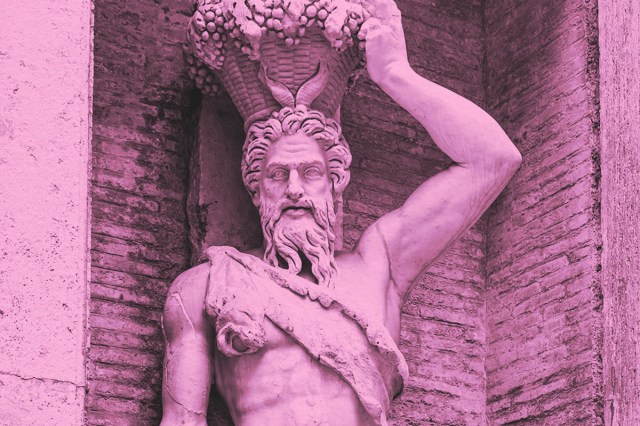
In Greek mythology, Pan was a fertility deity said to roam freely in the mountains, caves, and forests of Greece. Faunlike in appearance, he was typically represented as mostly human in form but with the horns, legs, and ears of a goat. As the patron of shepherds, Pan concerned himself with flocks and herds of pastoral animals. He was also a free-spirited — and notoriously lusty — god of the wilds, who enjoyed dancing in the moonlight with the nymphs and playing his eponymous panpipe.
As a god of nature and protector of animals, Pan can be seen as a positive force. But he had a dualistic nature, being neither purely good nor evil. Pan could be wild and unpredictable and possessed a peculiar and disconcerting power: the ability to instill a sudden, overwhelming fear in anyone who raised his hircine (goatlike) hackles. According to the ancient myths, he became particularly irritated when anyone interrupted his afternoon naps. If a passing stranger did disturb his slumber, Pan would let out a chilling yell that sent terror coursing through anyone nearby — a type of fear named “panic” in his honor.
Ancient Greeks believed Pan was responsible for a range of strange events, from sudden stampedes of livestock to the inexplicable fear that would grip travelers as they passed through dark woods. One famous story credits Pan with helping the Athenians defeat the Persians at the Battle of Marathon in 490 BCE. According to the accounts of the ancient Greek historian Herodotus, Pan appeared to the runner Pheidippides and promised to aid Athens. During the battle, the Persian army supposedly experienced sudden, unreasonable terror — soldiers became panic-stricken — which ultimately led to its defeat. The grateful Athenians later built a shrine to Pan beneath the Acropolis.
The word “panic” passed through the centuries, and today in English it means what it did millennia ago: “a sudden overpowering fright.” But now we tend to attribute panic to the instinct of “fight or flight” and the release of stress hormones such as adrenaline and cortisol, rather than to a libidinous, flute-playing goat-god who lives in the hills.
Featured image credit: Giorgio G/ Adobe Stock
Advertisement
More from our network
Word Smarts is part of Inbox Studio, which publishes content that uplifts, informs, and inspires.
Handwriting can be as distinctive as a fingerprint, but there are specific types of script that have developed over the centuries. Do you know the name for what you were taught in school?
The ability to communicate via written language is one of the main behaviors that distinguish humans from other animals. In prehistoric times, three main writing systems developed independently — in the Near East, China, and Mesoamerica. Each of these systems evolved from pictography to a syllabary (symbols representing syllables) to an alphabet. The Latin alphabet we use today developed out of the Near East writing system. Along with the alphabet came specific forms of writing styles, each adapted to solve specific problems — whether increasing writing speed, improving legibility, or simply making the written word more beautiful.
Here we take a look back through the history of cursive handwriting and how different methods have emerged over time, from the elegant loops of medieval scribes to the standardized methods taught in modern classrooms.
Roman Cursive
Long before the printing press was invented, ancient Romans relied on handwriting for all written communication, records, and daily scribblings. Apart from the square capitals (capitalis quadrata) used for inscriptions on public monuments, the writing can be divided into two varieties: old and new Roman cursive. The word “cursive” comes from the Latin “currere,” meaning “to run,” signifying the letters ran together. Old Roman cursive, used from approximately the first century BCE to the third century CE, was a majuscule script — one that used capital-like letters, all of a similar height. In the late third century, old Roman cursive was largely replaced by new Roman cursive, which incorporated minuscule letters similar to the lowercase letters used today in the Latin alphabet. New Roman cursive became the dominant form of writing in ancient Rome, leading indirectly to Carolingian minuscule — and eventually to the script commonly used today.
Carolingian Minuscule
Carolingian minuscule emerged during the eighth century, when several monasteries in the Carolingian realms of Northern France and Germany began developing scripts in an attempt to bring some clarity, order, and consistency to the swathe of barely legible cursives that had developed from the late-Roman period. The Carolingian ruler Charlemagne, keen on bringing about an intellectual revival, tasked the Anglo-Latin cleric Alcuin with standardizing texts across the empire as part of the broader educational reforms of the Carolingian Renaissance. Based primarily at the scriptorium (a collection of manuscripts) in Tours, France, Alcuin carried out his task with aplomb. The newly standardized script, with its clear, rounded letterforms, uniform heights, and consistent letter spacing, was ideal for copying manuscripts, and soon became the principal script in the empire’s scriptoria. By the end of the ninth century, Carolingian minuscule had emerged as the standard form of handwriting throughout most of Europe. It would influence virtually all subsequent Western scripts.
Advertisement
Gothic Cursive
Gothic scripts emerged in the 12th century to meet the growing demand for legible religious texts. At the same time, the rise of universities saw an increased demand for costly parchment — the dense, angular nature of Gothic cursive conserved space on the page, while also creating a visually striking aesthetic that came to define medieval manuscripts. (Due to its dense, heavy, dark style, Gothic script is also known as blackletter.) Multiple variations existed across Europe, including the rigorous and formal littera textualis, and a rounder style known as rotunda, used in southern Europe. While beautiful and space-efficient, Gothic cursive’s density made it challenging to read, especially for those unfamiliar with the style. Despite this, it remained the dominant script for formal documents, religious texts, and legal records throughout the late Middle Ages.
Italic Script
Italic script emerged during the Italian Renaissance of the 15th and 16th centuries, primarily as a response to the cramped and illegible lettering of medieval Gothic cursive. Humanist scholars sought to revive what they believed were ancient Roman writing styles, but they actually based their new italic script primarily on Carolingian minuscule, which they mistakenly thought was Roman rather than medieval. Italic featured slanted, elegant letters with a flowing rhythm, combining speed with beauty. And unlike Gothic’s angular compression, italic spread letters horizontally with generous spacing, making texts easier to read. Italic’s tilt also made it cost-efficient, as copyists were able to fit more words on fewer pages, further promoting its spread across Europe.
Copperplate Script
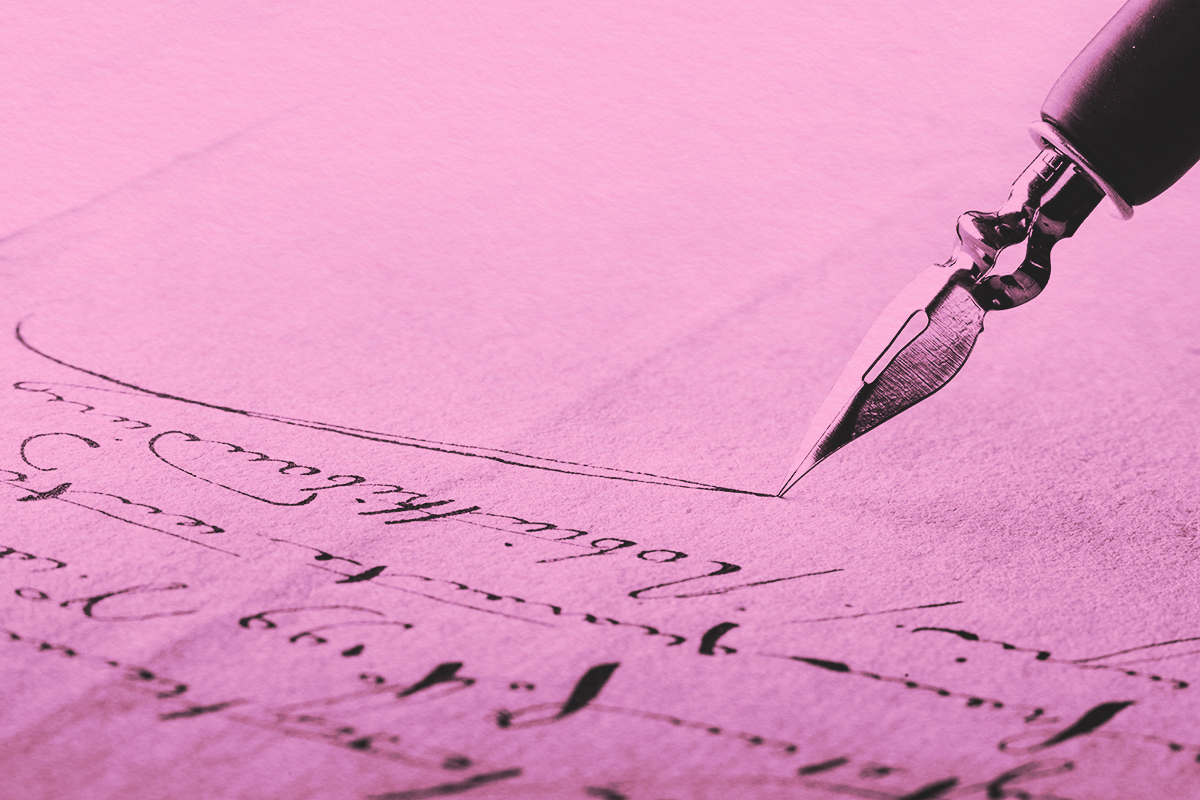
Copperplate script, also called English roundhand, dominated formal writing from the 17th through 19th centuries. It first emerged in England, largely due to a need for an efficient commercial cursive style. During this time, metal engraving became more common and accessible, and scribes began working alongside engravers to recreate their work on copper plates for printing — hence the name. The script itself is graceful and highly refined, using elegant letterforms with dramatic contrasts between thick downstrokes and thin upstrokes. Copperplate demanded excellent pen control, and writing masters created elaborate manuals displaying examples of the script. Copperplate soon became the standard for formal documents, invitations, certificates, and business correspondence in Britain, and from there spread throughout much of Europe and North America.
Advertisement
Spencerian Script
Spencerian script was developed by Platt Rogers Spencer in the United States during the 1840s. Spencer set out to create a form of cursive handwriting that could be written very quickly and legibly to aid in matters of business correspondence, and was also suitably elegant for personal letter writing. At first, Spencerian script can appear very similar to copperplate, but it does have a number of distinguishing features, including a lack of emphasis on shaded downstrokes on small letters, the use of only one broad downstroke on capitals, minuscules being considerably smaller than capitals, and the joins between letters tending to space them further apart. Its elegance rivaled copperplate but proved faster and more practical for everyday use. It caught on quickly, becoming the standardized form of cursive handwriting taught in American schools in the 1850s.
Palmer Method
Austin Palmer revolutionized cursive in the late 1800s by developing a system specifically designed for business efficiency and ease of teaching. The Palmer Method streamlined the flourishes of Spencerian script, creating a simpler and faster system of writing. In 1894, he published The Palmer Method of Business Writing, designed primarily for use in business colleges. The book was adopted by public school systems across the United States and became the standard cursive instruction for decades. Its focus on efficiency over artistry reflected the Industrial Age’s values of productivity and standardization — and while the method lacked the visual beauty of copperplate or Spencerian, it successfully democratized cursive by making it accessible to millions of students. The Palmer Method was used through the 1950s — and in some places, into the 1980s — but eventually began to fall out of favor when educational standards changed.
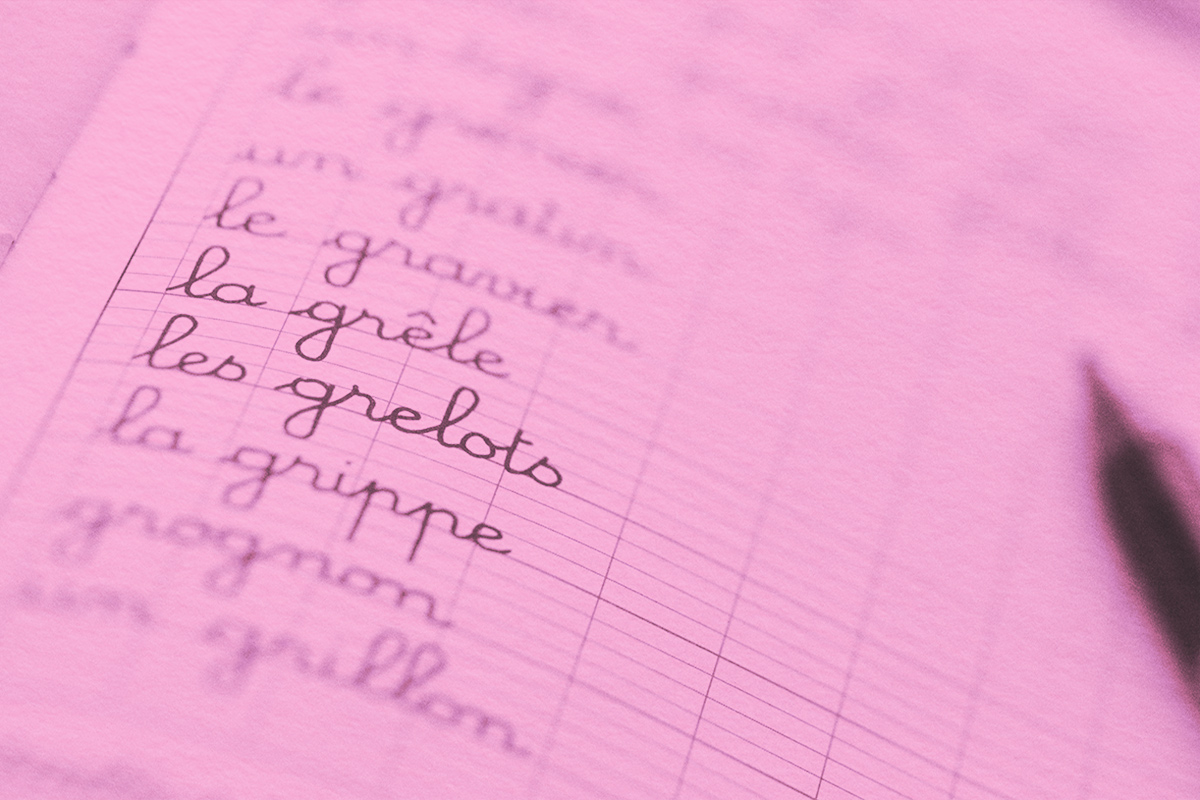
The Zaner-Bloser Method was adopted to teach handwriting in the latter half of the 20th century. It retains elements of the Palmer method, but it teaches block printing before teaching cursive script writing. In the early 21st century, some school districts dropped teaching cursive handwriting from the curriculum, but it’s now being added back. As of 2024, 24 states have a requirement to teach some kind of cursive handwriting in schools.
Featured image credit: KoolShooters/ Pexels
Advertisement
More from our network
Word Smarts is part of Inbox Studio, which publishes content that uplifts, informs, and inspires.
Subjects and objects are two of the most important components of sentences, helping us form our favorite song lyrics, novels, and movie lines. Here’s how to identify them.
Think back to some of the most recognizable lines from Hollywood films. Often, brevity increases impact. The line “Nobody puts Baby in a corner” (Patrick Swayze making hearts flutter in the 1987 romance Dirty Dancing) is a clear example of basic sentence structure, with a subject (“Nobody”), a verb (“puts”), and an object (“Baby”). Subjects and objects are two essential parts of sentences, but sometimes, they can be tricky to identify.
Every complete sentence must have a subject. The subject is the person, place, or thing performing the action, and it is almost always a noun or a pronoun. Even when the order of the words doesn’t fall into a straightforward pattern with the subject at the beginning, it’s there. For instance, “Here’s Johnny!” (from the 1980 adaptation of The Shining) is a complete sentence because it includes a subject (“Johnny”) and a verb (the contraction of “is”); “here” is an adverb. Occasionally, the subject can be a different part of speech, such as a gerund (a verb acting as a noun that ends in “-ing”) or an infinitive (“to” + a verb). For example: “Swimming is an excellent cardio exercise” uses “swimming” as the subject.
Of course, not all sentence constructions are as simple as a noun plus a verb. That’s where the object adds clarification or depth to a sentence. The object is a noun or pronoun affected by the verb’s action. For example, in Apollo 13‘s “Houston, we have a problem,” the subject is “we,” the object is “problem,” and “Houston” is a vocative (a direct address). “Problem” is the thing being acted upon by the verb.
Subjects can also be implied. Consider an example from 1977’s Star Wars: A New Hope: “Use the Force.” The subject is an implied “you,” making “the Force” the object of the verb “use.” Implied subjects can be challenging to identify but are common nonetheless. When in doubt about whether a noun is functioning as a subject or an object, consider how it interacts with the verb. If it performs the action, it’s the subject, but if it receives the action, it’s the object.
Featured image credit: Africa Studio/ Adobe Stock
Advertisement
More from our network
Word Smarts is part of Inbox Studio, which publishes content that uplifts, informs, and inspires.
Some familiar phrases sharpen your writing while others quietly dull it. Learn how to tell an aphorism from an idiom — and why spotting a cliché matters more than you think.
Every January, we’re flooded with well-meaning advice: “be true to yourself,” “start fresh,” “work smarter, not harder.” Some of it is genuinely helpful, and some of it just sounds wise because we’ve heard it so many times. For writers and careful speakers, the challenge isn’t avoiding familiar language altogether — it’s knowing when a figure of speech will be helpful in conveying your message.
A well-chosen aphorism can sharpen an idea, and a colorful idiom can make it memorable. A cliché, on the other hand, can drain it of life. As the new year invites reflection and resolution, it’s a good moment to choose our words with a little more intention. How can you tell the difference between an aphorism, an idiom, and a cliché?
Aphorisms
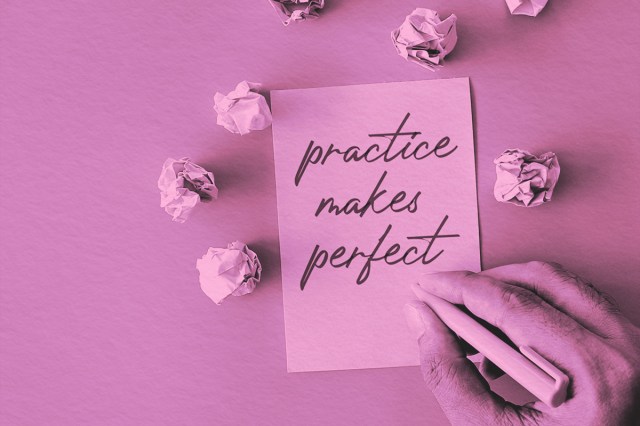
An aphorism is a concise statement of a principle or a universal truth. Examples abound: “actions speak louder than words,” “practice makes perfect,” “better late than never,” “easier said than done,” “every cloud has a silver lining,” “look before you leap,” “money can’t buy happiness,” and “two wrongs don’t make a right.”
Some aphorisms are direct quotes from or references to philosophy, poetry, and literature. For example: “the unexamined life is not worth living” (Socrates), “a thing of beauty is a joy forever” (John Keats), “the truth is rarely pure and never simple” (Oscar Wilde), and many from Shakespeare.
Aphorisms are effective because they are short, punchy, and direct. They often use parallel structure for effect and to create a rhythm (“easy come, easy go”), and are typically constructed in the active voice (“speak softly and carry a big stick”).
Advertisement
Idioms
An idiom, as Merriam-Webster defines it, is “an expression in the usage of a language that is peculiar to itself either in having a meaning that cannot be derived from the conjoined meanings of its elements (such as up in the air for ‘undecided’) or in its grammatically atypical use of words (such as give way).” Simply put, it’s a commonly understood expression that doesn’t match up to the definitions of its individual words.
Sources of idioms are varied and include card games, hunting, anatomy, the theater, and sports. For example,American English has been enriched with many idioms just from baseball: “in the ballpark,” “batting a thousand,” “it’s a brand-new ballgame,” “bush league,” “can’t get to first base,” “play hardball,” “heavy hitter,” “off base,” “out in left field,” “right off the bat,” “step up to the plate,” “swing for the fences,” “knock one out of the park,” “go down swinging,” “strike out,” “be thrown a curve ball,” “go to bat for someone,” and “touch base.”
A cliché is a trite, hackneyed phrase or expression. To name just a few: “tip of the iceberg,” “easy as pie,” “think outside the box,” and “fit as a fiddle.” You might recognize these as idioms — and they are — but clichés are worn out from overuse. Avoid falling back on a cliché — they reveal a lack of creativity and a reliance on dull word usage. It’s a fine line to tell when an idiom edges into cliché territory (as we could argue with a few of those baseball idioms), so if you think you’re falling back on the same stock phrases, maybe it’s time to search for a new option.
Featured image credit: izzuan/ Adobe Stock
Advertisement
More from our network
Word Smarts is part of Inbox Studio, which publishes content that uplifts, informs, and inspires.
Enter your email to receive daily lessons that dive into what makes English so fascinating. Each email is packed with odd rules, etymologies, and the tools you need to be a better communicator.
Sorry, your email address is not valid. Please try again.
Sorry, your email address is not valid. Please try again.