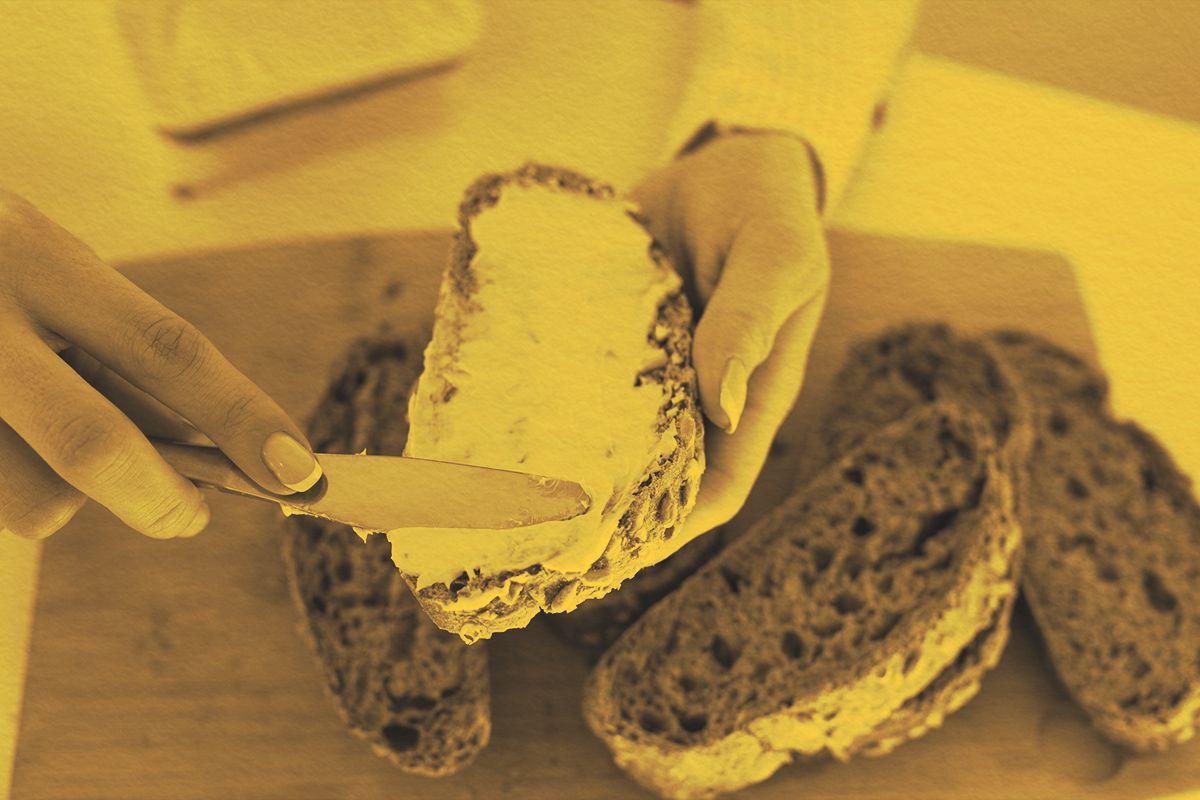
In a literal sense, “buttering someone up” may be the perfect solution for a ring stuck on their finger or a hand caught in the pickle jar. But outside of those rare cases, the phrase is used figuratively. “To butter someone up” means “to flatter or praise someone” as a method of gaining their help or support. The idiom’s origins are tough to pin down, but let’s travel back to the 17th century to glean a better understanding.
In a 1662 religious work, The Crown and Glory of Christianity, the slippery nature of butter is a vehicle for deception: Flatterers “oil their tongues and… butter their lips, so that by their smooth, soft speeches they may the more insinuate themselves into men’s minds.” A 1737 citation in The Universal Etymological English Dictionaryreads, “to butter, signifies also, to cheat or defraud in a smooth or plausible manner.”
We can metaphorically tie butter and deception via their slippery natures, but there’s no conclusive evidence as to why “butter” was used in this context. According to Dictionary.com, it’s possibly based on the idea of tasty buttered bread. “Buttering” may whet someone’s appetite for whatever you’re trying to convince them of.
It wasn’t until the late 18th century that the preposition “up” appeared alongside “butter” to create the now-common idiom. The Oxford English Dictionary points to an early citation from 1798: “We must butter him up with kind looks and civil speeches until he signs the deed.” But why “up” rather than “down” or “over”? For the same reason we say “doll up” or “spruce up” — it’s a widespread grammatical convention in English.
Featured image credit: bymuratdeniz/ iStock
Advertisement
More from our network
Word Smarts is part of Inbox Studio, which publishes content that uplifts, informs, and inspires.
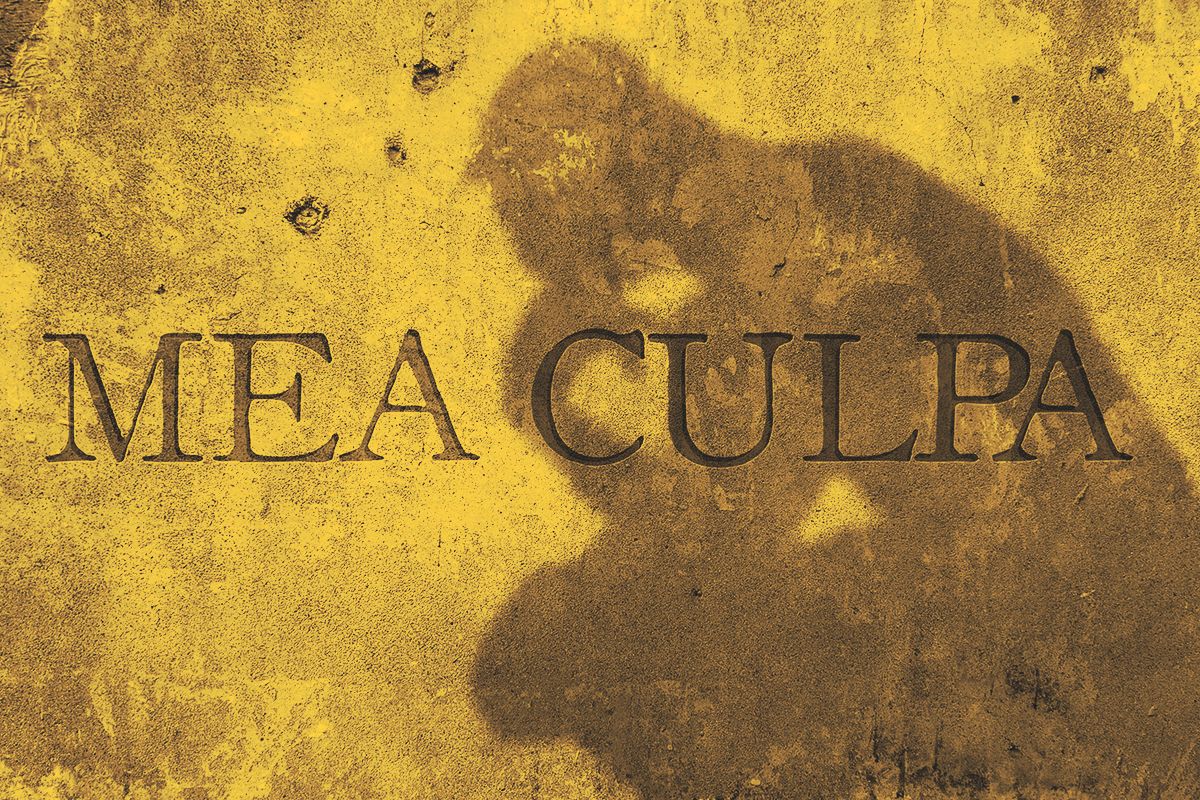
From state mottos to wisdom in wine, Latin phrases are alive and well in modern English — even if you don’t realize you’re speaking like an ancient Roman.
Latin was originally spoken 3,000 years ago by small groups of people living along the lower Tiber River in present-day Italy. During the height of the Roman Empire, the language exploded across the European continent and the western Mediterranean coastal regions of Africa.
Today, Latin has a reputation of being a “dead language,” but that descriptor isn’t entirely accurate. It provides the building blocks for all of the Romance languages, and many words and expressions in contemporary English are borrowed straight from Latin. Take the informal motto of the United States: E Pluribus Unum is Latin for “oOut of many, one.” Here’s a list of common expressions, words, and mottos for major institutions that owe their origin to this so-called dead language.
Veni, Vidi, Vici
This quote, meaning “I came, I saw, I conquered,” is famously attributed to Julius Caesar, sent in a message to the Roman Senate to describe his victory against King Pharnaces II of Pontus in 47 BCE. The classical historian Plutarch praised the brevity and poetry of Caesar’s words, likely contributing factors as to why the phrase has been preserved for so long. In more modern decades, a song in the 1950s Broadway hit Auntie Mame includes the line “You came, you saw, you conquered,” and the rock band the Hives named a 2002 album “Veni Vidi Vicious.”
Status Quo
This Latin expression, meaning “the existing state (of affairs),” is used mainly in the context of social or political issues, but it can refer to an unaltered condition of any kind. “Status quo” has been in contemporary English usage since 1833, so it’s quite far from dead.
Crescat Scientia; Vita Excolatur
While this isn’t a phrase you’ll hear every day, alums of the University of Chicago hold it close to heart. The motto means “let knowledge grow from more to more; and so be human life enriched.” Many universities and learning institutions have Latin mottos because the language was once used for formal education around the time theymany famous universities were founded, and the traditions persisted.
Advertisement
Ad Astra per Aspera
It makes sense that Clark Kent (aka Superman) was raised in Kansas. The state motto, translated from Latin, means “to the stars through difficulties.” About half of the 50 states have Latin mottos.
Carpe Diem
Carpe diem, one of the most widely used contemporary Latin phrases, translates to “seize the day,” but the interpretation of it is generally “live each day as if it’s your last.” The Latin phrase first appeared in the Roman poet Horace’s work Odes (23 BCE). Carpe is a form of the infinitive verb carpō, meaning “pick or pluck,” so a more literal translation would be “pluck the day.”
In Vino Veritas
This phrase, attributed to the Roman philosopher and writer Pliny the Elder, means “in wine, there is truth.” Pliny may have had weightier topics in mind, but the Latin phrase is still applicable as long as people continue to let secrets slip out after a few glasses of happy-hour wine.
Persona Non Grata
Persona non grata literally translates to “person not welcome.” It was originally used in the context of diplomacy, such as when a foreign diplomat was asked by a host country to be recalled to their home country. Today, it’s used in more personal situations — e.g., an ex-husband may be persona non grata in your friend group.
Unlike Veni, vidi, vici, these words were never actually said by the real-life Julius Caesar. Instead, the Shakespearean character of Julius Caesar says them in the eponymous play when he recognizes that his friend Marcus Junius Brutus played a role in his assassination. These days, the expression, which translates as “you too, Brutus?” might be used humorously to criticize a friend’s change of heart.
Featured image credit: Sinfebeth/ Shutterstock
Advertisement
More from our network
Word Smarts is part of Inbox Studio, which publishes content that uplifts, informs, and inspires.
7 Enduring Expressions That Outlived the Original Practices
From turning cranks to dialing phones, yesterday’s technologies live on in the modern lexicon — even if their original meanings are lost to younger generations.
Language can help preserve a certain time period long after the rest of the world has moved on. Slang, idioms, and metaphors provide insight into a culture’s activities, and as technology evolves and old practices fade away, the words and phrases they inspired often remain frozen in time. From ancient oil lamps to rotary phones, many outdated technologies and customs have left their mark on how we communicate today. While younger generations might never experience the physical act of “rolling up” a car window or “dialing” a phone, these phrases persist in our vocabulary as linguistic fossils of the past. Here’s a look at seven common expressions whose origins might stump younger generations.
Blackballed
In the 18th century, people belonged to social clubs for gaming, dining, making connections, and of course, gossiping. In many clubs, members were admitted through anonymous voting with different colored balls. A red ball was a positive answer, while a black ball was negative. To be blackballed meant you were found wanting, cast out, and denied membership. The colored balls may not be in use anymore, but “blackballed” still means “excluded from an organization or a group.”
CC
This acronym stands for “carbon copy,” which is how people used to copy handwritten messages. A sheet of carbon paper would be layered between sheets of blank paper and the pressure from writing on the top sheet would transfer a copy from the carbon to the bottom sheet. Today, we use photocopiers, but the idea of making copies still lingers in email terminology. The “CC” line adds email addresses to receive copies of the email, and saying “CC me” is a request to receive a copy.
In the Nick of Time
During the 18th century, business owners would keep track of debts, interests, and loans on tally sticks with notches carved on the wood. When someone arrived to pay off a debt right before the next notch was carved, they had arrived “in the nick of time.”
Advertisement
Roll up the Window
Even the most bare bones of new cars manufactured today have power windows, but only 20 or so years ago, it was common to use a hand crank to lower and raise car windows. The phrase “roll up the window” is a holdover from this era, even though the task is virtually obsolete.
Dial a Number
Long before cellphones and even before push-button landline phones, people used rotary phones. With these telephones, a user would spin a dial to enter each number. (It was tedious, but still more efficient than using an operator to route all telephone calls, as in the early days of the telephone.) The concept of “dialing a number” has stuck with us in the present day, even though most of us just hit a single “call” button in our contact list.
Burning the Midnight Oil
Before homes were wired for electricity, people lit their rooms with candles and oil lamps. This phrase hearkens back to those days and refers to someone staying up late and using an oil lamp, perhaps to read or write.
This term is more modern than the others, but it’s a reminder that language evolves rapidly. When the internet was still in its infancy, users had to type “www.” (which stands for “World Wide Web”) at the beginning of a website address to navigate to the right page. Now this part of a website address is automatically populated into the browser bar, and the phrase “World Wide Web” feels antiquated.
Featured image credit:
Advertisement
More from our network
Word Smarts is part of Inbox Studio, which publishes content that uplifts, informs, and inspires.
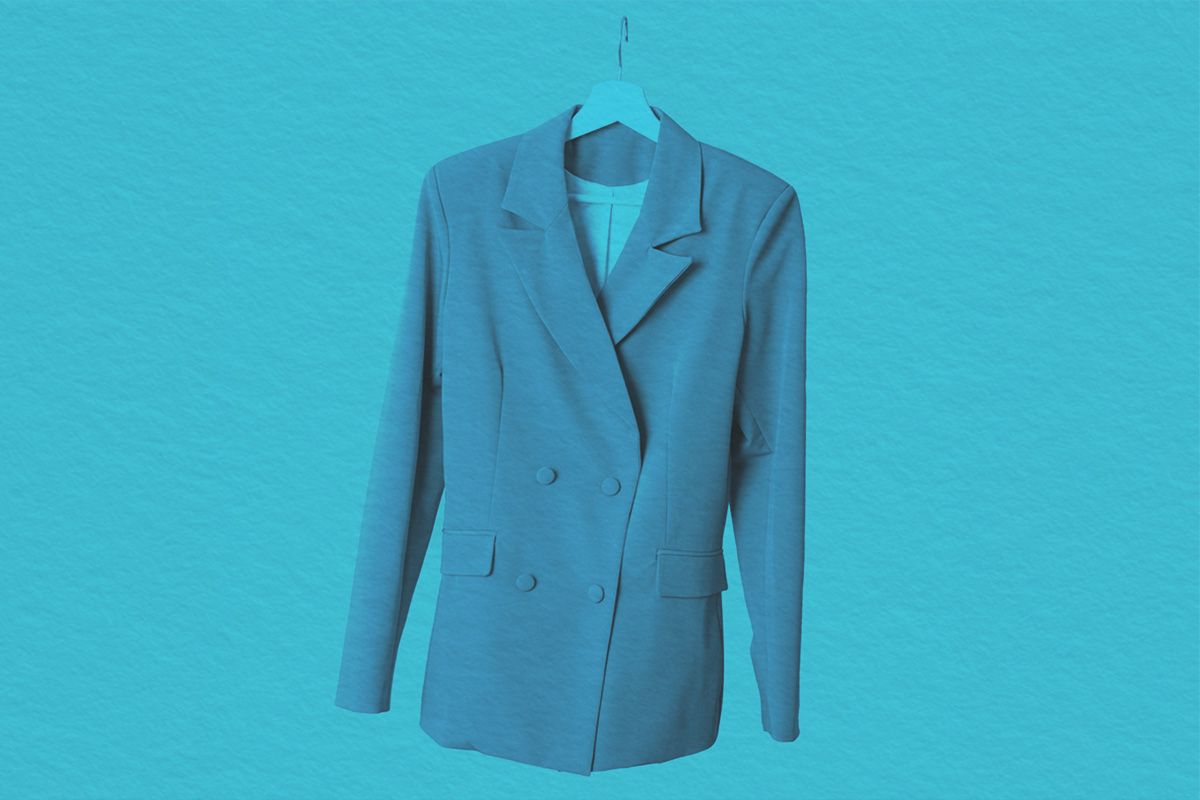
Our closets are full of garments with fascinating etymological histories. Take the tank top, whose name has historic ties to the world of aquatic leisure.
Tank tops are sleeveless garments that can be worn on a hot day, serve as an undershirt, or form the basis for an excellent John McClane cosplay costume. These multifunctional shirts are a relatively recent invention, first appearing in closets around the 1920s and exploding in popularity in the 1950s, thanks to a Hollywood boost. The name “tank top” itself wasn’t used until the late 1940s, in relation to a similar-looking piece of swimwear called the “tank suit.”
In the 19th century, women wore full-length bathing dresses, complete with layers of undergarments, to preserve their modesty. In the early 20th century, bathing suits underwent a revolution and became more tight fitting, even revealing the legs. By the 1910s, a one-piece, sleeveless, fitted bathing suit with legs was popular with both men and women for its ease of motion in the water. These came to be called “tank suits” as pools were colloquially called “tanks” in the U.K.
Hanes takes credit for the jump to undershirt territory. According to Jamie Wallis, former director of global communications at Hanes, in 1928 the company began selling the sleeveless shirts along with its woven shirts as a measure to preserve the longevity of the more formal collared garments. In the following decades, this garment came to be known as a “tank top,” taking its name from the similar-looking tank suits. Though it’s hard to say exactly when “tank top” was first coined for the undergarment, the Oxford English Dictionary notes that an early mention appeared in a 1949 edition of Women’s Wear Daily.
Once a simple undershirt, the ribbed tank top achieved cultural monument status in the second half of the 20th century, beginning with Marlon Brando’s wardrobe in the 1951 movie A Streetcar Named Desire. The white tank top worn as outerwear became a shorthand for male virility, as seen again with Robert De Niro in Raging Bull, Bruce Willis in Die Hard, and Vin Diesel in the Fast and Furious franchise. In the 1970s, Hanes nicknamed it the “A-shirt,” or athletic shirt, in order to move it away from undergarment territory.
Around the turn of the century, the tank top acquired a distasteful nickname related to domestic abuse, but the kids might be all right, because the newest slang term for these tops is “pleasers,” as in “wife pleasers.” Tank tops remain a staple of street fashion, and they’re not leaving underwear drawers anytime soon, but they might continue to acquire new nicknames.
Featured image credit: Giulio Fornasar/ iStock
Advertisement
More from our network
Word Smarts is part of Inbox Studio, which publishes content that uplifts, informs, and inspires.
We think nine out of 10 dentists would call a blob of toothpaste a nurdle — or at least that’s what the advertisements call it. In the spirit of shiny teeth, let’s shine some light on this dental term.
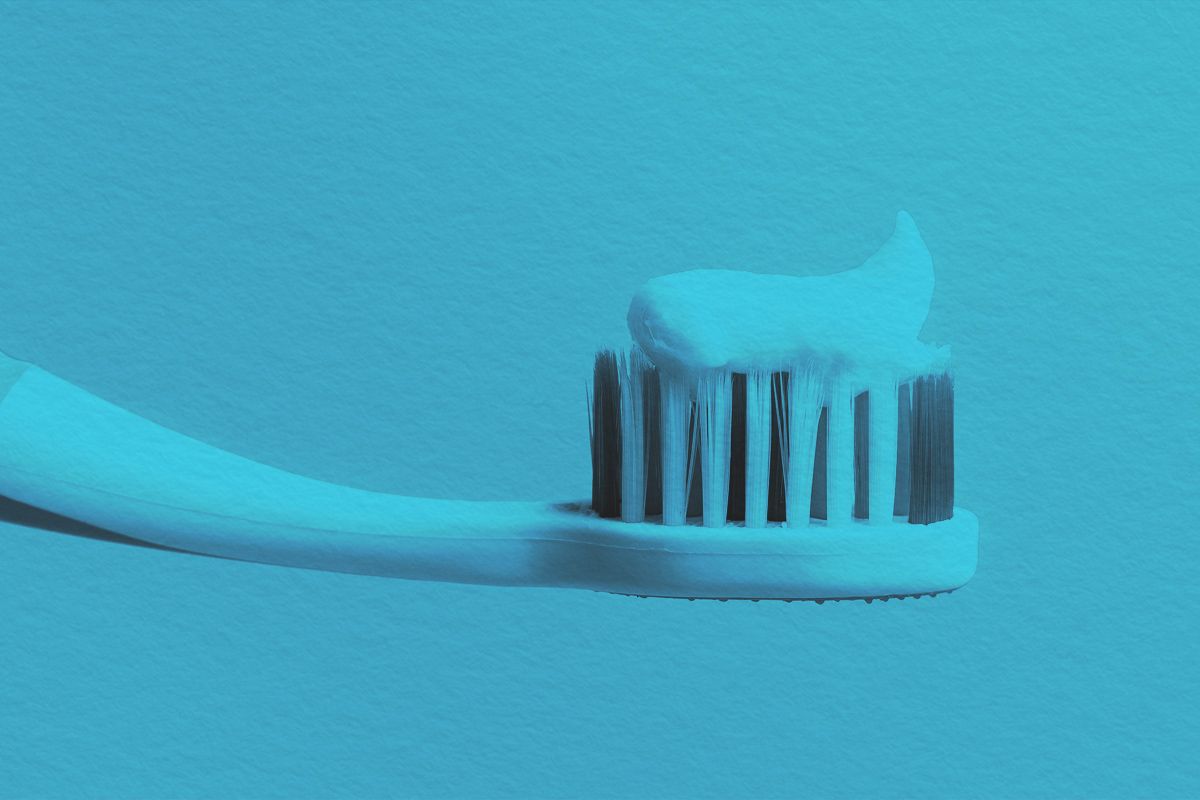
Squirting toothpaste onto a toothbrush is so second nature that it’s unlikely you’ve put much thought into the words behind it, but we’re here to tell you that there’s a word for almost everything. That little wavy blob of toothpaste is officially called a “nurdle.” While the word seems like it could come from either a nursery-school rhyme or a sci-fi saga, it’s no joke. In fact, it was once at the center of a courtroom dispute between toothpaste manufacturers — high drama indeed.
The origins of “nurdle” didn’t begin in the dentist’s office. In the 1960s, “nurdling” was a spoof pub game invented by absurdist British comedian Michael Bentine, and in the sport of cricket, “nurdle” applies when someone scores a run by gently nudging the ball to a vacant area of the field. A more modern definition for “nurdle” is that of a small pellet of plastic used to manufacture larger plastic products. This definition is probably most closely related to toothpaste usage, as it refers to a small portion of something.
But as we transition to dental care, it gets a bit murky. “Nurdle” is a nonsense term without a clear etymological origin. It’s been proposed as a spelling variant of “nodule,” which is a “small rounded lump.” This can give us a loose connection to “nurdle” as a small lump of toothpaste, but it’s still just conjecture.
Perhaps the earliest known printed instance of “nurdle” as toothpaste was in a 1968 advertisement for the now-defunct brand Vote. The ad included the tagline, “A nurdle a day keeps the dragon away” (with “dragon” implying “bad breath”). Decades later, in the 1990s, the American Dental Association adopted “nurdle” in its literature to explain the proper amount of toothpaste to put on a brush. The ADA likely brought “nurdle” to the forefront of the dental industry; however, we know the organization didn’t coin the word, as it appeared in ads decades earlier.
But the word might never have been brought to public attention if it weren’t for a courtroom battle between two major toothpaste manufacturers: Colgate-Palmolive Co. and GlaxoSmithKline PLC (which produces Aquafresh). They were fighting not over the word “nurdle,” but over the right to use an image of the wavy blob with tricolored toothpaste and either the words “Triple Action” (Colgate) or “Triple Protection” (Glaxo). Advertisements are worth big bucks, and the companies reached a confidential settlement over the nurdle imagery in 2011.
Featured image credit: Tatiana/ iStock
Advertisement
More from our network
Word Smarts is part of Inbox Studio, which publishes content that uplifts, informs, and inspires.
What Do the Three Latin Phrases on the $1 Bill Mean?
While most text on the $1 bill is written in English, the three Latin phrases on the reverse may leave you trying to decipher the hidden meanings in your wallet.
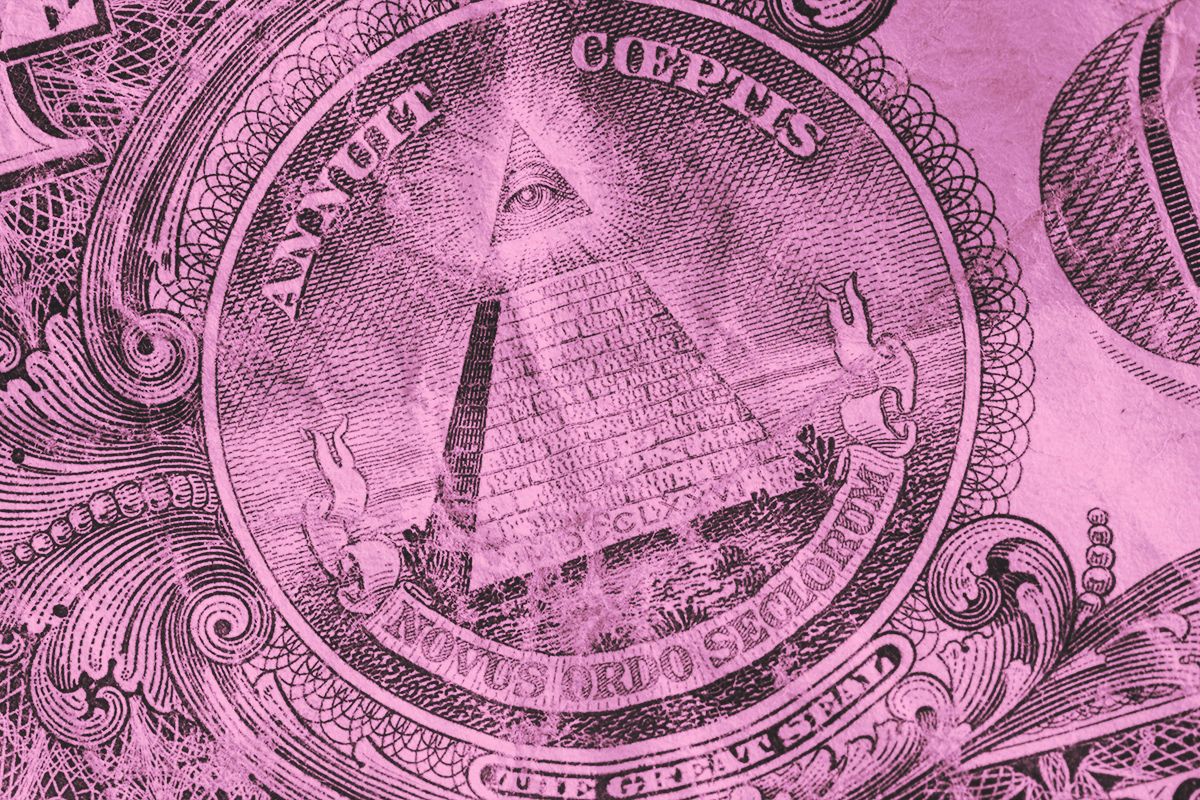
The next time you receive a $1 bill as change from a cashier, pay attention to a few defining elements on the currency. There’s Washington’s stoic demeanor, the weird pyramid with a glowing eye, and, of course, three Latin phrases inscribed on the back. This Latin text has been there since the debut of the dollar’s current design in 1963. Some conspiracy theorists believe the Latin words have a hidden meaning, but we’re not at liberty to confirm or deny any rumors. However, we can tell you the translation of these Latin phrases..
The Latin phrases are part of the Great Seal of the United States, whose design appears on the side of the bill with “ONE” printed in the middle. To the left is a pyramid with a floating peak — this is the “Eye of Providence,” which represents God keeping a watchful eye on humanity. Above the pyramid is the Latin motto ANNUIT CŒPTIS, a phrase that translates to “He [God] has favored our undertakings.” In the design of the Great Seal, this was an allusion to the seemingly divine interventions that occurred in support of American independence and democracy.
Below the Eye of Providence is the phrase NOVUS ORDO SECLORUM, Latin for “A new world order.” Despite popular rumors, this has nothing to do with the Illuminati; it’s related to the ancient Roman poet Virgil, who wrote the epic Aeneid. When designing the seal in 1782, founding father Charles Thomson was inspired by his past Latin scholarship to include Novus Ordo Seclorum as a way to represent the new democratic vision for the nation.
On the right side is an illustration of a bald eagle with a banner hanging from its mouth. The banner reads E PLURIBUS UNUM, Latin for “Out of many, one.” This motto represents the 13 original colonies that joined together in 1776 to form a new singular nation. Together, these three Latin phrases on the Great Seal and the $1 bill evoke feelings of freedom, democracy, and a new American vision.
Featured image credit: Thought Catalog/ Unsplash
Advertisement
More from our network
Word Smarts is part of Inbox Studio, which publishes content that uplifts, informs, and inspires.
Are You Smarter Than a Fifth-Grade Grammar Student?
Think you’ve mastered English grammar? Test your knowledge against fifth-grade grammar concepts, and see if your language skills have stood the test of time.
Even if you brought home straight A’s in grade school, it can be challenging to remember all of the lessons you once had memorized. The basics of capitalization and spelling might be easy, but do you remember your lesson on progressive verb tenses? Can you identify a narrative point of view? Let’s see if you could still hold your own in a fifth-grade grammar classroom.
1) Identify the verb tense in the following sentence:
We have played many games this weekend.
a) past simple
b) present perfect
c) future progressive
We’re starting with a tricky one. In fifth grade, students learn verb tenses, including past, present, and future. The correct answer is b) present perfect. The example sentence discusses a completed action, which is what perfect tense verbs are designed to do. The progressive verb tense — also known as continuous tense — describes an action in progress.
2) Identify the pronouns and the point of view in this sentence:
She and I drove to the pet store.
Can you spot the pronouns? In this sentence, the pronouns are “she” and “I.” A pronoun is a word used in place of a noun. For example, this sentence could read, “Nancy and I drove to the pet store,” but the pronoun “she” is used instead of the name. “We drove to the pet store” uses the pronoun “we” to replace both original pronouns.
What about the point of view? Remember that the point of view in writing refers to the story’s narrative voice: first person, second person, or third person. The sentence above is written in first person.
You can determine the point of view by the pronouns. First-person narratives use “I” and “we” pronouns to show the narrator is telling their own story. Second-person narratives use “you” to talk to the reader directly. Third-person point of view uses “he,” “she,” “it,” and “they” because a narrator is telling a story about someone else.
3) Choose the correct homophone for the sentence below:
The trees are losing ______ leaves.
a) they’re
b) their
c) there
Before autocorrect, choosing the correct homophone was a tricky task. The answer here is b) their, which is possessive. It means the leaves belong to the tree. “They’re” is a contraction of “they are,” and “there” is about location, so those options don’t make sense.
Homophones are terms that have the same pronunciation but different meanings. Other commonly confused homophones students learn at the fifth-grade level include “your” and “you’re”; “too,” “to,” and “two”; and “whose” and “who’s.”
4) What is the plural form of each word below?
Tooth = ____________
Person = ____________
Moose = ____________
Cactus = ____________
If you recognized these as irregular plural nouns, you’re a fifth-grade grammar superstar. Irregular nouns don’t easily become plural by adding “-s” or “-es” to the end of the word. Students need to memorize the correct forms for each noun. The answers for these words are as follows:
Tooth = Teeth
Person = People
Moose = Moose
Cactus = Cacti
Many irregular plurals can trip up adults long past the fifth grade.
5) Add the necessary commas and quotation marks to this sentence:
It’s Saturday Marko explained which means I have swimming lessons.
Complex punctuation can be tricky for fifth graders and adults alike. It requires understanding the sentence’s intention and the correct punctuation rules. The correct sentence looks like this:
“It’s Saturday,” Marko explained, “which means I have swimming lessons.”
In American English, commas and periods goinside quotation marks. The rules are different in British English, but we’re sticking to American grammar rules.
Featured image credit: recep-bg/ iStock
Advertisement
More from our network
Word Smarts is part of Inbox Studio, which publishes content that uplifts, informs, and inspires.
When Is Something ‘On Accident’ vs. ‘By Accident’?
Although the phrases “on accident” and “by accident” have been transposed for decades, only one is favored by linguistic authorities. Here’s how to choose the correct term.
When something happens unintentionally, do you say “by accident” or “on accident”? “I deleted the report by accident” and “I deleted the report on accident” both sound OK in conversational English, but only one is technically correct. According to a grammar authority (English professor Paul Brians at Washington State University), “on accident” is a nonstandard, colloquial phrase, and the correct version is always “by accident.” But why?
While the prepositions “by” and “on” can both make sense in these phrases, “by” is the historical source of the expression. According to the Oxford English Dictionary, “by accident” is a direct translation of the Middle French phrase par accident (meaning “by chance”), an adaptation of the earlier Latin phrase per accidens, which emerged around the fourth century. “On accident” showed up in English around the 19th century, but for traditional grammarians, it’s still the nonstandard choice.
Nearly two decades ago,Indiana State University linguistics professor Leslie Barratt did a deep dive into why “on accident” is infiltrating English grammar. Younger participants, born in the 1990s, almost exclusively used “on,” while older participants, born in the 1970s and earlier, used “by.” Those born in the middle used a mix of the two. Why this shift occurred was unclear to Barratt, but one leading theory is that “on accident” mimics the structure of its antonym, “on purpose,” providing a kind of linguistic symmetry.
While Barratt’s original research observed a decline in the use of “by accident,” in the 20 years since the study, “by” has seen a resurgence. Looking at the lifespan of “by accident” using Google Ngram, we can see a steadily declining trend from 1800 through the late 1990s. However, in the early 2000s, “by” picked up momentum, and usage has been increasing ever since. “On accident” usage reveals interesting patterns, too. The phrase was rarely used from the 1800s through the early 1900s, until it saw a sharp uptick during the 1910s, reaching its peak around 1935. It then slowly declined until around 2010, when it started to increase in popularity again. Today, both prepositional phrases are gaining momentum in contemporary English.
These fluctuating trends prove that grammar norms are constantly changing — but will our style guides and grammar school lessons account for these shifts? It seems they haven’t yet caught up with “on accident.” For now, stick with “by accident” in formal writing and settings, but feel free to use “on accident” in casual conversations, so long as you aren’t speaking with an English teacher.
Featured image credit: chinnarach/ Shutterstock
Advertisement
More from our network
Word Smarts is part of Inbox Studio, which publishes content that uplifts, informs, and inspires.
Finding yourself “in a pickle” is more frustrating than delicious. We can credit William Shakespeare for the popularization of this idiom in the early 17th century.
I personally hold pickles in the same high regard as Greek and Roman gods held ambrosia. I’m a sandwich connoisseur, and I can’t imagine leaving a deli with an overflowing pastrami sandwich without a juicy pickle on the side. But being “in a pickle” is far less fun than biting into a kosher spear. The idiom describes being stuck in a conundrum, often without a good solution. The phrase was coined centuries ago and later popularized by William Shakespeare.
According to the Oxford English Dictionary, “pickle” dates to the mid-15th century, originally describing a spicy sauce served with meat. It evolved to mean a brine by the early 1500s, and referred to whole vegetables by the mid-17th century. The word’s figurative application toward a predicament emerged in the mid-to-late 16th century.
The Online Etymology Dictionary notes that the earliest figurative uses appeared by the 1560s, alluding to the jumbled mess of vegetables used to whip up a pickle sauce. A 1573 agricultural guide by farmer Thomas Tusser features this early idiomatic example: “Reape barlie with sickle, that lies in ill pickle.” The phrase “ill pickle” implies a tangled mess of barley, difficult to harvest without a sickle.
In 1610, William Shakespeare brought the idea of being “in a pickle” into his play The Tempest. Alonso uses the figurative meaning when he asks, “How camest thou in this pickle?” to which his drunk jester Trinculo replies, “I have been in such a pickle since I saw you last.” Merriam-Websternotes that Shakespeare’s use plays off the fact that alcohol was sometimes used in the pickling process, contributing to the drunken Trinculo’s troublesome state. So in this instance, the meaning of being “in a pickle” is twofold: both drunkenness and finding oneself in a conundrum.
The idiom remained in common vocabulary in the 17th century, evidenced by an entry in politician Samuel Pepys’ diary from September 26, 1660, where he describes his “house being in a most sad pickle” — i.e., in bad shape and needing repairs. These examples illustrate how “in a pickle” developed its idiomatic definition, and the phrase is still used today to refer to vexing and troublesome situations.
Featured image credit: Solstice Hannan/ Unsplash
Advertisement
More from our network
Word Smarts is part of Inbox Studio, which publishes content that uplifts, informs, and inspires.
Celebrities aren’t only known for making headlines — many have made bold baby name choices. Here’s a look at how stars have come up with creative baby names.
Parents have the privilege of choosing any name they want for their child. They could select something that honors family tradition, or a moniker that has ties to a cultural heritage. Many people come up with new spellings or a spin on a classic name to stand out from the crowd. Celebrities often take this to the extreme and use it as an opportunity to express their individuality. Amid the sea of Sophias and Liams (the top baby names in 2020) in your kid’s preschool class, there might be a Kal-El — actor Nicolas Cage and Alice Kim’s tribute to Superman.
Here, we take a look at some of the more unusual names that celebrities have bestowed upon their children. They might not show up on any “Most Popular Baby Name” lists, but they display great creativity. Moon Unit, Dweezil, Ahmet, and Diva Thin Muffin
Psychedelic guitarist and rock star Frank Zappa might have kicked off the unique celebrity naming trend with his brood, beginning with Moon Unit, born in 1967. Second-born Dweezil’s moniker was apparently a pet name for Zappa’s wife Gail’s pinky toe, and the hospital wouldn’t put the name on the birth certificate. The baby was forced to bear the name Ian Donald Calvin Euclid until it was legally changed to Dweezil five years later. Ahmet and Diva Thin Muffin completed the family unit.
Dusty Rose
Maroon 5 frontman Adam Levine and model Behati Prinsloo named their daughter Dusty Rose. Far from being a flower in need of cleaning, dusty rose is a color in the shade of a muted light pink. It’s a whimsical choice for a baby name.
Onyx Solace
Singer Alanis Morissette and rapper Mario “Souleye” Treadway named their daughter Onyx Solace. Onyx is a dark-colored mineral that often has white streaks, while solace is a state of peace — an escape from chaos. It seems the pair chose a name with intentions for a deeper meaning.
Jonathan Rosebanks
The name Jonathan is a familiar one — it means “gift from God,” which has kept it a popular baby name over the years. However, actress Anne Hathaway and husband Adam Shulman put their heads together to coin Rosebanks. Hathaway’s grandfather was named Roseline, while Shulman’s mother’s maiden name was Banks. Put those together, and presto, they have a new middle name.
Blue Ivy
Blue Ivy became one of the most famous babies in the world the moment she was born — a natural result of having Beyoncé and Jay-Z for parents. Although Ivy remains unexplained by the duo, Queen Bey herself posted an excerpt from a book on her Tumblr (now taken down) that may explain Blue. The passage fromA Field Guide to Getting Lost by Rebecca Solnit explores how scattered light from the sun colors our skies and oceans blue.
Luna Simone
It’s not one of the most outlandish names on this list, but it does have artistic inspiration. John Legend and Chrissy Teigen named their daughter Luna Simone, after the moon and the soul singer and civil rights activist Nina Simone. Apple
The “what” for this appellation is pretty obvious, but the “why” is another story. When a question about the reason for the name was posed to actress Gwyneth Paltrow, she gave credit to Apple’s father, Coldplay singer Chris Martin. What is Martin’s affinity for apples? We may never know. Apple’s younger brother is Moses, a traditional name from the Bible, but one that doesn’t receive a lot of use these days in the United States.
Lincoln and Delta
Dax Shepard and Kristen Bell’s oldest daughter is named Lincoln, a nod not to the 16th president, but to Shepard’s love of classic cars. When Bell was pregnant with their second daughter, a friend jokingly suggested Delta Force for the new baby’s name. The joke turned into reality with baby Delta, proving that with celebrity baby names, anything is fair game.
Featured image credit: kelvin agustinus/ Pexels
Advertisement
More from our network
Word Smarts is part of Inbox Studio, which publishes content that uplifts, informs, and inspires.
Enter your email to receive daily lessons that dive into what makes English so fascinating. Each email is packed with odd rules, etymologies, and the tools you need to be a better communicator.
Sorry, your email address is not valid. Please try again.
Sorry, your email address is not valid. Please try again.