New dialects and merged languages have developed around the world as a function of people working together, yet speaking different languages. Pidgins and creoles are examples of natural language evolution.
Imagine people from different cultures, speaking different languages, but still needing to work together. How do they communicate with one another? They improvise and simplify, by using a smaller vocabulary, stripped-down syntax, and short sentences. It’s not a formal language per se, but it is functional. Now imagine generations of people using this bare-bones form of communication. The dialogue will evolve and expand, and children will grow up hearing it spoken.
These two examples describe a pidgin dialect and the development of a creole language, respectively, two linguistic phenomena that have occurred around the world for millennia.
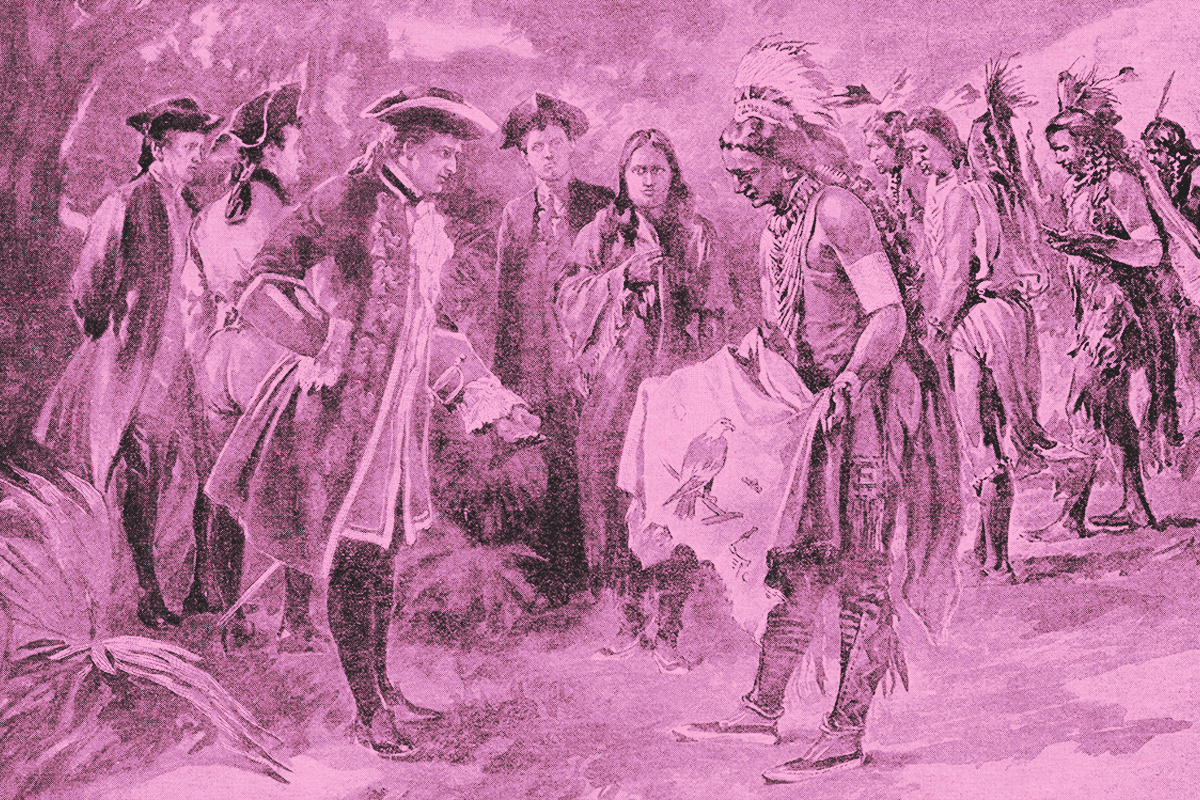
A pidgin dialect emerges when people speaking different languages need to communicate, often in the context of social inequality, such as colonialism and slavery, as when Africans and Europeans first interacted. Pidgins endure to this day. In Nigeria, for example, pidgin enables communication among that country’s more than 500 ethnic groups.
Pidgins are spoken by millions worldwide, in ports, at trading posts, on farms, in factories, and anywhere large numbers of people from different countries and cultures work together.
Advertisement
There’s not one form of pidgin; rather, a dialect develops out of necessity from stripped-down elements of the speakers’ languages. The word “pidgin” itself is an example of a pidgin that developed in the early 19th century among Chinese workers in the United States. It comes from a Chinese alteration of the English word “business.”
A creole language is a more advanced stage of a pidgin, arising when increased numbers of people begin to use a pidgin as their principal means of communication. When that occurs, their children hear it more than any other language, so it gradually takes on the status of a mother tongue for them. As a result, within a generation or two, that language use becomes consolidated and widespread. By this process, which linguists refer to as “nativization,” the result is a creole.
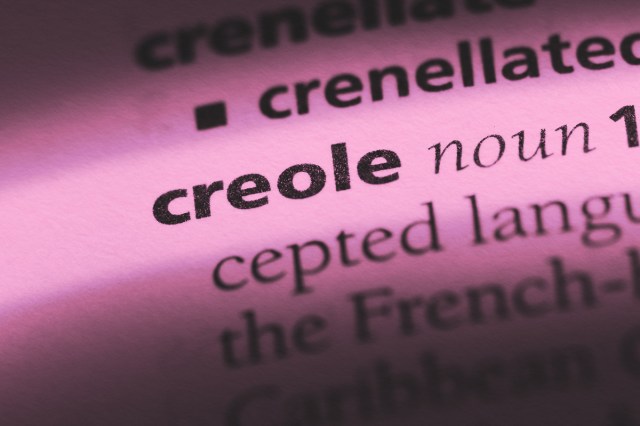
The difference between a pidgin dialect and a creole language is that a creole features a more complex, expanded vocabulary and a more consistent syntax, and it’s more stable than a pidgin. As a common noun, “creole” means “a mother tongue formed from the contact of two languages through an earlier pidgin stage.” A specific creole language may be referred to as a proper noun, such as French Creole or Louisiana Creole.
“Creole” has also been used as a proper noun and as an adjective to refer to people with mixed European and Black ancestry, or to the descendents of the European settlers in the Caribbean and Central and South America.
Emojis have become part of our day-to-day lives and a common feature of our digital communications. But can we actually consider emojis a language? In Face With Tears of Joy: A Natural History of Emoji, author Keith Houston explores this very question. He points out how the Face With Tears of Joy emoji was chosen as Oxford Dictionaries’ Word of the Year in 2015 — the first time a pictograph had been selected for the honor. At the time, Caspar Grathwohl, the president of Oxford Dictionaries, explained the choice by saying that “emoji are becoming an increasingly rich form of communication, one that transcends linguistic borders.” But where exactly do these borders lie when it comes to emojis — and can they be seen as a language in their own right?
Houston takes a deep dive into the subject and, after considering various studies, notes that most experts “hesitate to deem emoji a language.” He highlights some key areas in which emojis differ from formal language: “Inasmuch as there are grammatical rules for emoji,” he writes, “the scholarly consensus is that they are implicit, not formal; that they are limited, not exhaustive; and that they are variegated, not universal.”
So, it’s hard to call emojis a language. What, then, can we call them? One option, according to Houston, is to think of them as a script — as the written expression of a spoken language, rather than a language itself. This could place emojis alongside writing systems such as cuneiform, hieroglyphics, and Chinese characters. However, these examples are tied to specific spoken languages, while emojis are universal and capable of being interpreted in myriad ways.
Emojis, fundamentally, are iconic rather than symbolic — they represent their pictured object or activity, and while people might interpret the emoji icon in numerous different ways (which in itself is problematic in terms of regarding emojis as a language), it is still just a picture.
Linguists Gretchen McCulloch and Lauren Gawne offer an alternative, and very compelling, way of seeing emojis — not as a language, but as digital gestures. They note how most emojis are used to augment the meaning of the words they accompany — and in this sense, emojis act as the body language of the web. So, a language of sorts, but not — at least yet — any kind of formal, recognized language in the true sense of the word.
Featured image credit: Mego-studio/ Adobe Stock
Advertisement
More from our network
Word Smarts is part of Inbox Studio, which publishes content that uplifts, informs, and inspires.
What Presidential Campaign Coined ‘Keep the Ball Rolling’?
The idiom “keep the ball rolling” has ties to one of America’s most inconsequential presidents. Let’s travel back to the mid-19th century to learn more.
Some presidents leave their mark on the world of geopolitics, while others reshape how the average American lives their life. But William Henry Harrison died on his 32nd day in office, meaning he had little time to leave a notable impact on the country. However, Harrison’s legacy can be felt in the common lexicon, as the idiom “keep the ball rolling” has a very literal origin story tied to his 1840 presidential campaign.
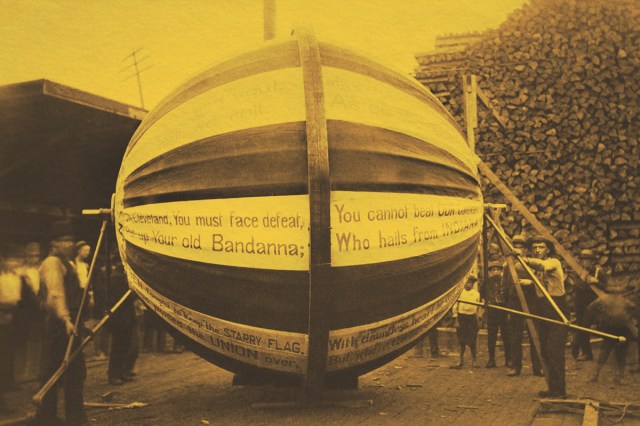
In an early example of a grassroots campaign, Harrison’s campaign supporters crafted a leather and tin 10-foot-tall ball that was inscribed with slogans, including “Fare well Dear Van, not the man” (referring to Harrison’s opponent, incumbent Martin Van Buren) and “To Guide the ship, Old Tip” (referring to Harrison’s nickname “Old Tippecanoe”). The ball was rolled from town to town, where his supporters would urge fellow campaigners to keep the ball rolling into the next town.
This publicity stunt was done once more in 1888 to support the presidential campaign of Benjamin Harrison — William’s grandson. The phrase was adopted into the lexicon after the first campaign, likely spurring the re-enactment in the second campaign. That ball was built with steel and canvas and inscribed with phrases such as “Old Allegany in 1840 started the ball for Harrison; In ’88 as they did then, We roll it on for Gallant Ben” (a bit wordy, as campaign slogans go). This second ball was rolled 5,000 miles from the creator’s Maryland home to Benjamin Harrison’s home state of Indiana. In both campaigns, the balls played a small role in getting the Harrisons elected, and they left us with the now-popular idiom.
Featured image credit: Glasshouse Images/ Alamy Stock Photo
Advertisement
More from our network
Word Smarts is part of Inbox Studio, which publishes content that uplifts, informs, and inspires.
Your spell-check isn’t broken — these English words don’t follow the rules. Learn how tricky spellings such as “fuchsia” and “segue” came into our language.
Which word made you slip up the most during grade-school spelling tests? One that confuses a lot of folks is “Wednesday,” the only day of the week with a silent letter. While the spelling seems like it was invented to trick kindergarteners, there’s actually a perfectly good reason “Wednesday” is spelled with a silent “d” in the middle. It comes from the Old English Wōdnesdæg (“Woden’s day”), reflecting the ancient Germanic practice of naming the days of the week after prominent gods — in this case, Woden (also known as Odin).
As it turns out, other strange English spellings also have good reasons for looking so, well, wrong. Whether staying true to ancient roots or hearkening back to surprising origin stories, these words have fascinating stories to tell with their spelling.
Bellwether
Noun: One that takes the lead or initiative; an indicator of trends.
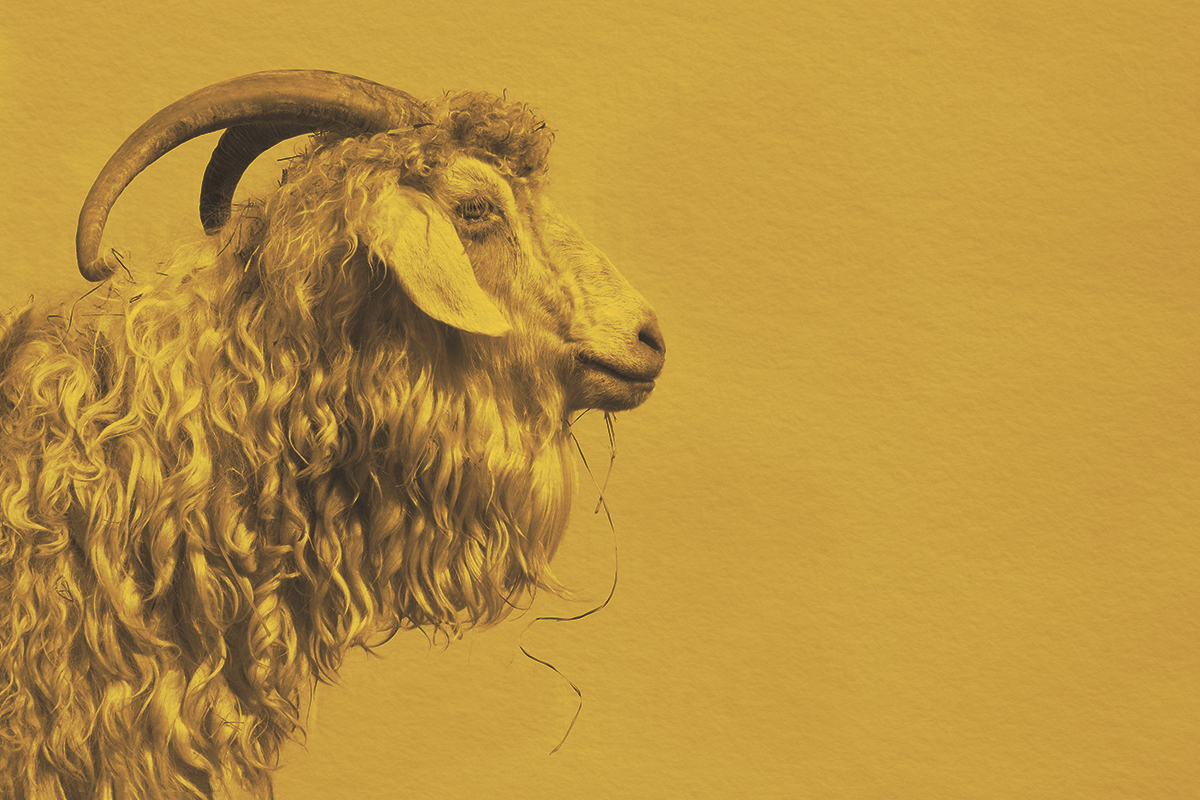
“Bellwether” is often used in a sense of forecasting, as in, “This state is a bellwether for national elections.” Because of this, it’s frequently misspelled as “bellweather,” forming a connection to weather forecasting. Additionally, “wether” itself is a very uncommon (at least in modern usage) English word — it refers to a castrated male sheep. But this definition is precisely where the term “bellwether” originated.
“Bellwether” comes from the Middle English term bellewether or belleweder, referring to said castrated sheep wearing a bell around its neck, encouraging other sheep to follow it. This was the leader of the flock. By the 15th century, the term’s literal sense had diminished and transformed into a metaphorical term for a leader, trendsetter, or indicator.
Colonel
Noun: A rank of a commissioned officer in the army, air force, or marine corps.
Certain military rankings have complex spellings. “Lieutenant” and “brigadier general” are mouthfuls, but they can be parsed out fairly easily by their spelling. But “colonel” — pronounced “kernel” — strays from the conventional rules of English spelling. In fact, it’s the only common English word with an “l” pronounced as an “r.”
This curious case of spelling results from the influence of two foreign languages: French and Italian. When the Italian word colonello was adopted into French, it became coronel and its pronunciation changed. Later, a spelling variant that reflects its Italian roots, colonel, became popular, but by then, the pronounced “r” was well established, resulting in a French pronunciation with an Italian spelling.
Advertisement
Fluorescent
Adjective: Bright and glowing as a result of fluorescence; very bright in color.
“Fluorescent” is an adjective describing something that emits light brightly, such as the fluorescent lights in a shopping mall. It originates from the noun “fluorescence,” which was coined during the 19th century by physicist Sir George G. Stokes, who first observed the glowing phenomenon in the mineral fluorite.
While a more common English spelling pattern would pair the vowels as “ou” instead of “uo,” the mineral, sometimes called “fluorspar,” was named after the Latin fluor, meaning “a flow,”from fluere, meaning “to flow.”
Fuchsia
Noun: Any of a genus (Fuchsia) of ornamental shrubs of the evening-primrose family; a vivid reddish purple.
Not all color names are as easy to spell as “red” and “green” — take “chartreuse” and “ochre.” Another sneaky name that breaks from English spelling norms is “fuchsia,” pronounced “FYOO-shuh.” Frequently misspelled as “fuschia” or “fushia,” the correct spelling (“fuchsia”) features a rare “chs” consonant combination.
While English does employ the vowel pair “ch” to sound like “sh” sometimes, as seen in “parachute” and “crochet,” it’s rarely followed by an “s.” This noun’s unique spelling came about because the term was named after Leonhart Fuchs, a German botanist. The oldest version of the term referred to the genus of plants, and it became Fuchsia after the Fuchs surname. The color was named after the plant.
Famous playwrights such as William Shakespeare are best known for doing just that: writing plays. So why, then, isn’t it spelled “playwrite”? The use of “wright” is no accident — it’s been spelled this way since the term was coined in Middle English. It refers to “a worker skilled in the manufacture, especially of wooden objects,” such as a “shipwright.”
In Middle English, “wright” also meant “builder” or “architect,” not just a woodworker. It comes from the Old English wyrhta or wryhta, meaning “worker” or “maker.” So, a playwright is literally a builder of plays. The term emphasizes the craftsmanship, not just the act of writing.
Segue
Verb:To make a transition without interruption from one activity, topic, scene, or part to another.
Often misspelled and mispronounced, “segue” was originally a musical term (“proceed to what follows without pause”) that has become a common word for transitioning to something new. Pronounced “seg-way,” it can confound even native English speakers because the vowel duo “ue” does not traditionally sound like “way.” Further compounding the confusion, the word “way” itself seems to support the definition, indicating a path or transition.
However, there’s a perfectly reasonable explanation for the spelling of “segue”: The original musical term comes from the Italian word seguire, meaning “to follow.” Per Italian pronunciation norms, the verb combination “ue” is often pronounced “way.” Perhaps capitalizing on the spelling-pronunciation mismatch, the American brand Segway produces two-wheeled transportation devices that act as a segue between landmarks during sightseeing tours.
Verb: To cause to be set aside; to force out of use as inferior.
“Supersede” (pronounced “SOO-per-seed”) has superseded many older spelling variations of the word. It first came from the Latin supersedēre, literally meaning “to sit on top of” (sedēre means “to sit”) but also “to be superior to” or “to refrain from.” In Middle English, the word transformed into “superceden,” a synonym for “defer.” While the correct spelling in modern English is “supersede” — preserving the Latin spelling — an alternative, “supercede,” is fairly common and listed as an acceptable variant in the dictionary.
This variation likely comes from the English spelling practice of ending words with “-cede,” as in “precede,” “recede,” and “concede.” “Supersede” is the only common English word that ends with the suffix “-sede,” making writers think twice when sounding it out.
Featured image credit: Gustavo Muñoz/ Adobe Stock
Advertisement
More from our network
Word Smarts is part of Inbox Studio, which publishes content that uplifts, informs, and inspires.
Your last name is shared with your family members, but it might go back hundreds of years to an ancient ancestor. Certain last names — patronyms and matronyms — are created from an ancestor’s first name.
If you live in a very small community, first names alone might suffice to differentiate one person from another. Almost 1,500 years ago, this was exactly how people identified themselves. But as clans grew larger, surnames (literally meaning “additional names,” coming from Anglo-Norman French) were required.
Surnames (last names) were not widely used in England until the Norman Conquest in 1066. Then the introduction of parish registers in 1538 fostered the use of hereditary surnames. By the end of the 16th century, in many parts of Western Europe, surnames had been passed down through generations and become fixed in spelling and use. The common practice in many cultures was to create a surname based on the first name of an ancestor — these familial names are called patronyms and matronyms.
A patronym is a surname based on a father’s first name, and a matronym is based on a mother’s. “Patronym” is from the Latin pater (“father”),the source of words such as “patriarch,” “patron,” “paternity,” “patronize,” and “paternalism.” “Matronym” is from the Latin mater (“mother”), the root of “matrimony,” “matron,” “maternity,” “matriarch,” and “matrix.”
You might be able to reasonably guess that someone with the last name O’Sullivan has Irish heritage — many last names that clearly indicate a certain country or culture are patronyms. In England, it was common to add an “s” to a name, giving us patronyms such as Peters, Phillips, Rogers, and Williams. The prefixes “O-,” “Mac-,” “Mc-,” and “Fitz-” generally indicate an Irish patronym, such as O’Reilly, MacCormack, and McDonald. Scandinavian patronyms, such as Carlson, Jensen, and Gibson, are recognized by a “-son” or “-sen” suffix.
Advertisement
Patronyms aren’t exclusively an Anglo-Saxon legacy. “Di-” or “D-” indicates Italian heritage, as in D’Agostino and DiMarco. An “-ez” suffix indicates a Hispanic patronym, as in Dominguez, Fernandez, and Enriquez. Adding “-ov” to a Russian first name creates patronyms such as Ivanov, Popov, and Petrov. “Ben” and “Bin” are used for patronyms in Hebrew and Arabic-speaking cultures, such as Ben-David and Bin Youssef.
Matronyms as a modern last name are much less common. Historically, in some cultures they were given to children of unwed mothers, children whose fathers died before they were born, when a father’s name was foreign or difficult to pronounce, or when a woman was especially well known.
However, matronyms are more common in certain cultures. In the Eastern European Ashkenazi Jewish culture, many surnames come from the matrilineal line: Rochlin (Rachel), Rivlin (Rivka), Sorkin (Sorka), Zeitlin (Zeitl), Feiglin (Feige), and Dworkin (Dvora). Most traditional Icelandic surnames are patronyms, but some are matronyms: Helguson (“Helga’s son”), Minervudóttir (“Minerva’s daughter”), and Helgadóttir (“Helga’s daughter”).
Given names are a special identifier chosen for each person, while surnames connect family members. Those with patronyms and matronyms are sharing a piece of their ancestral story every time they say their names.
Featured image credit: vulkanismus/ Adobe Stock
Advertisement
More from our network
Word Smarts is part of Inbox Studio, which publishes content that uplifts, informs, and inspires.
It can be hard to determine the chances of a dark horse candidate. But if you keep reading, you’ll have a pretty good chance of at least learning how the phrase was coined.
If you open up a book of English idioms, it’ll seem like a proverbial zoo. There are black sheep, busy bees, sitting ducks, and bulls that have somehow found their way into china shops. Then there’s the “dark horse,” an idiom dating to the early 19th century. It originally came from the horse racing world, only to be later adopted into other sports and political theater.
As defined by Merriam-Webster, “dark horse” means “a usually little-known contender (such as a racehorse) that makes an unexpectedly good showing.” This takes us back to the context under which it was coined. The descriptor “dark” originally referred to a racehorse that gamblers knew very little about, thus making it difficult to establish accurate betting odds for said horse. The word “dark” suggests that the horse and its skillset are somewhat shrouded in mystery.
The Oxford English Dictionary traces the phrase’s roots back to 1821; however, its popularity is credited to author and U.K. Prime Minister Benjamin Disraeli, who used it in his 1831 novel The Young Duke. He wrote, “A dark horse, which had never been thought of… rushed past the grand stand in sweeping triumph.”
“Dark horse” quickly developed a figurative usage, as it was frequently applied to unlikely political candidates who staged an unexpectedly competent showing. Take James Polk — winner of the 1844 U.S. presidential election — who’s often referred to as a “dark horse.” The blog Phrase Finder also notes that by the 1860s, “dark horse” was used in its figurative sense to apply to candidates seeking academic promotions. Today the idiom continues to be used in a political context, and it’s also often applied to athletic competitors deemed unlikely to succeed.
Featured image credit: winhorse/ iStock
Advertisement
More from our network
Word Smarts is part of Inbox Studio, which publishes content that uplifts, informs, and inspires.
If you’re a sick gamer but you’re worried about your computer crashing from a virus, rest assured that your vocabulary, at least, has survived centuries.
Some words sound inherently modern, as if they could have been invented in the last few decades alongside smartphones, social media, 3D printing, and self-driving cars. But step into the world of etymology and more often than not, you’ll find words with ancient histories. Even the most modern-sounding words — those we use frequently in our fast-paced, technologically driven world — can have origins in times long gone, sometimes as far back as Old English and the tongues of classical antiquity. Here, we look at eight words that feel contemporary but have surprisingly ancient roots.
Virus
Whether talking about computers or pandemics, the word “virus” has plenty of context — often negative — in our modern world. Perhaps the only positive association is “going viral,” something that many would-be influencers strive to achieve. That usage is newer, but the word “virus” itself has been around for a long time. It goes back to classical Latin, in which vīrus refers to a poisonous secretion or venom, or potentially anything with a virulent or malignant quality. “Virus” entered the English language in 1599 in the context of a poisonous venom, while “viral,” meaning “caused by a virus,” emerged much later in the 1930s.
Twitter
Long before the existence of the social media platform we now call X, the word “twitter” appeared in late 14th-century Middle English. It began as “twiteren,” meaning “to chirp or make small, tremulous sounds,” in reference to birds. Birds have long since twittered in many literary works, including James Thomson’s poem “Autumn”: “With other kindred birds of season, there / They twitter cheerful, till the vernal months / Invite them welcome back.”
Crash
Before cars, stock markets, and computers began crashing, “crash” emerged as an onomatopoeic word in the late 14th century, first written as “crasschen,” meaning “to break into pieces or make a loud, clattering sound.” And prior to car crashes, people crashed horses, such as in Charles Kingsley’s 1866 novel Hereward the Wake, in which “two other knights crashed their horses through the brushwood.”
Advertisement
Swipe
The dating app Tinder popularized the modern swipe, with its “swipe right to like, swipe left to pass” functionality — something the app’s co-founder came up with while in the shower. The word “swipe,” however, has been around for at least two centuries. In 1825, “swipe” was used in Scottish as “to move circularly” or “to give a stroke in a semicircular or elliptical form.” It soon after appeared in English, meaning “to strike at” or “deal a swinging blow,” often in relation to the English sport of cricket. A more modern usage of swiping a credit card first appeared in 1986, according to the Oxford English Dictionary.
Gamer
Today, if someone is referred to as a gamer, it probably means they play video games — or, if they’re more old-school, tabletop role-playing games. But gamers are nothing new. The word has been used since Middle English to refer to anyone who frequently takes part in a game or sport, or a person who plays games for stakes — in other words, a gambler. This latter sense was often frowned upon. In J. H. Ingraham’s 1845 short story “The Key; Or the Pack of Cards,” we are told, “The gamer is farther from restoration even than the drunkard, because what he does he does in the light of sobriety.”
Browse
Surveys indicate the average American may spend up to 10 hours a day online. That’s a big chunk of time spent browsing — and an impressively impactful feat for a word that’s been around since the 15th century. “Browse” originally referred to the way in which animals feed on buds or eat leaves from trees, or the manner in which cattle graze. The pastoral meaning was extended to the perusal of books in the early 1800s and later found its way into modern internet parlance.
Advertisement
Sick
The modern usage of “sick” to mean “outstandingly or amazingly good or impressive” is a prime example of amelioration — a type of semantic change in which words with negative or neutral associations improve in meaning and develop positive connotations. “Sick” itself goes all the way back to the Old English word séoc, referring to suffering from illness of any kind, or being generally unwell or ailing. The word bravely hung on to its original sense for centuries, until skateboarders and surfers decided to radically invert its meaning in the 1980s.
The sheer dread of being unfriended on social media is one of the modern world’s greatest woes. Some small succor can perhaps be found, however, in the knowledge that unfriending is nothing new. “Unfriend” as a noun has existed since at least the 13th century, referring to someone who is not a friend or on friendly terms, or possibly an enemy. As a verb — and more aligned with the modern meaning — we can find an example in a 1659 letter by Thomas Fuller, in which he wrote, “I hope, Sir, that we are not mutually un-friended by this difference which hath happened betwixt us.”
Featured image credit: Roman/ Adobe Stock
Advertisement
More from our network
Word Smarts is part of Inbox Studio, which publishes content that uplifts, informs, and inspires.
“When life gives you lemons…” you make an anapodoton. This rhetorical device involves shortening common expressions, leaving the listener to infer meaning and fill in the rest based on prior knowledge and context.
I recently chatted with a family member about their upcoming trip to Europe and the foods they might try. I remarked, “When in Rome…” as an encouragement to embrace the local cultures. The full expression is, “When in Rome, do as the Romans do” — a recommendation to adopt the customs of a new place. But have you ever noticed that we rarely finish that phrase? It’s more common to cite just the first half of the familiar saying. When we leave out the latter part of a saying or subordinate clause, expecting the listener to fill in the rest, it’s called an “anapodoton.”
“Anapodoton” (plural: “anapodota”) comes from the Greek word anapodosis, meaning “without a main clause.” This rhetorical device doesn’t work with just any phrase; it relies on expressions that are so well known that even a fragment of them conveys the full meaning. In fact, some anapodota are more common than their complete counterparts in everyday speech. Here are a few popular examples:
These anapodota are a fun reminder of how much shared cultural knowledge plays into our ability to communicate with each other, allowing us to fill in the blanks when we need to.
Featured image credit: svetlana_cherruty/ Adobe Stock
Advertisement
More from our network
Word Smarts is part of Inbox Studio, which publishes content that uplifts, informs, and inspires.
A capitonym is a prime example of the power of capitalization: A single letter can transform a regular noun such as “turkey” into a proper noun with a different meaning — “Turkey.”
“I may take a trip in May.” Being able to understand this sentence (“may” versus “May”) relies on a capitalization tool you may not have heard of: capitonyms. This device changes a word’s meaning by capitalizing its first letter — no spelling alterations required. For instance, you might say, “We held our inaugural charity march last March.” The charity “march,” or walk, is the common noun or verb, while the capitonym “March” refers to the month. The same principle distinguishes the bird “turkey” from the country “Turkey,” the verb and noun “will” from the name “Will,” and the noun “windows” from the computer operating system “Windows.”
You might be familiar with all of these examples of capitonyms by their other designation: proper nouns. A capitonym is a proper noun that has a paired standard noun with a different meaning. Some capitonyms also change in pronunciation. Consider this sentence: “He wanted to polish off the Polish sausages.” Here, the phrasal verb “polish off” (meaning “to finish quickly”) is pronounced “pah-lish.” “Polish,” on the other hand, is an adjective relating to the country of Poland, and is pronounced “poh-lish.”
Here’s another example of pronunciation change at work: “I was reading a book at Reading Terminal Market.” Here, the verb “reading” is pronounced as usual, but the capitonym “Reading” (a market in Philadelphia) is pronounced “red-ding.” Other instances include the pronunciation of “lima beans” versus “Lima, Peru,” and “mobile phone” versus “Mobile, Alabama.”
While some capitonyms are apparent, others are less familiar. “August,” for example, is best known as the month, but “august” (lowercase) is an adjective meaning “marked by majestic dignity or grandeur.” Similarly, “Catholic,” relating to the Catholic church, has a different meaning when lowercase, as an adjective meaning “broad in sympathies, tastes, or interests.” These single-letter capitalizations and slight pronunciation variations highlight how small details can create big changes in language.
Featured image credit: baona/ iStock
Advertisement
More from our network
Word Smarts is part of Inbox Studio, which publishes content that uplifts, informs, and inspires.
A dollar doesn’t go as far as it used to, but giving your two cents can still go a long way. Let’s look at the potential origins of this monetary idiom.
When you’re at the register, two cents doesn’t go very far. Penny candy used to be a hot item at the general store, but good luck finding anything today for such a low price. When it comes to opinions, though, giving your two cents could mean you have a lot to say. We’d like to add our own two cents to the conversation and examine how the phrase was coined.
The truth is there’s no clear origin story, but there are a number of possible examples. One relates to the Bible, specifically the Widow’s Offering, a parable that appears in the Books of Mark and Luke. In the story, a poor widow places two small coins into an offering box, which Jesus finds to be more meaningful than any of the vast sums donated by wealthier folks. While richer people gave fragments of their fortunes, the widow gave every cent she had. Thus, the phrase may have been derived from the idea of giving your two cents to help if that’s all you can do.
The phrase also may come from the Twopenny Post, an early 19th-century British mail service. In 1801, Parliament passed a law increasing the cost of letter delivery from a single pence to two pence. So, if you wanted to send a letter expressing your thoughts to someone, you’d have to pony up two pence — or give your two cents.
The term has since evolved from giving or spending literal money to a metaphorical usage of giving an opinion, sometimes when it’s not needed or asked for. “Two cents’ worth” is another form of the idiom, meaning “an opinion offered on a topic under discussion.” These are just two examples we found of many purported origin stories behind the phrase “two cents.” If you know of other linguistic backstories, message us to give us your own two cents.
Featured image credit: MBurnham/ iStock
Advertisement
More from our network
Word Smarts is part of Inbox Studio, which publishes content that uplifts, informs, and inspires.
Enter your email to receive daily lessons that dive into what makes English so fascinating. Each email is packed with odd rules, etymologies, and the tools you need to be a better communicator.
Sorry, your email address is not valid. Please try again.
Sorry, your email address is not valid. Please try again.