




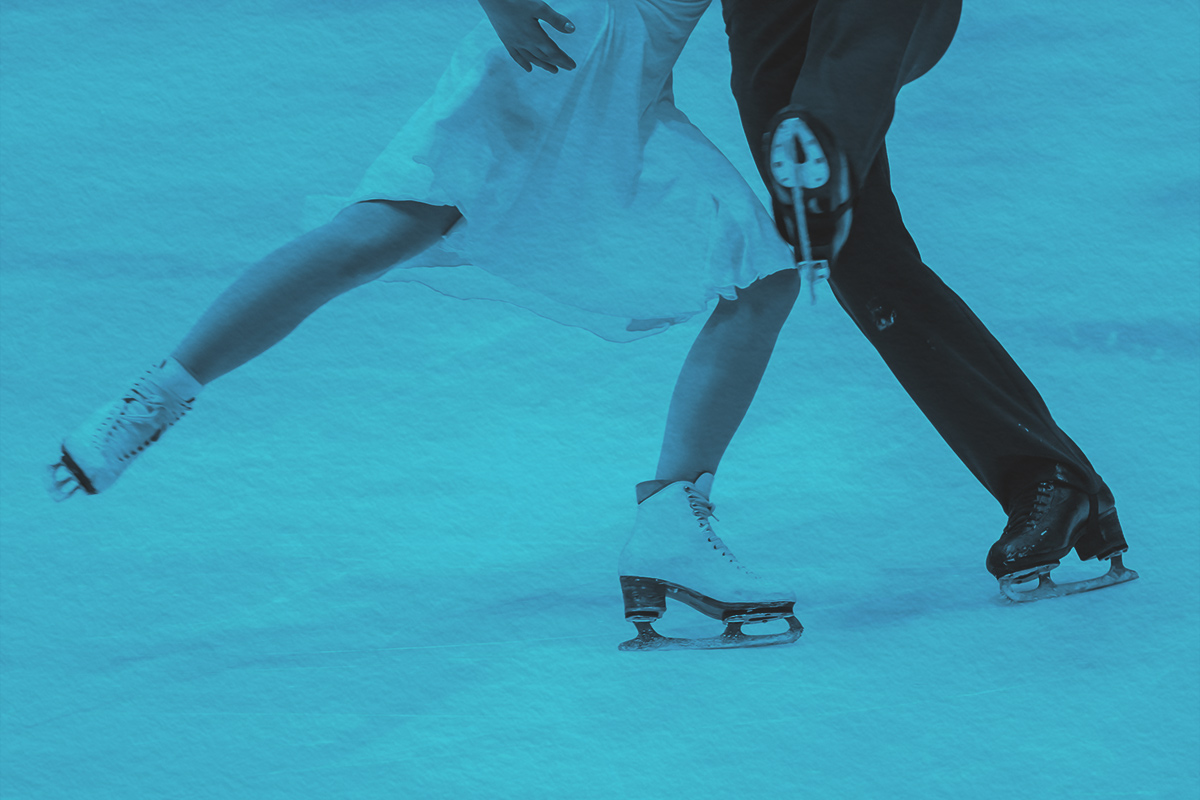
As someone who finds the Winter Olympics much more entertaining than the Summer Games, I’m excited to plop down and spend the next two weeks watching endless hours of ice hockey and curling. But unless you participate in these winter sports yourself, you may find certain terms to be unfamiliar or confusing. Here’s a look at words and phrases that you should know while you watch the 2026 Winter Olympic Games.
You’re most likely to hear the term “salchow” while watching figure skating. It refers to a jump where a skater leaps into the air using the back inside edge of one skate, performs one or more full turns in the air, and then lands on the back outside edge of the opposite skate. The jump is called a double, triple, or quadruple salchow based on how many full revolutions are completed.
The term was coined by 1921 and is named for Ulrich Salchow, a Swedish figure skater who, in 1908, won the first Olympic gold awarded in men’s figure skating. It is one of many common figure skating jumps named for preeminent figures in the sport’s history. For instance, “axel” comes from Norwegian figure skater Axel Paulsen, and“lutz” is believed to be in honor of Swiss American figure skater Gustave Lussi.
Since the 1948 Winter Olympics, slalom has been an individual skiing event. The word “slalom” can refer generally to zigzagging movement or more specifically to a timed race in which athletes zigzag around a series of markers (e.g., flags). The word made its way into the English language in the early 1920s, and it’s derived from the Norwegian slalam, which literally translates to “sloping track.”
Another hurdle that Olympians may encounter on the slopes are moguls. In this context, they’re not titans of industry; they’re bumpy, elevated piles of snow. “Mogul” is derived from the Norwegian mugje, meaning “heap” or “mound.”
While we’re on the topic of skiing, we’d be remiss not to mention “piste” — a term that refers to a hard-packed ski trail. The word originated in French by 1696, though it comes from the Old Italian pista, which is derived from the verb pistare, meaning “to trample down.” Today, it accurately describes the downhill ski trails used by Olympians.
When you hear the term “skeleton” on a Winter Olympic broadcast, the announcers are probably referring to small sleds ridden by single riders lying headfirst in a prone position. “Skeleton” also names the sport, which has existed since 1882. The name may be derived from the appearance of early sleds that resembled human skeletons, though an alternative theory suggests it’s a mistranslation of the Norwegian kjelke, meaning “sled.”
The term “bonspiel” refers to a match or tournament in the sport of curling. Its earliest use dates to around 1772, though its precise etymological origins aren’t certain. One theory is that it comes from the Dutch bond (meaning “league”) and spel (“game”), even though the sport itself was invented in Scotland.
As for why the sport is called “curling,” the name refers to the fact that in curling games, the stones spin in a curved trajectory as they travel down the ice, curling inward toward a more central target.
“Hat trick” is a term in ice hockey referring to when a single player scores three goals in one game. But long before it applied to hockey, the phrase originated in another sport — British cricket. If a bowler retired three batsmen with three consecutive balls, the team would buy that bowler a new hat to commemorate their impressive feat. You might also hear the term “hat trick” in Olympics broadcasts if a certain athlete earns three medals.


In the world of Olympic snowboarding (and other board sports such as skateboarding), athletes have either a “regular” or “goofy” stance. This refers to whichever foot they put forward on the board — a regular stance involves putting the left foot forward, while a goofy one is putting the right foot forward. It’s important to clarify that “regular” and “goofy” aren’t meant to be synonymous with “correct” and “incorrect.” Instead, the origin of the word “goofy” can be traced to the 1937 Disney cartoon “Hawaiian Holiday,” in which the character Goofy rides on a surfboard with his right foot forward.
More from our network
Word Smarts is part of Inbox Studio, which publishes content that uplifts, informs, and inspires.