


A reader probably rarely thinks about book translation until something sounds “off.” When there’s a translation mistake, it can be glaring, which is why the role of a literary translator is so important. Translators are the unsung heroes behind countless classic tales, including French author Victor Hugo’s Les Misérables and The Hunchback of Notre Dame and Miguel de Cervantes’ Spanish masterpiece Don Quixote, as well as modern novels such as The Girl with the Dragon Tattoo by Swedish author Steig Larsson and The Alchemist by Paulo Coelho, originally written in Portuguese.
A book translator is both a reader and a writer who uses a finely tuned set of skills to give life to an existing story in a new language. To discover more about the behind-the-scenes process of book translation and the role of a literary translator, we interviewed Sofia Huitron, an English and Spanish translator specializing in children’s books and graphic novels.
When faced with translating an entire book, most translators, including Huitron, start by reading the book from beginning to end, often more than once. As Huitron explained, “It’s essential to understand the full story, tone, and overall feel so I can recreate that same experience in the translated version.”
Literary translators create by recreating. Knowing the author’s voice and personality, the rhythm and pacing of the prose, and the emotional tone helps a translator capture not just the words on the page, but also the essence of the story. The goal is for the new translation to give English readers the same experience as reading in the original language.
Translators must also conduct thorough research on the context of the book. They become experts on all aspects of the story, whether it’s the geography of a contemporary West Coast romance novel or the historical landscape of a World War II thriller. Mistranslations can occur if the translator is uninformed on key details.
For instance, a translator working on the aforementioned romance novel may need to research coastal California’s microclimates, local slang, and even surf culture to avoid subtle inaccuracies. Confusing Northern and Southern California’s particular nuances could undermine the setting’s authenticity for readers familiar with the area.
In the case of the WWII thriller, a translator would brush up on the timeline of events, as well as military terminology, ranks, and city names, as these can vary across languages. For instance, an English-to-French translation might call for the name of Poland to be changed to Pologne — it would be a major faux pas to use the English version of a country name.
Cultural references are often key to storylines, and missing or misusing one can undermine the author’s intentions. As Huitron put it, “It’s not just about translating words, but about preserving meaning, voice, tone, and cultural nuance so a story can truly live in another language.”
Research is also conducted on the author’s background so that the translator has a better sense of their voice and why they might write or think a certain way. To accomplish this, Huitron explained, “I immerse myself in the author’s voice and experiment with different versions of a passage until I find the one that feels most natural and true to the story.”
After hours of reading and research, it’s time to start translating. But literary translation is not a one-to-one swap. “Translation goes far beyond replacing words,” Huitron said. “Idioms, humor, and expressions don’t work literally, so my job is to capture the meaning and cultural context behind them and recreate the same impact in the target language.”
Translation involves constant, active choices; there is nothing passive or mechanical about it. It’s a careful balance between staying faithful to the original material while making the text feel natural in the new language. “It requires fluency not just in languages, but in cultures,” as Huitron put it.
Book translation requires heavy revision and editorial collaboration — it’s a lengthy process. Translators refine for clarity and consistency, ensuring a good fit in the new language. This attention to detail often goes unnoticed, but for translators, it’s everything.
According to one seasoned literary translator with the American Translators Association, recreating a 70,000-word novel (approximately 250 pages) might take about 70 days, or 14 weeks. She estimates an average translation of 1,000 words per day, with her work days including writing multiple drafts, coordinating with editors, and proofreading.
Literary translation is often overlooked, but it’s all around us. Without it, we couldn’t share stories on a global scale. No other story has translated quite as well as The Little Prince. Antoine de Saint-Exupéry’s famous children’s book (Le Petit Prince in the original French) is the most translated work of fiction in the world.
Since its 1943 publication, The Little Prince has amassed 600 translations that resonate with audiences worldwide for its deep themes of human connection, packed into an easy-to-read short story. But these translations didn’t come without missteps.
In 1943, Katherine Woods created the original and most famous translation of The Little Prince from French into English. Though this version is well loved, she mistranslated the French word ami (“friend”) as “sheep” (actually le mouton in French) in a crucial passage. This created the famous “Sheep Test” for other translations of The Little Prince, in which a reader can tell whether the translator has read the original French version or if they translated it from the English version.
For better or worse, mistakes such as these are common in translations. J.R.R. Tolkien, author of The Hobbit and The Lord of the Rings, was famously disappointed in early translations of his works, especially when it came to the mistranslation of names inspired by Old English, which Tolkien took special care in creating. Tolkien was a skilled linguist, and to preserve the accuracy of his works, he published A Tolkien Compass (1975), which included his own notes on the meaning and origin of names in The Lord of the Rings. It has become an irreplaceable tool for Tolkien translators.

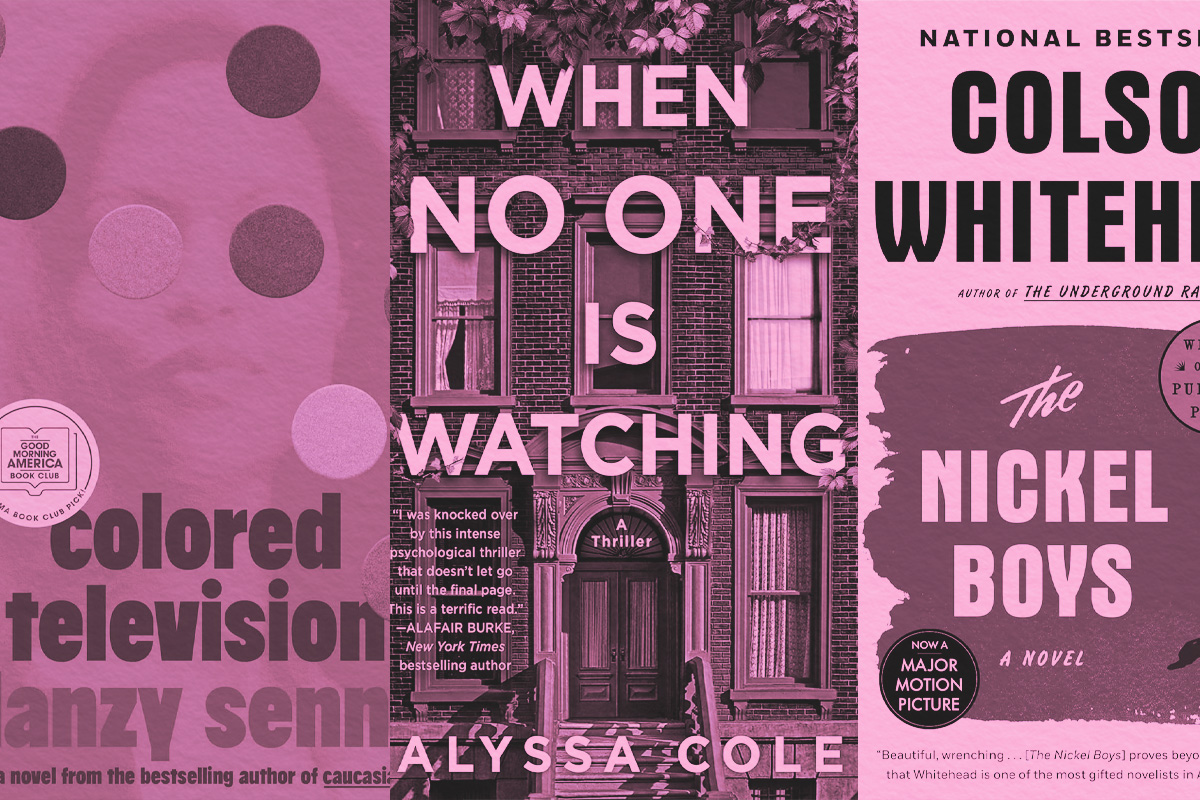
All of this meticulous work might go unnoticed by a casual reader, but its impact becomes clear when we look at some of the world’s most famous translated books. When asked what she hopes readers take away from literary translation, Huitron said, “I hope this leads to a deeper appreciation for translated books and for the translators who make our favorite stories accessible to readers around the world.”
More from our network
Word Smarts is part of Inbox Studio, which publishes content that uplifts, informs, and inspires.