







What’s a shebang, is there such a thing as part of a shebang, and what’s the origin of the idiom “the whole shebang”?
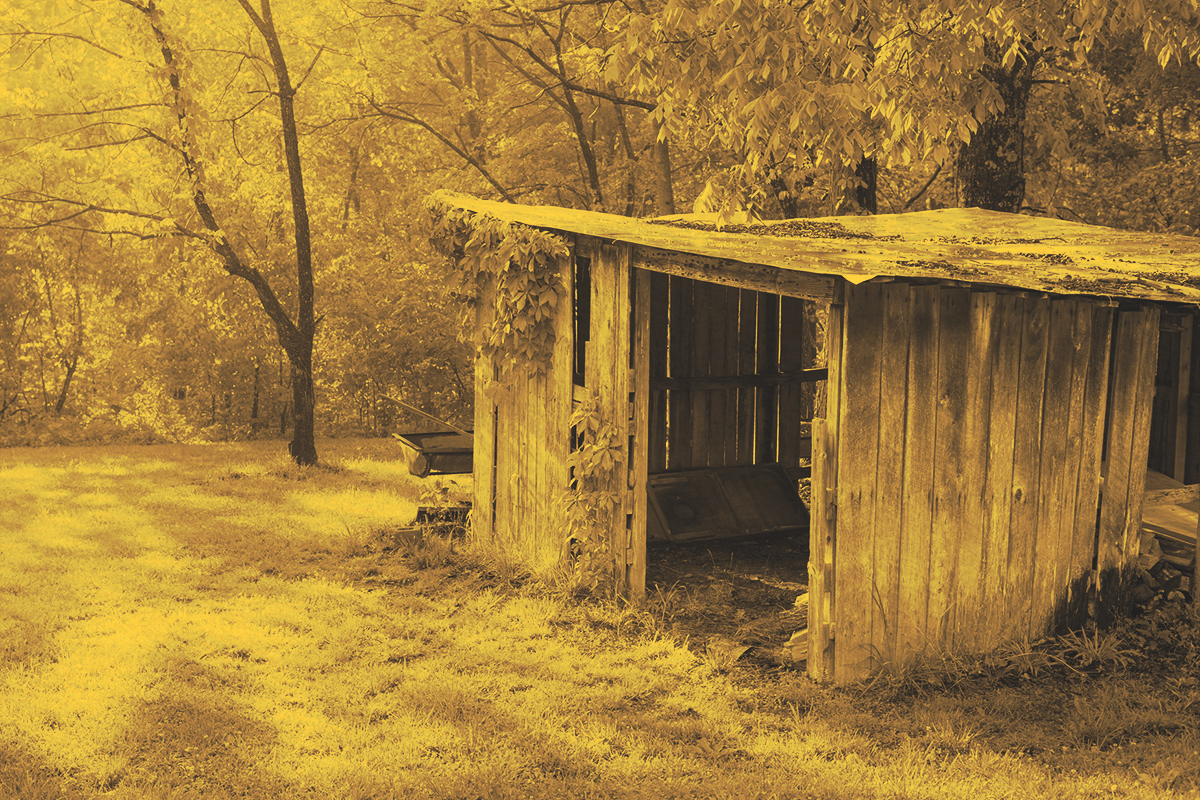
These are important questions, and we find some answers in the earliest usage of the word. Merriam-Webster says it appeared in English during the Civil War, as seen in Walt Whitman’s diary entries. He used “shebang” to refer to a type of crude dwelling: Soldiers were living in “shebang enclosures of bushes” and coming “out from their tents or shebangs of bushes.”
A few years later, Mark Twain used “chebang” (an alternate spelling) to refer to any matter of concern. “I like the book, I like you and your style and your business vim, and believe the chebang will be a success,” he wrote in a letter to his publishers in 1869. To complicate matters, in 1872, Twain used “shebang” in reference to a vehicle in his novel The Innocents at Home: “You’re welcome to ride here as long as you please, but this shebang’s chartered.”
The meaning of “shebang” as it relates to a structure was expanded in 1878 in Hallock’s American Club List & Sportsman’s Glossary: “Shebang, any sort of structure from a shanty to a hotel.” And in 1901, Canadian novelist H. G. Parker authored a book about a heavy-drinking Montreal lawyer, in which he wrote, “There were people who called the tavern a ‘shebang.’”
None of these writers coined the term — they were using it because it was already in the wider lexicon. So where did “shebang” come from? Both Merriam-Webster and the Oxford English Dictionary point out its obscure origin, but that obscurity hasn’t stopped etymologists from speculating.
There are a few possibilities:
- Irish, seibin, “a small mug,” which in English became “shabeen, shebeen,” meaning an illegal drinking establishment
- Irish, síbín, meaning “illicit whiskey”
- French, chabane, meaning “hut”
- French, char-á-banc, meaning “a carriage or coach with benches”


Each of these options can address some 19th-century usage of “shebang,” but what about the idiom “the whole shebang”? “The whole shebang” is recorded from 1869, but how it relates to huts, structures, hotels, taverns, or vehicles is unclear. The saying is used to mean “everything that is included in something.” The fact is that some idioms have unknown origins. It may simply be that “shebang” came to refer to so many disparate things that it now refers to the whole of just about anything — the whole shebang.
More from our network
Word Smarts is part of Inbox Studio, which publishes content that uplifts, informs, and inspires.





