


Contrary to its name, the Silent Generation had a loud impact on culture. Its members were born between 1928 and 1945, coming of age in the 1950s, parallel to the rise of rock ’n’ roll and the prominence of doo-wop. Artists today are still inspired by the popular musicians of that decade, and film fans often refer to it as the golden age of Hollywood. Indeed, movies such as Singin’ in the Rain, Sunset Boulevard, and Some Like It Hot remain lasting cinematic staples.
The 1950s were also a time of change in the U.S. as construction of the highway system and the suburbs accelerated after World War II. Visual markers such as diners, sock hops, Elvis-like gelled hair, and more dominate the imagery of the Silent Generation’s youth. Language evolved, too, with new terms to capture the energy and attitude of the era. Here’s some of the slang you can use on your way to the drive-in.
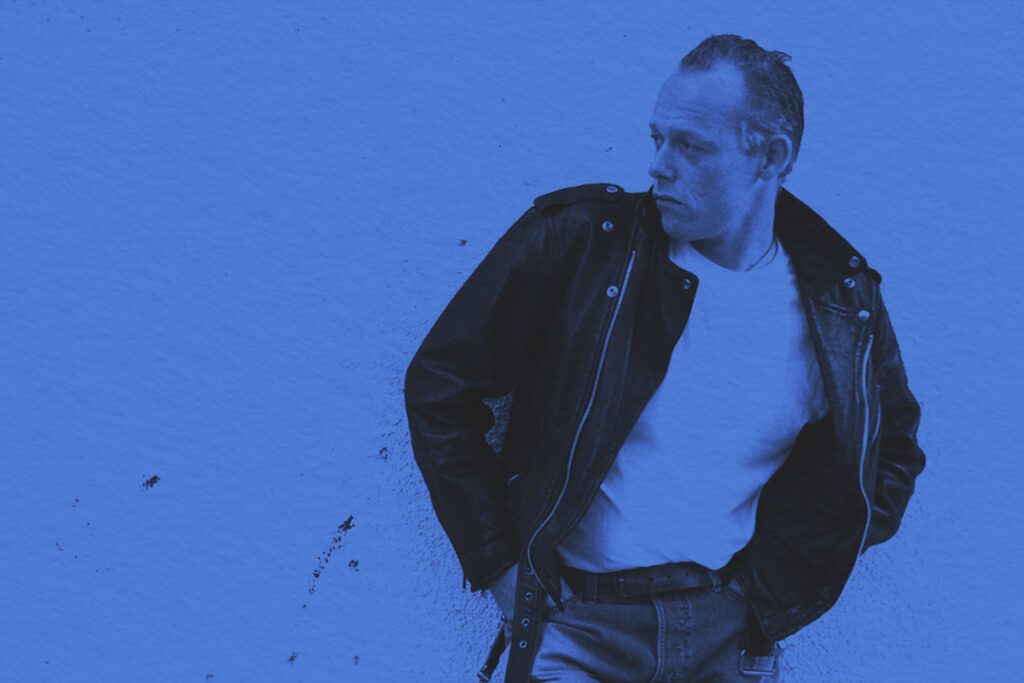
Greasers were part of an influential subculture in the 1950s. The word probably originated before the 1950s and had a derogatory bent when it was first used, with the meaning of “an aggressive swaggering young white male usually of working-class background.” However, it has persisted thanks to the 1978 movie Grease and the 1983 movie The Outsiders, now a popular Broadway musical. As seen in those films, the typical greaser look was based on rock stars of the time: hair coiffed with pomade, a white T-shirt, a leather jacket, and heavy boots or Chuck Taylor sneakers.
Lexicographers trace the origin of this idiom — referring to someone acting in a way that will invite retaliation — back to the 1940s. It was first documented in a 1945 issue of The Palisades, a publication written for the U.S. armed forces. We see it decades later in the movie Grease, when Danny Zuko says someone is “cruisin’ for a bruisin’.” The continued appearance in pop culture helped this phrase stay relevant beyond the 1950s.
The rise of suburbs and car ownership in the United States in the 1950s led to the creation of drive-in movie theaters, which became a popular spot for dates. The passion pit was the section of the drive-in where couples would indulge in romantic moments.
Defining what was cool and staying up-to-date with trends in the 1950s was extremely important, and there were many words for coolness. “Hip” was used in the context of jazz music in the early 20th century, and by the 1950s it had come to mean “fashionable” or “stylish.” “Hip” crops up in one of the most iconic books of the 1950s, On the Road by Jack Kerouac, in which he describes another character as having a “hip sneer.”
“Swell” was another word to express that something was cool, fashionable, or stylish, but with a slightly dangerous edge to its reputation. In the 1957 stage musical The Music Man, Harold Hill drums up fear of the youth in the song “Ya Got Trouble” by proclaiming that boys in a pool hall are using words like “swell” — clearly a harbinger of delinquency.
Continuing the theme of generational standoffs in the 1950s, adults called children they found annoying “ankle-biters.” People used the term to refer to small children as far back as the 1830s, and by the 1950s it began to apply to anyone people found generally annoying. These days, “ankle-biter” would more likely refer to a small dog than a youth.
When you’re ready to fully embrace the return of Silent Generation slang, pick up the honorific “daddy-o,” which is commonly defined as “a term of familiar address to a man, originally used by jazz musicians to display camaraderie.” The novel Invisible Man by Ralph Ellison (published in 1952) is peppered with “daddy-o,” establishing it as regular slang.
More from our network
Word Smarts is part of Inbox Studio, which publishes content that uplifts, informs, and inspires.