


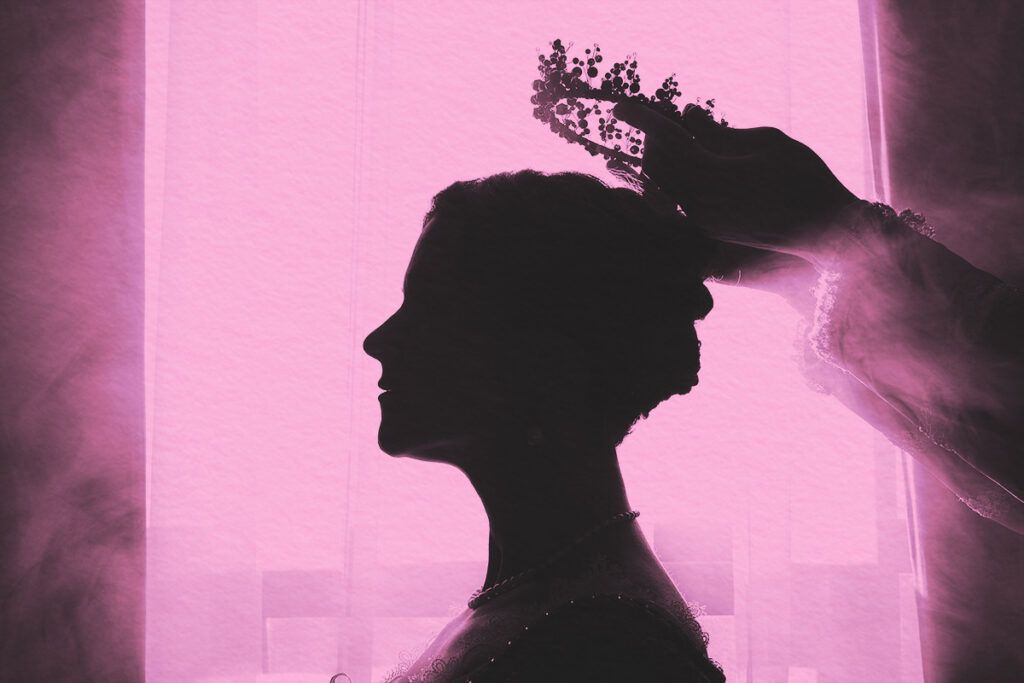
While members of royalty are more often known by their titles and first names, they do still have family names in most cases. The current heir to the British throne, for example, is William, Prince of Wales. He and his wife, Catherine, Princess of Wales, do not have an official last name, nor do their children, Princes George and Louis and Princess Charlotte. However, for specific legal requirements, the family uses the surname of Mountbatten-Windsor. The name originated with William’s grandparents Queen Elizabeth II and Prince Philip, who decided they wanted their children to have a name that distinguished them from the rest of the royal family. Mountbatten comes from Prince Philip’s last name before he married, and Windsor is the name given to the descendants of the male line of Queen Victoria.
The current British royal family is descended from the Windsors, but there have been several other family names on the throne throughout history, and when you look at the family trees, you can see connections to many other royal families in Europe. If you share one of these royal last names, you might be able to trace your lineage back to a throne.
King George V, son of King Edward VII, changed the family name from Saxe-Coburg-Gotha (Prince Albert’s family name) to Windsor in 1917, largely due to anti-German sentiments. The name was chosen in honor of Windsor Castle in Berkshire, England. Since the house of Windsor descends from one of Queen Victoria’s grandchildren, it’s possible that having the last name Windsor means you’re connected to the current ruler of the United Kingdom.
The house of Stuart was the royal family of Scotland from 1371 and of England from 1603 until the death of Queen Anne in 1714. She had no direct heirs, so the monarchy passed to the house of Hanover — but the Stuart surname (originally spelled “Stewart,” until French influence in the 16th century led to the adoption of “Stuart”) is still common in Scotland. It’s also a popular last name in the United States, stemming from the wave of immigration from Scotland in the 18th century.
The house of Valois held power in France from 1328 to 1589. Members of this dynasty held titles across Burgundy, Brittany, and Orléans in France. The final ruler from the house of Valois, Henry III, briefly ruled in Poland as well. If you have the last name Valois, you might be able to trace your family heritage back to medieval times.
Lady Jane Grey was queen of England for nine days in 1553, when she was only 15. King Edward VI nominated her as the next queen before his death. She was executed when her other cousin Mary Tudor took power. Despite Jane’s short reign, her legacy lives on in the common surname Grey.
With titled members throughout European history, this royal house began ruling France in the 16th century. Another branch of Bourbons began ruling in the 18th century in Spain, and more spread to Italy. The current king of Spain, Felipe VI, descends from the Bourbons, and the current Grand Duke of Luxembourg, Guillaume V, is also from a Bourbon branch. Having a last name like Bourbon could mean you’re connected to royals all across Europe.
The current king of the Netherlands, Willem-Alexander, comes from the royal family of Orange-Nassau. The house of Orange was prevalent throughout the history of the Netherlands, but the male line died out in 1890. In 1908, the Dutch queen Wilhelmina decreed that her descendants would be known as Orange-Nassau. The hyphenated name comes from the union of Henry III (Nassau-Breda) of Germany and Claudia (Chalon-Orange) of French Burgundy in 1515.
The Romanov dynasty ended in Russia in 1917, but the family ruled Russia from the early 17th century. After the dissolution of the monarchy, 47 members of the royal family were able to escape abroad. With this surname, also written as Romanoff, you could have a genuine tie to the former Russian royals.
One of the largest ruling houses of Europe, the Habsburgs spread their influence across Europe through strategic marriages and power consolidation of their empire territories. The Austro-Hungarian Empire was dissolved in 1918 at the end of World War I, but members of the famously powerful family are still living today. With rulers found in Croatia, Portugal, Sicily, and even Mexico, this royal family extends across the globe.
The current rulers of the principality of Monaco come from the house of Grimaldi, which was founded in Genoa in 1160 and took control of Monaco in 1297. Given the length of this family’s rule, any Grimaldi could have a familial connection to the Monaco royals. Additionally, American actress Grace Kelly was the mother of Prince Albert II, the current ruler, so anyone connected to her is also royally connected.
More from our network
Word Smarts is part of Inbox Studio, which publishes content that uplifts, informs, and inspires.