




Even though the English lexicon includes over half a million words, sometimes we need to make up a new one, just for a specific usage. These unique words are called nonce words.
“Nonce” is from the Middle English “nanes,” created through the misdivision (also known as rebracketing) of two words: “then anes,” meaning “for one purpose.”As an adjective, “nonce” did not appear in print until the 1884 publication of what became the Oxford English Dictionary. Its editor, James Murray, coined the term “nonce-word” for “words apparently employed for the nonce” (for one purpose).
Many words that fit that description existed much earlier, however. In the 1871 novel Through the Looking Glass, Lewis Carroll included about 20 nonce words in the nonsense poem “Jabberwocky”: brillig, outgrabe, mimsy, slithy, tove, frabjous, and frumious. Two of his nonce words have been added to the dictionary: galumph (“to move with a clumsy heavy tread”) and chortle (“to laugh or chuckle especially when amused or pleased”).
James Joyce similarly coined many nonce words for the 1922 modernist novel Ulysses. Among them: ringroundabout (“to completely surround something”), mrkgnao (“a cat’s meow”), smilesmirk (“one facial expression conveying both a smile and a smirk”), yogibogeybox (“the practice and accessories of spiritualism”), poppysmic (“lip smacking”), and rtststr (“a rat’s sound”).
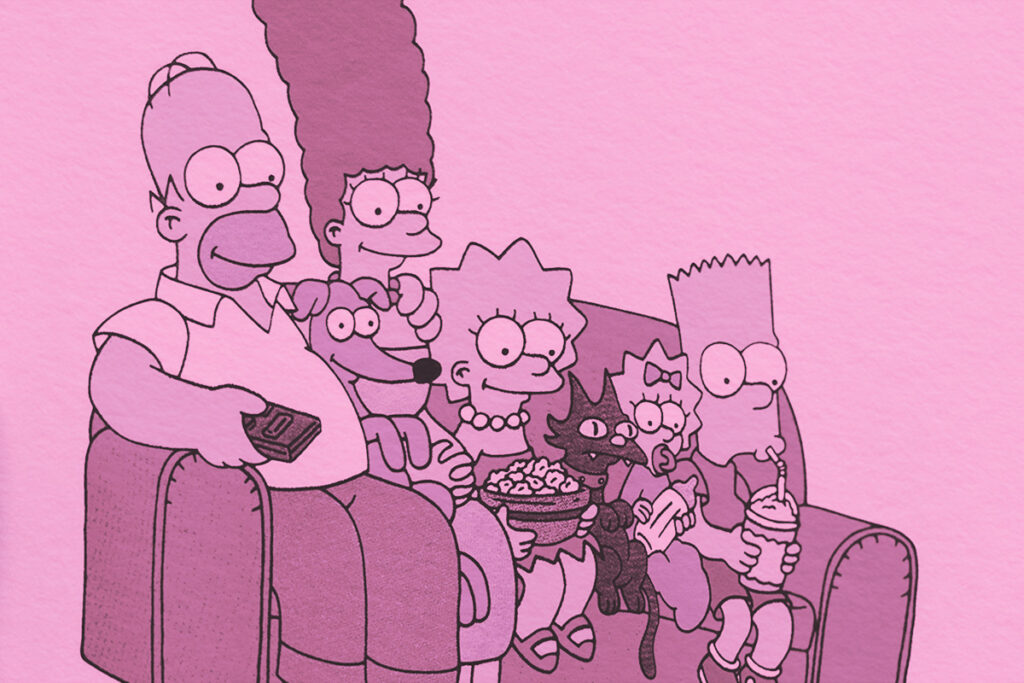
More recently, Matt Groening and others coined humorous nonce words for The Simpsons, the longest-running American animated sitcom. They include lupper (“meal between lunch and supper”) and wordhole (“mouth”). Some of these Simpsons nonce words have become so widely used that they made it into the dictionary. Consider: meh (“used to express indifference or mild disappointment”), cromulent (“acceptable, satisfactory”), and embiggen (“to make bigger or more expansive”).
Perhaps the best-known nonce word is from the 1964 movie Mary Poppins: supercalifragilisticexpialidocious, the sound of which, according to the lyrics, “is something quite atrocious” — but “if you say it loud enough you’ll always sound precocious.”
Writers for The Simpsons piggybacked on that sesquipedalian (“given to or characterized by the use of long words”) coinage: Professor Frink’s field of science is microcalifragilistics.
More from our network
Word Smarts is part of Inbox Studio, which publishes content that uplifts, informs, and inspires.