


For those who find travel stressful, feeling like an outsider is just one of the worries. If you’re in search of the right train platform and can’t parse the signs, you want to know how to pronounce the name of your destination correctly, especially to anyone kind enough to help out a tourist. Languages around the world use vastly different pronunciations from standard English. Accent marks and unfamiliar letter pairings can confuse travelers, as can city names that don’t match what Americans know them by. Though learning a new language is difficult, practicing local pronunciation is an important step for visiting a new place.
The largest city in Hungary is an excellent tourist destination for history nerds because of its prewar classical architecture. The city used to be split into Buda and Pest by the Danube River, but they came together as the official capital in 1873. The final syllable of the city’s name has a slight trick to it: The “s” should actually be pronounced as an “sh,” so it sounds like “booda-pesht.”
Even though it’s been an active metropolis since the Middle Ages, confusion persists about how to refer to Scotland’s capital city. Instead of saying “edin-berg,” locals drop the final “g” and end with an aspirated “h.” If you can’t pull off an authentic Scottish brogue, practice “ed-in-bur-uh” a few times before talking to a local.
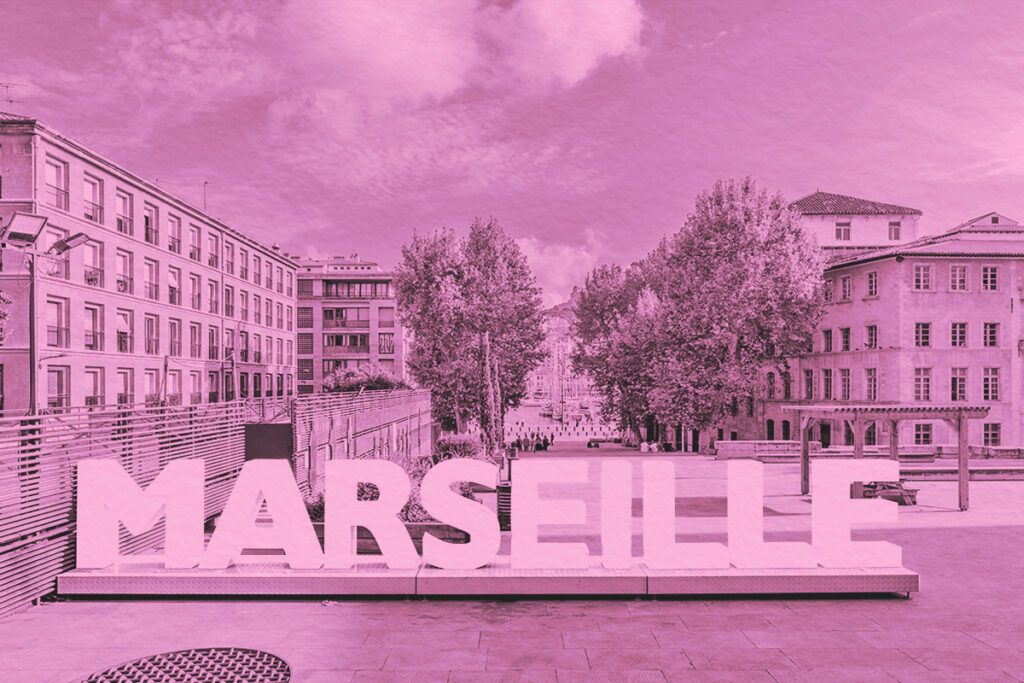
If you’re unfamiliar with the French language, the abundance of double vowels and double consonants might give you pause. An English speaker might pronounce Marseille, the capital of the Provence-Alpes-Côte d’Azur region, as “mar-sell” or “mar-sell-ee,” but approaching this phonetically is a mistake. The “ei” in the town name is a diphthong, which is two vowel sounds meant to be pronounced together. The double “l,” followed by the “e,” is not pronounced at all. When you visit the South of France, take a stop in the beautiful city of “marsay.”
This British town is in the county of Leicestershire in England. The name comes from the Old English name of the town, written in 924 CE as Ligera ceastre, which translates to “city of the Ligore people.” In modern English, the middle section of the word is essentially just for show. To sound like a born-and-bred Briton, you have to say “lester.”
The largest city in China is home to eye-popping skyscrapers contrasted with beautiful historic places, such as the Yuyuan Garden, dating back to the 16th-century Ming dynasty. English speakers tend to pronounce the first “a” as “ay”: “shayng-hi.” Instead, you should pronounce the city name as “shahng-hi.”
Even in English-speaking countries, city names are subject to the various English accents around the world. Brisbane is the capital city of Queensland, popular with visitors because of the Brisbane Riverwalk and many national parks. Instead of saying “briz-bay-n,” Australians elide the “a” out of the word. Aussies will thank you for pronouncing it “bris-bn” — no final vowel necessary.
This beautiful city in Thailand is known for its various beach resorts and historic Buddhist temples. In English, we pronounce “ph” as an “f” sound, but that doesn’t apply here. Instead, let the “h” stay silent, and tell the locals how glad you are to be visiting “poo-ket.”
This city in Spain is a UNESCO World Heritage Site because of its importance to Christian, Islamic, and Jewish history. The city was called Toletum in the days of the Roman Empire, which led to the modern name, Toledo — a name also found in five U.S. states and other countries around the world. If you’re visiting the Gothic cathedral in Toledo, Spain, make sure to soften the “e” and say “toh-leh-doh.”
Finnish and other Scandinavian languages are notoriously tricky for English speakers. Their spelling structure and pronunciation are very different from those in English, since they evolved from Old Norse and North Germanic languages. Though Porvoo looks like it should be simple, the double vowels do not follow English-speaking trends. Say “por-vo” instead of “por-voo.”
More from our network
Word Smarts is part of Inbox Studio, which publishes content that uplifts, informs, and inspires.