







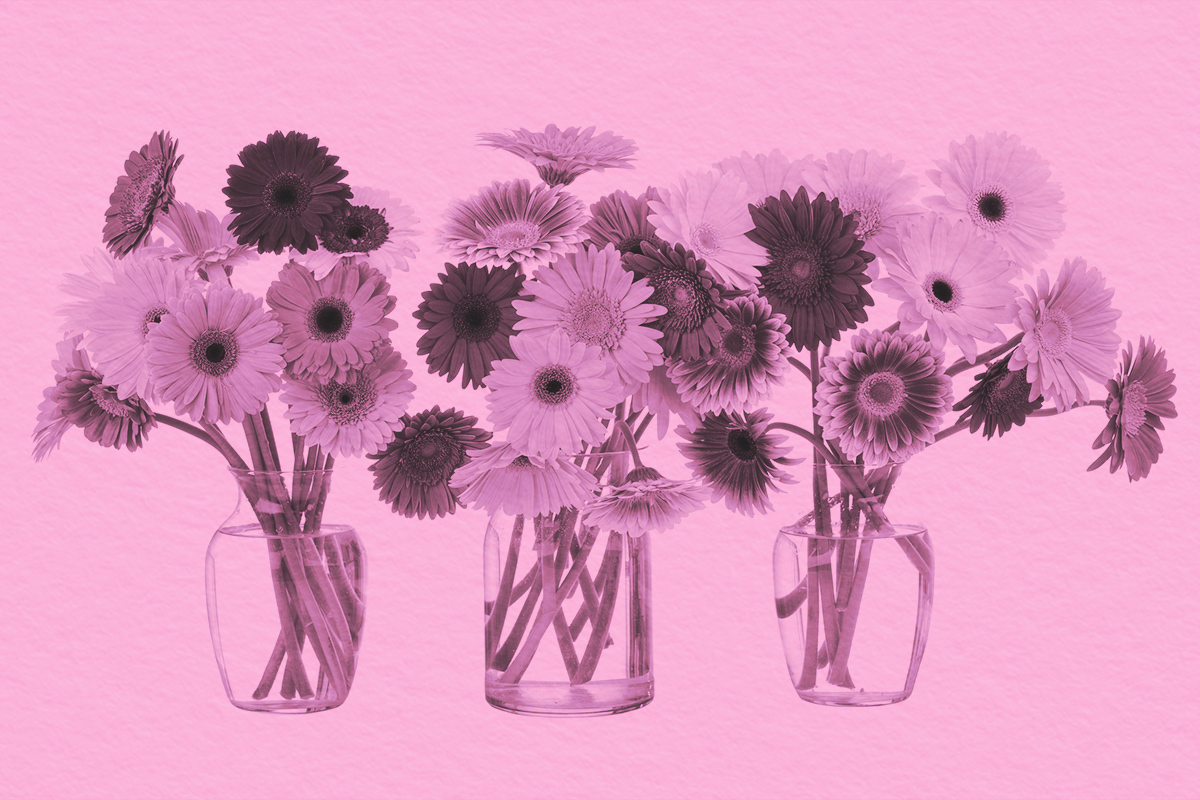
Spring is the perfect time to brush up on your floriography, which is the language of flowers, from the Latin flor, meaning “flower,” and the Greek graphia, meaning “writing.” Daffodils and tulips aren’t having conversations in the garden, but different blooms convey different feelings or intentions. Constructing a bouquet with a specific meaning was especially popular in Victorian times, but giving flowers has never gone out of style. Learning more about the language of flowers can help ensure you’re sending the right message with your arrangement, whether it’s for a first date, an anniversary, or even a rival.
The names you might know for flowers don’t necessarily match their scientific names. The formal names follow the structure of binomial nomenclature set up by the Swedish botanist Carolus Linneaus. The 1753 book Species Plantarum established this naming system. Each two-word name classifies the genus and the species of the plant. Some common names are more obvious — roses are Rosa indica and gardenias are Gardenia jasminoides — while others have no connection between the common and scientific names. Daffodils, for example, are Narcissus pseudonarcissus, relating to the myth of Narcissus.
Shortly after flora began to be classified under scientific names, additional meanings became attached to flowers. The practice of floral etiquette in Victorian times is well documented. During this era when manners were everything, flowers were a way of saying something that couldn’t be said out loud. A book published at the time, Language of Flowers by Kate Greenaway, tracks these important meanings. Greenaway, an artist and a writer, didn’t come up with these meanings, but she compiled the knowledge based on traditional usage of the flowers and the circumstances in which they were given. The meanings continued to develop based on elaborate Victorian etiquette practices, much like the other rules surrounding every social gathering.
The etiquette was especially important to know for those who were courting. If a suitor gave a young lady a red rose, signifying his romantic intentions, she could return to him a yellow carnation, which basically meant “leave me alone.”
- Daisy: Innocence, loyal love, purity
- Daffodil: Regard, unequalled love
- Poppy: Consolation
- Gardenia: “You’re lovely,” secret love
- Geranium: Stupidity, folly (either an apology for the giver’s behavior, or calling out the recipient’s actions, depending on how it was given)
Combinations of flowers made the meanings even more nuanced. In the case of the geranium, it might be paired with another flower signifying regret, further emphasizing an apology for bad behavior.
In cases where the flower comes in multiple colors, there’s an even larger lexicon. Red roses meant love, but dark crimson roses were for those in mourning. Giving a pink rose indicated perfect happiness, but if someone chose to hand over a yellow rose, that meant a decrease in love.
Decoding a full bouquet — including the hand that delivered it, and its presentation — required a dictionary such as Greenaway’s guide. If someone handed over flowers or a bouquet upside down, it conveyed the opposite of what the flower usually meant. If the ribbon on the bouquet was tied to the right, that meant the message was the giver’s feeling. If the ribbon was tied to the left, the feelings were meant to be applied to the recipient.
Today, giving flowers is a nice gesture, appropriate for all sorts of occasions and sentiments, from dates and anniversaries to “get well soon” wishes. Plants and succulents are also meaningful gifts that last longer than a vase of cut flowers. We don’t track the meanings as closely as they did then, but there’s one throughline between Victorian times and now: It’s the thought that counts.
More from our network
Word Smarts is part of Inbox Studio, which publishes content that uplifts, informs, and inspires.





