




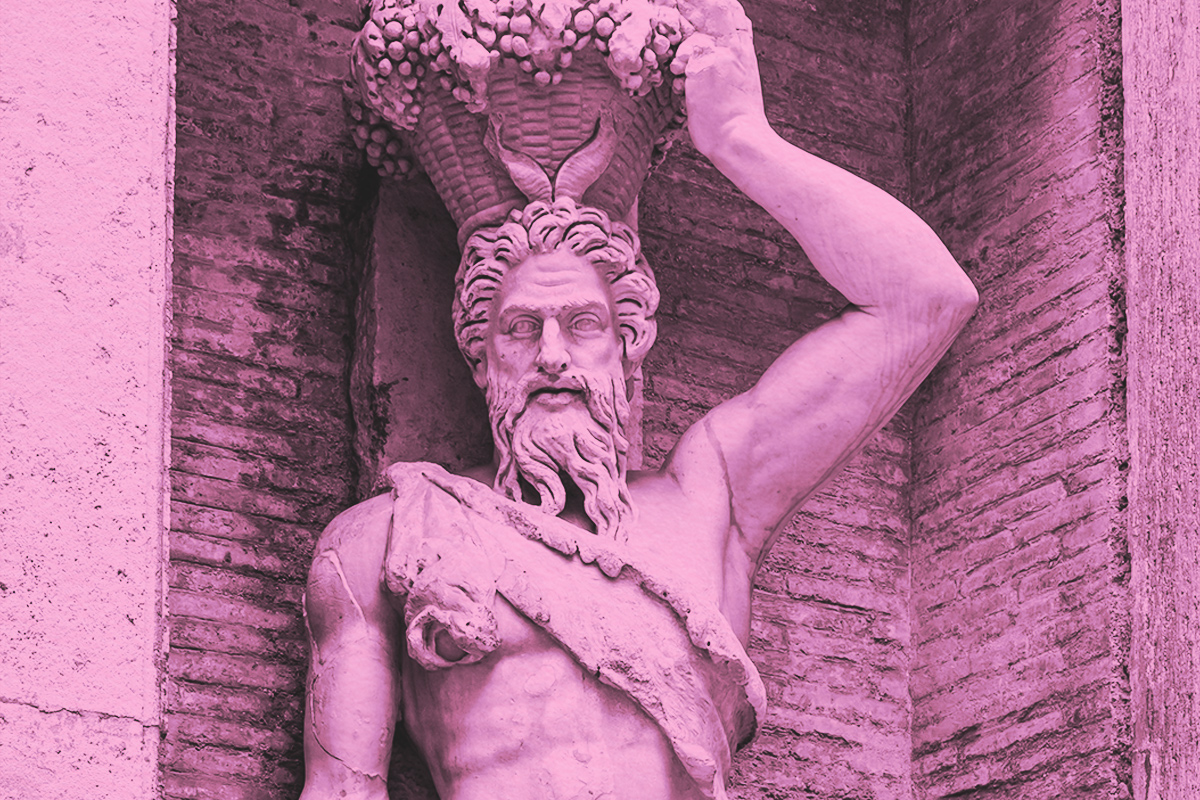
In Greek mythology, Pan was a fertility deity said to roam freely in the mountains, caves, and forests of Greece. Faunlike in appearance, he was typically represented as mostly human in form but with the horns, legs, and ears of a goat. As the patron of shepherds, Pan concerned himself with flocks and herds of pastoral animals. He was also a free-spirited — and notoriously lusty — god of the wilds, who enjoyed dancing in the moonlight with the nymphs and playing his eponymous panpipe.
As a god of nature and protector of animals, Pan can be seen as a positive force. But he had a dualistic nature, being neither purely good nor evil. Pan could be wild and unpredictable and possessed a peculiar and disconcerting power: the ability to instill a sudden, overwhelming fear in anyone who raised his hircine (goatlike) hackles. According to the ancient myths, he became particularly irritated when anyone interrupted his afternoon naps. If a passing stranger did disturb his slumber, Pan would let out a chilling yell that sent terror coursing through anyone nearby — a type of fear named “panic” in his honor.
Ancient Greeks believed Pan was responsible for a range of strange events, from sudden stampedes of livestock to the inexplicable fear that would grip travelers as they passed through dark woods. One famous story credits Pan with helping the Athenians defeat the Persians at the Battle of Marathon in 490 BCE. According to the accounts of the ancient Greek historian Herodotus, Pan appeared to the runner Pheidippides and promised to aid Athens. During the battle, the Persian army supposedly experienced sudden, unreasonable terror — soldiers became panic-stricken — which ultimately led to its defeat. The grateful Athenians later built a shrine to Pan beneath the Acropolis.


The word “panic” passed through the centuries, and today in English it means what it did millennia ago: “a sudden overpowering fright.” But now we tend to attribute panic to the instinct of “fight or flight” and the release of stress hormones such as adrenaline and cortisol, rather than to a libidinous, flute-playing goat-god who lives in the hills.
More from our network
Word Smarts is part of Inbox Studio, which publishes content that uplifts, informs, and inspires.