




Fairy tales are often treated as simple childhood stories, but their influence extends far beyond one’s early years. The language and characters embedded in these tales continue to shape our everyday speech into adulthood, offering vivid shorthand for complex ideas. From expressions of transformation and luck to ideals of love and justice, fairy-tale language remains deeply woven into how people communicate.
Because these stories are introduced so early, their imagery and phrasing tend to linger in the collective lexicon. Idioms drawn from fairy tales frequently center on themes of hospitality, creation, and morality. Many of these fairy-tale expressions have become so familiar that they appear in daily conversation without much thought to their origins.
In “The Story of the Three Bears,” a young girl named Goldilocks goes into the bears’ home and eats their food, sits in their chairs, and sleeps in their beds, testing each individual bear’s belongings to find the perfect fit. The story was originally published in 1918 in English Fairy Tales by Flora Annie Steel, who adapted the fable from both oral and written storytelling, and incorporated fanciful illustrations by Arthur Rackham.
Today when someone talks about a Goldilocks situation, they’re referring to finding the perfect fit. Scientists have adopted the term as “Goldilocks zone,” referring to the distance from a star that will likely contain a planet with water. Earth exists in the Goldilocks, or habitable, zone from the sun.
This idiom comes from the tale of Rumpelstiltskin, first published in 1812 in a volume of Brothers Grimm fairy tales. In the German story, a miller’s daughter is challenged by the king to turn straw into gold. She’s desperate to complete the task but at a loss as to how, until a strange, impish man shows up and offers to help her if she’ll give him something in return. This happens three times, with escalating promises to Rumpelstiltskin, before the king is satisfied. The story goes on from there, with various endings depending on the version, but the king’s impossible task is consistent across all of them. Today the concept of turning straw into gold has been adopted to mean turning something ordinary or useless into something extraordinary.
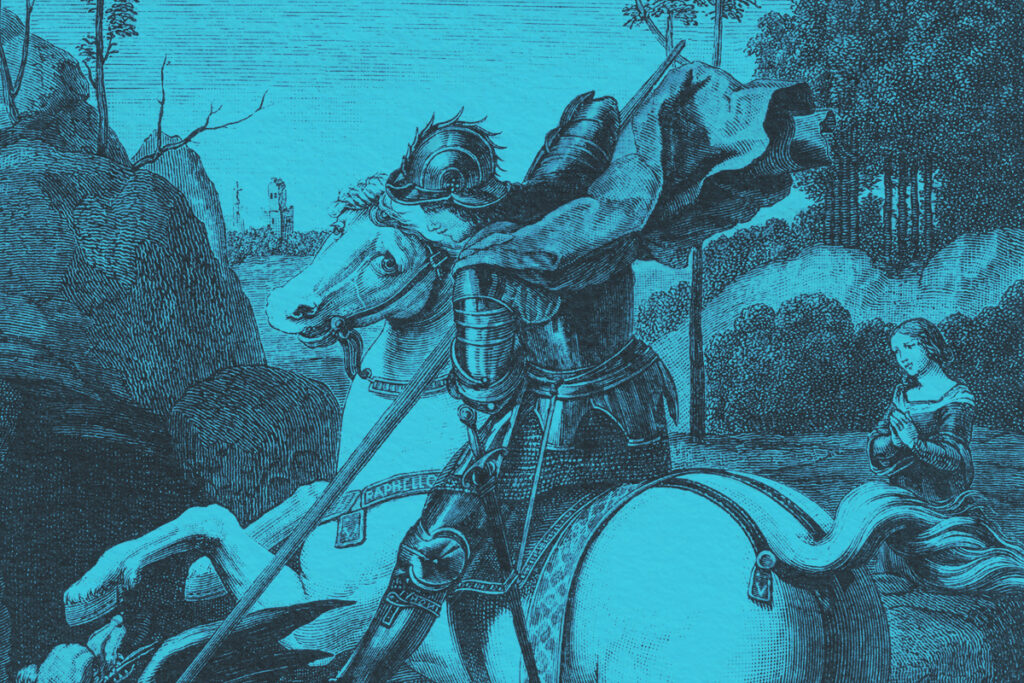
Knights who rescue swooning maidens have been a fixture of chivalric stories since medieval times. But the exact “knight in shining armor” wording appeared later, in a 1790 poem by Henry Pye: “No more the knight, in shining armour dress’d, / Opposes to the pointed lance his breast.” In modern parlance, the knight is someone who swoops in to rescue someone else without worrying about consequences. The concept of a knight in shining armor is usually presented in a romantic context, with a dashing suitor arriving just in time to save the day.
The tale of King Midas (a real historical figure) has been transformed into a thing of legend. In the myth, the Greek god Dionysus gives Midas the power to turn everything he touches to gold, but the king soon comes to regret it. Today, someone who is said to have the “Midas touch” is able to make money in any and every situation. However, it may be a double-edged sword: Midas couldn’t even eat without changing his food into gold.
Many fairy tales present moral lessons and include questionable endings for the characters. But in the modern perspective, a fairy-tale ending is something inherently positive. This phrase references the end of romantic stories such as “Sleeping Beauty” or “Cinderella,” where the chivalrous prince marries the right woman. While in real life a fairy-tale ending is not really an ending — a relationship continues on after the wedding, for example — the concept of a fairy-tale ending means there’s a positive outcome for everyone.
In the story of Cinderella, a poor girl forced into servitude for her family gets plucked out of obscurity by a prince. It’s a common trope for romance novels and movies, and the phrase “Cinderella story” has come to apply to any love story where there’s a big social class difference between the lovers. In sports parlance, a Cinderella story is one where the underdog rises up to win the day — for example, when a low-ranked team wins against a favorite to progress in the March Madness basketball tournament.
This idiom also comes directly from the plot of the Cinderella fairy tale, originally published under the name “The Little Glass Slipper” by Charles Perrault in 1697. In the story, Cinderella’s fairy godmother helps her get ready for the royal ball and warns her that she has to leave by midnight or her dress will revert to rags and her carriage will turn into a pumpkin. In a modern context, the idiom references wanting to leave a party at the right time so as not to overstay your welcome. Someone who is tired and wants to go home might claim they are “turning into a pumpkin.”
More from our network
Word Smarts is part of Inbox Studio, which publishes content that uplifts, informs, and inspires.