




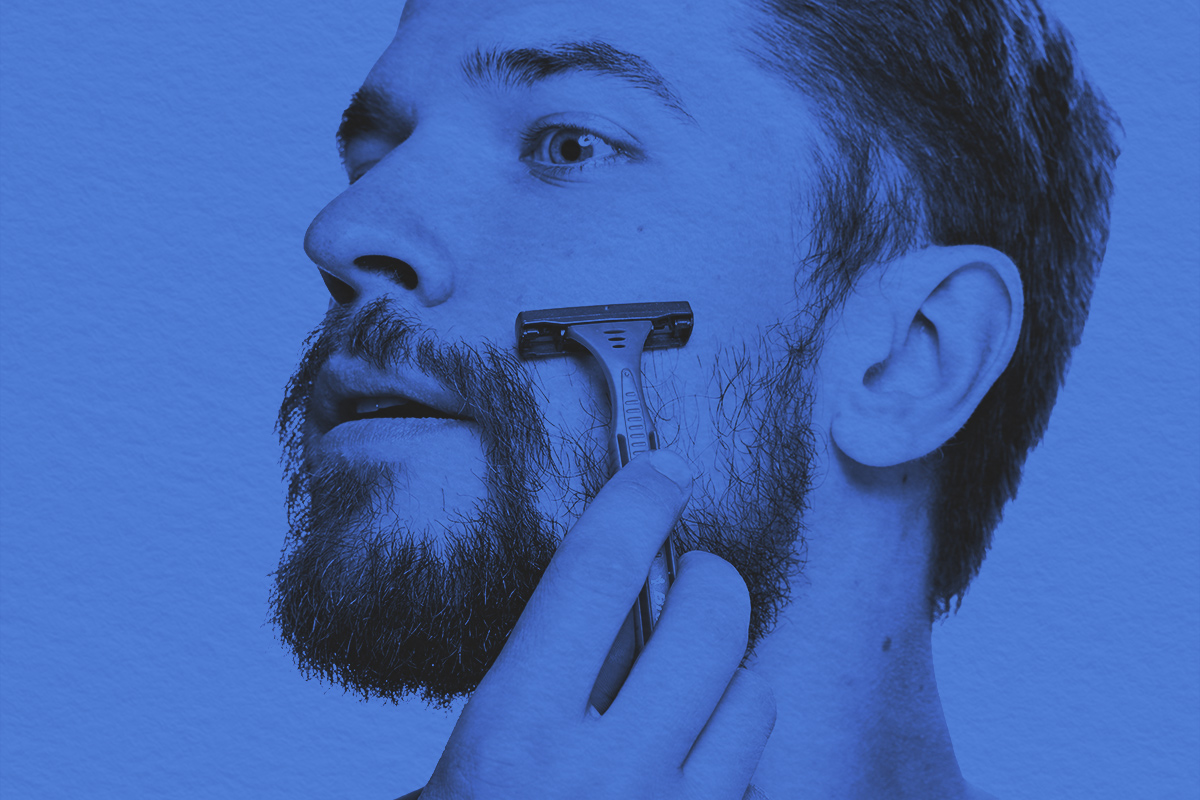
Beards are serious business. Just ask Shakespeare, who wrote in Much Ado About Nothing, “He that hath a beard is more than a youth, and he that hath no beard is less than a man.” Facial hair can be more than a simple matter of fashion. It can say a lot about a person, whether it’s the serious whiskers of a stern general, the flamboyant flourishes of a jazz musician, or the hefty growth of a lumberjack.
When it comes to the etymology of facial hair styles, sometimes the origins are clear. Handlebar, horseshoe, and pencil mustaches, for example, are all self-explanatory — they’re named after what they resemble. Other styles, however, have names that might leave you scratching your dappled chin in curious contemplation. Here we take a look at the fascinating world of pogonotrophy (the fancy word for beard growing) and the etymological origins of some of the most popular facial hair styles.
The Van Dyke beard is a sophisticated combination of a mustache and a chin beard. This moustache can be of varying sizes and styles, and the chin typically incorporates a goatee (see below), but with one important characteristic — the mustache and the hair on the chin are not connected (and the cheeks remain clean-shaven). The style is rumored to take its name from the 17th-century Flemish painter Anthony van Dyck, who wore the distinct style in a self-portrait. His subjects included King Charles I of England, who also sported the stylish look.
The Van Dyke beard became enormously popular across Europe in the 1600s, faded away at the end of the century, and later had a resurgence in the 1800s. It has remained in fashion ever since, adorning many famous faces from General Custer to Colonel Sanders to Johnny Depp. The spelling has varied over the years — Van Dyck, Van Dyke, Vandyke — due to shifting English spelling conventions.
The goatee could easily fall into the category of “self-explanatory beard names.” The style is named after the tuft of hair on a billy goat’s chin. But the suffix “-ee” in “goatee” is somewhat unusual — it could end with “-y” or “-ie,” but for some unknown reason, the diminutive variant “-ee” was chosen and has been used since at least 1841, according to written citations.
In more recent years, “goatee” has become an umbrella term for any facial hair incorporating the chin but not the cheeks. But some purists argue that once you add a mustache, it’s technically a Van Dyke, not a goatee. Either way, it’s been an enduring look, sported by everyone from beatniks to ’90s rock stars to depictions of Satan.
Limiting your facial hair to just a small tuft below the lower lip is a bold move, and one that requires a certain je ne sais quoi to pull off successfully. The exact origins of the soul patch are difficult to trace, but the style was popularized by jazz musicians in the 1940s and 1950s. These included the legendary jazz trumpeter Dizzy Gillespie, who called it his “jazz dab.” The term “soul patch” didn’t appear in print until the late 1970s — one early reference comes from a 1979 issue of Rolling Stone, which describes the facial hair of the Blues Brothers. The “soul” connection likely stems from the style’s association with various types of soul music, but the exact origin remains a mystery.
The term “sideburns” is a classic example of linguistic reversal. The style, which today refers to the hair that grows on the side of the face in front of the ears, was originally called “burnsides.” It was named after General Ambrose Burnside, a Union general during the American Civil War who sported magnificently bushy facial hair consisting of abundant sideburns connected to his mustache, while keeping his chin clean-shaven.
By most accounts, Burnside was quite a mediocre general — but his facial hair was legendary. In the 1870s, people began calling this distinctive style “burnsides” in his honor. But within just a few years, the syllables had flipped to create “sideburns,” likely because the hair was literally on the sides of the face. Burnside’s actual style, complete with bushy mustache, soon fell out of favor, but people carried on wearing the side whiskers — and with “sideburns” being a more descriptive name than “burnsides,” the linguistic reversal stuck and remains common today.


If you haven’t heard of the yeard, you should probably hang out with the cool kids more often — or at least the ones old enough to have massive amounts of facial hair. The yeard represents not just a style but a commitment. It’s a portmanteau of “year” and “beard,” referring to a full year of beard growth. Unlike most facial hair terms that describe a specific shape or technique, a yeard is purely temporal: It’s whatever your natural beard growth produces over 365 days, with no shaving or excessive trimming.
“Yeard” has yet to make it into most dictionaries, at least in reference to beards, but the unrelated Old English word “yeard” means a small, uncultivated area attached to a house (rather than a large uncultivated area attached to a face). But “yeard” does have an entry in the Urban Dictionary: “A beard grown out over a year, or that looks scraggly and icky enough to have been grown for an entire year.”
More from our network
Word Smarts is part of Inbox Studio, which publishes content that uplifts, informs, and inspires.