






Starting a regular gym routine means learning both new skills and new lingo. While it’s easy to understand “run,” “squat,” and “lift,” certain other activities have bewilderingly specific nicknames.
Some exercises use creative names to describe the movement. A donkey kick involves kicking out the leg as a donkey kicks their hind legs, for example. A farmer’s carry mimics the action of a farmer carrying heavy buckets at their side. But there’s another category of exercise: those named after countries or other locations. It’s hard to tell exactly what these exercises are from their names alone, so let’s take a trip to the gym.
When you’re working with weights, you might encounter a Romanian deadlift. A regular deadlift is a classic weight-lifting move that involves bending over and lifting a heavy weight from the ground before setting it back down. Romanian Olympian Nicu Vlad (the 1984 to 1996 games) invented his own training exercise that looks similar to the deadlift, but it starts from the standing position. The weight lifter bends over with the weight and then straightens up again. The main difference from the deadlift is that the weight is not put on the ground between reps with the Romanian deadlift. The exercise isn’t limited to Romanians, but other weight lifters copied the Romanian strongman’s style and started calling the movement the Romanian deadlift.
In the same sort of attribution, the Bulgarian split squat is named for Bulgarian fitness coach Angel Spassov. The exact origin of the exercise is unknown, but the coach introduced it to the United States in the 1980s. It’s a difficult movement: Keep the front foot flat on the ground and elevate the back foot on a block. Then lunge as usual and feel the burn. The difficulty of this exercise can be amped up by holding a weight in each hand.
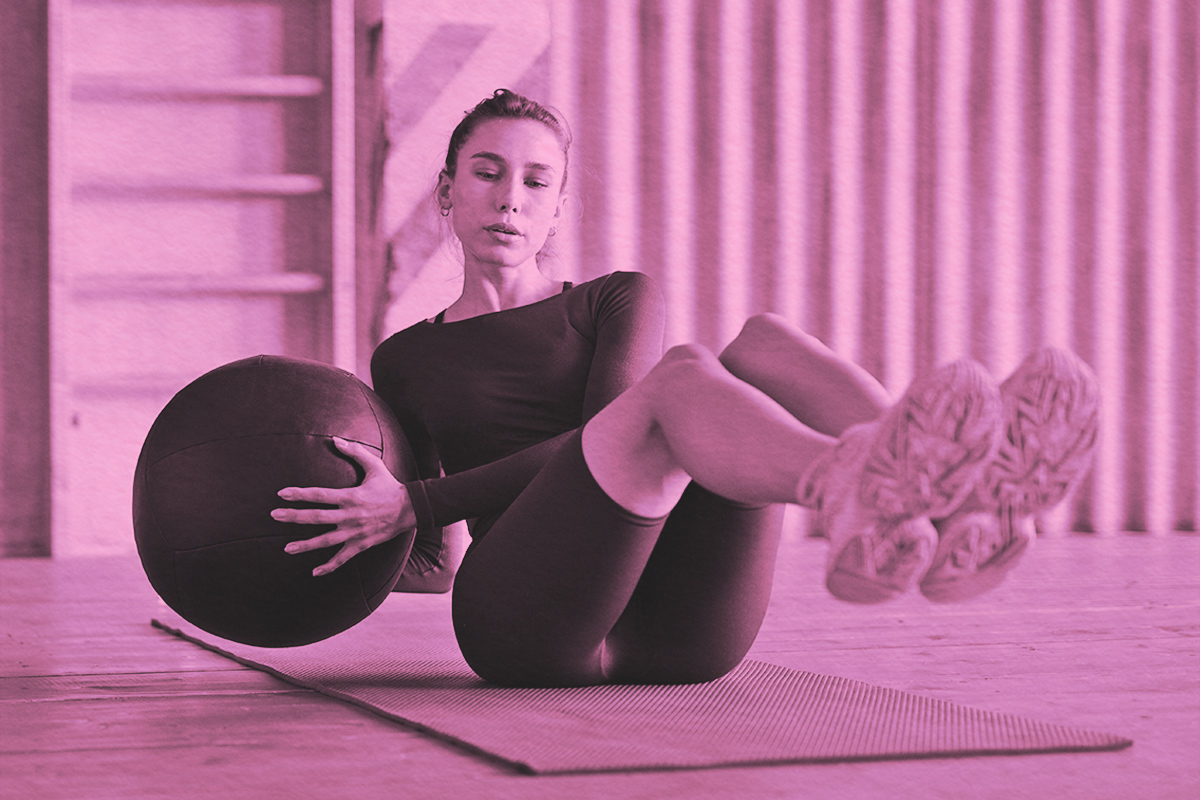
Russian twists, meanwhile, are a seated core exercise that involves twisting from side to side and touching the ground next to the hips. Holding a weighted medicine ball will make this one more difficult. The exercise came to be associated with the country because of public displays of exercise by Russian athletes during the Cold War — the exercise is also called “Russian twist” in the Russian language.

The next time you’re at the gym, take a moment to appreciate the melting pot of influences. The fitness journey takes us around the world because so many athletes have innovated how to build strength.
More from our network
Word Smarts is part of Inbox Studio, which publishes content that uplifts, informs, and inspires.





