


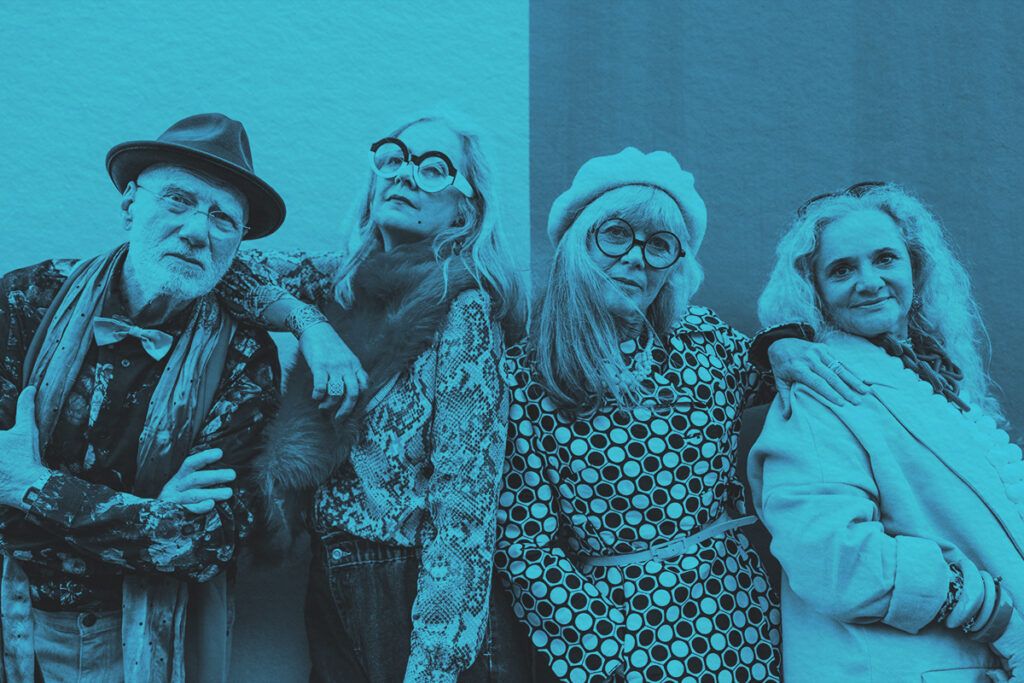
Think back to when you were growing up, sitting around the dinner table with the family, and having a conversation with your parents. For many of us, those days gone by evoke pleasant memories — and also provide a fascinating look at popular words and phrases of yesteryear. Though a few have stood the test of time, most of those once-common words have since been largely forgotten. Today’s English may feel like a wildly different language from the dialect our parents or grandparents spoke. Here are seven words and phrases that were popular with past generations, though you’re not likely to hear them anymore.
Hot Diggity Dog
If your folks grew up in the mid-20th century, they may have busted out the phrase “hot diggity dog!” to express excitement. This saying was first printed in a 1921 edition of the St. Joseph Gazette in Missouri. It’s derived from earlier and similar phrases used to express approval, such as “hot dog!” and “hot-ziggety!” The expression “hot diggity dog!” remained popular into the late 1970s, even appearing in Oscar Mayer Wiener commercials from that time. Today, the phrase is rarely heard.
Hootenanny
The term “hootenanny” caught on in the 1940s to refer to “a gathering at which folk singers entertain often with the audience joining in.” The origins are unknown, and it’s entirely possible that it’s simply a nonsensical creation. But your parents likely used it well into the 1960s, when it served as the title of a musical variety TV show. Much like folk music itself, however, this word has given way to more modern slang for musical gatherings. Take “rager,” for instance, which involves more intense dance music than what your folks probably listened to back in the day.
Dungarees
Jeans have never gone out of style, but if your parents wore a pair of heavy denim pants prior to the 1950s, they probably called them dungarees. This term came from the Hindi word dungri, meaning “coarse calico.” It was widely used among English speakers in the first half of the 20th century, but in the mid-1950s and early ’60s, the newly coined term “jeans” emerged to refer to blue denim pants. Baby boomers adopted this word to replace “dungarees” (and other forgotten terms such as “waist overalls”) as the more widely accepted standard.
Drop a Dime
The phrase “drop a dime” is antiquated for multiple reasons — not the least of which is the fact that it’s hard to imagine anything costing a dime anymore. The expression comes from the former cost of a payphone, which is widely considered to be a relic of the past. But both 10-cent price tags and payphones were common in our parents’ generation, and so was this phrase, which means “to alert the police about another person’s wrongdoing.” It was coined in the 1960s when people could use a public phone to anonymously report wrongdoing to the cops.
Ameche
While Don Ameche isn’t a household name among modern film buffs, the talented actor was well known during the mid-20th century. He famously starred in the title role of the 1939 film The Story of Alexander Graham Bell. It was Bell, of course, who invented the telephone, and after the film’s release, “ameche” became familiar slang for the telephone.
Passion Pit
You might not want this image in your head, but when your parents were courting each other, they may have gone on a date to the passion pit. This dated 1930s slang refers to drive-in movie theaters, which were common spots for teenagers to get away from their parents and canoodle in their cars. “Canoodle” is yet another term you don’t hear that often today. It refers to the “amorous embracing” your folks may have done at the passion pit.
Copacetic
The origins of the term “copacetic” are a mystery, with one theory suggesting that it originated as African American slang in the 1880s. There’s evidence of this term in print as early as 1919, meaning “very satisfactory.” If your parents were music or movie fans, they likely knew and used this term, as it was popularized by the tap dancing legend Bill “Bojangles” Robinson, who starred alongside Shirley Temple in several 1930s films. The Grateful Dead later used it in the lyrics of the 1987 track “West L.A. Fadeaway,” though by that point the word had already begun to fade in popularity.
More from our network
Word Smarts is part of Inbox Studio, which publishes content that uplifts, informs, and inspires.