


The season of ghouls, monsters, vampires, witches, and more is upon us. While some folks embrace the spooky and scary vibes, others get enough of facing their fears every day. Shrieks and gasps of fright might accompany a scare, but there’s also a specific vocabulary that pairs with people’s greatest fears. The suffix “-phobia” is tacked onto mostly Greek root words to come up with language describing everything from a slight aversion to outright terror. It derives from the Greek word phobos (meaning “fear”) which itself comes from the name of the Greek god of panic and fear, in some cases specifically brought on by war. The Greek words for phobias are usually used for more severe levels of fear, sometimes even used as the name of medical maladies. However, English, always adapting and changing, sometimes pairs “-phobia” with an English word, such as “germaphobia,” for a lower level of aversion.
If you know your Greek and Latin, you can even decipher the words for some of the most obscure fears. For example, arachibutyrophobia — from the Greek arachi (peanut) and the Latin butyrum (butter) — translates into a fear of getting peanut butter stuck to the roof of your mouth. That may be more of an annoyance than a true phobia, but here we have the words for some of the most common phobias out there.
“Acrophobia” refers to a fear of heights. Instead of Greek, etymologists trace this compound word to the Italian form acrofobia, dating back to the 1880s. In Greek and Latin, however, acro- does refer to something tall, like the Acropolis.
You might look at this and think “fear of air travel,” but that’s a relatively recent evolution of the word. The original usage was a symptom of rabies: an unusual sensitivity to or fear of air. That context was more common in the 1800s.
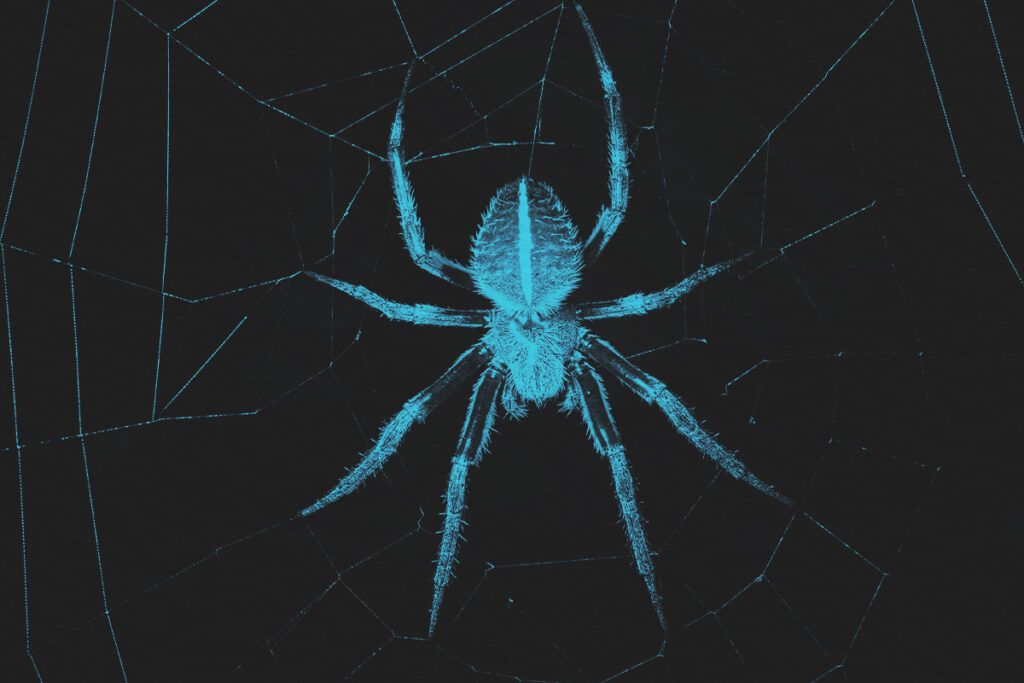
This is probably one of the best-known fears: the fear of spiders. Given that spiders can be venomous, the fear of spiders is a smart evolutionary response. However, the aversion might also be rooted in ancient myth. In Ovid’s Metamorphoses, Arachne, a mortal weaver, challenged Minerva, the goddess of witchcraft and wisdom, to a weaving context. Arachne wove a tapestry of the many ways gods had punished mortals unfairly, and Minerva was so angry that she transformed Arachne into a spider. Thus Arachne’s weaving, while beautiful, would never be appreciated by the humans who feared her as a spider.
Although a more recently named discovery, this is a common one all the same: a heightened fear of dogs. The first half of the word comes from the Greek word for “dog,” kýōn. We can find “cynophobia” in writing in the 19th century, but it became a medical condition documented by psychologists in 1998. With the official naming came more treatments related to desensitization and easing of the fear. The usage of this term as a diagnosis refers to people whose fear of dogs is debilitating to their daily life.
Fear of public speaking, or glossophobia, is a major plotline of movies such as The Princess Diaries and The King’s Speech. The Greek word glossa means “tongue,” so the word is less literal than some of the other phobias on this list.
Since it’s such a common fear, with a range in the levels of response, there are a variety of classes and strategies for dealing with glossophobia. You might take a public speaking class, or join an organization such as Toastmasters for more experience in conquering your glossophobia.
“Germaphobe” might be used to refer to someone who uses hand sanitizer regularly in public, or to someone who ensures their kitchen and bathroom are always fastidiously clean, but the term “mysophobia” is an intense fear of contamination. A physician named William Hammond coined the term in 1879 in reference to a patient washing their hands excessively as a symptom of their obsessive-compulsive disorder.
Mýsos is the Greek word for pollution or defilement. “Mysophobia” is used generally, but there are also terms such as “verminophobia” and “bacteriophobia” for more specific contamination fears.
Nyctophobia, fear of the dark, is more common in children, but even adults can experience some level of trepidation in dark environments. The word comes from the Greek nyx, meaning “night.” You might also see “scotophobia” to refer to a general fear of darkness, not just at night, but “nyctophobia” is still more dominant.
Indiana Jones is probably the most well-known ophidiophobe in pop culture: He’s afraid of snakes. “Ophidian” is an adjective that means “of, relating to, or resembling snakes,” so an ophidiophobe might be afraid of the animal but also any slithering noise or creepy wiggling scales. The wider term “herpetophobia” (from the Greek herpeton, meaning “creeping thing, reptile”) refers to a fear of reptiles, lizards, and other scaly beasts that fall under the same umbrella.
Deriving from the Greek word trýpē (hole), this phobia is a recently recognized phenomenon. In the early 2000s, members of an online forum recognized that they shared a common fear of “clusters or repeating patterns of tightly packed small holes or bumps.” A notable example of a public reaction of trypophobia came when Apple released a model of the iPhone in 2019 with three lenses for the camera: People prone to trypophobia were intensely put off by the design.
More from our network
Word Smarts is part of Inbox Studio, which publishes content that uplifts, informs, and inspires.