







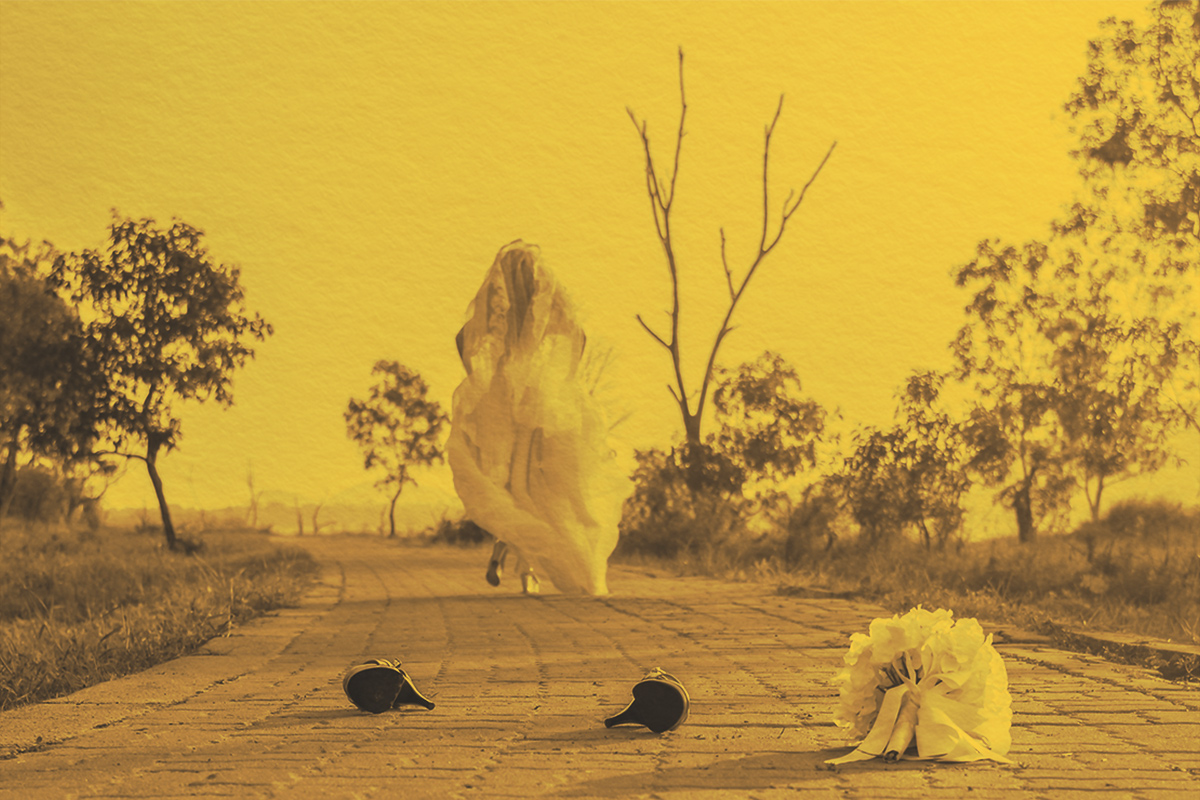
The phrase “cold feet” could refer to someone who wears socks to bed, but it’s more likely referring to someone who has lost their nerve or confidence, perhaps at the last minute. This may mean a bride or groom who flees the altar, someone who backs out of a blind date, or perhaps a potential investor pulling out of a big deal. There are a few potential origin stories for the phrase, although none of them is definitive, which is often the case with such common expressions.
There’s an argument to be made that the phrase dates to a 1605 play titled Volpone by Ben Jonson: “Let me tell you: I am not, as your Lombard proverb saith, cold on my feet; or content to part with my commodities at a cheaper rate than I am accustomed.” According to a 1912 analysis in Modern Language Notes by Italian professor Kenneth McKenzie, this usage is likely derived from the Italian idiom “aver freddo ai piedi,” literally meaning “to be cold in the feet,” with a figurative meaning of “to be without money.” McKenzie explained that the phrase moved into English with the meaning of “unwillingness to continue in some endeavor because one is out of money.”
Others believe the phrase is derived from the German “kalte Füße bekommen” — a phrase that translates as “to get cold feet.” The saying appeared in the Fritz Reuter novel Seed-time and Harvest, which was translated into English in 1878. In this case, the expression also has to do with finances, describing a character who leaves a poker table as his luck worsens.


In 1893, “cold feet” appeared in a novella by Stephen Crane titled Maggie: A Girl of the Streets: “I knew this was the way it would be. They got cold feet.” According to the Oxford English Dictionary, this is the earliest known example of “cold feet” being used to describe nerves. But by 1916, this usage of the phrase became commonplace, as “cold-footer” was used to describe any individuals who refused to fight in World War I. Today, the phrase is commonly used in reference to nuptial nerves.
More from our network
Word Smarts is part of Inbox Studio, which publishes content that uplifts, informs, and inspires.





