


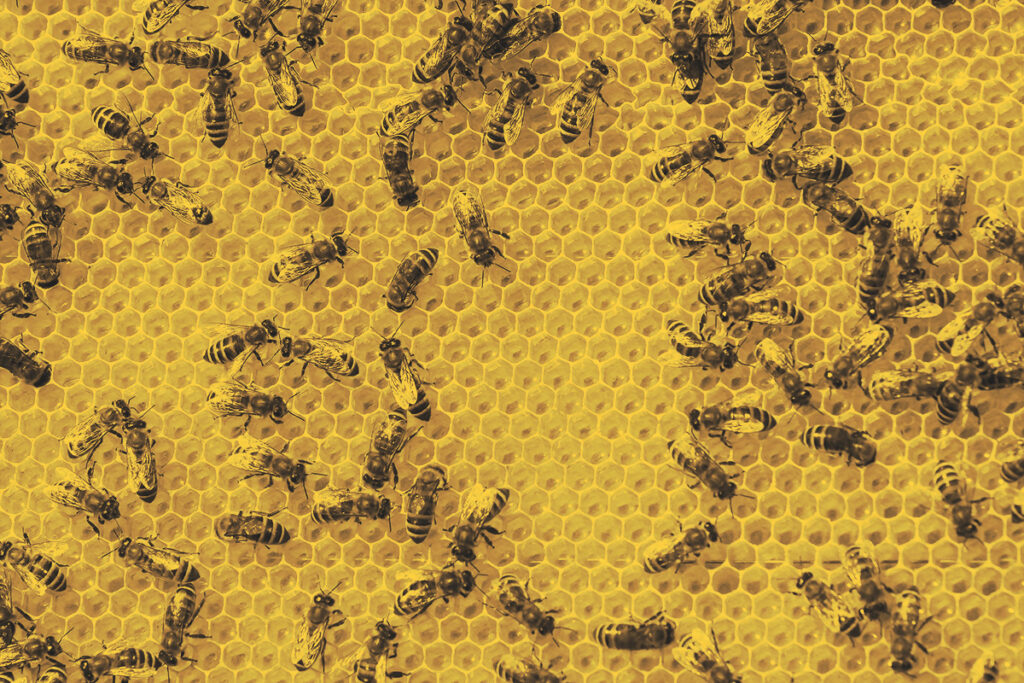
The term “bee’s knees” raises two questions: Do bees even have knees? And where the heck did this phrase originate? To answer the first question, bees do have jointed legs, though to call those joints “knees” isn’t exactly correct. But biology has never stood in the way of a good rhyme, which may help explain the phrase in question. Today, it’s defined by Merriam-Webster as “an excellent or much liked person or thing.” But it originally meant something very different when first used during the 17th century.
According to the Oxford English Dictionary, early uses of “bee’s knees” implied something small, insignificant, or essentially nonexistent — much like the so-called knees of an actual bee. This remained the prevailing definition until 1920, when “bee’s knees” took on the more positive connotation we now associate with the phrase. But if you’re hoping for a simple explanation as to why, we don’t exactly have one.
One theory posited by entomologist Richard Jones is that “bee’s knees” took inspiration from the talented legs of dancer Bee Jackson, who helped popularize the Charleston dance craze in the 1920s. But linguist Gary Martin suggests that its origins are simpler, and that people more likely adapted it because of its jaunty, rhyming nature.
In addition to “bee’s knees,” there are several other animal-themed phrases that were coined in the 1920s to describe something excellent: “flea’s eyebrows,” “cat’s pajamas,” and “canary’s tusks,” just to name a few. These all appear to be nonsensical, leading us to believe there wasn’t true logic behind the shift in “bee’s knees,” but it was a fun thing to say.
More from our network
Word Smarts is part of Inbox Studio, which publishes content that uplifts, informs, and inspires.