2 MIN READ

Who Was ‘Doubting Thomas’?

It’s doubtful that we can trace the exact origin of the phrase “Doubting Thomas,” but we do know who it refers to. Are you familiar with the Thomas in question?

by Bennett Kleinman
Saint Thomas the Apostle

When talking about someone who’s habitually incredulous, why do we say “Doubting Thomas” instead of “Skeptical Samuel” or “Mistrusting Mary”? It’s because the Thomas in question happened to be quite famous. No, not Thomas Edison, and not Thomas the Tank Engine either. This Tom was known for his skepticism: The origins of this phrase refer to Thomas the Apostle from the Bible.

Advertisement

Thomas’ doubting nature appears in chapter 20 of the Gospel of John in the New Testament. According to that tale, Thomas was told that a resurrected Jesus Christ had appeared before the other apostles, though he refused to believe them until he saw it with his eyes. One week later, Jesus appeared before Thomas, causing the apostle to change his mind and believe. This scene has been a popular topic among artists as far back as the sixth century, with one of the earliest examples found in a mosaic at the Basilica di Sant’Apollinare Nuovo in Ravenna, Italy. It was later painted by Caravaggio in his 1601-02 work “The Incredulity of Saint Thomas.”

The phrase “Doubting Thomas” didn’t appear in the Bible, though, and it’s difficult to know for sure when it became a popular idiom. The Oxford English Dictionary cites an early example of the phrase in print in an 1883 article in Harper’s Magazine: “Doubting Thomases, who will only believe what they see, must wait awhile.” Given the long-lasting popularity of that magazine, it stands to reason that it helped inspire the readership to pick up and spread the usage of the same phrase.

Featured image credit: Luis Fraga/ Shutterstock
3 MIN READ

What Does ‘Preppy’ Mean to Gen Z?

How did “preppy” go from an elite Ivy League aesthetic to the TikTok trend of today?

by Bennett Kleinman
Young lady dressed well put together

Those of us who are from the 1900s (as the kids say) likely equate the idea of being “preppy” with boat shoes, sweaters tied around your shoulders, and yachting with grandpapa in Nantucket. But that classical definition of preppy has changed in recent years, especially among Gen Zers. This made me wonder how the term has evolved over the generations since it was first coined.

Advertisement

The Oxford English Dictionary (OED) notes the word “preppy” was first used in 1900 as a synonym of “immature.” “Preppy” was in reference to “prep school,” where the students were children and teens — hence the “immature” connotation. This use was sporadic until the 1950s, a decade that marked the emergence of the baby boomer generation. However, the earlier term related to the school structure is the noun “prep.” Since at least the mid-1800s, to call someone a “prep” meant that they were a prep school student, and the school names themselves were often shortened. We see an example in a famous depiction of mid-20th-century prep school culture in J.D. Salinger’s Catcher in the Rye: “Pencey Prep is this school that’s in Agerstown, Pennsylvania.” 

During the early 1960s, “preppy” came to refer to a specific fashion style worn by those who attended prep school — individuals who tended to belong to a conservative, wealthy social set. This style could be described as neat and classic, characterized by ties, sweaters, and school emblems. During the peak Generation X years (do the math for the young adulthood of those born between 1965 and 1980), the preppy style included plaid, herringbone, and houndstooth patterns, as well as tailored suits, loafers, and silk blouses.

Preppy fashions and attitudes spanned Gen X and millennial pop culture, depicted by conservative teen Alex P. Keaton on the 1980s TV show Family Ties, the Walsh twins in the 1990s TV phenomenon Beverly Hills, 90210, the snotty rich girls in the 1989 dark comedy Heathers, and high-society characters such as Carlton Banks from The Fresh Prince of Bel Air and the prep school students of Gossip Girl.

But while the word “preppy” had a similar connotation for the latter half of the 20th century, it means something very different for a Gen Zer. Instead of being restricted to the prep school social set, it has evolved into an aesthetic that anyone can achieve. TikTok user @preppyygals defines “preppy” as a fashion style that includes flowy, colorful dresses and shoes stamped with bright stars and other bedazzled elements. In a Today show story, a Generation Alpha member defined the aesthetic by retailers Lululemon and Lily Pulitzer. Another said it’s “when you wear pink and wear smiley faces.” This shift of “preppy” from a strict reference to prep schools to an open aesthetic (very different from tailored prep school uniforms) demonstrates how slang terms continue to expand and evolve the more people use them. What will “preppy” become for Generation Beta?

Featured image credit: Look Studio/ Shutterstock
3 MIN READ

Do You Say ‘Pancakes’ or ‘Flapjacks’?

Regionalisms can be found all over the menu, but breakfast is home to plenty of them. While you’re debating scrambled or over-easy, make sure you know whether to order “pancakes” or “flapjacks” in your town.

by Bennett Kleinman
Pancakes stack with melting butter piece and pouring syrup

A full English breakfast traditionally includes eggs, bacon, sausages, baked beans, tomatoes, mushrooms, and toast. While there’s no such specific definition for a full American breakfast, if you were to ask for such a thing at an American diner, you’d likely get some form of eggs, bacon, and a stack of thin, hot, and starchy cakes, smothered in syrup. Depending on where you’re from, those cakes may be called “pancakes” or “flapjacks” — though we wouldn’t blame you if you scarfed them down so quickly, you don’t care about the name. This choice is one of several linguistic food debates common throughout America, with the words varying based on region.

Advertisement

The word “pancake” was the first of these similar terms to be coined, with an etymology dating to circa 1400. The food is defined as “a thin, flat cake of batter, usually fried and turned in a pan. Pancakes are usually eaten with syrup or rolled up with a filling.” The word was created as a literal reference to the cooking process. It’s perhaps the most common variant in the country, especially in large urban areas and the northern United States.

Flapjack” is a Southern term that can describe pan-fried cakes, but also a specific type of apple turnover. However, in Canada and the United Kingdom, a flapjack is an entirely different food item akin to a biscuit containing rolled oats, as noted by Dictionary.com.

A third contender is “hotcake” — a term you’ll find on the McDonald’s menu. This word was coined in the United States in the late 17th century, referring to “any of various types of cake which are baked on a griddle or fried.” You’re probably familiar with the idiom “sell like hotcakes,” so it makes sense for the fast-food giant to use the alternative term as a tactic to help the food item stand out on the menu (compared with the more generic “pancake”).

Other hyper-regional terms for pancakes include “johnnycake,” which was used by New Englanders in colonial times, but might still be heard in the area. In parts of the South, you also may come across “hoe cakes” on a menu. Put any modern associations with the first word aside — this is related to the practice of cooking cakes on the metal part of a field hoe, which was common among enslaved individuals in that part of the country. Whichever term you decide to use, rest assured that you’ll be getting some decadent goodness on your breakfast plate. Now the only question is: chocolate chips or blueberries?

Featured image credit: Alena_Kos/ Shutterstock
2 MIN READ

Why Do We Say ‘Make a Beeline’?

Animals and insects feature prominently in many idioms — if it’s raining cats and dogs, maybe you’re making a beeline to find shelter. Where did this idiom come from?

by Bennett Kleinman
Bees flying around honeycomb

When you think of bees, you probably imagine honey, buzzing, or possibly an animated Jerry Seinfeld in 2007’s Bee Movie. Maybe you’ve also used the expression “make a beeline” when you were describing a speedy or direct route. This, however, is a curious idiom. The phrase is related to a description of the insect’s flight path, but if you were to watch one buzz around flowers, it might seem like a circuitous journey. So where did this idiom, which means “to head directly toward something as quickly as possible,” come from?

Advertisement

In June 1828, the American Quarterly Review published an article that contained an early use of the term “bee-line,” referring to how a bee released from captivity appeared to set a direct course to return to its hive. This was true even if the bee appeared to move in a crooked pattern rather than a straight line, as it was still heading quickly back to its hive. Further scientific studies of the insects showed that bees also followed direct patterns in other situations, such as when they left and returned to the hive as part of their daily quest to harvest nectar.

Almost overnight, people began to use “bee-line” in an idiomatic sense. The term appeared in an October 1829 edition of the New-York Spectator: “I drew a bee line to the next tavern.” The exact phrase “make a bee-line” appeared in print by 1835, as seen in an example in a book called Clinton Bradshaw: “Now there’s the door — make a bee-line out, if you please, gentlemen.” These examples show a rapid shift from “beeline” as a scientific descriptor to the idiomatic usage. 

Today, you may say that you’re making a beeline (the modern spelling is one word, no hyphen) if you’re running to catch a bus, trying to get to the post office before it closes, or hurrying to grab a discounted TV at your local Walmart on Black Friday.

Featured image credit: Martin Pelanek/ Shutterstock
3 MIN READ

What’s The Difference Between ‘Ensure,’ ‘Insure,’ And ‘Assure’?

Want to understand the difference between “ensure,” “insure,” and “assure”? While these sound-alike words all deal with protection, knowing their distinct meanings will transform your writing.

by Bennett Kleinman
Security shield check mark with lock sign

Try saying “ensure insure assure” as fast as you can five times — you’ll likely get tongue tied beyond belief. These three terms all sound quite similar, and to make matters more confusing, they all have definitions along the same lines regarding safety and protection. So how do you determine which of these seemingly indistinguishable words to use? Let’s look at the facts and get to the bottom of it.

Advertisement

“Ensure” is a verb with a variety of meanings as defined by the OED. It was first coined during the late 14th century as a verb “to tell (a person) confidently that (something is true).” Other early definitions meant to “pledge one’s faith… for the execution of a promise,” and “to make (a person) mentally sure.” In essence, “ensure” always meant that you were trying to convince someone of a true fact, or a future event that was bound to happen despite their doubts.

“Insure” dates to the mid-15th century. Several of its definitions are quite similar to that of “ensure,” according to the Oxford English Dictionary, as it too can mean to “make (a person) sure (of a thing).” But “insure” differs in the context of commerce, as it’s also defined as “to secure the payment of a sum of money in the event of loss or of damage.” So despite the fact that “ensure” and “insure” sometimes overlap, you would only use “insure” when talking about actual financial support.

Finally we have “assure” — a term that has to do with feeling a sense of safety. People have used “assure” as far back as the late 14th century, and it’s defined as “to make safe from or against… risks.” It can also mean to “make stable, establish securely.” Unlike how “insure” refers to recouping money after a disaster, “assure” is often used in the context of preventing those disasters from ever occurring (again).

So at the end of the day, here’s what you need to remember. “Ensure” has to do with the idea of convincing someone of a truth. “Insure” relates to being protected in the wake of a tragic event. “Assure” has to do with establishing a sense of safety to prevent disasters from taking place. Follow those general guidelines and you’ll be good to go.

Featured image credit: lovenimo/ iStock
2 MIN READ

Are ‘Fewest’ and ‘Least’ Interchangeable?

Although they seem like synonyms, here’s why “fewest” and “least” aren’t interchangeable — and how to decide which one to use.

by Rachel Gresh
Hand showing small amount of something

Anyone who’s watched Survivor knows the nail-biting excitement of the Tribal Council. In this high-stakes elimination, the rules are simple: The contestant who receives the most votes is sent home. This means that the contestants with the fewest votes stay in the game — or is it the least votes? While these two adjectives may seem interchangeable (and many people use them as such), they have distinct uses, and knowing when to use one over the other can make a big difference.

Advertisement

The key to choosing between “fewest” and “least” lies in what you’re describing. If you’re talking about quantifiable nouns — such as people or items — “fewest” is your go-to choice. On Survivor, the votes are countable, so “fewest votes” is grammatically correct. “Fewest” is the superlative adjective of “few,” used to describe the smallest number of things in a group.

However, “least” also means “smallest.” The difference is in the context: “Least” is a superlative of “little,” referring to the smallest amount, not the smallest number. “Least” is not used with countable nouns. Instead, it’s reserved for mass nouns — plural things that can’t be counted individually, such as happiness, coffee, or snow. You could say, “I’m the least happy on the mornings that I have the least amount of coffee, and the most happy when there’s the least amount of snow.” 

“Fewest” and “least” can be interchangeable — but only if you adjust your phrasing. Consider the coffee example above: “Fewest amount of coffee” doesn’t work because “amount” is not a countable noun. But you could say “fewest cups of coffee,” because “cups” is a countable noun. Similarly, “the least amount of work” or “the fewest hours of work” convey the same basic idea. The choice of adjective depends on whether you’re referring to a mass noun (amount of work) or a countable noun (hours of work).

In Survivor speak: The tribe has spoken and the rules are set. “Fewest” and “least” are not interchangeable, though they have similar qualities. As a rule of thumb, use “fewest” for countable things (such as books, students, or minutes) and “least” for uncountable things (such as health, happiness, or water). Understanding this distinction will help you use both terms correctly and more precisely.

Featured image credit: Prostock-studio/ Shutterstock
2 MIN READ

Why Do We Abbreviate ‘Number’ as ‘No.’?

Plenty of abbreviations don’t match up to their full words. Why don’t we use a version that makes more sense? Why “No.” instead of “Nu.” or “Nm.”?

by Bennett Kleinman
Different styles of number symbol

We’ve all heard the old axiom “there’s no ‘I’ in ‘team,’” but here’s another one for you: There’s no “O” in “number.” OK, maybe this isn’t a nugget of motivational wisdom, but it does make me wonder why “No.” is the standard abbreviation for “number.” English is full of odd abbreviations — take “lb” as an abbreviation for “pound” (which we touched on in a previous edition), “oz” for “ounce,” or “Rx” for “prescription.” While the letters in an abbreviation don’t always match the full word, there’s usually an etymological story to explain it. Let’s examine “No.” and “number.” 

This abbreviation goes back to the Latin numero, which translates to English as “number.” The “numero sign” has been historically expressed as “N°,” “No,” or “No.” — versions that shorten the word “numero” to just its first and last letters. The Oxford English Dictionary has examples of the abbreviation being used as an adverb meaning “in number” going back to the 1660s, mostly used in reference books. A citation from a 1693 dictionary demonstrates the adverb usage: “No vi. that is, Six in number.”

The abbreviation began to be used as a noun, also in reference books, around the mid-to-late 18th century. In a 1797 edition of Encyclopædia Britannica: “When the magnifiers, No 4, 5, or 6, are used.”

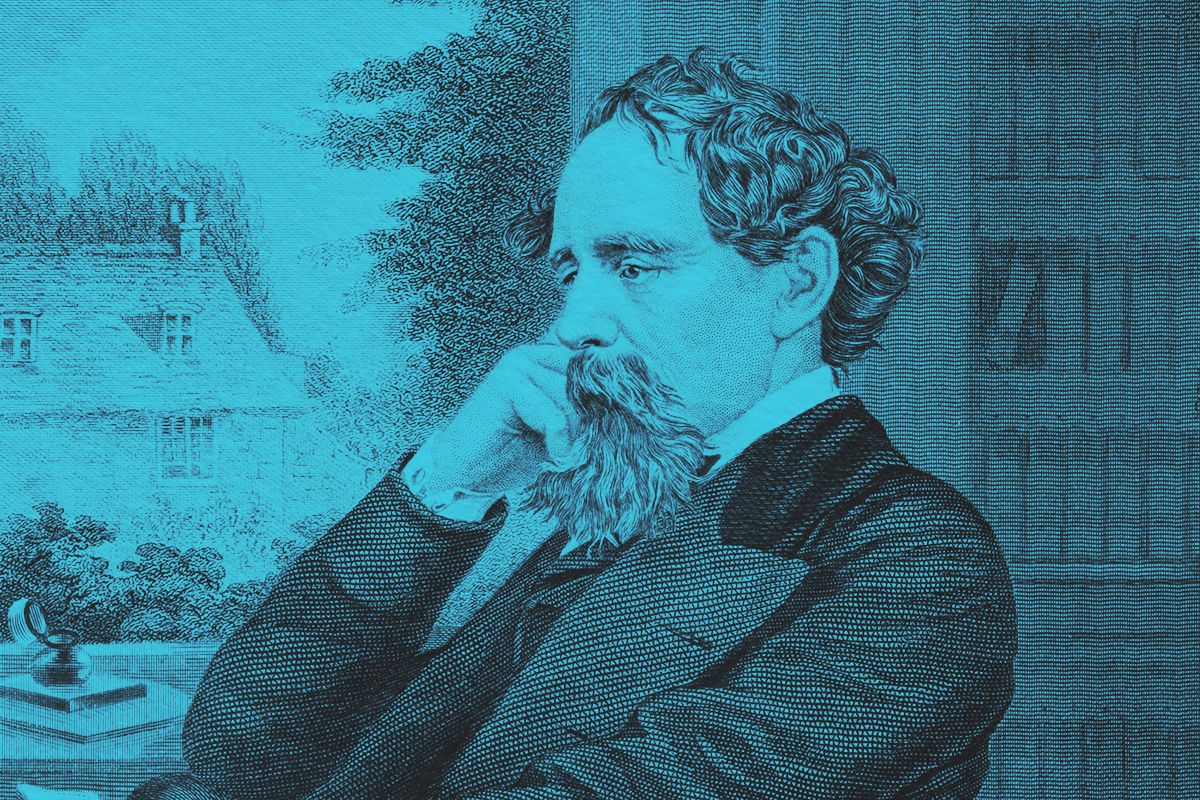
The usage of “No.” continued to grow, and it was adopted for a wide variety of topics outside reference materials. In the 1836 “Sketches by Boz,” Charles Dickens wrote, “Mrs. Macklin, at No. 4. opened her little street door,” and in an 1840 letter, he wrote, “I am curious to see how the idea of the first No. of my projected work, strikes you.”

This repeated use in reference books, by major authors, and by reputable publications earned the abbreviation “No.” a permanent place in the common lexicon, despite the mismatch with the English word “number.” Without such usage, it might have faded away. But today, anyone will understand if you use “No.” to replace the word “number.”

Featured image credit: Serhii Poliakevych/ iStock
3 MIN READ

What Is a Past Participle?

A past participle looks like a simple verb, but it’s more than that. We look to classic literature to decipher examples of this grammatical concept.

by Rachel Gresh
Men standing at whiteboard writing past participle forms of irregular verbs

The romantic classic Pride and Prejudice opens with the sentence, “It is a truth universally acknowledged that a single man in possession of a good fortune must be in want of a wife.” In this line (one of her most famous), author Jane Austen employs an often-underrated grammatical tool: the past participle. Here, “acknowledged” enhances Austen’s storytelling by forming an adjective instead of a verb.

Advertisement

To transform the verb “acknowledge” into a past participle, all Austen needed to do was add the suffix “-ed.” Now, “acknowledged” acts as an adjective, modifying the noun “truth.” Other examples of past participles include “a hushed conversation” and “on borrowed time.” Although these terms might look like simple past tense verbs, they’re called past participles when used in this context as adjectives. 

Most regular past participles are formed this way — by adding “-ed” to a verb. Irregular verbs, however, have less predictable past participles. They take on various suffixes, including “-en,” “-n,” “-ne,” or “-t.” This looks like “shaken confidence” or “a lost letter.”

Past participles don’t just modify nouns — they also form verb tenses. When combined with the auxiliary verb “have,” they create what’s called the perfect verb tense. For example, in Mr. Darcy’s line, “In vain I have struggled,” the past participle “struggled” works with “have” to form the present perfect tense. This tense indicates that the struggle started in the past and is still relevant to the present. More examples of this tense include: “He has graduated” and “She has left.” 

Advertisement

The same formula is used for other perfect verb tenses. For past perfect tense, use “had” instead of “have,” as in, “In vain I had struggled” or “They had waited.” When combined with “not,” past participles form negative perfect tenses, as in Elizabeth Bennet’s reflection: “I could easily forgive his pride, if he had not mortified mine.” Past participles are also used in the less-common future perfect tense, which uses an additional auxiliary verb, “will” — “She will have read the letter by noon.”

Finally, past participles are key in the passive voice, where the subject receives the action rather than performing it. For example, in Mr. Darcy’s revelation, “I was given good principles, but left to follow them in pride and conceit,” the subject “I” is the recipient of the action, not the doer. To create the passive voice, use a conjugation of the verb “be” along with a past participle, as in, “The pages of the novel were torn.”

In short, past participles are an incredibly useful construction that we can find sprinkled throughout both literature and everyday speech. Whether transforming verbs into descriptive adjectives or creating clarity in complex tenses, their versatility and precision are crucial to storytelling, from grammar class to Jane Austen’s novels.

Featured image credit: Pressmaster/ Shutterstock
5 MIN READ

4 Obscure Grammar Rules You Might Know By ‘Ear’

For native English speakers, there are likely specific grammar rules that just sound right to you. Here are four grammar topics you might not know how to explain.

by Lisa Galek
Bicycle leaning against wall

If you grew up speaking English as your first language, there are likely many things that just sound right. A question is delivered with a higher tone at the end to make it sound inquisitive. Excitement is portrayed with loud and fast voices. Other elements, such as the order in which words are delivered, are dictated by specific grammar rules that you might not even be aware of. Here are four little-known grammar rules you probably don’t think about much — until someone uses them the wrong way.

Advertisement
The Order of Adjectives

If someone told you they bought a “red shiny big bicycle,” you would understand what they meant, but you might not be able to shake the feeling that their description was a little bit off. That’s because adjectives are almost always listed in a particular order:

  • Quantity: one, many, a few
  • Opinion/Quality: beautiful, good, sweet
  • Size: big, little, short
  • Age: old, youthful, antique
  • Shape: heart-shaped, round, spiral
  • Color: green, blue, dark
  • Origin/Material: American, wooden, leather
  • Qualifier: buttoned, sports, gardening

Following this order, the correct version of the example above is “big red shiny bicycle” — doesn’t that flow better? Interestingly, native speakers don’t usually need to be taught the accepted order of adjectives. When people grow up absorbed in a certain language, they pick up the flow of language patterns. So when we hear a list of adjectives spoken, they sound either “right” or “wrong,” and our ears will often tell us the correct things to say or write.

Advertisement
Who vs. Whom

“Whom” is fancy and “who” is regular — right? While a lot of people think that’s the case, there’s actually a grammar rule behind when to use “who” vs. “whom.” There’s nuance to this issue, but “who” and “whom” are both pronouns. “Who” is used to refer to the subject of a sentence, and “whom” refers to the object of a verb or preposition in a sentence.

An easy trick to understanding which word to use is to answer the question using other pronouns. If “he,” “she,” or “they” works in the sentence, then “who” is the correct form.

Who is going to the fair? → He is going.

Who wants to know? → She wants to know.

If you can answer the question using “him” or “her,” then you’re dealing with object pronouns, and “whom” is the correct form.

Whom should I go out with? → You should go out with her.

Whom does the car belong to? → The car belongs to him.

For a mnemonic device, put aside the true context of the question and use “him” — if it sounds correct, then the “m” in “him” matches up to the “m” in “whom.”

Advertisement

Ablaut Reduplication

This complex-sounding term describes a simple phenomenon in linguistics. “Reduplication” refers to repeated words in a compound word or phrase, such as “boo-boo” or “pom-pom.” Ablaut reduplication is when the vowel sound in the second syllable is slightly altered. Here are some examples:

  • chitchat
  • ding-dong
  • flip-flop
  • hip-hop
  • knickknack
  • Ping-Pong
  • singsong
  • ticktock
  • zigzag

You’ll notice the first vowel is almost always the high “i” sound, as in the word “hit.” If there are two words in the phrase, the “i” vowel sound will always come first, followed by an “a” or “o” vowel sound. If there are three words in the phrase — for example, “tic-tac-toe” or “bing-bang-boom” — the vowel sequence is “i,” “a,” and then “o.”

Ablaut reduplication almost certainly doesn’t appear on any elementary school tests, but a native English-speaking child likely would know “dong-ding” is a bit odd for the sound of a doorbell. The correct flow is a result of rules we instinctively learn when being raised speaking the language.

Good vs. Well

Once upon a time, the answer to “How are you doing?” was “I am well” — never “I am good.” This rule is likely still taught in grammar lessons, but it’s less strictly held to in casual conversation. You may even use “good” and “well” interchangeably throughout your life. However, in formal grammar terms, when “good” is used as an adjective, it should be paired with nouns. “Well” is an adverb, so it should be paired only with verbs.

  • I’m doing well.
  • I can’t see well.
  • My dog is a good boy.
  • I had a good day.

The distinction between “well” and “good” is often confused with states of being, specifically when paired with the word “feel.” When referring to physical health, use the word “well” (“I have a cough and don’t feel well”). But if you’re discussing your emotions, then “good” is the correct term (“I’m not feeling good about the test today”). In that second example, “good” is not an adjective, so it doesn’t matter that it’s being paired with the verb “feeling.” “Good” is working as a noun, or state of being. How many of these grammar rules did you remember? If you’re being quizzed on them, maybe it’s important to be able to recite the rules, but there are always exceptions. Just make sure you can get your point across.

Featured image credit: Chris Barbalis/ Unsplash
3 MIN READ

How Do You Properly Use an Ellipsis?

Are you a fan of the “dot dot dot” in your typing? The punctuation mark, called an “ellipsis,” has some formal rules for its usage that you may not be following.

by Bennett Kleinman
Ellipsis written with colored pencil

How do you use an ellipsis? No, not the aerobic exercise machine — that’s an elliptical. And we’re not talking about celestial bodies blocking each other in the sky, either. That’s an eclipse.

Advertisement

Ellipses are those three tiny dots that may appear together at the beginning, middle, or end of a sentence. The formal definition is “the omission from speech or writing of a word or words that are superfluous or able to be understood from contextual clues,” but the punctuation mark has acquired a few more casual usages in modern digital communications. The origin of this curious punctuation mark dates back to the 16th century, though at that time it was written slightly differently. Let’s look at where the ellipsis came from and how you should properly use the “dot dot dot” today.

In the book Ellipsis in English Language, Anne Toner examines the earliest known uses of “…” in English. It may have appeared in a 1588 English translation of the Roman comedy Andria, but in that piece, the ellipsis was written as four hyphens instead of three periods. This marking was used to interrupt a sentence to convey a sense of silence. According to Toner, the ellipsis became quite popular among 16th-century authors, and was used in the works of Shakespeare. Sometime in the early 18th century, the hyphens turned into dots, and by the early 19th century, three dots in succession (…) had become the new standard for how to write an ellipsis.

Advertisement

Now that you know a little more about the history of the ellipsis, here’s how to use it. There’s really only one formal use for an ellipsis: to indicate omitted information. Essentially, you swap out irrelevant details for a “…” to declutter a sentence while still maintaining its original meaning. You can also use an ellipsis to essentially “skip ahead” by cutting out the middle of a quote if you want to connect two separate passages.

For example, Charles Dickens’ A Tale of Two Cities has one of the most recognizable introductions in literature, but someone quoting it might want to reference only a selection of it: “It was the best of times, it was the worst of times … it was the season of Light, it was the season of Darkness.” The ellipsis in the middle of the text lets us know we’re missing some words. 

Even with the formal punctuation rules, the ellipsis retains an informal usage related to 16th-century stage direction: Writers use it to convey a sense of hesitation or pause at the beginning, middle, or end of a sentence. An ellipsis at the end of a sentence may seem to trail off instead of ending decisively; this may help establish a feeling of uncertainty or spaciness. This usage has been adopted heavily in digital communications. A text that reads, “I was waiting for you…” implies a tone of exasperation, while “I was waiting for you!” conveys excitement. 

Keep in mind that various style guides have different rules for how to write an ellipsis, so it’s worth checking your preferred style guide for more information. For instance, the AP Stylebook says you should write an ellipsis without any spaces between the individual dots but include a space on either side of the set of three dots ( … ), while the Chicago Manual of Style tells you to put a space between each dot (. . .).

Featured image credit: Lijphoto/ Shutterstock