




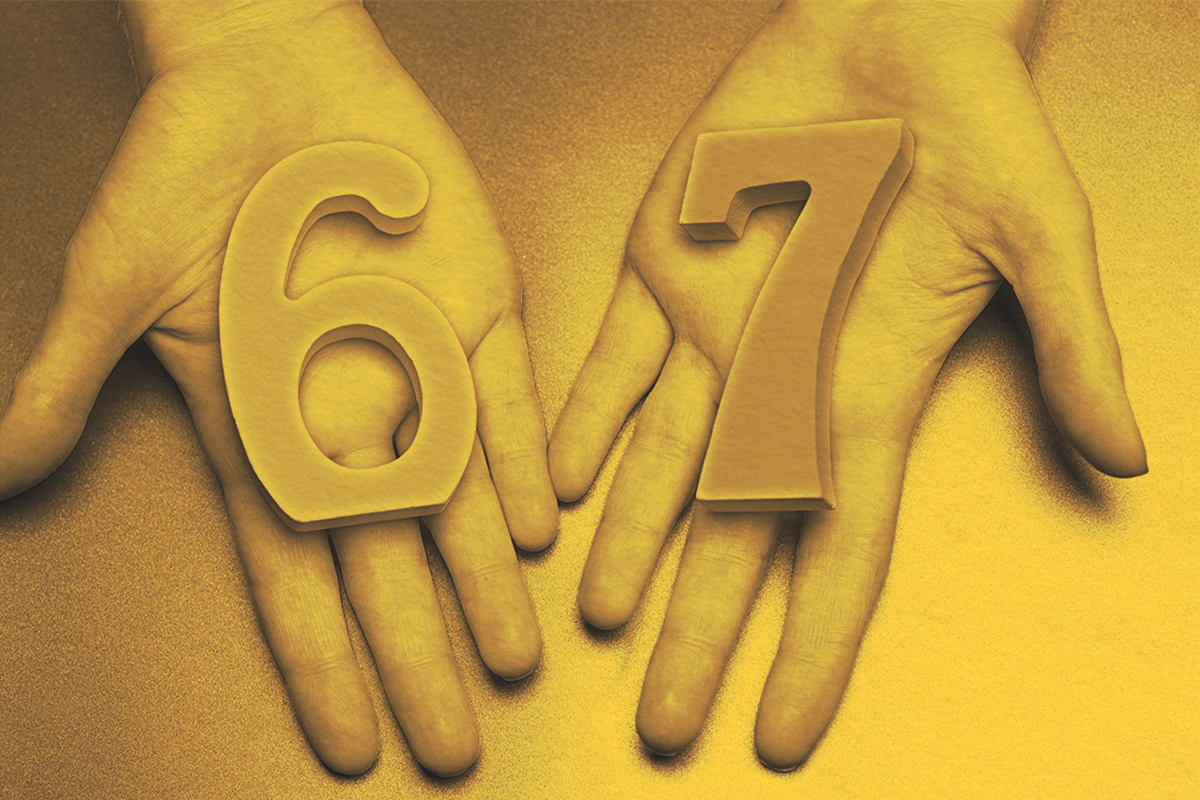
The numbers six and seven have a wildly different meaning depending on your age. To today’s youth, “6-7” is a nonsensical phrase that spread like wildfire on TikTok and among Gen Alpha over the last several months of 2025. To older generations, “to be at sixes and sevens” means enduring a state of confusion. And when we say older, we really mean it. The phrase “at sixes and sevens” originated back in the 14th century, yet it has remained relevant for more than 650 years.
According to the Oxford English Dictionary, this phrase can be traced back to English poet Geoffrey Chaucer’s 1374 work “Troilus and Criseyde.” He wrote (in Middle English), “Lat nat this wrechched wo thyn herte gnaw, But manly set the world of sexe and seuene.” At that time, the phrase referred to the consequences from the actions of a careless individual, with the “sexe” (six) and “seune” (seven) referring to a 14th-century dice game in which throwing a six or a seven was a risky roll.
The phrase evolved to describe a state of confusion or disorder by the 16th century, but it was still written in the singular form as “to set on six and seven” or just “six and seven.” By the 18th century, the plural form “at sixes and sevens” became the standard — it’s not clear why the plural became the norm, but it’s stayed that way ever since.
The centuries-old phrase is still relevant in modern contexts. Let’s say a man named Bill loses his job unexpectedly; you might say, “Bill was at sixes and sevens after being fired without warning.” Or in the case of a relationship that’s moving too fast, you might say, “Emily was at sixes and sevens after being told ‘I love you’ on the first date.” As for Gen Alpha’s “6-7” meme, it seems to be reaching its natural demise.
More from our network
Word Smarts is part of Inbox Studio, which publishes content that uplifts, informs, and inspires.