




A duck is a duck and not a drake, but a drake is definitely a duck, just like a goose is a goose and not a gander, but a gander is definitely a goose. The English language can sometimes seem like a magnificent mess, and perhaps nowhere is that more evident than on the farm and in the wider animal kingdom. Our animal words come from a heady mix of sources — many from Old English, some borrowed from Norse or French, and others coined in aristocratic hunting manuals or by farmers who needed to tell their stock apart. The result is a barnyard full of linguistic oddities, including an array of animals with distinctly different words for their male and female counterparts. Here are eight creatures whose males and females answer to alternative names, and the etymological stories behind them.
Agriculture developed some 12,000 years ago, so it’s no surprise that both “cow” and “bull” are very old words. “Cow,” the word for a female bovine, likely comes from the Old English cū, possibly echoing the animal’s vocalizations (what English now portrays as “moo”). “Bull,” for a male bovine, comes from the Old Norse boli, possibly deriving from bullen, meaning “to roar.” This distinction is still well known today: Because farmers managed breeding herds closely, the names of the roaring sire and the milk-producing mother stayed separate over the centuries.
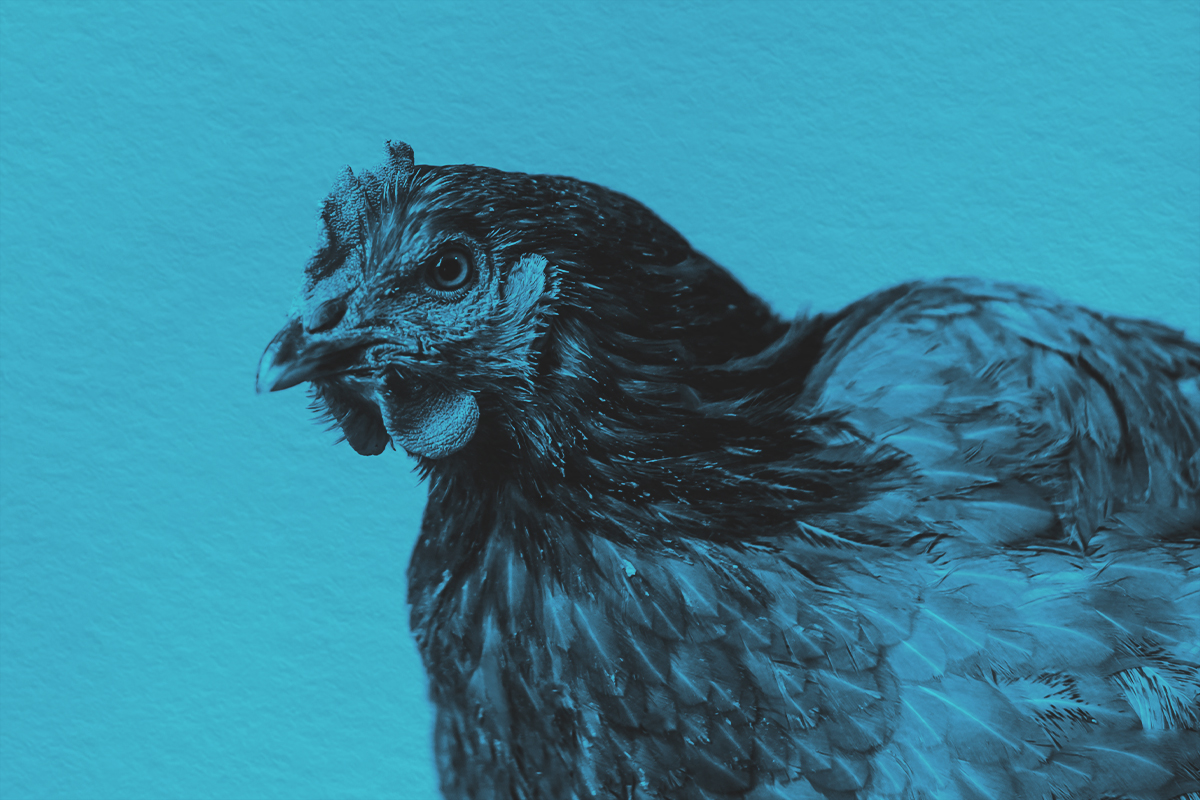
“Hen,” for a female chicken, is an ancient Germanic word tied to the Old English hana, possibly with roots in an Indo-European base word meaning “to sing” — a clear nod to early-morning crowing. Males, meanwhile, were originally called cocks, from similar words in Old English (cocc) and Old French (cok), again imitative of their call. Due to the cockerel’s association with sexual voracity, the word “cock” has long been used to refer to a specific anatomical part. This prompted polite society, especially Puritans in North America, to adopt the term “rooster” — literally “one that roosts” — which first appeared in America in the late 1700s.
“Duck” comes from the Old English duce, meaning “dive” or “diver,” which makes perfect sense for a bird that spends its days on the water. Curiously, the quirks of English decided that “duck” would apply both to the entire species and separately to the adult female. The male, however, gained its own word, “drake,” from a Middle English term inherited from the Germanic draak, drake, or drache. However, “drake” is rarely used in casual conversation. Children’s literature, especially, tends to favor the broader “duck,” as in Beatrix Potter’s The Tale of Jemima Puddle-Duck.
“Goose” stems from the Old English gos, an ancient Germanic root shared across dozens of languages. It’s possible that the word is imitative of the bird’s honking sound. “Goose” commonly refers to birds of both sexes, unless used in conjunction with the specifically male word “gander.” The origins of the latter are less clear; etymologists aren’t sure whether it’s directly connected with “goose” or comes from somewhere else entirely. Either way, the words have often been linked in idioms and literature, as in the expression “What’s good for the goose is good for the gander,” and the nursery rhymes “Goosey Goosey Gander” and “Mother Goose” (“Old Mother Goose, when she wanted to wander; Would ride through the air, on a very fine gander”).
“Ram” comes from the ancient Germanic word ram and is connected to the Old Norse rammr, meaning “strong,” possibly on account of the male animal’s physical strength (which also connects with the “ram” in “battering ram”). The feminine “ewe,” meanwhile, goes all the way back to the Old English eowu and the Latin ovis. The far more common and generic “sheep” — as found in the nursery rhyme “Baa, Baa, Black Sheep” (first published in 1744, but probably much older) — comes from the Old English scéap.
Horses were vital to medieval warfare and agriculture, making distinct terms important.“Mare,” for a female horse, comes from the merging of two separate Old English words: mearh, meaning a male horse, and mīre or mȳre, meaning a female horse. And then there’s “stallion,” which is one of those words whose etymology seems obvious once you know it. It entered English via the Old French estaloun, referring to a horse kept in a stall specifically for breeding rather than work — so a male horse in a stall became a stallion.
Medieval hunting culture produced an elaborate vocabulary surrounding venery, the sport of hunting wild animals. A male deer — often a red deer specifically, which was a highly prized target — became known as a stag, from the Old English stacga or stagga, which may have more broadly referred to any male animal in its prime. Males are alternatively known as bucks, from the Old English buc and bucca. (“Buck” is also used to refer to males of other species, such as rabbits.) The origins for the female “doe” are far more obscure, but may have come from the Old English dá. Oscar Hammerstein helped to both introduce and explain “doe” to the masses with his show tune “Do-Re-Mi” from the 1959 musical The Sound of Music, featuring the immortal lyric, “Doe, a deer, a female deer.” Females of other species, including rabbits and kangaroos, are also called does.
“Vixen” comes from the Old English fyxen, specifically meaning “a female fox.” It is the only surviving example in English of the Germanic feminine suffix -en or -in. (Old English once had many feminine endings like this, but “vixen” outlasted all of them.) One particularly charming usage example comes from Richard Verstegan’s 1605 work A Restitution of Decayed Intelligence: “Fixen … is the name of a shee-fox, otherwise & more anciently foxin.” Male foxes are called dogs or tods, both of which are ancient words of unknown origin. Alternatively, a male fox is a reynard — a term directly plucked from literature, thanks to the popularity of 12th-century fables involving an anthropomorphic red fox and trickster called Reynard the Fox.
More from our network
Word Smarts is part of Inbox Studio, which publishes content that uplifts, informs, and inspires.