




When speaking idiomatically, it’s important to use terminology that others can relate to.
Many species of animals are instantly recognizable, which is why there are so many animal-themed idioms in the English language. Whether they’re pets or wild animals, these creatures tend to have traits and behaviors that we learn about from a young age, making their respective idioms easily understandable. For instance, elephants epitomize immensity, ducks represent vulnerability, and peacocks exemplify vanity. Here are eight common animal-themed idioms and the linguistic history behind them.
An eager beaver is a person who’s overly zealous and keen to do whatever is necessary, such as volunteering to tackle any pressing duties. The reason beavers were selected for this idiom is partly because of the near-rhyme, and because they’re typically considered to be industrious critters, evidenced by the fact that they’ll stop at nothing to build their dams. According to Merriam-Webster, this idiom was first coined in 1942, and it was originally used in a military context. An early source cited by the blog Word Histories shows the idiom referred to cadets who went above and beyond to please their superior officers.
To be a sitting duck means to be left in a vulnerable or defenseless position, much like how ducks resting on a pond are easy targets for hunters. The earliest known use of the idiom dates to 1942, per Merriam-Webster. The Oxford English Dictionary cites a 1942 example in which the saying was used to describe enemy tanks being left in a vulnerable position exposed to sharpshooters.
To farmers, cows are a consistent and reliable source of milk, making them a highly profitable commodity. This reputation helped inspire the idiom “cash cow,” which is often used to describe a steady source of revenue for any business. Merriam-Webster puts the earliest known use of this phrase around 1972, and it remains a popular term in modern parlance.
To be a fly on the wall means to secretly listen in or watch people without them being aware of your presence. It’s based on the idea that flies are so small, you wouldn’t know if one were in the room with you until it started buzzing around. The blog Phrase Finder points to an early example of this phrase in a 1921 edition of the Oakland Tribune: “I’d just love to be a fly on the wall when the Right Man comes along.”
When betting on ponies, gamblers are always looking to put their money on a dark horse — a little-known contender that ends up performing well. This phrase dates as far back as 1821, though it was popularized in 1831 by Benjamin Disraeli in The Young Duke. The sporting idiom was soon adopted into the world of politics, referring to formerly obscure candidates who end up winning an election — such as James K. Polk in 1844.
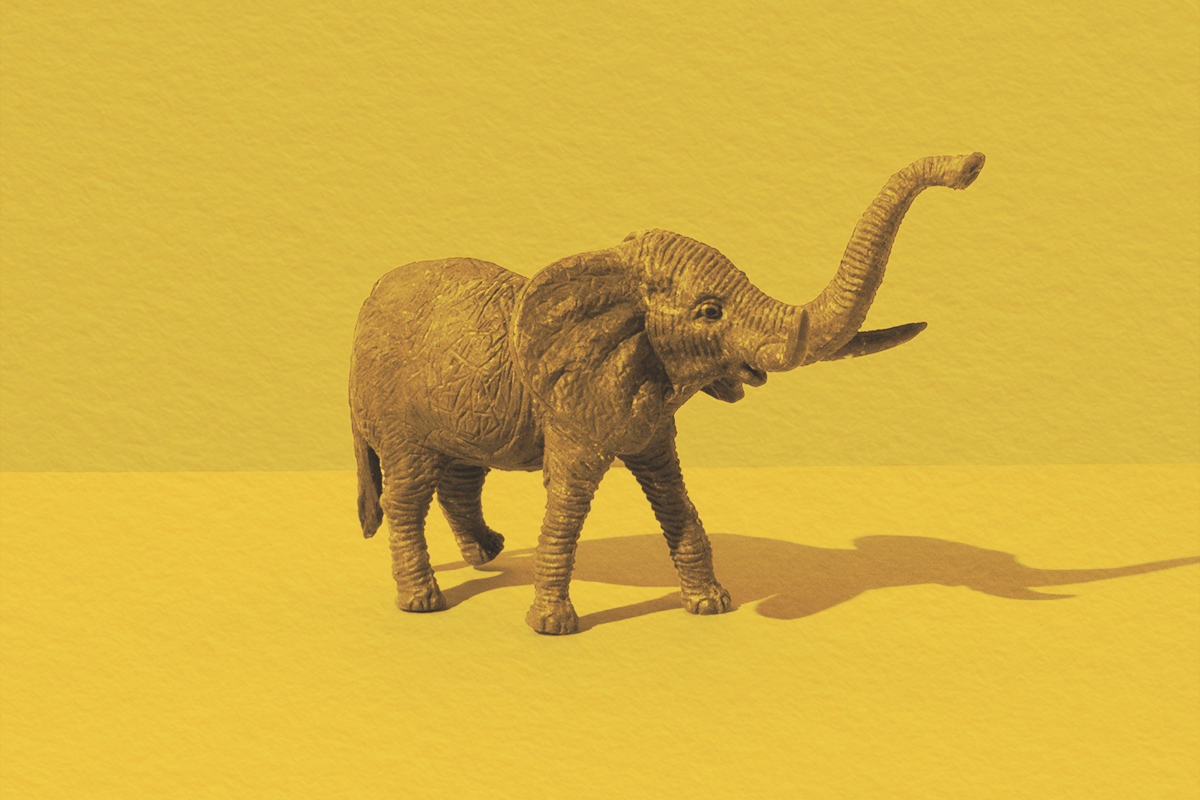
The elephant in the room is an obvious problem that you may choose to ignore, even though it’s staring you right in the face. It’s based on the idea that it would be impossible to ignore an immense elephant if it were standing feet away. Merriam-Webster puts the origins of the phrase at around 1985, but an earlier usage, referring to something incongruous, dates to the 1930s.
According to Merriam-Webster, the phrase “lion’s share” entered English in 1742 and is defined as “the largest portion of something.” The origin is much older, as the title for one of the ancient Greek stories in Aesop’s Fables. In that story, a lion, fox, jackal, and wolf go hunting together. Upon killing a stag, the lion takes charge and divides the prey into four equal parts. But rather than sharing equally, he claims three-fourths based on the fact that he considers himself king of the animals, as well as the strongest and bravest of the bunch.

With a propensity to display their bright, gaudy feathers, peacocks have a reputation as some of the vainest creatures in the animal kingdom. The phrase “proud as a peacock” was made famous by Geoffrey Chaucer in a 14th-century story titled “The Reeve’s Tale,” from The Canterbury Tales. In it, Chaucer wrote, “As any pecok he was proud and gay.” This idiom has come to describe anyone who has a high opinion of themself.
More from our network
Word Smarts is part of Inbox Studio, which publishes content that uplifts, informs, and inspires.