
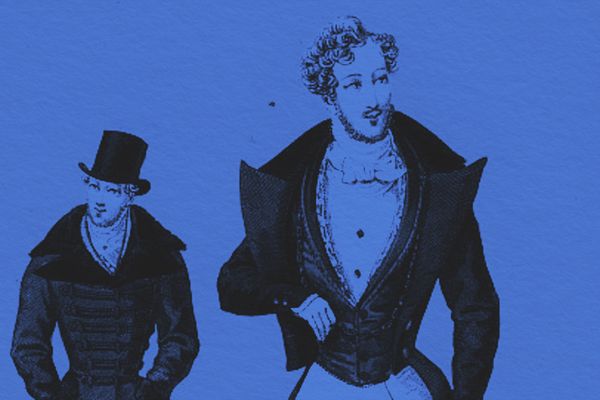





Circa 1950s two male executives conversing

The 1950s were a time of pop culture revolution in the United States. Hollywood stars such as Elizabeth Taylor and James Dean captivated audiences on the silver screen, while the golden age of television brought families together each evening at home for I Love Lucy, Leave It to Beaver, and The Twilight Zone. In music, rock ’n’ roll dominated the airwaves, with stars such as Elvis Presley, Chuck Berry, and Little Richard rising to fame.

At the same time, a post-World War II economic boom fueled the growth of American suburbs, and youth culture flourished, marked by poodle skirts and pomaded hair. Not surprisingly, the decade also gave rise to some of the most memorable slang of the 20th century. Let’s take a look back at how people used to yak in the 1950s.

Yak

“Yak” doesn’t refer to just an animal. In the 1950s, it became a verb for persistent talking or chatter, as in, “Stop yakking and get back to work!” It often suggests time-wasting, nagging, or rambling. And while its exact origin is unclear, it may be connected to the 19th-century Australian slang “yacker,” meaning “talk” or “conversation.” It gained popularity with “Yakety Yak,” the 1958 hit song by the R&B group the Coasters. 

Advertisement
Bird Dog

Today, to bird-dog is to watch someone or something closely. It’s derived from the 19th-century noun “bird dog,” a hunting dog trained to retrieve game. By the 1930s, the noun had taken on a slang meaning as someone who tries to steal another person’s date. It surged in popularity during the ’50s, thanks in part to the Everly Brothers’ hit song of the same name: “Johnny is a joker that’s been tryin’ to steal my baby (He’s a bird dog).” Before long, it broadened to a verb for seeking out business opportunities, especially new clients or talent.

Sock Hop

In the 1950s, teenagers kicked off their shoes and hopped around gymnasium floors in their socks at dance parties known as “sock hops.” Students were required to remove their hard-soled shoes before entering the dance floor so they didn’t scuff up the floors. The first sock hops emerged during the 1940s, but by the ’50s, they were a staple of American teen culture, featuring rock ’n’ roll music and the latest dance moves. As Danny and the Juniors said, “All the cats and the chicks can get their kicks at the hop.”

Dreamboat

In the 1980s, we might have called an attractive man a hunk, and today, a Gen Zer might have their eyes on a snack. But during the 1950s, the go-to equivalent for a handsome, charming man was “dreamboat.” The term reached its peak as swoon-worthy actors and rock ’n’ roll singers stole the hearts of audiences — think James Dean, Marlon Brando, Elvis Presley, and Ricky Nelson. It even appeared as the title of a 1952 comedy film starring Clifton Webb and Ginger Rogers.

Advertisement
Peepers

Peepers” has been slang for “eyes” since the early 18th century, but it enjoyed a resurgence during the 1940s and ’50s to refer to eyes, eyeglasses, or even sunglasses: “Can you read this? I forgot my peepers!” The term was popularized by the 1938 song “Jeepers Creepers,” famously performed by Louis Armstrong: “Jeepers Creepers, where’d ya get those peepers? / Jeepers Creepers, where’d ya get those eyes?” In the television industry, the hit ’50s sitcom Mr. Peepers followed the daily life of a mild-mannered science teacher known for his glasses.

Ragtop

In 1950s slang, a ragtop was a convertible car with a soft, fabric roof. The term was popularized in hot-rodding culture, distinguishing these cars from conventional hardtop convertibles, which were sometimes called flip-tops. “Ragtop” first appeared around 1952 and quickly became used among car enthusiasts and teens alike.

Advertisement
Made in the Shade

To have it made in the shade is to be in a very easy or comfortable position, typically in reference to lifestyle: “After winning the lottery, they have it made in the shade.” The phrase evokes the relief of resting in the shade rather than working in the hot sun. Not much is known about its origin, but it may be rooted in an old children’s rhyme: “ice-cold lemonade, made in the shade, stirred with a spade, by an old maid.” Regardless, in the 1950s it became a cheerful way to describe good fortune.

Beatnik

A beatnik is someone who participated in a social movement of artistic self-expression during the 1950s and into the 1960s. The term quickly became slang for any young, artistic person who rejected conventional society. It was coined in 1958 by journalist Herb Caen and was sometimes used humorously or critically. It drew from the beat generation, originally referring to a weariness with society, but it was later associated with rhythm and jazz music. Its suffix, “-nik,” is a product of the Sputnik space craze, derived from Russian and meaning “a person or thing associated with or involved in.”

Barn Burner

A barn burner is something especially exciting or interesting, especially in sports, though the term is much older than its athletic usage. In the late 19th century, it was a political term referring to a progressive faction of the New York Democratic Party. It referred to an old story about a farmer who burned down his barn to rid it of rats, implying taking extreme measures to reach a goal. By the 1930s, it had taken on a figurative sense, and throughout the 1940s and ’50s, it was commonly used in sports journalism to describe noteworthy events. Today, it might also be used to describe an energetic performance, such as a speech. 

Featured image credit: © Getty Images/Unsplash.com